Louisville & Nashville Steam Roster (Post 1900)
Published: October 11, 2026
By: Adam Burns
The Louisville & Nashville bought steam the way it bought bridges: enough engine for the job, and a second engine when the grade asked for one. Eight-coupled freight power, Pacifics and then Mountains on the limiteds, and a single class of 2-8-4s at the end. The roster carried no ten-coupled engines and no articulateds. The last steam operation was January 1957, class J-4 Mikado No. 1882, leased to the subsidiary Carrollton Railroad in northern Kentucky.

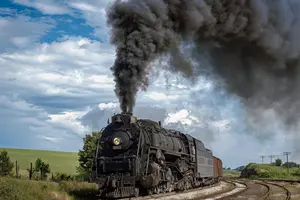
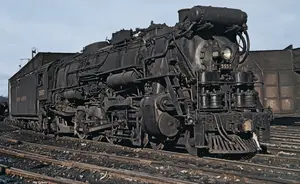
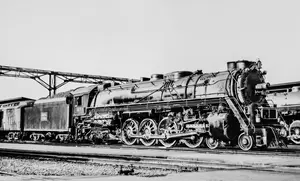
Class M-1 2-8-4 No. 1953, a Big Emma, near Winchester, Kentucky, on June 5, 1956. The class is the only L&N venture into a locomotive larger than a Mikado. None survive. Photographer unknown.
On this page: At a glance · Consolidations · Mikados and Big Emma · Pacifics and Mountains · Switchers · Roster built since 1900
At a glance
| Item | Detail |
|---|---|
| Railroad | Louisville & Nashville. Mark LN. Company page: Louisville & Nashville |
| This roster | Engines built since 1900, after Drury, pages 201–204. The quantity column totals 1,196 |
| Freight | Consolidations through class H-29A. Home-built Mikados, then 93 light USRA Mikados and 165 heavy USRA Mikados. Forty-two M-1 2-8-4s |
| Passenger | Pacifics K-1 through K-8. Twenty-two L-1 Mountains, 400–421 |
| Switchers | Rebuilt 0-6-0s, 35 larger six-wheel engines in 2055–2089, and 60 eight-wheel switchers, classes C-1 and C-2 |
| Last steam | January 1957. J-4 No. 1882, on the Carrollton Railroad |
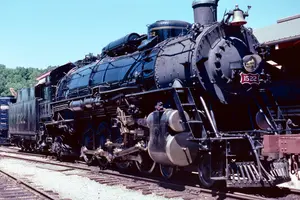
| Preserved | K-1 Pacific No. 152, in operating condition at the Kentucky Railway Museum. The Big Emmas were scrapped |
Roster follows Drury, Guide to North American Steam Locomotives (revised edition), pages 201–204. Information compiled October 11, 2026.
Three hundred Consolidations, then the heavy ones
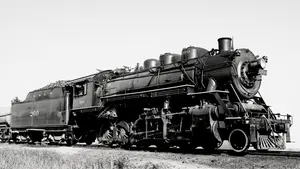
After 1900 the freight engine was a medium Consolidation. Classes H-23, H-25, and H-27, numbers 975–1280, came from Rogers, Baldwin, and South Louisville between 1903 and 1911, some 300 locomotives. All had 57-inch drivers. The H-23s and H-25s had 21-by-28-inch cylinders. The H-27s had 21-by-30. Weight ran from 183,400 to 196,000 pounds. The newer H-25s and H-27s had piston valves, Walschaerts gear, and superheaters.
The 94 heaviest Consolidations were classes H-28 and H-29, numbers 1281–1374, built at South Louisville in 1911 and 1914. The grid also separates an H-29A. They produced about 10,000 pounds more tractive effort than the H-25s and H-27s. Many H-29s had mechanical stokers and auxiliary water tenders and worked through the 1940s. Until the bridges on the Gulf coast were strengthened around 1940, Consolidations powered the fast freights into New Orleans.
Two H-24s were light engines of an older design, 154,000 pounds. Two H-26s had 51-inch drivers and were bought from the builder three years after they were constructed. The grid’s built year on the H-26s is 1907 and the retirement is 1940.
Home-built Mikados, the USRA engine, and Big Emma
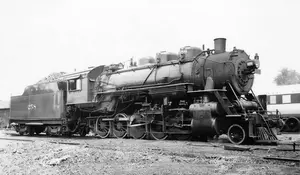
South Louisville built 50 class J-1 Mikados in 1914–1918, with 57-inch drivers, long boilers, and mechanical stokers, for Eastern Kentucky coal moving to Cincinnati and Louisville. The grid splits them as 1416–1449, 2400–2415, and the J-1A block 1450–1461, and marks the first two blocks “All to J-1A.” Thirty-four J-2s followed in 1918–1921. They had 28-by-30-inch cylinders in place of 27-by-30, and they weighed 326,000 pounds in place of 302,000. No. 1480, the first J-2A, was finished at South Louisville in 1921 and was the heavier machine of that pair of classes.
The light USRA Mikados, class J-3, numbers 1500–1592, were 93 engines: Lima built 18 in 1919 and Alco built 75 in 1920–1923. Crews liked them. They gave less mechanical trouble than any other freight class, and they ran to New Orleans.
The heavy USRA Mikados were classes J-4 and J-4A, numbers 1750–1914, 165 engines. They had mechanical stokers. Many later received feedwater heaters, thermic syphons, and larger tenders. The final 24, Baldwin 1929, also received boosters. Those are the J-4As. They worked Cincinnati–Montgomery and Cincinnati–Corbin, and they ran to Atlanta, Mobile, Pensacola, Evansville, and East St. Louis, into the mid-1950s. The grid’s retirement cell on the J-4s reads 1951–. The cell is printed that way. No. 1882, one of them, was the engine still in steam in January 1957.
Brooks built one three-cylinder USRA heavy Mikado, No. 1999, class J-5, in 1924. It sat out the Depression, then worked the hump at DeCoursey Yard. Drury retires it in 1950.
The M-1 2-8-4s were 42 engines, and they were the largest the railroad could turn and house. The first 20, numbers 1950–1969, came from Baldwin in 1942 and 1944. Lima’s 22, numbers 1970–1991, came in 1949. The grid prints them as one row. They had 69-inch drivers, 25-by-32-inch cylinders, 265 pounds of pressure, and 65,290 pounds of tractive effort. A booster added 14,100 pounds for starting. Larger fireboxes, cast-steel frames and cylinders, roller bearings, and 12-wheel tenders went with a fuel saving of about 12 percent against the 2-8-2s.
They worked mostly on the Kentucky, Cincinnati, Cumberland Valley, and Eastern Kentucky divisions. On the Eastern Kentucky they regularly rolled 9,500-ton coal trains, 124 cars, from Neon to DeCoursey, with helpers on the short grades at Jackson and Ravenna. On the Cumberland Valley the trains were 8,300 tons to DeCoursey, again with helpers on two grades. During the war and just after it, four M-1s were assigned to passenger service between Cincinnati and Corbin. The railroad’s name for the class was Big Emma. Cumberland was suggested and never caught on. The type page is the 2-8-4.
In 1948 an M-1 was tested against a three-unit EMD F3 on the Cincinnati–Louisville line. The F3s won, and in 1949 the railroad decided to dieselize everything but the coalfield freights. Passenger service was fully dieselized by 1954. The M-1s were sidelined after 1956. The NC&StL merger in August 1957 brought enough diesels that by 1959 the last 2-8-4s could be sold for scrap. None survive.
The road had already decided, in 1940, against a 4-8-4 for the passenger trains north of Mobile. The 4-8-2s were too heavy for the bridges west of Mobile, and a 4-8-4 would have been heavier. It bought 16 EMD E6s instead, and ordered the first M-1s at the same time. What it did add, across the later steam fleet, were superheaters, feedwater heaters, stokers, mechanical lubricators, power reverse, firebox syphons, and overfire jets. Fast freight and the heavy limiteds received auxiliary or high-capacity tenders.
From the K-1 to a streamlined three-cylinder Pacific
By the 1890s the 4-6-0 had replaced the 4-4-0 as the mainline passenger engine. Some 35 larger Ten-Wheelers came from Cooke, Rogers, and Baldwin between 1890 and 1904. After 1905 the Pacific took that work. Some 4-4-0s stayed on locals and branches into the 1940s. The grid’s only post-1900 American is D-0 No. 7, Baldwin 1916, retired in 1947.
The first Pacifics were K-1s 150–154 from Rogers in 1905, light engines at 187,800 pounds, with 69-inch drivers and about 22,000 pounds more weight than the newest Ten-Wheelers. South Louisville then built 40 more: K-1s 155–174 and K-2s 175–194. The K-2s had superheaters, piston valves, and cylinders a half inch larger. Many K-1s were brought up to the same standard, including No. 152, which survives in operating condition at the Kentucky Railway Museum. The K-1s and K-2s took the Cincinnati–Atlanta and Cincinnati–New Orleans lines, and then most of them went to the flatter Gulf Coast and South Alabama divisions. One K-2 was rebuilt with a trailing-truck booster for the New Orleans Limited out of Mobile.
The K-3s and K-4s were slightly larger, with straight boilers, piston valves, superheaters, and fireboxes with divided or partly sloped grates. K-3s are 195–211. K-4s are 216–239, and 2212–2215 were classed K-4A and numbered apart for accounting reasons. The K-3s had 21½-by-28-inch cylinders, an inch larger than the K-2s, and weighed 211,500 pounds. The K-4s had 22-inch cylinders, weighed 233,300 pounds, and were the first L&N Pacifics with outside-journal trailing trucks. Castner’s prose dates the K-3 and K-4 building to 1912 and 1921. The table follows the grid.
In 1919 six USRA Pacifics arrived, class K-5, numbers 240–245: 25-by-28-inch cylinders, 73-inch drivers, 277,000 pounds, and about 7,000 pounds more tractive effort than the railroad’s own design. After the war, 20 more came: 264–271 from Baldwin in 1923 and 272–283 from Brooks in 1924. The grid prints that second block as one row. South Louisville built 18 more Pacifics, K-4B 246–263, almost identical to the prewar K-4s. The prose remembers 1919 and a first copy in 1923. The built cell reads 1920–1922. The K-5s took the top passenger trains on the northern divisions and later roamed the system. They were stoker-equipped.
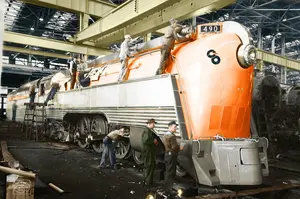
Brooks built one three-cylinder USRA Pacific in 1925, No. 295, class K-7. It was stored in the 1930s, rebuilt at Louisville in 1940 without the middle cylinder, and streamlined for the L&N’s segment of the Chicago–Miami South Wind. Three more heavy Pacifics were streamlined in 1940 and 1941 for the Dixie Flagler and the South Wind.
Four Pacifics came from the Gulf, Mobile & Northern in the 1920s: class K-6, 296–299, Baldwin 1912. Seven more arrived with the Louisville, Henderson & St. Louis in 1929: class K-8, 81–87, Richmond, built 1923–1927.
The Mountains were 22 class L-1 engines, numbers 400–421, based on the USRA light Mountain with 70-inch drivers in place of 69. Baldwin delivered 16 in 1926 and six more, slightly heavier, in 1930. They replaced K-5s on the heaviest limiteds between Cincinnati and Atlanta and down the main line to Birmingham. After 1940 they ranged as far south as Mobile. They were too heavy for the bridges on the Gulf Coast west of Mobile, and too heavy west to Evansville and East St. Louis. Some went into freight service in the early 1950s. In 1953 the 14 remaining 4-8-2s were renumbered 470–483 to open a block for GP7s. The grid’s retired cell reads 1951, and that is the cell in the table.
Nearly eighty small switchers, then the USRA 0-8-0
Yards were the province of 0-6-0s and 0-8-0s, with older Moguls and Consolidations still in that work. Nearly 80 small 0-6-0s were rebuilt in the early 1900s from Consolidations of the 1880s. Many were reboilered. They kept numbers in the 600, 700, and 800 series and lasted into the late 1940s. The grid’s rebuilt rows, classes B-5, B-7, B-9, B-10, and B-11, print quantities that add to 50. The prose figure and the table are both Castner’s, and the table is printed as the grid gives it.
Baldwin and Alco built 35 larger 0-6-0s, which the prose classes as B-4 and B-6, numbers 2055–2089, between 1903 and 1907. The grid prints the whole span as class B-4, in three rows. One of those rows, 2060–2069, is noted “Ex-H-3 2-8-0.” Three secondhand 0-6-0s arrived in the 1920s, two from American International Shipbuilding and one from the Louisville, Henderson & St. Louis. B-0 No. 30 is the Henderson & St. Louis engine, a Baldwin of 1911, retired in 1948.
The heavy switchers were 60 eight-wheel engines, built 1919–1925. Thirty-four were homemade C-1s, numbers 2100–2117 and 2124–2139. Twenty-six were USRA-design C-2s, numbers 2118–2123 and 2140–2159. The C-1 boilers were similar in size to the home-built heavy 2-8-0s. The built cells on the C-1 rows read 1922–1923.
Louisville & Nashville steam locomotives built since 1900
| Type | Class | Numbers | Qty | Builder | Built | Retired | Notes |
|---|---|---|---|---|---|---|---|
| 0-6-0 | B-0 | 30 | 1 | Baldwin | 1911 | 1948 | Ex-LH&StL |
| 0-6-0 | B-4 | 2055–2059 | 5 | Manchester | 1903 | 1946– | |
| 0-6-0 | B-4 | 2070–2089 | 20 | Manchester, Rogers | 1905, 1907 | 1934–1951 | |
| 0-6-0 | B-4 | 2060–2069 | 10 | Baldwin | 1903–1904 | Ex-H-3 2-8-0 | |
| 0-6-0 | B-5 | 633–648 | 12 | L&N | Ex-H-4 2-8-0 | ||
| 0-6-0 | B-7 | 649–658 | 9 | L&N | Ex-H-4 2-8-0 | ||
| 0-6-0 | B-8 | 2090, 2091 | 2 | Lima | 1918 | Ex-H-5 2-8-0 | |
| 0-6-0 | B-9 | 701–801 | 11 | L&N | Ex-H-6 2-8-0 | ||
| 0-6-0 | B-10 | 724–812 | 12 | L&N | Ex-H-5 or H-6 2-8-0 | ||
| 0-6-0 | B-11 | 704–805 | 6 | L&N | |||
| 0-8-0 | C-1 | 2100–2117 | 18 | L&N | 1922–1923 | ||
| 0-8-0 | C-1 | 2124–2139 | 16 | L&N | 1922–1923 | ||
| 0-8-0 | C-2 | 2118–2123 | 6 | Alco | 1919 | USRA design | |
| 0-8-0 | C-2 | 2140–2159 | 20 | Alco | 1922–1925 | ||
| 2-6-0 | F-8 | 545–549 | 5 | Rogers | 1906 | 1927–1930 | Ex-L&A |
| 2-6-0 | F-9 | 550–556 | 7 | Baldwin | 1889–1907 | 1928–1934 | |
| 2-8-0 | H-18 | 909–923 | 15 | Cooke | 1899–1900 | 1928–1934 | |
| 2-8-0 | H-19 | 924–933 | 10 | Rhode Island | 1901 | 1933–1949 | |
| 2-8-0 | H-20 | 934–943 | 10 | Cooke | 1902 | 1928–1949 | |
| 2-8-0 | H-21 | 950–974 | 25 | Rogers | 1902–1903 | 1933–1934 | |
| 2-8-0 | H-23 | 975–994 | 20 | Baldwin | 1903 | 1933– | |
| 2-8-0 | H-23 | 1000–1179 | 180 | Baldwin, Rogers, L&N | 1905–1907 | 1933– | |
| 2-8-0 | H-24 | 848, 849 | 2 | Rogers | 1904 | 1948, 1947 | |
| 2-8-0 | H-25 | 1180–1233 | 54 | Rogers, Baldwin, L&N | 1907–1910 | 1947– | |
| 2-8-0 | H-26 | 996, 997 | 2 | Richmond | 1907 | 1940 | |
| 2-8-0 | H-27 | 1234–1280 | 47 | Baldwin, L&N | 1910–1911 | 1934–1952 | |
| 2-8-0 | H-28 | 1281–1305 | 25 | L&N | 1911 | 1950– | |
| 2-8-0 | H-29 | 1306–1350 | 45 | L&N | 1912–1913 | 1949– | |
| 2-8-0 | H-29A | 1351–1374 | 24 | L&N | 1913–1914 | 1949– | |
| 2-8-0 | H-30 | 61, 62 | 2 | Brooks | 1922 | Ex-C&M | |
| 2-8-2 | J-1 | 1416–1449 | 35 | L&N | 1915, 1917 | 1950– | All to J-1A |
| 2-8-2 | J-1 | 2400–2415 | 15 | L&N | 1914 | 1950– | All to J-1A |
| 2-8-2 | J-1A | 1450–1461 | 12 | L&N | 1918 | 1950– | |
| 2-8-2 | J-2 | 1462–1479 | 18 | L&N | 1918–1919 | 1950– | |
| 2-8-2 | J-2A | 1480–1495 | 16 | L&N | 1921 | 1950– | 1480 was the first J-2A, South Louisville, 1921 |
| 2-8-2 | J-3 | 1500–1592 | 93 | Lima, Alco | 1919–1923 | 1951– | USRA light Mikado. Lima 18 in 1919, Alco 75 in 1920–1923 |
| 2-8-2 | J-4 | 1750–1890 | 141 | Brooks, Richmond | 1918–1927 | 1951– | USRA heavy Mikado. 1882 was the last steam, January 1957 |
| 2-8-2 | J-4A | 1891–1914 | 24 | Baldwin | 1929 | Boosters. The final 24 of the 165 heavy Mikados | |
| 2-8-2 | J-5 | 1999 | 1 | Brooks | 1924 | 1950 | 3-cylinder. Hump engine at DeCoursey |
| 2-8-4 | M-1 | 1950–1991 | 42 | BLW, Lima | 1942–1949 | 1954– | Big Emma. 1950–1969 Baldwin, 1942 and 1944. 1970–1991 Lima, 1949 |
| 4-4-0 | D-0 | 7 | 1 | Baldwin | 1916 | 1947 | |
| 4-6-0 | G-11 | 305–309 | 5 | Rhode Island | 1901 | –1940 | |
| 4-6-0 | G-13 | 314 | 1 | Baldwin | 1903–1904 | 1934–1948 | Ex-LH&StL |
| 4-6-0 | G-23 | 31–33 | 3 | Baldwin | 1912 | 1947–1951 | Ex-LH&StL |
| 4-6-2 | K-1 | 150–174 | 25 | Rogers, L&N | 1905–1907 | 1940–1947 | 15 to K-2A. 150–154 Rogers, 1905. 152 is at the Kentucky Railway Museum |
| 4-6-2 | K-2 | 175–194 | 20 | L&N | 1909–1910 | 1940–1951 | All to K-2A |
| 4-6-2 | K-3 | 195–211 | 17 | L&N | 1912–1913 | 1940–1951 | |
| 4-6-2 | K-4 | 216–239 | 24 | L&N | 1914–1918 | 1940– | |
| 4-6-2 | K-4A | 2212–2215 | 4 | L&N | 1914 | 1940– | Numbered apart for accounting |
| 4-6-2 | K-4B | 246–263 | 18 | L&N | 1920–1922 | 1948– | |
| 4-6-2 | K-5 | 240–245 | 6 | Richmond | 1919 | 1951– | USRA |
| 4-6-2 | K-5 | 264–283 | 20 | Baldwin, Brooks | 1923, 1924 | 1951– | 264–271 Baldwin, 1923. 272–283 Brooks, 1924 |
| 4-6-2 | K-6 | 296–299 | 4 | Baldwin | 1912 | 1950–1951 | Ex-GM&N |
| 4-6-2 | K-7 | 295 | 1 | Brooks | 1925 | 3-cylinder. Rebuilt 1940 without the middle cylinder and streamlined for the South Wind | |
| 4-6-2 | K-8 | 81–87 | 7 | Richmond | 1923–1927 | 1948 | Ex-LH&StL. Acquired 1929 |
| 4-8-2 | L-1 | 400–421 | 22 | Baldwin | 1926, 1930 | 1951 | 16 in 1926, six in 1930. 70-inch drivers. Renumbered 470–483 in 1953 |
The quantity column totals 1,196. On the two J-1 rows the printed quantities trade one locomotive with the number spans and still add to the 50 engines in the text. Several rebuilt 0-6-0 rows print a quantity smaller than a count of the numbers. The cells are Drury’s. There is no H-22. H-28, H-29, and H-29A are the 94 heavy Consolidations, 1281–1374. Class C-1 and class C-2 are the 60 eight-wheel switchers.
C&M Cumberland & Manchester. GM&N Gulf, Mobile & Northern. L&A Louisville & Atlantic. LH&StL Louisville, Henderson & St. Louis. BLW Baldwin.
Related reading on American-Rails.com
- Louisville & Nashville · Diesel roster
- 2-8-4 locomotives · 2-8-2 locomotives · 4-6-2 locomotives · 4-8-2 locomotives · USRA locomotives
- Kentucky Railway Museum, home of Pacific 152 · Humming Bird · South Wind
Sources
- George H. Drury, Guide to North American Steam Locomotives, revised edition, Louisville & Nashville, pp. 201–204. Chapter by Charles B. Castner. User photographs in
Downloads\LN_Steam, October 2026. Class grid, specifications, and the January 1957 last steam run - Charles B. Castner, “Big Emma,” Trains, December 1972, p. 22. Recommended with the chapter
- Richard E. Prince, Louisville & Nashville Steam Locomotives (1968). Recommended roster. Construction numbers from Prince are not added to this grid
- Published rosters noted by Drury: Railroad Magazine, January 1936, p. 88, and June 1949, p. 112; Trains, March 1955, p. 27
- Louisville & Nashville Railroad Historical Society, lnrr.org
Recent Articles


-
Louisville & Nashville Steam Roster (Post 1900)
Oct 11, 26 05:44 PM
 Louisville & Nashville steam since 1900. Drury's class grid: Consolidations, 165 heavy Mikados, 42 Big Emma 2-8-4s, Pacifics, and 22 Mountains. Last steam January 1957.
 -
Louisville and Nashville Railroad: Map, Rosters, History
Oct 11, 26 05:39 PM
 Louisville & Nashville, the Old Reliable. Charter of March 5, 1850, Milton H. Smith, the 921-mile main line, Big Emma, and the December 29, 1982 merger. Steam and diesel rosters are companion pages.
 -
Oregon Railroad Museums (2026): A Complete Guide
Oct 11, 26 05:19 PM
 Oregon railroad museums—the Oregon Rail Heritage Center, Brooks trolleys, Canby’s 1891 depot, Medford’s Willamette, and Train Mountain. Confirm hours on each site.
 -
Texas Railroad Museums (2026): A Complete Guide
Oct 11, 26 05:15 PM
 Texas railroad museums—Frisco’s Big Boy 4018, Galveston’s Santa Fe depot, Temple’s 1911 station, Plano’s interurban, and Fort Worth & Denver 304. Confirm hours on each site.
 -
Wisconsin Railroad Museums (2026): A Complete Guide
Oct 10, 26 11:51 PM
Wisconsin railroad museums—Green Bay’s Big Boy 4017 and Eisenhower’s A4, Mid-Continent at North Freedom, East Troy’s interurban, and the Riverside & Great Northern. Confirm hours on each site. -
Interstate Railroad (Virginia): Map, Roster, Logo, History
Oct 10, 26 11:22 PM
 Interstate Railroad, a Virginia coal road chartered February 18, 1896. Andover shops. Ten Alco RS3s, 30–39. Southern control in 1961. The company ended October 31, 1985.
 -
North Carolina Railroad Museums (2026): A Complete Guide
Oct 10, 26 11:16 PM
 North Carolina railroad museums—Spencer Shops, Wilmington’s Atlantic Coast Line 250, Hamlet’s Seaboard depot, and the New Hope Valley Railway. Confirm hours on each site.
 -
New Mexico Railroad Museums (2026): A Complete Guide
Oct 10, 26 10:54 PM
 New Mexico railroad museums—Santa Fe 2926 in Albuquerque, the Clovis depot, Alamogordo’s Toy Train Depot, and Belen. Confirm hours on each site.
 -
New York Railroad Museums (2026): A Complete Guide
Oct 10, 26 09:33 PM
 New York railroad museums—Phoenicia, Medina’s New York Central freight house, the Transit Museum, Long Island 35 and 39, and GG1 4933. Confirm hours on each site.
 -
Columbia, Newberry & Laurens Railroad: History, Timetable, Roster
Oct 10, 26 09:08 PM
 Columbia, Newberry & Laurens Railroad, Columbia to Laurens, 75 miles. Chartered in 1885. Five Atlantic Coast Line GP7s, 100–104. Merged into the Seaboard System on April 30, 1984.
 -
New Haven Diesel Roster (All-Time)
Oct 10, 26 06:35 PM
 New Haven diesel roster, all-time. 558 road numbers: 60 DL-109s, 30 FA-1s, 27 PA-1s, 60 FL9s, and the switchers from HH600 0900. Serials and order numbers.
 -
New Haven Steam Roster (Post 1900)
Oct 10, 26 06:31 PM
 New Haven steam since 1900. Drury's class grid: 226 Moguls, 33 Mikados, 50 Santa Fes, 70 Mountains, 141 Pacifics, and 10 Hudsons. Last fan trip July 19, 1953.
 -
New Haven Railroad: Rosters, Map, Logo, History, Trains
Oct 10, 26 06:26 PM
 New York, New Haven and Hartford. The Shore Line, Hell Gate, the 1952 map at 1,838.89 miles, and the railroad Penn Central took at 11:59:59 p.m. on December 31, 1968.
 -
C&O's 4-6-4 "Hudson" Locomotives (Class L): Specs, Roster, History
Oct 10, 26 05:36 PM
 Chesapeake & Ohio Class L 4-6-4 Hudsons. Eight L-2s, five L-1 rebuilds, five L-2-As. Specs, Baldwin works numbers, and the roster. No. 490 survives.
 -
Alton Railroad: Map, History, Timetables
Oct 09, 26 10:31 PM
 Alton Railroad, chartered February 27, 1847 as the Alton & Sangamon. Chicago, St. Louis, and Kansas City, the 1937 Official Guide, and the May 31, 1947 merger into the Gulf, Mobile & Ohio.
 -
Mobile & Ohio Steam Roster (Post 1900)
Oct 09, 26 12:26 PM
 Mobile & Ohio steam since 1900. Drury's class grid: 48 six-wheel switchers, 107 Ten-Wheelers, 15 Consolidations, 58 Mikados, and 14 Pacifics. Last revenue steam October 7, 1949.
 -
Mobile & Ohio Railroad: History, Map, Timetable
Oct 09, 26 11:31 AM
 Mobile & Ohio Railroad, chartered in 1848. Columbus on April 22, 1861, the Cairo & St. Louis, the March 1940 Official Guide, and the September 13, 1940 merger into the Gulf, Mobile & Ohio.
 -
Gulf, Mobile & Northern Steam Roster (Post 1900)
Oct 09, 26 10:42 AM
 Gulf, Mobile & Northern steam since 1900. Drury's class grid: Ten-Wheelers, Mikados, Russian Decapods, Pacifics 425 and 426, and three light 4-8-2s. Last revenue steam October 7, 1949.
 -
Gulf, Mobile & Ohio Diesel Roster (All-Time)
Oct 09, 26 10:41 AM
 Gulf, Mobile & Ohio diesel roster, all-time. The 1935 boxcab, DL-107s, 55 FA-1s, F3s and F7s, the Ingalls 4-S, GP30s through GP38-2s, and 21 SD40s. Serials and order numbers.
 -
Gulf, Mobile & Northern Railroad: History, Rebel Route
Oct 09, 26 10:36 AM
 Gulf, Mobile & Northern, from the 1890 Mobile, Jackson & Kansas City to the Rebel and the September 13, 1940 merger into the Gulf, Mobile & Ohio. Steam roster is the companion page.
 -
Gulf, Mobile & Ohio Railroad: Map, Photos, Trains, History
Oct 08, 26 11:48 PM
 Gulf, Mobile & Ohio, chartered in 1938 and merged September 13, 1940. The Mobile & Ohio, the Alton on May 31, 1947, the Rebel Route, and Illinois Central Gulf on August 10, 1972.
 -
New Jersey Railroad Museums (2026): A Complete Guide
Oct 08, 26 11:37 PM
 New Jersey railroad museums—Whippany, Maywood, Pine Creek, Mahwah’s Erie depot, Phillipsburg, and Boonton. Confirm hours on each site.
 -
New Hampshire Railroad Museums (2026): A Complete Guide
Oct 08, 26 11:34 PM
 New Hampshire railroad museums—North Conway, the Flying Yankee, Ashland, Gorham, Raymond, and Sandown. Confirm hours on each site.
 -
Missouri Railroad Museums (2026): A Complete Guide
Oct 08, 26 11:00 PM
 Missouri railroad museums—the National Museum of Transportation, Patee House, Frisco 4524, the Chicago & Alton depot, and Marceline. Confirm hours on each site.
 -
Milwaukee Road X3800: Deer Lodge’s Shop Goat
Oct 08, 26 04:28 PM
 Milwaukee Road X3800, the a home-built shop goat that served the Deer Lodge, MT yard. It was a 220-volt DC switcher, powered through an extension cord that moved electrics into a roundhouse where the…
 -
Key West Extension (Overseas Railroad): History, Construction, Decline
Oct 08, 26 03:59 PM
 Henry Flagler's Overseas Railroad, Miami to Key West, 1905–1935. The Seven Mile Bridge, the 1935 Labor Day Hurricane, and the road that became U.S. 1.
 -
Florida East Coast Steam Roster (Post 1900)
Oct 08, 26 02:34 PM
 Florida East Coast steam since 1897. Seventeen Ten-Wheelers, twenty Atlantics, eighty-seven Pacifics, ninety Mountains, fifteen Mikados, and the switchers.
 -
Florida East Coast Diesel Roster (All-Time)
Oct 08, 26 02:12 PM
 Florida East Coast diesel roster, all-time. E units from 1939, F3s, BL2s, GP7s and GP9s, the GP40-2 orders, 22 SD40-2s, and 24 ES44C4s. Serials and EMD order numbers.
 -
Florida East Coast Railway: Map, History, Rosters
Oct 08, 26 01:46 PM
 Florida East Coast Railway, Henry Flagler's line from Jacksonville to Miami and Key West. Receivership in 1931, the 1963 strike, Grupo México in 2017, and Brightline on the same track.
 -
Minnesota Railroad Museums (2026): A Complete Guide
Oct 08, 26 10:32 AM
Minnesota railroad museums—the Lake Superior Railroad Museum, Two Harbors, Jackson Street, Willmar’s Great Northern 2523, and Currie. Confirm hours on each site. -
Maine Railroad Museums (2026): A Complete Guide
Oct 08, 26 09:24 AM
 Maine railroad museums—Seashore Trolley, the two-foot lines at Portland, Alna, and Phillips, Boothbay, and the Bangor & Aroostook depots. Confirm hours on each site.
 -
Massachusetts Railroad Museums (2026): A Complete Guide
Oct 08, 26 12:08 AM
 Massachusetts railroad museums—Berkshire Scenic at Lenox, Shelburne Falls trolley No. 10, Edaville, Chatham’s 1887 depot, and Lowell. Confirm hours on each site.
 -
Clinchfield Steam Roster (Post 1900)
Oct 07, 26 12:09 PM
 Clinchfield steam since 1900. Fifteen H-4 Consolidations, K-1 Mikados, M-2 and M-3 Mallets, L-class 2-8-8-2s, eighteen Challengers. Class grid after Drury. Last steam April 16, 1954.
 -
Clinchfield Diesel Roster (All-Time)
Oct 07, 26 12:05 PM
 Clinchfield diesel roster, all-time. F3A 800, FP7 200, the F7s, GP7s, 25 SD40s, 18 SD45-2s, seven U36Cs, and the Family Lines hoods. Serials and EMD order numbers.
 -
Clinchfield Railroad: Map, Steam Locomotives, Roster, Logo
Oct 07, 26 12:02 PM
 Clinchfield Railroad, Elkhorn City to Spartanburg. George L. Carter, the Carolina, Clinchfield & Ohio, the 1924 lease, coal, the loops, and CSX. Steam and diesel rosters are companion pages.
 -
Kentucky Railroad Museums (2026): A Complete Guide
Oct 07, 26 11:39 AM
 Kentucky railroad museums—the Kentucky Railway Museum, Bowling Green’s L&N depot, Paducah, Versailles, and Covington. Confirm hours on each site.
 -
Kansas Railroad Museums (2026): A Complete Guide
Oct 07, 26 11:26 AM
 Kansas railroad museums—Santa Fe 3768 at Wichita, Santa Fe 132 in Topeka, the Great Overland Station, and Abilene. Confirm hours on each site.
 -
Cincinnati, New Orleans and Texas Pacific Diesel Roster (All-Time)
Oct 07, 26 10:38 AM
 All-time diesel roster of Southern locomotives lettered for the Cincinnati, New Orleans and Texas Pacific. Serials, order numbers, and builder dates.
 -
Cincinnati, New Orleans and Texas Pacific Railway
Oct 07, 26 10:31 AM
 Cincinnati, New Orleans and Texas Pacific Railway, incorporated September 8, 1881, to lease Cincinnati’s railroad to Chattanooga. Queen and Crescent route, Rathole, and the 2024 sale to Norfolk Southe…
 -
Indiana Railroad Museums (2026): A Complete Guide
Oct 07, 26 12:26 AM
Indiana railroad museums—Nickel Plate 765, Elkhart’s New York Central collection, French Lick, Linden’s junction depot, and Haley Tower. Confirm hours on each site. -
"Triplex" Steam Locomotive: Specs, History, Photos
Oct 06, 26 11:52 PM
 Erie class P-1 Triplex 2-8-8-8-2s. Three Baldwin compounds, 2603–2605, later 5014–5016, built 1914 and 1916. Matt H. Shay, the 1930 class card, and Virginian XA 700.
 -
Illinois Railroad Museums (2026): A Complete Guide
Oct 06, 26 11:47 PM
 Illinois railroad museums—the Illinois Railway Museum, Monticello, the Pioneer Zephyr, Galesburg’s Burlington 3006, and the depots. Confirm hours on each site.
 -
Iowa Railroad Museums (2026): A Complete Guide
Oct 06, 26 11:41 PM
 Iowa railroad museums—the Union Pacific Railroad Museum, RailsWest, Sioux City, Boone, and the National Hobo Museum in Britt. Confirm hours on each site.
 -
Charleston and Western Carolina Diesel Roster (All-Time)
Oct 06, 26 11:29 PM
Charleston and Western Carolina diesel roster. Twenty-one GP7s, two SW7s, two SW9s, and six F7As, all built 1950–1952. Serials, order numbers, and ACL and SCL numbers. -
Charleston and Western Carolina Railway: Map, History, Timetables
Oct 06, 26 11:18 PM
 Charleston and Western Carolina Railway, incorporated September 16, 1896. Port Royal to Spartanburg, with branches to Anderson and Greenville. Merged into the Atlantic Coast Line on December 31, 1959.
 -
Central of Georgia Steam Roster (Post 1900)
Oct 06, 26 04:00 PM
 Central of Georgia steam since 1900. Cooke Consolidations, Harriman Mikados, 32 Mountains, and eight Lima 4-8-4s. Class grid after Drury. Last steam May 1953.
 -
Central of Georgia Diesel Roster (All-Time)
Oct 06, 26 03:44 PM
 Central of Georgia diesel roster. SW1 No. 1 in 1939, E7s and E8s, nine F3As, 39 RS3s, GP7s through SD35s. Serials and order numbers.
 -
Central of Georgia Railway: Map, Logo, History, Rosters
Oct 06, 26 03:42 PM
 Central of Georgia Railway, from the 1833 Savannah charter to Southern control on June 17, 1963. Map, logos, Nancy Hanks II, and links to the steam and diesel rosters.
 -
Georgia Railroad Museums (2026): A Complete Guide
Oct 06, 26 03:33 PM
Georgia railroad museums—Savannah’s Central shops, Duluth, the General at Kennesaw, the Texas in Atlanta, Tifton, Waycross, and Albany. Confirm hours on each site. -
Florida Railroad Museums (2026): A Complete Guide
Oct 06, 26 03:18 PM
 Florida railroad museums—Boca Raton, Winter Garden, Whitehall, the Gold Coast, Parrish, Fort Myers, Milton, and Plant City. Confirm hours on each site.