Central of Georgia Steam Roster (Post 1900)
Last revised: October 6, 2026
By: Adam Burns
The Central of Georgia spent the twentieth century with a freight engine that looked like its parent’s. Harriman Mikados, sixty-seven of them by George H. Drury’s count, shared one design from the Baldwin batch of 1912 through the last of the type. Mountains took the passenger trains after the First World War. Eight Lima 4-8-4s, near-duplicates of a Southern Pacific design, were the last new steam, built in 1943 and gone ten years later.
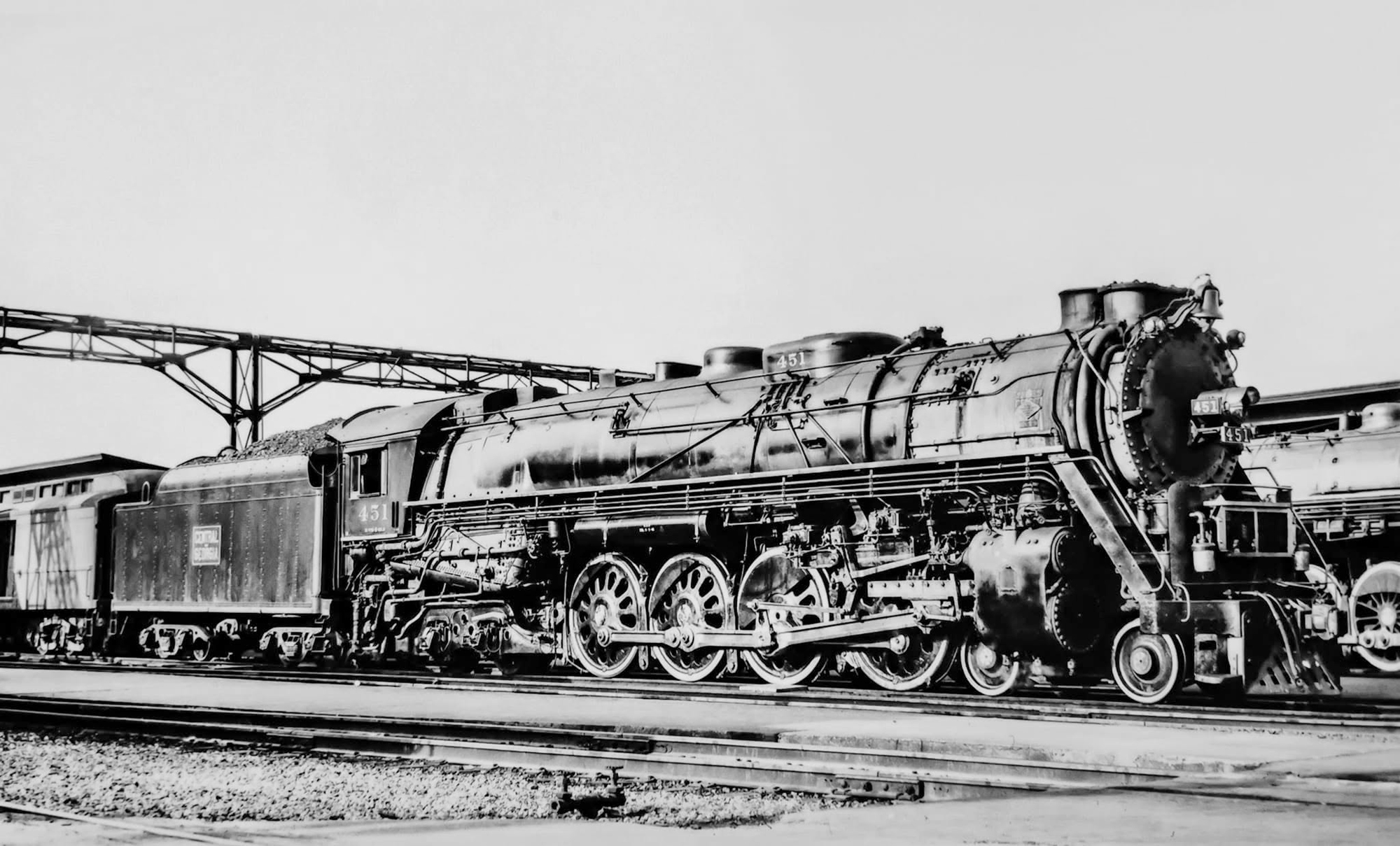
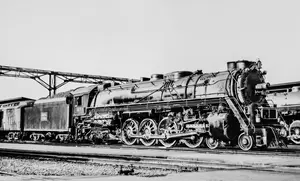
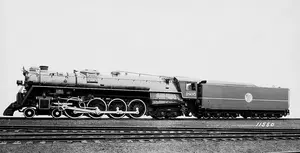
Central of Georgia "Big Apple" 4-8-4 #451 at Birmingham, Alabama in September, 1946. F. E. Ardrey photo.
The class grid below is the post-1900 roster in Drury’s Guide to North American Steam Locomotives, revised edition, pages 98 and 99. In 1925 the railroad renumbered the fleet. Both number columns are printed.
On this page: At a glance · Consolidations and Mikados · Santa Fes and the Mallets · Ten-Wheelers, Pacifics, Mountains · Eight 4-8-4s · Switchers · Roster built since 1900
At a glance
| Item | Detail |
|---|---|
| Railroad | Central of Georgia. Mark CG. Company page: Central of Georgia |
| This roster | Engines built since 1900, after Drury, pages 98–99. The 1925 renumbering has its own column |
| Consolidations | Cooke C-1s for the Birmingham line, then Baldwin C-2, C-3, and C-4. Ten ex-Illinois Central 2-8-0s, rebuilt as 2-8-2s |
| Mikados | Harriman design. Drury’s total is 67. First fifteen from Baldwin in 1912 |
| Santa Fe type | Ten USRA heavy copies, class J-1, Baldwin, 1926. Two ex-C&EI, class J-2. Seven ex-IC, class J-3 |
| Mallets | Ten Richmond 2-6-6-2s, class ML, 1919. Returned to the Illinois Central in 1926 |
| Passenger | Pacifics, then 32 Mountains, 1919–1926. Eight Lima 4-8-4s, class K, 451–458, in 1943 |
| Last steam | May 1953 |
Roster follows Drury, Guide to North American Steam Locomotives (revised edition), pages 98–99. Where a quantity cell and a number span disagree, both are printed and the difference is described in the text. Information compiled October 6, 2026.
Freight locomotives
Rogers built the Central’s last three freight Ten-Wheelers in 1904. On the grid they are 297–299, class T, with 61-inch drivers. They were lighter than the passenger 4-6-0s Rogers had just delivered, and the railroad turned to the Consolidation for freight.
The oldest Consolidations on the property were ten Baldwins built in 1887 for the Columbus & Western, a Central subsidiary between Columbus and Birmingham. They sit outside this grid. Larger 2-8-0s pushed them into switching, and all but one were gone by 1930. Cooke then built 22 Consolidations in 1901–1903, class C-1, later 111–132. Drury gives them 55-inch drivers and a weight of 193,400 pounds, for the Columbus–Birmingham route across the south end of the Appalachians.
The next group came from Baldwin in 1904 and 1905 for faster, lighter freight elsewhere on the railroad. Class C-2, later 150–187, thirty-eight engines, had 57-inch drivers and weighed 161,830 pounds. Two years later Baldwin delivered 25 more light 2-8-0s and 25 heavy ones. Both groups, later classed C-3 and C-4, had 57-inch drivers. The C-3s, 200–224, had 20-by-28-inch cylinders and weighed 163,390 pounds. The C-4s, 500–524, had 22-by-30-inch cylinders and weighed 203,100 pounds.
In 1912 the Central bought ten 2-8-0s from its parent, the Illinois Central. Brooks had built them in 1903. They are 1751–1760 on the pre-1925 list. They weighed about as much as a C-4 and had the same size cylinders, but 63-inch drivers made them faster and less powerful. The Central rebuilt one into a 2-8-2 in 1919 and another in 1921, then sent the remaining eight to Alco’s Richmond Works. Those rebuilds are the blank-class 2-8-2s numbered 571–580 after 1925, and 1771–1780 before it. Richmond’s dates on that row are 1919–1923.
The first Mikados were fifteen Harriman engines from Baldwin in 1912, virtual duplicates of Illinois Central Mikados of the year before. They were superheated, with piston valves, Walschaerts valve gear, 63-inch drivers, and outside-bearing trailing trucks. After 1925 they were 601–615. Lima built four more to the same design in 1915 and six in 1916, the six as part of an Illinois Central order. The grid carries that 1915–1916 group as 616–627, class MK, and prints a quantity of 10. The spans 616–627 and 1816–1827 each contain 12 numbers. A separate Lima row, 628–637, is ten engines of 1916. Ten Illinois Central Mikados of the same design arrived secondhand in 1921. Drury counts them in the total of 67 and leaves them out of the class grid.
The Lima 2-8-2s of 1923, twenty engines, 638–657, were built along with Mikados for the Illinois Central and the Georgia Railroad. Ten more, 658–667, came from Baldwin. The grid dates them 1925 and still prints their pre-1925 numbers, 1858–1867. The chapter text dates that Baldwin batch to 1926 and says it brought the Harriman Mikados to 67, all of one design. Adding the number spans on the Mikado rows, and counting 616–627 as twelve engines, is what produces 67. The quantity cell on 616–627 is left as Drury printed it.
Ten Mallets, then the Santa Fe type
In 1919 the road received ten compound 2-6-6-2s from Richmond, class ML, later 790–799 and originally 1901–1910. They were about 10,000 pounds lighter than the USRA 2-6-6-2 and had larger cylinders, which gave them about 8,000 pounds more tractive effort. They went to work as pushers on a grade out of Sylacauga, Alabama, and proved too slow. The 1925 numbers were brief. In 1926 the Central traded them back to the Illinois Central for seven 2-10-2s.
Those seven are class J-3, 771–777, built at Schenectady in 1916–1918 as Illinois Central 2601–2607. The retirement cell is printed as Drury printed it, 1947–1943. The same year as the trade, Baldwin delivered ten new 2-10-2s, class J-1, 701–710, copies of the USRA heavy Santa Fe. On the Central, as on the Illinois Central, the type was called the Central type and was first classed CT. They suited the Birmingham route better than the Mallets and could be used on other lines as well.
In 1945 the Central bought two USRA heavy 2-10-2s from the Chicago & Eastern Illinois for a surge of wartime traffic. They are class J-2, 711 and 712. The built cell is 1918, the year Baldwin built them for the C&EI, and the retirement cell is 1950.
Passenger locomotives
Not until after 1900 did the Central treat the Ten-Wheeler as a passenger engine. Rogers delivered six 4-6-0s with 69-inch drivers in 1902 and five more in 1904. That is the other class T row, 400–410, eleven engines, 1902–1904. Some were later rebuilt with piston valves and Walschaerts valve gear. The three freight Ten-Wheelers of 1904, described above, were the lighter 61-inch engines.
The first Pacifics came from Baldwin in 1905 and 1906. They are class P-1, 414–428, fifteen engines. Drury calls them typical early Pacifics: slide valves, inboard-bearing trailing trucks, 68-inch drivers, and a weight of about 192,000 pounds, with about a third more tractive effort than the Ten-Wheelers. Ten heavier Pacifics followed from Baldwin in 1912, class P-2, 431–440. The grid dates that row 1912–1913. They had 69-inch drivers, outside-journal trailing trucks, and superheaters, and weighed about 239,500 pounds. They were still classed as light Pacifics. Lima added four more P-2s in 1916, 441–444.
After the First World War the Central needed new passenger locomotives and chose the Mountain. Between 1919 and 1926 Richmond and Baldwin delivered 32 of them, class MT, all of the same dimensions, with only minor differences from one group to the next. The post-1925 numbers, in the order Drury gives the groups, are 481–490, then 491–497, 476–480, 471–475, and finally 466–470. Builder numbers and road numbers ascend inside each group. The grid folds the first four groups into one Richmond row, 471–497, twenty-seven engines, 1919–1925. The last five, 466–470, are Baldwin, 1926, and have no pre-1925 numbers.
Eight 4-8-4s
The Second World War first left the Central with extra locomotives. Traffic to the military posts, above all Fort Benning at Columbus, then put them to work. Florida trains outgrew the Mountains. Wartime limits on new designs sent the railroad to a locomotive that already existed. Lima delivered eight class K 4-8-4s in 1943, numbers 451–458, near-duplicates of Southern Pacific’s GS-6. The Central’s engines differed in the pilot and the smokebox front, carried Elesco coil feedwater heaters, and rode on short eight-wheel tenders set by the turntables. Southern Pacific’s GS-6s had skyline casings and Worthington SA heaters. Drury’s caption nicknames the Central’s 4-8-4s “Big Apples.” The class retired in 1953.
Those numbers sit inside the Mountain series. The 4-8-4s took the open 1925-series numbers 451–458.
Switchers, and May 1953
Few of the Central’s early 0-6-0s lasted until the 1925 renumbering. After that the only switchers were a dozen Baldwin 0-6-0s of 1904 and 1906, class S-1, later 50–61. Some were eventually superheated and given piston valves. In 1913 Rogers delivered two 0-4-0s, 1191 and 1192, for light duty. They were sold in 1918 to the United Verde Copper Company at Jerome, Arizona, before the 1925 renumbering.
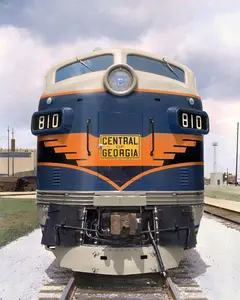
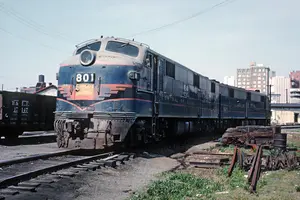
By the end of the Second World War the oldest 2-8-0s had given way to diesel switchers from Electro-Motive, Alco, and Baldwin. A dozen Electro-Motive E units took the mainline passenger trains between 1946 and 1950. Hood units finished the freight trains in the early 1950s. Steam was gone by May 1953. Those diesels are the diesel roster.
Central of Georgia steam locomotives built since 1900
| Type | Class | Numbers (1925) | Numbers (pre-1925) | Qty | Builder | Built | Retired | Notes |
|---|---|---|---|---|---|---|---|---|
| 0-4-0 | 1191, 1192 | 2 | Rogers | 1913 | Sold 1918 | United Verde Copper, Jerome, Arizona | ||
| 0-6-0 | S-1 | 50–61 | 1150–1161 | 12 | Baldwin | 1904–1906 | 1950–1953 | |
| 2-8-0 | C-1 | 111–132 | 1011–1032 | 22 | Cooke | 1901–1903 | 1935–1946 | |
| 2-8-0 | C-2 | 150–187 | 1050–1087 | 38 | Baldwin | 1904–1905 | 1934–1947 | |
| 2-8-0 | C-3 | 200–224 | 1200–1224 | 25 | Baldwin | 1906–1907 | 1935–1953 | |
| 2-8-0 | C-4 | 500–524 | 1700–1724 | 25 | Baldwin | 1906–1907 | 1950–1953 | |
| 2-8-0 | 1751–1760 | 10 | Brooks | 1903 | Ex-IC, bought 1912. Rebuilt to 2-8-2s 1771–1780 | |||
| 2-8-2 | 571–580 | 1771–1780 | 10 | Richmond | 1919–1923 | Rebuilds of the Brooks 2-8-0s | ||
| 2-8-2 | MK | 601–615 | 1801–1815 | 15 | Baldwin | 1912 | 1939–1952 | |
| 2-8-2 | MK | 616–627 | 1816–1827 | 10 | Lima | 1915–1916 | 1948–1952 | Quantity cell reads 10. Each number span contains 12 |
| 2-8-2 | MK | 628–637 | 1828–1837 | 10 | Lima | 1916 | 1948–1953 | |
| 2-8-2 | MK | 638–657 | 1838–1857 | 20 | Lima | 1923 | 1948–1953 | |
| 2-8-2 | MK | 658–667 | 1858–1867 | 10 | Baldwin | 1925 | 1952–1953 | Chapter text dates this batch 1926 |
| 2-10-2 | J-1 | 701–710 | 10 | Baldwin | 1926 | 1950–1953 | Copies of the USRA heavy Santa Fe. First classed CT | |
| 2-10-2 | J-2 | 711, 712 | 2 | Baldwin | 1918 | 1950 | Ex-C&EI. USRA heavy. Bought 1945 | |
| 2-10-2 | J-3 | 771–777 | 7 | Schenectady | 1916–1918 | 1947–1943 | Ex-IC 2601–2607. Retirement cell printed as in Drury | |
| 2-6-6-2 | ML | 790–799 | 1901–1910 | 10 | Richmond | 1919 | To IC in 1926 | |
| 4-6-0 | T | 400–410 | 1600–1610 | 11 | Rogers | 1902–1904 | 1935–1944 | |
| 4-6-0 | T | 297–299 | 1397–1399 | 3 | Rogers | 1904 | 1934 | |
| 4-6-2 | P-1 | 414–428 | 1614–1628 | 15 | Baldwin | 1905–1906 | 1939–1952 | |
| 4-6-2 | P-2 | 431–440 | 1651–1660 | 10 | Baldwin | 1912–1913 | 1935–1952 | |
| 4-6-2 | P-2 | 441–444 | 1661–1664 | 4 | Lima | 1916 | 1950–1952 | |
| 4-8-2 | MT | 471–497 | 1671–1697 | 27 | Richmond | 1919–1925 | 1948–1953 | |
| 4-8-2 | MT | 466–470 | 5 | Baldwin | 1926 | 1951–1953 | ||
| 4-8-4 | K | 451–458 | 8 | Lima | 1943 | 1953 |
C&EI is the Chicago & Eastern Illinois. IC is the Illinois Central. The ten Baldwin Consolidations of 1887 for the Columbus & Western are older than this grid.
Related reading
- Central of Georgia
- Central of Georgia diesel roster
- Illinois Central
- Consolidation type · Mikado type · Santa Fe type · Pacific type · Mountain type · 4-8-4 type
Sources
- George H. Drury, Guide to North American Steam Locomotives, revised edition, Central of Georgia chapter, pages 98–99. The class grid is the table “Central of Georgia steam locomotives built since 1900.”
- Richard E. Prince, Central of Georgia Railway and Connecting Lines (1976).
- W. Forrest Beckum Jr. and Albert M. Langley Jr., Central of Georgia Railway Album (Union Station Publishing, 1986, ISBN 0-9615257-1-1).
- Published rosters cited by Drury: Railroad magazine, December 1932, page 135, and June 1948, page 116.
- Central of Georgia Railway Historical Society, cofga.org.
Recent Articles


-
Central of Georgia Steam Roster (Post 1900)
Oct 06, 26 04:00 PM
 Central of Georgia steam since 1900. Cooke Consolidations, Harriman Mikados, 32 Mountains, and eight Lima 4-8-4s. Class grid after Drury. Last steam May 1953.
 -
Central of Georgia Diesel Roster (All-Time)
Oct 06, 26 03:44 PM
 Central of Georgia diesel roster. SW1 No. 1 in 1939, E7s and E8s, nine F3As, 39 RS3s, GP7s through SD35s. Serials and order numbers.
 -
Central of Georgia Railway: Map, Logo, History, Rosters
Oct 06, 26 03:42 PM
 Central of Georgia Railway, from the 1833 Savannah charter to Southern control on June 17, 1963. Map, logos, Nancy Hanks II, and links to the steam and diesel rosters.
 -
Georgia Railroad Museums (2026): A Complete Guide
Oct 06, 26 03:33 PM
 Georgia railroad museums—Savannah’s Central shops, Duluth, the General at Kennesaw, the Texas in Atlanta, Tifton, Waycross, and Albany. Confirm hours on each site.
 -
Florida Railroad Museums (2026): A Complete Guide
Oct 06, 26 03:18 PM
 Florida railroad museums—Boca Raton, Winter Garden, Whitehall, the Gold Coast, Parrish, Fort Myers, Milton, and Plant City. Confirm hours on each site.
 -
Connecticut Railroad Museums (2026): A Complete Guide
Oct 06, 26 01:05 PM
 Connecticut railroad museums—the Shore Line Trolley, East Windsor, the Naugatuck Railroad, Danbury Union Station, Willimantic, and the SoNo tower. Confirm hours on each site.
 -
Colorado Railroad Museums (2026): A Complete Guide
Oct 06, 26 12:47 PM
 Colorado railroad museums—Golden, the Forney’s Big Boy 4005, Pueblo’s Santa Fe 2912, and the depots at Castle Rock, Limon, and Ridgway. Confirm hours on each site.
 -
Atlantic Coast Line Steam Roster (Post 1900)
Oct 06, 26 12:44 PM
 Atlantic Coast Line steam since 1900. Copper Head Ten-Wheelers, 235 P-5 Pacifics, Q-1 Santa Fes, twelve R-1 4-8-4s. Class grid after Drury. Last steam June 30, 1955.
 -
Atlantic Coast Line Diesel Roster (All-Time)
Oct 06, 26 11:57 AM
 Atlantic Coast Line diesel roster. HH660 1900 in 1939, E3s for the Champion, FTs and F2s, GP7s 100–279, GP30s, U25Cs, and the 1967 SCL numbers. Serials and orders.
 -
Atlantic Coast Line Railroad: "Standard Railroad of the South"
Oct 06, 26 11:53 AM
 Atlantic Coast Line, the Standard Railroad of the South. April 21, 1900 to July 1, 1967. Plant System, L&N, Clinchfield, the Champion, and the Seaboard Coast Line merger.
 -
California Railroad Museums (2026): A Complete Guide
Oct 06, 26 09:50 AM
 California railroad museums—the California State Railroad Museum, Perris, Portola, Railtown 1897, and the depots that still stand. Confirm hours on each site.
 -
Arizona Railroad Museums (2026): A Complete Guide
Oct 06, 26 09:46 AM
Arizona railroad museums—the Arizona Railway Museum in Chandler, Southern Pacific 1673 at Tucson, and the McCormick-Stillman park in Scottsdale. -
Arkansas Railroad Museums (2026): A Complete Guide
Oct 06, 26 09:07 AM
 Arkansas railroad museums—Cotton Belt 819 at Pine Bluff, the Fort Smith trolley, the Mammoth Spring depot, and the Eureka Springs railway.
 -
Alabama Railroad Museums (2026): A Complete Guide
Oct 06, 26 09:03 AM
Alabama railroad museums—Heart of Dixie at Calera, the North Alabama museum at Chase, Huntsville’s 1860 depot, and Fort Payne. Confirm hours on each site. -
Pennsylvania Railroad Museums (2026): A Complete Guide
Oct 06, 26 12:09 AM
 Pennsylvania railroad museums—Strasburg, Steamtown, the Horseshoe Curve, the East Broad Top, and the depots and towers in between. Confirm hours on each site.
 -
Maryland Railroad Museums (2026): A Complete Guide
Oct 05, 26 11:53 PM
 Maryland railroad museums—the Baltimore roundhouse, Ellicott City station, Bowie, Gaithersburg’s Buffalo Creek & Gauley 14, and the Western Maryland collections.
 -
Ohio Railroad Museums (2026): A Complete Guide
Oct 05, 26 05:51 PM
 Ohio railroad museums—the Age of Steam Roundhouse, Bellevue, Worthington, Conneaut’s Nickel Plate 755, and the Dennison depot. Confirm hours on each site.
 -
Delaware Railroad Museums (2026): A Complete Guide
Oct 05, 26 02:43 PM
 Delaware railroad museums—Wilmington & Western at Greenbank, the Harrington tower and N5 caboose, Felton's 1868 depot, and the Selbyville station museum.
 -
C&O's M-1 Steam Turbine Locomotives: Specs, Roster, History
Oct 05, 26 12:13 PM
 Chesapeake & Ohio Class M-1 steam-turbine-electrics. Three Baldwin-Westinghouse locomotives, 500–502, built 1947–48 for The Chessie. Specs, the 2-C1+2-C1-B arrangement, and a roster. All scrapped…
 -
N&W 2-6-6-2 Locomotives (Class Z): Specs, Roster, History
Oct 05, 26 11:44 AM
 Norfolk & Western Class Z 2-6-6-2s. One hundred ninety compound Mallets, 1300–1489, from Richmond, Baldwin, and Schenectady, 1912–1918. Diagram specs, the Z-1b rebuilds, Z-2 1399, and a roster. No…
 -
Scenic Train Rides (USA 2026): State Guide to Tourist Railroads
Oct 04, 26 12:17 AM
 Scenic and tourist train rides in all 50 states for 2026. Colorado narrow gauge, Pennsylvania steam, Alaska’s White Pass, and the states with no full-size ride this month. Confirm on the railroad.
 -
Wyoming Scenic Train Rides (2026): A Complete Guide
Oct 03, 26 12:07 AM
 Wyoming has no full-size tourist railroad on the calendar in October 2026. Cheyenne Depot Museum and Douglas Railroad Museum are static. Union Pacific 4014’s posted public trip is a November run to De…
 -
Washington Scenic Train Rides (2026): A Complete Guide
Oct 02, 26 11:53 PM
 Washington tourist trains in 2026—Mount Rainier Scenic at Elbe, the Northwest Railway Museum, and Chehalis-Centralia. Lake Whatcom has no 2026 date on its ticket page.
 -
Wisconsin Scenic Train Rides (2026): A Complete Guide
Oct 02, 26 11:48 PM
 Wisconsin tourist trains in 2026—Wisconsin Great Northern, Osceola & St. Croix Valley, Mid-Continent, East Troy, and the National Railroad Museum.
 -
Pennsylvania Railroad Class Q2 4-4-6-4: Specs, Roster, History
Oct 02, 26 11:28 PM
 Pennsylvania Railroad Class Q2 4-4-6-4 duplexes. Twenty-six engines, 6131 and 6175–6199, Altoona 1944–45. Form 109-J specs, the 7,987 hp test of 6175, and a roster. All scrapped.
 -
Utah Scenic Train Rides (2026): A Complete Guide
Oct 02, 26 11:18 PM
 Utah tourist trains in 2026—Heber Valley Railroad from Heber City. Golden Spike at Promontory is a locomotive demonstration, not a line-haul ride.
 -
South Dakota Scenic Train Rides (2026): A Complete Guide
Oct 02, 26 11:06 PM
 South Dakota’s 2026 scenic train is the Black Hills Central 1880 Train, Hill City to Keystone. Steam is the summer assignment. Confirm the engine.
 -
Oregon Scenic Train Rides (2026): A Complete Guide
Oct 02, 26 11:04 PM
 Oregon tourist trains in 2026—Oregon Coast Scenic from Rockaway Beach, Mount Hood at Hood River, Eagle Cap from Elgin, and the Oregon Rail Heritage Center in Portland.
 -
Oklahoma Scenic Train Rides (2026): A Complete Guide
Oct 02, 26 10:36 PM
Oklahoma has no full-size scenic railroad on an October 2026 calendar. Oklahoma Railway Museum Halloween and Polar trains, the El Reno trolley, and the Heartland Flyer. -
North Dakota Scenic Train Rides (2026): A Complete Guide
Oct 02, 26 01:14 PM
North Dakota has no tourist railroad on a 2026 calendar. Ride Amtrak’s daily Empire Builder. The Fort Lincoln Trolley in Mandan is not a current ticket. -
Nebraska Scenic Train Rides (2026): A Complete Guide
Oct 02, 26 10:11 AM
 Nebraska has no full-size scenic railroad in 2026. The Omaha Zoo Railroad runs weekends through October 4. Ride Amtrak’s California Zephyr across the state.
 -
Missouri Scenic Train Rides (2026): A Complete Guide
Oct 02, 26 09:56 AM
 Missouri tourist trains in 2026—Branson Scenic Railway and the St. Louis, Iron Mountain & Southern at Jackson. Belton has no 2026 schedule posted.
 -
Minnesota Scenic Train Rides (2026): A Complete Guide
Oct 02, 26 09:52 AM
 Minnesota tourist trains in 2026—North Shore Scenic Railroad in Duluth, the Duluth River Train, and the Como-Harriet streetcar.
 -
Kansas Scenic Train Rides (2026): A Complete Guide
Oct 02, 26 09:32 AM
 Kansas tourist trains in 2026—the Abilene & Smoky Valley Railroad. Santa Fe 3415 is in overhaul. Midland Railway at Baldwin City is closed.
 -
Iowa Scenic Train Rides (2026): A Complete Guide
Oct 02, 26 08:41 AM
 Iowa tourist trains in 2026—Boone & Scenic Valley across the Bass Point Creek High Bridge, and Midwest Central’s December North Pole trains
 -
Indiana Scenic Train Rides (2026): A Complete Guide
Oct 02, 26 08:35 AM
 Indiana tourist trains in 2026—French Lick Scenic Railway, Nickel Plate Express, Hoosier Valley, and Hesston. Whitewater Valley is suspended.
 -
Illinois Scenic Train Rides (2026): A Complete Guide
Oct 02, 26 12:28 AM
 Illinois tourist trains in 2026—Illinois Railway Museum, Monticello Railway Museum, Fox River Trolley, and Silver Creek & Stephenson.
 -
Texas Scenic Train Rides (2026): A Complete Guide
Oct 02, 26 12:14 AM
 Texas tourist trains in 2026—Texas State Railroad, Grapevine Vintage Railroad, Austin Steam Train's Hill Country Flyer, and the Galveston Railroad Museum.
 -
Tennessee Scenic Train Rides (2026): A Complete Guide
Oct 02, 26 12:03 AM
Tennessee tourist trains in 2026—Tennessee Valley Railroad Museum, Dollywood Express, Three Rivers Rambler Christmas trains, and the Tennessee Central Railway Museum. -
South Carolina Scenic Train Rides (2026): A Complete Guide
Oct 01, 26 11:52 PM
 South Carolina's tourist train is the South Carolina Railroad Museum in Winnsboro—Blue Granite Express, pumpkin trains, and Santa trains on the old Rockton & Rion.
 -
Mississippi Scenic Train Rides (2026): A Complete Guide
Oct 01, 26 11:38 PM
 Mississippi has no regular tourist railroad in 2026. Ride Amtrak through the state, or book the excursion lines in Alabama, Tennessee, Louisiana, or Arkansas.
 -
Louisiana Scenic Train Rides (2026): A Complete Guide
Oct 01, 26 02:52 PM
 Louisiana has no regular full-size tourist railroad in 2026. New Orleans Polar Express returns December 11–31. Museums at Long Leaf, DeQuincy, and Jackson.
 -
Kentucky Scenic Train Rides (2026): A Complete Guide
Oct 01, 26 02:45 PM
Kentucky tourist trains in 2026—Big South Fork Scenic Railway, Bluegrass Scenic Railroad, Kentucky Railway Museum, and My Old Kentucky Dinner Train. -
Georgia Scenic Train Rides (2026): A Complete Guide
Oct 01, 26 02:27 PM
Georgia tourist trains in 2026—Blue Ridge Scenic Railway, SAM Shortline, Azalea Sprinter, Savannah shop rides, and what to confirm at Stone Mountain. -
Arkansas Scenic Train Rides (2026): A Complete Guide
Oct 01, 26 01:02 PM
 Arkansas tourist trains in 2026—Arkansas & Missouri through the Boston Mountains, and the Eureka Springs & North Arkansas dinner and excursion trains.
 -
Alabama Scenic Train Rides (2026): A Complete Guide
Oct 01, 26 12:59 PM
Alabama tourist trains in 2026—Heart of Dixie Railroad Museum at Calera, North Alabama Railroad Museum at Chase, and the Wales West Light Railway at Silverhill. -
The Circus Train: How Such Attractions Reached Distant Cities
Oct 01, 26 12:22 PM
 How circuses moved by rail: Coup's 1872 flats, the Ringling train's sections and car counts, the 1918 Hammond wreck, and the last show on May 21, 2017.
 -
West Virginia Halloween Train Rides (2026)
Oct 01, 26 12:19 PM
 2026 West Virginia Halloween train. Cass Scenic Halloween Train, October 30 and 31, steam, 5:00 p.m. from Cass Depot. Adult $75. About two hours to Whittaker. Family ride.
 -
Wisconsin Halloween Train Rides (2026)
Oct 01, 26 12:11 PM
2026 Wisconsin Halloween trains. Mid-Continent Pumpkin Special October 24–25, adult $24, pumpkins extra. Halloween Flyer October 24 at 4:30 p.m., adult $30. Osceola Pumpkin Express boards in Osceola… -
Utah Halloween Train Rides (2026)
Oct 01, 26 12:00 PM
 2026 Utah Halloween trains at Heber Valley Railroad. Pumpkin Train, about 40 minutes, with a cookie and a pumpkin. Halloween Express, about 90 minutes to Grim Hollow, Monday, Thursday, and Friday even…