Clinchfield Steam Roster (Post 1900)
Published: October 7, 2026
By: Adam Burns
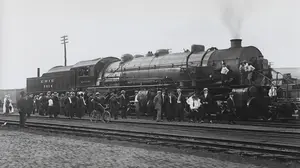
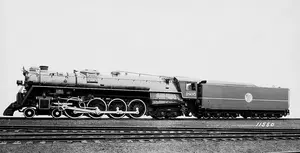
The Clinchfield bought steam for a low-grade coal railroad that still had to cross the Blue Ridge. Of the 114 locomotives built after 1900, seventy-six were articulateds. The first of them, Mallet No. 500, arrived from Baldwin in 1909, the year the line reached Spartanburg. The last of them, eighteen 4-6-6-4s, finished the steam era. On April 16, 1954, Challenger No. 653 made a round trip from Erwin to Kingsport and came in for the last time.
The class grid below is the post-1900 roster in George H. Drury's Guide to North American Steam Locomotives, revised edition, pages 145–147. The company history is the Clinchfield Railroad. Diesels are the diesel roster. The 4-6-6-4s also have their own page, the Clinchfield Challengers.
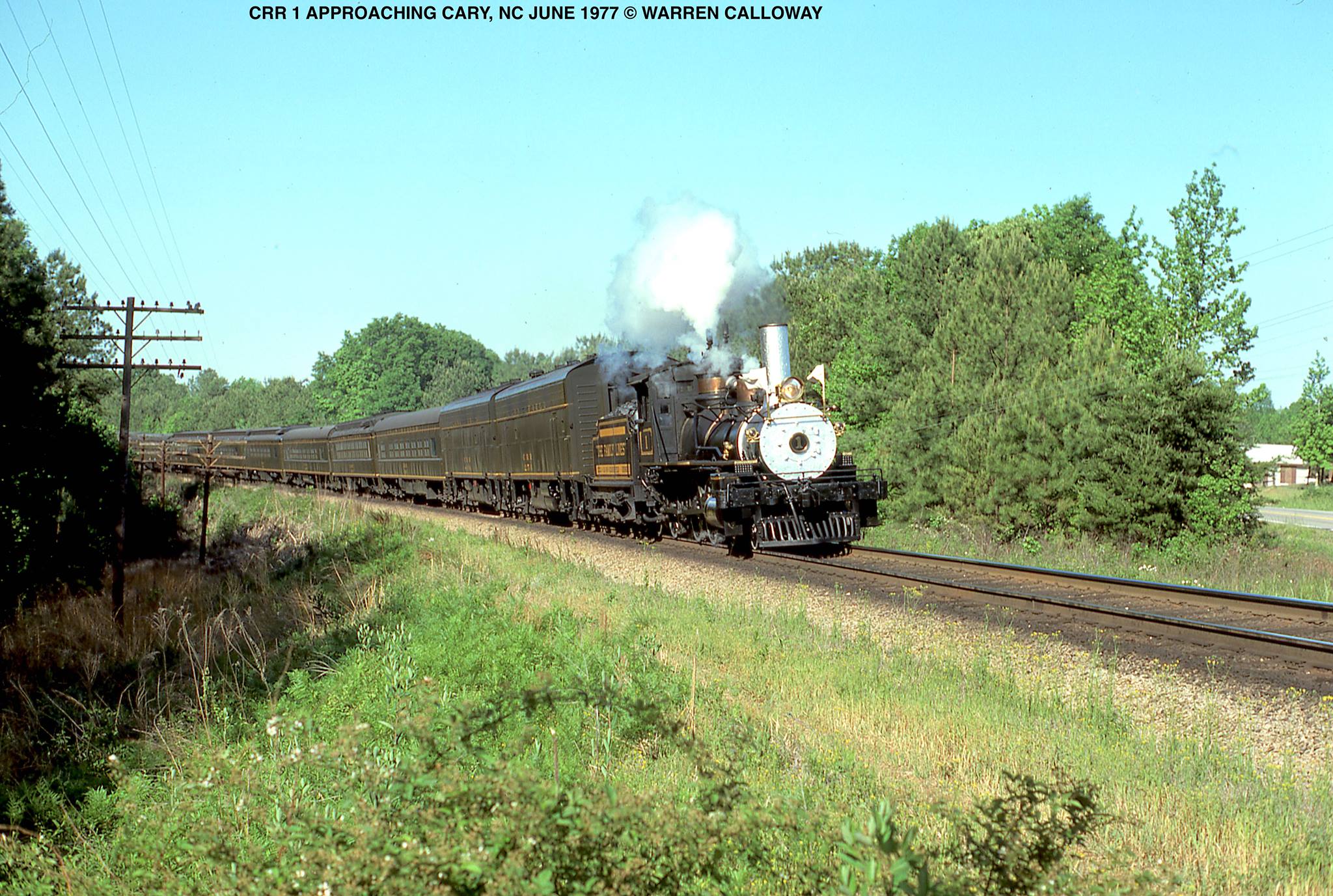
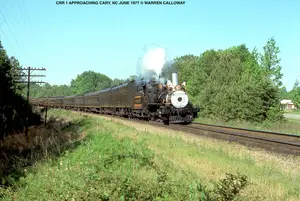
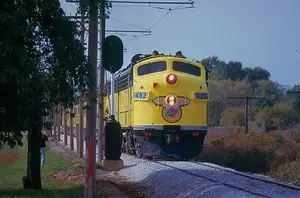
Clinchfield 4-6-0 No. 1, the One Spot, with two F7B boosters on a Seaboard Coast Line excursion approaching Cary, North Carolina, in June 1977. The engine was built in 1882 and is older than every locomotive in the table below. Warren Calloway photo.
On this page: At a glance · Consolidations and Mikados · 2-6-6-2s · 2-8-8-2s · Challengers · Ten-Wheelers and Pacifics · The One Spot · Roster built since 1900
At a glance
| Item | Detail |
|---|---|
| Railroad | Carolina, Clinchfield & Ohio, operated after 1924 by the Clinchfield Railroad. Mark CRR. Company page: Clinchfield |
| This roster | Engines built since 1900, after Drury, pages 145–147. 114 locomotives. The printed quantity column lists class M-2 under both of its number series |
| Articulateds | 76 of the 114. One M-1, ten M-2s, ten M-3s, twenty-seven 2-8-8-2s, eighteen 4-6-6-4s |
| Switchers | Two. H-3 Nos. 51 and 52, Baldwin 1905, rebuilt to 0-8-0 in 1917 |
| Passenger | Ten-Wheelers 99 and 100–103. Pacifics 150–154 |
| Last steam | April 16, 1954. E-1 No. 653, Erwin to Kingsport and return |
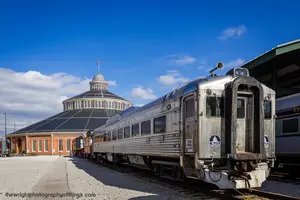
| Preserved | The 1882 Ten-Wheeler, Clinchfield No. 1, at the B&O Railroad Museum since 1979. It is outside this grid |
Roster follows Drury, Guide to North American Steam Locomotives (revised edition), pages 145–147. Information compiled October 7, 2026.
Consolidations, then Mikados
The largest single order of one wheel arrangement was fifteen Baldwin Consolidations in 1909, class H-4, numbers 300–314. They had 57-inch drivers and weighed about 200,000 pounds. They were the freight engine of the new railroad until the Mikados arrived, and the last of them stayed into the early 1950s. Drury's retirement span for the class is 1950–1953.
Two groups of Mikados followed. Nine class K-1 engines, 400–408, came from Baldwin in 1919, with 63-inch drivers, 27-by-30-inch cylinders, a tractive effort of about 56,000 pounds, and a weight of about 307,000 pounds, between the light and heavy United States Railroad Administration 2-8-2. The whole class was sold in 1943. Five went to the Charleston & Western Carolina, Nos. 400, 401, 404, 405, and 408. Four went to the Georgia Railroad, Nos. 402, 403, 406, and 407.
Ten more, class K-4, Nos. 410–419, came from Alco's Brooks works in 1923 and lasted until 1952–1955. R. P. Morris photographed No. 411 at Erwin, air pumps on the smokebox front and the headlight tucked under it, the portrait Drury uses for the class. Two light Mikados filled the numbers in between. No. 499, class K-2, was built by Baldwin in 1911 for the Cambria & Indiana and came to the Clinchfield in 1917. No. 498, class K-3, was built in 1917 for the Spanish-American Iron Company as their No. 70, with 51-inch drivers, and the Clinchfield bought it the same year. Drury leaves the K-3 retirement cell blank. The compiled disposition is 1952, the same year as No. 499.
The only switchers were a pair of 2-8-0s built for the South & Western in 1905, Nos. 51 and 52, class H-3. In 1917 they were rebuilt as 0-8-0s. Drury retires them in 1938. A few still earlier road engines sit outside this grid: Consolidation 34 of 1903, Consolidations 35–37, Mogul 20, and Ten-Wheelers 6 and 7.
Three classes of 2-6-6-2
Baldwin delivered the railroad's first articulated in 1909, class M-1, No. 500, a 2-6-6-2 with 57-inch drivers, the firebox over the rear drivers, and a weight of about 343,000 pounds. It was off the roster in 1938.
A year later Baldwin delivered ten larger engines, class M-2, numbered 550–559. They had piston valves, weighed about 378,000 pounds, and were good for roughly 7,000 pounds more tractive effort than No. 500. Baldwin rebuilt engines of the class in 1923, and the later number series was 510–519. Drury's grid prints both series, with 1923 in the built column of the 510–519 row and "Rebuilt from 550–559" in the notes. They are one class of ten. The 550–559 row carries the 1910 construction date. The 510–519 row carries the 1951–1952 retirement.
In 1916 the Clinchfield bought ten six-year-old 2-6-6-2s from the Chicago Great Western, classed them M-3, and kept the Great Western numbers, 600–609. They were close to No. 500 in several dimensions. Drury retires them in 1925.
Home-designed 2-8-8-2s, then the USRA engine
The big freight engine of 1919 was a 2-8-8-2 the railroad designed for itself. Seven class L-1 engines, 700–706, came from Baldwin that year. Drury gives them a weight of 524,000 pounds, cylinders of 28 and 42 by 32 inches, and 200 pounds of boiler pressure. The same builder then delivered ten United States Railroad Administration copies, class L-2, 725–734, in October and November. Those weighed 541,000 pounds, with 25-and-39-by-32-inch cylinders and 240 pounds of pressure. The difference in tractive force was about 2,000 pounds, in favor of the home-designed L-1.
When ten more were ordered in 1923, the railroad asked for copies of the USRA engine. Brooks built them as class L-3, 735–744. C. W. Witbeck's photograph of No. 740 is the one Drury prints. The L-1s were gone by 1948–1950. The L-2s and L-3s lasted until 1950–1952.
Eighteen Challengers
At the start of the Second World War the Clinchfield needed a locomotive that could pull like a 2-8-8-2 and run like a Mikado. It bought eight single-expansion 4-6-6-4s from Alco in 1942 and 1943, class E-1, Nos. 650–657, based on the Delaware & Hudson's J class of 1940. Four more of the same design, class E-2, Nos. 660–663, followed in 1947 and were the last new steam on the railroad. The E-1s and E-2s had 69-inch drivers, four 22-by-32-inch cylinders, 265 pounds of pressure, a weight of about 607,000 pounds, and about 101,000 pounds of tractive effort. The sheet is on the Clinchfield 4-6-6-4 page.
The third class was inherited from a Union Pacific order. In 1943 Alco built six more 4-6-6-4s to move wartime traffic. The War Production Board diverted them from the Union Pacific and the Defense Plant Corporation leased them to the Denver & Rio Grande Western, which classed them L-97 and numbered them 3800–3805. The Rio Grande preferred the Baldwins it was buying for itself. After the war the six were for sale, and the Clinchfield bought them in 1947 as class E-3, Nos. 670–675. Drury's built column is 1943, the year Alco finished them, and the retirement column is 1953.
The last steam operation was April 16, 1954. E-1 No. 653, one of the 1942–1943 engines, made a round trip from Erwin to Kingsport. The eighteen Challengers were scrapped. The only Clinchfield steam locomotive set aside is the Ten-Wheeler in the next section.
Ten-Wheelers and five Pacifics
Passenger power was a short list. Predecessor South & Western bought three locomotives from Baldwin in 1905: 4-6-0 No. 1, which became Clinchfield 99, and the two Consolidations that later became the 0-8-0s. No. 99 is class G-1 on the grid, retired in 1938. It is a 1905 engine. The preserved One Spot is older, and it is a different locomotive.
Four class G-2 Ten-Wheelers, 100–103, came from Baldwin in 1908 for the passenger trains, with 63-inch drivers and a weight of about 82 tons. They were retired in 1938. Baldwin then delivered three Pacifics in 1910, class P-1, Nos. 150–152, about 235,000 pounds, 69-inch drivers, inside piston valves, and Walschaerts valve gear. R. P. Morris photographed No. 150 in October 1937. Two more Pacifics followed in 1914, class P-2, Nos. 153 and 154, about 281,000 pounds, the same 69-inch drivers, 25-by-30-inch cylinders, and 46,200 pounds of tractive effort. They were first assigned to fast freight. Drury retires the P-1s in 1951 and the P-2s in 1953.
The One Spot
A predecessor, the Ohio River & Charleston, had a 4-6-0 built in 1882 and numbered 5. In 1913 the Clinchfield sold it to the Black Mountain Railway, a subsidiary. In 1955 the Clinchfield bought it back, restored it, and put it on excursion trains as No. 1. It was too light to haul more than two steel passenger cars, so the excursions ran with diesel helpers and the Ten-Wheeler was fitted with the controls to use them. In 1968 the railroad sold it to the city of Erwin for display. In 1979 it went on display at the B&O Railroad Museum in Baltimore, which is where it remains. The June 1977 photograph at the top of this page shows it on a Seaboard Coast Line excursion at Cary, North Carolina, with two F7B boosters coupled behind the tank.
Clinchfield steam locomotives built since 1900
| Type | Class | Numbers | Qty | Builder | Built | Retired | Notes |
|---|---|---|---|---|---|---|---|
| 2-8-0 | H-3 | 51, 52 | 2 | Baldwin | 1905 | 1938 | Rebuilt to 0-8-0, 1917 |
| 2-8-0 | H-4 | 300–314 | 15 | Baldwin | 1909 | 1950–1953 | |
| 2-8-2 | K-1 | 400–408 | 9 | Baldwin | 1919 | Sold 1943 | Five to the C&WC, four to the Georgia Railroad |
| 2-8-2 | K-2 | 499 | 1 | Baldwin | 1911 | 1952 | Ex-Cambria & Indiana. Acquired 1917 |
| 2-8-2 | K-3 | 498 | 1 | Baldwin | 1917 | Ex-Spanish-American Iron 70. See the note on 1952 | |
| 2-8-2 | K-4 | 410–419 | 10 | Brooks | 1923 | 1952–1955 | |
| 2-6-6-2 | M-1 | 500 | 1 | Baldwin | 1909 | 1938 | |
| 2-6-6-2 | M-2 | 510–519 | 10 | Baldwin | 1923 | 1951–1952 | Rebuilt from 550–559. Same engines as the next row |
| 2-6-6-2 | M-2 | 550–559 | 10 | Baldwin | 1910 | Rebuilt 1923. Count these ten once | |
| 2-6-6-2 | M-3 | 600–609 | 10 | Baldwin | 1910 | 1925 | Ex-Chicago Great Western. CGW numbers retained |
| 2-8-8-2 | L-1 | 700–706 | 7 | Baldwin | 1919 | 1948–1950 | Home design. 28 and 42 by 32 inches. 200 psi |
| 2-8-8-2 | L-2 | 725–734 | 10 | Baldwin | 1919 | 1950–1952 | USRA design. 25 and 39 by 32 inches. 240 psi |
| 2-8-8-2 | L-3 | 735–744 | 10 | Brooks | 1923 | 1951–1952 | Copies of the USRA engine |
| 4-6-6-4 | E-1 | 650–657 | 8 | Alco | 1942–1943 | 1954 | Based on the Delaware & Hudson J of 1940. 653 was the last steam |
| 4-6-6-4 | E-2 | 660–663 | 4 | Alco | 1947 | 1954 | Same design as E-1. Last new steam |
| 4-6-6-4 | E-3 | 670–675 | 6 | Alco | 1943 | 1953 | Built for a Union Pacific order. Ex-D&RGW 3800–3805. To CRR in 1947 |
| 4-6-0 | G-1 | 99 | 1 | Baldwin | 1905 | 1938 | South & Western No. 1, later 99. Different engine from the One Spot |
| 4-6-0 | G-2 | 100–103 | 4 | Baldwin | 1908 | 1938 | |
| 4-6-2 | P-1 | 150–152 | 3 | Baldwin | 1910 | 1951 | |
| 4-6-2 | P-2 | 153, 154 | 2 | Baldwin | 1914 | 1953 | First assigned to fast freight |
Adding the quantity column as printed gives 124, because class M-2 appears under both number series. It was ten locomotives. The roster totals 114, and 76 of them were articulateds. Drury's K-3 retirement cell is blank; the compiled scrap year for No. 498 is 1952. The 1923 date on M-2 Nos. 510–519 is the rebuild Drury prints in the built column. The engines were built in 1910 as 550–559. C&WC Charleston & Western Carolina. CGW Chicago Great Western. D&RGW Denver & Rio Grande Western.
Related reading on American-Rails.com
- Clinchfield Railroad · Diesel roster · Clinchfield 4-6-6-4s
- Mikado · 2-6-6-2 · 2-8-8-2 · 4-6-6-4 · Pacific
- Charleston & Western Carolina · B&O Railroad Museum · Clinchfield Loops
Sources
- George H. Drury, Guide to North American Steam Locomotives, revised edition, Clinchfield, pp. 145–147. User photographs in
Downloads\Clinchfield_Steam, October 2026. Class grid, the 114 locomotives, the H-4 and K-1 dimensions, the M-2 and M-3 purchases, the L-1 and L-2 weights and cylinders, the Challenger orders, the passenger engines, the One Spot, and April 16, 1954 - Steve Llanso, steamlocomotive.com Locobase, Clinchfield M-1, M-2, H-4, and Mikado classes. M-2 road numbers 550–559 and later 510–519. M-1 works number 33551, July 1909, scrapped September 1938. K-1 sale of 1943, five to the Charleston & Western Carolina and four to the Georgia Railroad. K-2 ex-Cambria & Indiana 4, acquired 1917, scrapped 1952. K-3 ex-Spanish-American Iron 70, bought 1917, scrapped 1952
- Clinchfield.org steam compilation, for M-3 numbers 600–609 and for the early engines outside Drury's grid. Where it dates the G-2s to 1909, the table keeps Drury's 1908
- James A. Goforth, When Steam Ran the Clinchfield (Gem Publishers, 2001). Drury also points to Railroad Magazine, January 1934, p. 136, and January 1951, p. 110
Recent Articles


-
Clinchfield Steam Roster (Post 1900)
Oct 07, 26 12:09 PM
 Clinchfield steam since 1900. Fifteen H-4 Consolidations, K-1 Mikados, M-2 and M-3 Mallets, L-class 2-8-8-2s, eighteen Challengers. Class grid after Drury. Last steam April 16, 1954.
 -
Clinchfield Diesel Roster (All-Time)
Oct 07, 26 12:05 PM
 Clinchfield diesel roster, all-time. F3A 800, FP7 200, the F7s, GP7s, 25 SD40s, 18 SD45-2s, seven U36Cs, and the Family Lines hoods. Serials and EMD order numbers.
 -
Clinchfield Railroad: Map, Steam Locomotives, Roster, Logo
Oct 07, 26 12:02 PM
 Clinchfield Railroad, Elkhorn City to Spartanburg. George L. Carter, the Carolina, Clinchfield & Ohio, the 1924 lease, coal, the loops, and CSX. Steam and diesel rosters are companion pages.
 -
Kentucky Railroad Museums (2026): A Complete Guide
Oct 07, 26 11:39 AM
 Kentucky railroad museums—the Kentucky Railway Museum, Bowling Green’s L&N depot, Paducah, Versailles, and Covington. Confirm hours on each site.
 -
Kansas Railroad Museums (2026): A Complete Guide
Oct 07, 26 11:26 AM
 Kansas railroad museums—Santa Fe 3768 at Wichita, Santa Fe 132 in Topeka, the Great Overland Station, and Abilene. Confirm hours on each site.
 -
Cincinnati, New Orleans and Texas Pacific Diesel Roster (All-Time)
Oct 07, 26 10:38 AM
 All-time diesel roster of Southern locomotives lettered for the Cincinnati, New Orleans and Texas Pacific. Serials, order numbers, and builder dates.
 -
Cincinnati, New Orleans and Texas Pacific Railway
Oct 07, 26 10:31 AM
 Cincinnati, New Orleans and Texas Pacific Railway, incorporated September 8, 1881, to lease Cincinnati’s railroad to Chattanooga. Queen and Crescent route, Rathole, and the 2024 sale to Norfolk Southe…
 -
Indiana Railroad Museums (2026): A Complete Guide
Oct 07, 26 12:26 AM
 Indiana railroad museums—Nickel Plate 765, Elkhart’s New York Central collection, French Lick, Linden’s junction depot, and Haley Tower. Confirm hours on each site.
 -
"Triplex" Steam Locomotive: Specs, History, Photos
Oct 06, 26 11:52 PM
 Erie class P-1 Triplex 2-8-8-8-2s. Three Baldwin compounds, 2603–2605, later 5014–5016, built 1914 and 1916. Matt H. Shay, the 1930 class card, and Virginian XA 700.
 -
Illinois Railroad Museums (2026): A Complete Guide
Oct 06, 26 11:47 PM
 Illinois railroad museums—the Illinois Railway Museum, Monticello, the Pioneer Zephyr, Galesburg’s Burlington 3006, and the depots. Confirm hours on each site.
 -
Iowa Railroad Museums (2026): A Complete Guide
Oct 06, 26 11:41 PM
 Iowa railroad museums—the Union Pacific Railroad Museum, RailsWest, Sioux City, Boone, and the National Hobo Museum in Britt. Confirm hours on each site.
 -
Charleston and Western Carolina Diesel Roster (All-Time)
Oct 06, 26 11:29 PM
 Charleston and Western Carolina diesel roster. Twenty-one GP7s, two SW7s, two SW9s, and six F7As, all built 1950–1952. Serials, order numbers, and ACL and SCL numbers.
 -
Charleston and Western Carolina Railway: Map, History, Timetables
Oct 06, 26 11:18 PM
 Charleston and Western Carolina Railway, incorporated September 16, 1896. Port Royal to Spartanburg, with branches to Anderson and Greenville. Merged into the Atlantic Coast Line on December 31, 1959.
 -
Central of Georgia Steam Roster (Post 1900)
Oct 06, 26 04:00 PM
 Central of Georgia steam since 1900. Cooke Consolidations, Harriman Mikados, 32 Mountains, and eight Lima 4-8-4s. Class grid after Drury. Last steam May 1953.
 -
Central of Georgia Diesel Roster (All-Time)
Oct 06, 26 03:44 PM
 Central of Georgia diesel roster. SW1 No. 1 in 1939, E7s and E8s, nine F3As, 39 RS3s, GP7s through SD35s. Serials and order numbers.
 -
Central of Georgia Railway: Map, Logo, History, Rosters
Oct 06, 26 03:42 PM
 Central of Georgia Railway, from the 1833 Savannah charter to Southern control on June 17, 1963. Map, logos, Nancy Hanks II, and links to the steam and diesel rosters.
 -
Georgia Railroad Museums (2026): A Complete Guide
Oct 06, 26 03:33 PM
Georgia railroad museums—Savannah’s Central shops, Duluth, the General at Kennesaw, the Texas in Atlanta, Tifton, Waycross, and Albany. Confirm hours on each site. -
Florida Railroad Museums (2026): A Complete Guide
Oct 06, 26 03:18 PM
 Florida railroad museums—Boca Raton, Winter Garden, Whitehall, the Gold Coast, Parrish, Fort Myers, Milton, and Plant City. Confirm hours on each site.
 -
Connecticut Railroad Museums (2026): A Complete Guide
Oct 06, 26 01:05 PM
 Connecticut railroad museums—the Shore Line Trolley, East Windsor, the Naugatuck Railroad, Danbury Union Station, Willimantic, and the SoNo tower. Confirm hours on each site.
 -
Colorado Railroad Museums (2026): A Complete Guide
Oct 06, 26 12:47 PM
 Colorado railroad museums—Golden, the Forney’s Big Boy 4005, Pueblo’s Santa Fe 2912, and the depots at Castle Rock, Limon, and Ridgway. Confirm hours on each site.
 -
Atlantic Coast Line Steam Roster (Post 1900)
Oct 06, 26 12:44 PM
 Atlantic Coast Line steam since 1900. Copper Head Ten-Wheelers, 235 P-5 Pacifics, Q-1 Santa Fes, twelve R-1 4-8-4s. Class grid after Drury. Last steam June 30, 1955.
 -
Atlantic Coast Line Diesel Roster (All-Time)
Oct 06, 26 11:57 AM
 Atlantic Coast Line diesel roster. HH660 1900 in 1939, E3s for the Champion, FTs and F2s, GP7s 100–279, GP30s, U25Cs, and the 1967 SCL numbers. Serials and orders.
 -
Atlantic Coast Line Railroad: "Standard Railroad of the South"
Oct 06, 26 11:53 AM
 Atlantic Coast Line, the Standard Railroad of the South. April 21, 1900 to July 1, 1967. Plant System, L&N, Clinchfield, the Champion, and the Seaboard Coast Line merger.
 -
California Railroad Museums (2026): A Complete Guide
Oct 06, 26 09:50 AM
California railroad museums—the California State Railroad Museum, Perris, Portola, Railtown 1897, and the depots that still stand. Confirm hours on each site. -
Arizona Railroad Museums (2026): A Complete Guide
Oct 06, 26 09:46 AM
Arizona railroad museums—the Arizona Railway Museum in Chandler, Southern Pacific 1673 at Tucson, and the McCormick-Stillman park in Scottsdale. -
Arkansas Railroad Museums (2026): A Complete Guide
Oct 06, 26 09:07 AM
 Arkansas railroad museums—Cotton Belt 819 at Pine Bluff, the Fort Smith trolley, the Mammoth Spring depot, and the Eureka Springs railway.
 -
Alabama Railroad Museums (2026): A Complete Guide
Oct 06, 26 09:03 AM
Alabama railroad museums—Heart of Dixie at Calera, the North Alabama museum at Chase, Huntsville’s 1860 depot, and Fort Payne. Confirm hours on each site. -
Pennsylvania Railroad Museums (2026): A Complete Guide
Oct 06, 26 12:09 AM
 Pennsylvania railroad museums—Strasburg, Steamtown, the Horseshoe Curve, the East Broad Top, and the depots and towers in between. Confirm hours on each site.
 -
Maryland Railroad Museums (2026): A Complete Guide
Oct 05, 26 11:53 PM
 Maryland railroad museums—the Baltimore roundhouse, Ellicott City station, Bowie, Gaithersburg’s Buffalo Creek & Gauley 14, and the Western Maryland collections.
 -
Ohio Railroad Museums (2026): A Complete Guide
Oct 05, 26 05:51 PM
 Ohio railroad museums—the Age of Steam Roundhouse, Bellevue, Worthington, Conneaut’s Nickel Plate 755, and the Dennison depot. Confirm hours on each site.
 -
Delaware Railroad Museums (2026): A Complete Guide
Oct 05, 26 02:43 PM
 Delaware railroad museums—Wilmington & Western at Greenbank, the Harrington tower and N5 caboose, Felton's 1868 depot, and the Selbyville station museum.
 -
C&O's M-1 Steam Turbine Locomotives: Specs, Roster, History
Oct 05, 26 12:13 PM
 Chesapeake & Ohio Class M-1 steam-turbine-electrics. Three Baldwin-Westinghouse locomotives, 500–502, built 1947–48 for The Chessie. Specs, the 2-C1+2-C1-B arrangement, and a roster. All scrapped…
 -
N&W 2-6-6-2 Locomotives (Class Z): Specs, Roster, History
Oct 05, 26 11:44 AM
 Norfolk & Western Class Z 2-6-6-2s. One hundred ninety compound Mallets, 1300–1489, from Richmond, Baldwin, and Schenectady, 1912–1918. Diagram specs, the Z-1b rebuilds, Z-2 1399, and a roster. No…
 -
Scenic Train Rides (USA 2026): State Guide to Tourist Railroads
Oct 04, 26 12:17 AM
 Scenic and tourist train rides in all 50 states for 2026. Colorado narrow gauge, Pennsylvania steam, Alaska’s White Pass, and the states with no full-size ride this month. Confirm on the railroad.
 -
Wyoming Scenic Train Rides (2026): A Complete Guide
Oct 03, 26 12:07 AM
 Wyoming has no full-size tourist railroad on the calendar in October 2026. Cheyenne Depot Museum and Douglas Railroad Museum are static. Union Pacific 4014’s posted public trip is a November run to De…
 -
Washington Scenic Train Rides (2026): A Complete Guide
Oct 02, 26 11:53 PM
 Washington tourist trains in 2026—Mount Rainier Scenic at Elbe, the Northwest Railway Museum, and Chehalis-Centralia. Lake Whatcom has no 2026 date on its ticket page.
 -
Wisconsin Scenic Train Rides (2026): A Complete Guide
Oct 02, 26 11:48 PM
 Wisconsin tourist trains in 2026—Wisconsin Great Northern, Osceola & St. Croix Valley, Mid-Continent, East Troy, and the National Railroad Museum.
 -
Pennsylvania Railroad Class Q2 4-4-6-4: Specs, Roster, History
Oct 02, 26 11:28 PM
 Pennsylvania Railroad Class Q2 4-4-6-4 duplexes. Twenty-six engines, 6131 and 6175–6199, Altoona 1944–45. Form 109-J specs, the 7,987 hp test of 6175, and a roster. All scrapped.
 -
Utah Scenic Train Rides (2026): A Complete Guide
Oct 02, 26 11:18 PM
 Utah tourist trains in 2026—Heber Valley Railroad from Heber City. Golden Spike at Promontory is a locomotive demonstration, not a line-haul ride.
 -
South Dakota Scenic Train Rides (2026): A Complete Guide
Oct 02, 26 11:06 PM
 South Dakota’s 2026 scenic train is the Black Hills Central 1880 Train, Hill City to Keystone. Steam is the summer assignment. Confirm the engine.
 -
Oregon Scenic Train Rides (2026): A Complete Guide
Oct 02, 26 11:04 PM
 Oregon tourist trains in 2026—Oregon Coast Scenic from Rockaway Beach, Mount Hood at Hood River, Eagle Cap from Elgin, and the Oregon Rail Heritage Center in Portland.
 -
Oklahoma Scenic Train Rides (2026): A Complete Guide
Oct 02, 26 10:36 PM
Oklahoma has no full-size scenic railroad on an October 2026 calendar. Oklahoma Railway Museum Halloween and Polar trains, the El Reno trolley, and the Heartland Flyer. -
North Dakota Scenic Train Rides (2026): A Complete Guide
Oct 02, 26 01:14 PM
North Dakota has no tourist railroad on a 2026 calendar. Ride Amtrak’s daily Empire Builder. The Fort Lincoln Trolley in Mandan is not a current ticket. -
Nebraska Scenic Train Rides (2026): A Complete Guide
Oct 02, 26 10:11 AM
 Nebraska has no full-size scenic railroad in 2026. The Omaha Zoo Railroad runs weekends through October 4. Ride Amtrak’s California Zephyr across the state.
 -
Missouri Scenic Train Rides (2026): A Complete Guide
Oct 02, 26 09:56 AM
 Missouri tourist trains in 2026—Branson Scenic Railway and the St. Louis, Iron Mountain & Southern at Jackson. Belton has no 2026 schedule posted.
 -
Minnesota Scenic Train Rides (2026): A Complete Guide
Oct 02, 26 09:52 AM
 Minnesota tourist trains in 2026—North Shore Scenic Railroad in Duluth, the Duluth River Train, and the Como-Harriet streetcar.
 -
Kansas Scenic Train Rides (2026): A Complete Guide
Oct 02, 26 09:32 AM
 Kansas tourist trains in 2026—the Abilene & Smoky Valley Railroad. Santa Fe 3415 is in overhaul. Midland Railway at Baldwin City is closed.
 -
Iowa Scenic Train Rides (2026): A Complete Guide
Oct 02, 26 08:41 AM
 Iowa tourist trains in 2026—Boone & Scenic Valley across the Bass Point Creek High Bridge, and Midwest Central’s December North Pole trains
 -
Indiana Scenic Train Rides (2026): A Complete Guide
Oct 02, 26 08:35 AM
 Indiana tourist trains in 2026—French Lick Scenic Railway, Nickel Plate Express, Hoosier Valley, and Hesston. Whitewater Valley is suspended.
 -
Illinois Scenic Train Rides (2026): A Complete Guide
Oct 02, 26 12:28 AM
 Illinois tourist trains in 2026—Illinois Railway Museum, Monticello Railway Museum, Fox River Trolley, and Silver Creek & Stephenson.