New Haven Steam Roster (Post 1900)
Published: October 10, 2026
By: Adam Burns
The New Haven's modern steam was a low, light fleet built for a Shore Line that was almost level and for bridges that set the weight. Between 1900 and 1910 the road bought 226 Moguls. The freight engines that followed were 18 Consolidations inherited with the Central New England, then 33 Mikados, 50 Santa Fes, and 70 Mountains. Passenger power closed with ten Baldwin 4-6-4s in 1937. The official last steam run was an excursion in April 1952. Mikado 3016 drew a fan trip on July 19, 1953.
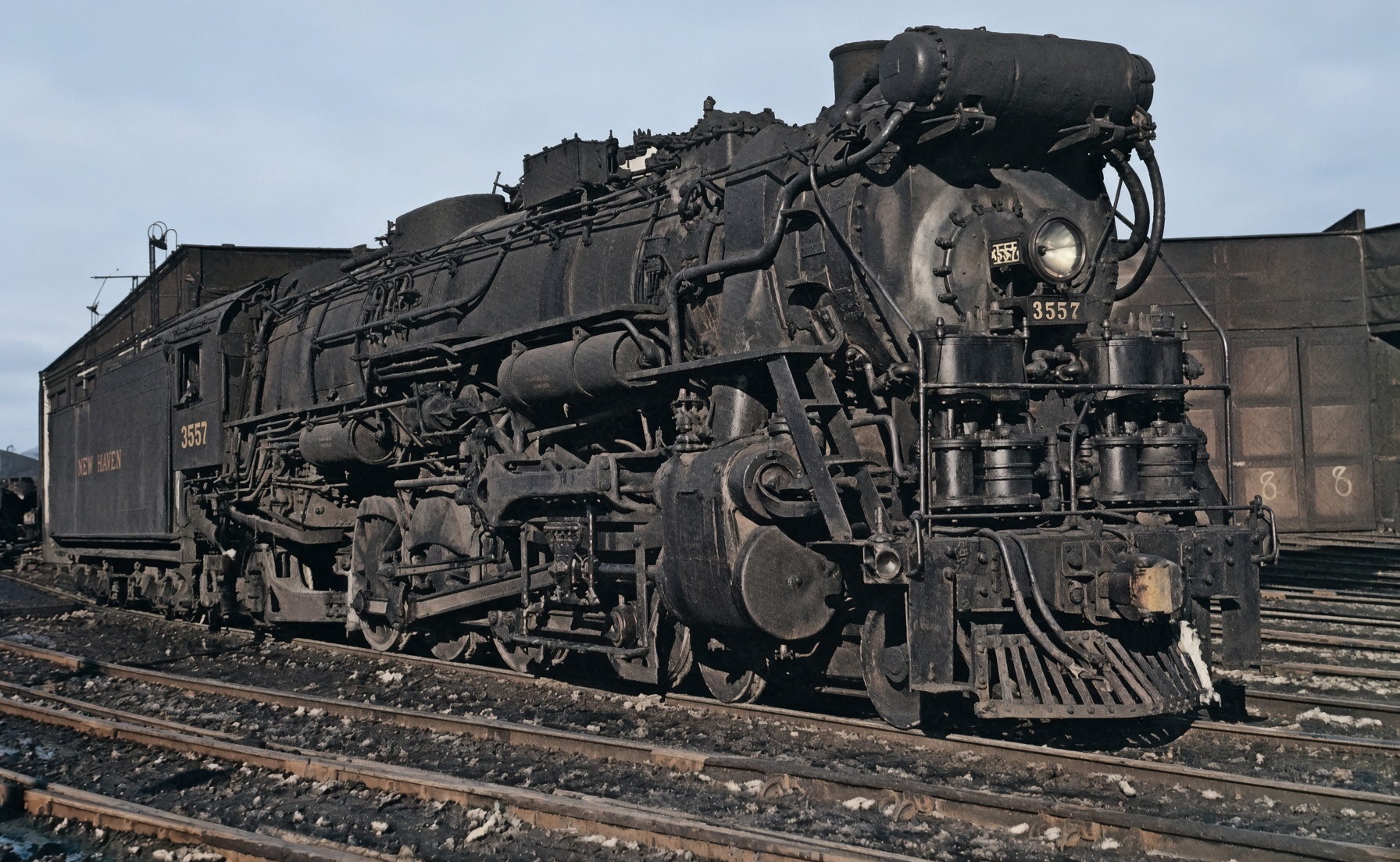
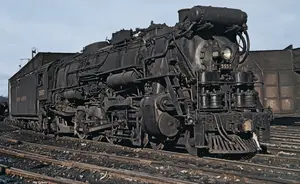
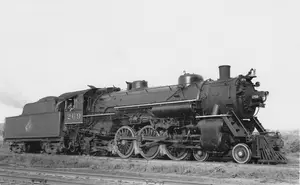
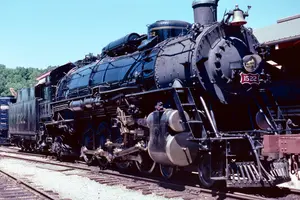
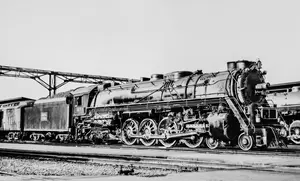
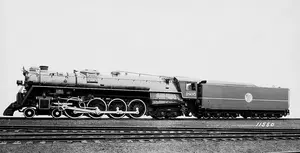
New Haven 4-8-2 #3557 (R-3) is seen here between assignments at Southampton Street in Boston on March 6, 1948. Lawson Hill photo. These Mountains were built by Alco in 1927 and carried an interesting three-cylinder design while the Elesco feedwater heater on the smokebox gave them a fordmidable appearance.
The class grid below is the post-1900 roster in George H. Drury's Guide to North American Steam Locomotives, revised edition, pages 250 through 254, headed "New York, New Haven & Hartford steam locomotives built since 1900." The company history is the New York, New Haven & Hartford. Diesels, serials and order numbers included, are the diesel roster.
On this page: At a glance · Moguls to Santa Fes · Mountains · From Americans to Hudsons · Switchers · Union Freight and the Climaxes · Roster built since 1900
At a glance
| Item | Detail |
|---|---|
| Railroad | New York, New Haven & Hartford. Mark NH. Company page: New Haven |
| This roster | 903 locomotives in the post-1900 class grid. Union Freight and the Central New England Climaxes sit in their own tables |
| Freight, 1900–1910 | 226 Moguls, classes K-1-b, K-1-c, and K-6 |
| Later freight | 18 Consolidations, 33 Mikados, 50 Santa Fes, 70 Mountains |
| Passenger | 75 Americans, 12 Atlantics, 72 Ten-Wheelers, 141 Pacifics, 10 Hudsons |
| Switchers | 142 six-wheel switchers and 54 eight-wheel switchers |
| Newest steam | I-5 4-6-4s 1400–1409, Baldwin, 1937 |
| Last trips | Excursion, April 1952, Pacifics 1372 and 1388. Fan trip, July 19, 1953, Mikado 3016 |
Class, numbers, quantity, builder, and dates follow Drury's revised-edition grid, pages 250–254. Information compiled October 9, 2026.
Moguls, then a low Mikado
The Shore Line was nearly gradeless. Drury's exception is about five miles of 0.7 percent against southbound trains through Sharon, Massachusetts. The early freight engine for that railroad was the Mogul. Two hundred twenty-six of them arrived between 1900 and 1910: K-1-b 260–299 and 325–479, K-1-c 300–324, and six K-6s that had been Central New England 125–130. The Central New England stayed a separate operation under New Haven control until the merger of January 1, 1927. Its own Consolidations came with it, three Rogers F-3s and fifteen Schenectady F-5s.
The light Mikado was class J-1, numbers 3000–3024, Schenectady, 1916, with 63-inch drivers. They were a little smaller than a United States Railroad Administration light Mikado, and the profile was kept low for the Dorchester Branch between Readville and Boston. Eight more 2-8-2s, class J-2, numbers 3100–3107, came from Schenectady the same year on the same size of driver. Drury's note on that row reads that Nos. 3105–3107 are ex-Central New England 180–182. In the late 1920s nearly the whole Mikado group received Elesco feedwater heaters and thermic syphons, and a few received Boxpok drivers. By the Second World War five of the class were being cannibalized. Five hulks were later put back together. Mikados 3006, 3016, and 3020 stayed on as snow melters until 1956 and were scrapped in the spring of 1958. No. 3016 appeared in It Happened to Jane.
The Santa Fe type was class L-1, fifty engines, 3200–3249, Schenectady, 1918. Counterbalancing held them to 25 miles an hour. Most of them moved to the Maybrook line, the freight road to the Poughkeepsie Bridge.
Seventy Mountains, the last of them three-cylinder
The United States Railroad Administration's first ten light 4-8-2s were New Haven class R-1, numbers 3300–3309, Richmond, 1919. Thirty-nine copies followed: R-1-a 3310–3339, Schenectady, 1920, and R-1-b 3340–3348, Schenectady, 1924.
Schenectady then built an experimental single, R-2 No. 3500, in 1924. Drury gives it 360,000 pounds, 16,000 more than the R-1-b, 230 pounds of pressure, and 63,390 pounds of tractive effort, with a McClellon watertube firebox. Seven two-cylinder R-2-a engines, 3501–3507, followed in 1926, about 3,000 pounds heavier, at 265 pounds, with duPont-Simplex stokers that gave trouble and were replaced by HT-2 stokers in the 1930s. Southern valve gear on that group later became Baker or Walschaerts.
The three-cylinder Mountains are a different row. Three R-3s, 3550–3552, came in 1926, three 22-by-30-inch cylinders at 265 pounds, where the earlier Mountains had used 27-by-30. Ten R-3-a engines, 3553–3562, followed in 1928, with one-piece cast-steel smokeboxes associated with W. L. Bean. The next year all 21 McClellon-boilered engines, the single R-2, the seven R-2-as, the three R-3s, and the ten R-3-as, went back to Schenectady for conventional boilers. The middle cylinder stayed a maintenance problem. The engines worked through the war as three-cylinder machines. The last new steam freight was the R-3-a group. Drury illustrates No. 3558. They pushed until 1950, and afterward one of them helped at Hopewell Junction.
From Americans to the I-5
Passenger power at the turn of the century was still the American. Drury's post-1900 rows are A-1 1250–1284, built in 1896 and 1903, C-3-c 1525–1549 from Rhode Island in 1903, the last 4-4-0s the road purchased, and C-15 1500–1514, built in the railroad's own shops in 1901–1904. Many of the A-1s were rebuilt in the 1920s. A-1 No. 1275 outlasted the rest in wire-train service.
Twelve Atlantics, 1100–1111, came from Schenectady in 1907, class F-1 and later H-1, the letter changed in 1928 so it would clear the Central New England's 2-8-0s. They had 79-inch drivers. The Pacifics that followed had 73. They were built for the extra-fare New York–Boston trains. Steel cars soon moved them to lighter trains. Superheat and piston valves came in 1912–1922. After 1935 one or two of them protected the Comet with a pair of lightweight coaches. Drury's retired cell for the class reads 1900–1947, beside a built date of 1907. The cell is printed as the book prints it.
Branch freight Ten-Wheelers were the G-3s, 950–969, Rhode Island, 1903–1904. The passenger Ten-Wheelers were Baldwin, 1904–1907: fifty G-4-a engines, 800–849, and two G-4-b engines, 858 and 859, the pair Drury marks as balanced compounds. They were converted to two-cylinder simple engines, superheated, and given outside valve gear between 1912 and 1924, and later received new frames.
The Pacifics came in five classes. I-1s, 1000–1031, were relatively light, 229,500 to 232,000 pounds: Schenectady 1000–1008 in 1907, Baldwin 1009–1029 later that year, and Schenectady 1030 and 1031 in 1910. Superheat in 1912–1923 enlarged the cylinders an inch, to 23 by 28. They stayed clear of feedwater heaters and mechanical stokers. I-2s, 1300–1349, Brooks, 1913, had 73-inch drivers, 24-by-28-inch cylinders, superheat, and 251,500 pounds. I-3s, 1090–1095, Baldwin, 1913, used the same cylinders on 79-inch drivers and were the engines meant to take the Atlantics' job. Both the I-2s and the I-3s left fast mainline passenger service when the I-4s arrived in 1916.
The I-4s, 1350–1399, Schenectady, 1916, were the top passenger engines for twenty years: 79-inch drivers, 26-by-28-inch cylinders, and a relatively light 266,000 pounds because of the Thames River bridge at New London. Large boilers with combustion chambers made them good steamers. A new bridge at New London in 1918 let the road strengthen the frames and drivers. Between 1922 and 1930 the class received Elesco feedwater heaters. Air reservoirs atop the boiler replaced the original equipment between the frames, and some of the stubby tenders gave way to 12-wheel tenders. By the mid-1930s the engines were wearing out under longer trains. In 1936 the road tested four I-4s toward a specification for new power, and two of those engines failed the tests.
What Baldwin delivered was a 4-6-4, class I-5, numbers 1400–1409, in 1937. Drury's figures are 80-inch drivers, 22-by-30-inch cylinders, 285 pounds, and 365,300 pounds, painted black and silver, with the shrouding kept to the end. Eight engines covered twelve trips each way every day between Boston and New Haven, 157 miles. Two were spares, and the spares worked. The class retired in 1951. The official last steam run, the April 1952 excursion, was behind I-4 Pacifics 1372 and 1388.
Three earlier Pacifics, class P-1, numbers 50–52, were Schenectady engines of 1909 from the Central New England, still carrying those numbers. Drury gives them a built year and the Central New England origin, and leaves the retirement year off the grid.
Switchers, including three cylinders
The century opened with cross-compound 0-6-0s. Drury's T-1 row is twenty engines, 2300–2319, Rhode Island and Schenectady, 1900 and 1902. Ten more from Rhode Island were later simple engines, reclassed as the work went on from 1907 to 1917. The T-2s are the next fleet: nineteen T-2-a engines, 2325–2343, Rhode Island, 1904, whose main rods drove the second axle, and ninety-seven T-2-b engines, 2373–2469, from Cooke, Rhode Island, and Richmond, 1906–1913. Six T-3s, 2350–2355, were Schenectady's, 1904–1910. All of these six-wheel switchers were saturated, with slide valves and Stephenson gear.
The 0-8-0s begin with three Y-2s, numbers 10–12, Schenectady, 1913, former Central New England engines. Thirty-five copies of the USRA 0-8-0 followed in 1920–1923, the Y-3s: fifteen numbered 3400–3414, lettered New Haven, and twenty numbered 3415–3434 that had been lettered Central New England and later joined the New Haven roster. They were somewhat lighter than the USRA copies, saturated, with piston valves and Walschaerts gear.
The road's first three-cylinder engines were 0-8-0s. Ten Y-4s, 3600–3609, Schenectady, 1924, had 57-inch drivers and 22-by-28-inch cylinders, all of which drove on the third axle, at 247,000 pounds, about 15 tons over the USRA copies. Drury's note reads "Ex-CNE 28-32, 13-27." Six more, Y-4-a 3610–3615, arrived in 1927 for the Central New England, lighter, saturated, piston-valved, with arch-window cabs, built for Maybrook. After they became New Haven engines they moved to Boston. They worked well in low-speed switching. The large 12-wheel tenders on the three-cylinder switchers were soon swapped with 4-8-2s. Drury's likely reason is delivery: a tender is easier to move with a coupler at each end than a road engine is.
Union Freight and the Climaxes
Two oddities sit in the chapter and outside the road-number grid. In 1897 the New England, successor to the New York & New England, sent a wood passenger car to Schenectady, where a vertical-boiler 0-4-0 with 42-inch drivers was fitted into one end. It worked until 1904, was stored, and was sold in 1907. In 1936 the Besler Systems put a two-car steam lightweight on the Bridgeport–Waterbury–Hartford run. The power unit, a vertical flash boiler and a four-cylinder truck, rode in one end of each car. The train came off in 1943, and the cars went back to ordinary passenger equipment.
The Union Freight Railroad, a New Haven subsidiary, ran freight along the streets of Boston between South Station and North Station, the link with the Boston & Maine, and served the industries on that line. Four box-cab Climax geared locomotives, built 1923–1928, held the job until 1946, when GE 44-ton diesels took it. Drury prints the two earlier Union Freight 0-4-0Ts, and the four Climaxes under a Central New England heading, as their own rows. Those six locomotives are below the main table.
Roster built since 1900
| Type | Class | Numbers | Qty | Builder | Built | Retired | Notes |
|---|---|---|---|---|---|---|---|
| 0-6-0 | T-1 | 2300–2319 | 20 | Rhode Island, Schenectady | 1900 and 1902 | 1935–1946 | Cross-compound |
| 0-6-0 | T-2-a | 2325–2343 | 19 | Rhode Island | 1904 | 1935–1946 | |
| 0-6-0 | T-2-b | 2373–2469 | 97 | Cooke, Rhode Island, Richmond | 1906–1913 | 1935–1950 | |
| 0-6-0 | T-3 | 2350–2355 | 6 | Schenectady | 1904–1910 | 1935 | |
| 0-8-0 | Y-2 | 10–12 | 3 | Schenectady | 1913 | 1948 | Ex-CNE 10–12 |
| 0-8-0 | Y-3 | 3400–3414 | 15 | Schenectady | 1920 and 1923 | 1949–1952 | |
| 0-8-0 | Y-3 | 3415–3434 | 20 | Schenectady | 1922 | 1949–1952 | |
| 0-8-0 | Y-4 | 3600–3609 | 10 | Schenectady | 1924 | 1949–1952 | Ex-CNE 28–32, 13–27 |
| 0-8-0 | Y-4-a | 3610–3615 | 6 | Schenectady | 1927 | 1950–1951 | Three cylinders |
| 2-6-0 | K-1-b | 260–299 | 40 | Baldwin, Cooke | 1907 | 1927–1951 | |
| 2-6-0 | K-1-b | 325–479 | 155 | Baldwin, Schenectady, Rhode Island | 1900–1905 | 1927–1951 | |
| 2-6-0 | K-1-c | 300–324 | 25 | Rhode Island | 1902 | 1927–1949 | |
| 2-6-0 | K-6 | 550–555 | 6 | Brooks | 1910 | 1935 | Ex-CNE 125–130 |
| 2-8-0 | F-3 | 110, 117, 118 | 3 | Rogers | 1905 and 1907 | 1928 | Ex-CNE 110, 117, 118 |
| 2-8-0 | F-5 | 150–164 | 15 | Schenectady | 1912 | 1946–1950 | Ex-CNE 150–164 |
| 2-8-2 | J-1 | 3000–3024 | 25 | Schenectady | 1916 | 1947–1956 | 3006, 3016, and 3020 were the snow melters. 3016 drew the July 19, 1953 fan trip |
| 2-8-2 | J-2 | 3100–3107 | 8 | Schenectady | 1916 | 1946 | Nos. 3105–3107 are ex-CNE 180–182 |
| 2-10-2 | L-1 | 3200–3249 | 50 | Schenectady | 1918 | 1946–1950 | |
| 4-4-0 | A-1 | 1250–1284 | 35 | Rhode Island, Schenectady | 1896 and 1903 | 1935–1949 | 1275 outlasted the class on the wire train |
| 4-4-0 | C-3-c | 1525–1549 | 25 | Rhode Island | 1903 | 1925–1935 | |
| 4-4-0 | C-15 | 1500–1514 | 15 | NYNH&H shops | 1901–1904 | 1925–1935 | |
| 4-4-2 | F-1 (H-1) | 1100–1111 | 12 | Schenectady | 1907 | 1900–1947 | Reclassed H-1 in 1928. The retired cell is Drury's |
| 4-6-0 | G-3 | 950–969 | 20 | Rhode Island | 1903–1904 | 1926–1944 | |
| 4-6-0 | G-4-a | 800–849 | 50 | Baldwin | 1904–1907 | 1935–1948 | |
| 4-6-0 | G-4-b | 858–859 | 2 | Baldwin | 1904 | 1935 | Balanced compound |
| 4-6-2 | P-1 | 50–52 | 3 | Schenectady | 1909 | — | Ex-CNE 50–52 |
| 4-6-2 | I-1 | 1000–1031 | 32 | Schenectady and Baldwin | 1907 and 1910 | 1944–1951 | |
| 4-6-2 | I-2 | 1300–1349 | 50 | Brooks | 1913 | 1948–1952 | |
| 4-6-2 | I-3 | 1090–1095 | 6 | Baldwin | 1913 | 1947–1948 | |
| 4-6-2 | I-4 | 1350–1399 | 50 | Schenectady | 1916 | 1939–1952 | 1372 and 1388 drew the April 1952 excursion |
| 4-6-4 | I-5 | 1400–1409 | 10 | Baldwin | 1937 | 1951 | 80-inch drivers. Shrouding retained |
| 4-8-2 | R-1 | 3300–3309 | 10 | Richmond | 1919 | 1946 and 1948 | USRA |
| 4-8-2 | R-1-a | 3310–3339 | 30 | Schenectady | 1920 | 1947–1951 | USRA copies |
| 4-8-2 | R-1-b | 3340–3348 | 9 | Schenectady | 1924 | 1947–1951 | USRA copies |
| 4-8-2 | R-2 | 3500 | 1 | Schenectady | 1924 | 1949 | McClellon watertube firebox |
| 4-8-2 | R-2-a | 3501–3507 | 7 | Schenectady | 1926 | 1949 and 1951 | |
| 4-8-2 | R-3 | 3550–3552 | 3 | Schenectady | 1926 | 1949 | Three cylinders |
| 4-8-2 | R-3-a | 3553–3562 | 10 | Schenectady | 1928 | 1949–1951 | Three cylinders. 3558 is the engine Drury illustrates |
The quantity column sums to 903. Six-wheel switchers are 142. Eight-wheel switchers are 54. Moguls are 226. Consolidations are 18. Mikados are 33. Santa Fes are 50. Americans are 75. Atlantics are 12. Ten-Wheelers are 72. Pacifics are 141. Hudsons are 10. Mountains are 70.
Union Freight Railroad
| Type | Numbers | Qty | Builder | Built | Notes |
|---|---|---|---|---|---|
| 0-4-0T | 5 | 1 | Rhode Island | 1907 | Boston street freight, South Station to North Station |
| 0-4-0T | 6 | 1 | Cooke | 1914 |
Central New England Climaxes
| Type | Numbers | Qty | Builder | Built | Notes |
|---|---|---|---|---|---|
| Climax | 8–11 | 4 | Climax | 1923–1928 | Box-cab geared locomotives on the Union Freight until 1946 |
Those six locomotives are outside the 903. CNE Central New England. USRA United States Railroad Administration.
Related reading on American-Rails.com
- New York, New Haven & Hartford · New Haven diesel roster
- Central New England · Poughkeepsie Bridge · Comet · Boston & Maine
- Mikado · Pacific · Mountain · Hudson · Santa Fe · American · Atlantic
Sources
- George H. Drury, Guide to North American Steam Locomotives, revised edition, "New York, New Haven & Hartford," pp. 250–254. The class grid, the 226 Moguls, the 18 Consolidations, the 33 Mikados and the Dorchester Branch clearance, the 50 Santa Fes and the 25-mile-an-hour counterbalancing, the USRA R-1s and the 39 copies, R-2 No. 3500 at 360,000 pounds and 63,390 pounds tractive effort, the McClellon boilers sent back to Schenectady, the three-cylinder R-3 and R-3-a, the I-4 weight of 266,000 pounds and the 1918 New London bridge, the Elesco heaters and 12-wheel tenders, the 1936 I-4 tests, the I-5 dimensions and the 157-mile Boston–New Haven diagram, the April 1952 excursion behind 1372 and 1388, the July 19, 1953 trip with 3016, the snow melters scrapped in the spring of 1958, the T-class and Y-class switchers, the 1897 railcar, the Besler train withdrawn in 1943, and the Union Freight Climaxes
- Drury's own further reading on p. 254: New Haven Railroad Historical & Technical Association, nhrhta.org; J. W. Swanberg, New Haven Power (Alvin F. Staufer, 1988); Railroad magazine, January 1939, p. 95, and February 1939, p. 113; Trains, February 1950, p. 26
- The Comet that the Atlantics protected is the Goodyear-Zeppelin trainset of 1935. This roster uses Drury's sentence about that protection and leaves the trainset's own dates on that page
Recent Articles


-
New Haven Diesel Roster (All-Time)
Oct 10, 26 06:35 PM
 New Haven diesel roster, all-time. 558 road numbers: 60 DL-109s, 30 FA-1s, 27 PA-1s, 60 FL9s, and the switchers from HH600 0900. Serials and order numbers.
 -
New Haven Steam Roster (Post 1900)
Oct 10, 26 06:31 PM
 New Haven steam since 1900. Drury's class grid: 226 Moguls, 33 Mikados, 50 Santa Fes, 70 Mountains, 141 Pacifics, and 10 Hudsons. Last fan trip July 19, 1953.
 -
New Haven Railroad: Rosters, Map, Logo, History, Trains
Oct 10, 26 06:26 PM
 New York, New Haven and Hartford. The Shore Line, Hell Gate, the 1952 map at 1,838.89 miles, and the railroad Penn Central took at 11:59:59 p.m. on December 31, 1968.
 -
C&O's 4-6-4 "Hudson" Locomotives (Class L): Specs, Roster, History
Oct 10, 26 05:36 PM
 Chesapeake & Ohio Class L 4-6-4 Hudsons. Eight L-2s, five L-1 rebuilds, five L-2-As. Specs, Baldwin works numbers, and the roster. No. 490 survives.
 -
Alton Railroad: Map, History, Timetables
Oct 09, 26 10:31 PM
 Alton Railroad, chartered February 27, 1847 as the Alton & Sangamon. Chicago, St. Louis, and Kansas City, the 1937 Official Guide, and the May 31, 1947 merger into the Gulf, Mobile & Ohio.
 -
Mobile & Ohio Steam Roster (Post 1900)
Oct 09, 26 12:26 PM
 Mobile & Ohio steam since 1900. Drury's class grid: 48 six-wheel switchers, 107 Ten-Wheelers, 15 Consolidations, 58 Mikados, and 14 Pacifics. Last revenue steam October 7, 1949.
 -
Mobile & Ohio Railroad: History, Map, Timetable
Oct 09, 26 11:31 AM
 Mobile & Ohio Railroad, chartered in 1848. Columbus on April 22, 1861, the Cairo & St. Louis, the March 1940 Official Guide, and the September 13, 1940 merger into the Gulf, Mobile & Ohio.
 -
Gulf, Mobile & Northern Steam Roster (Post 1900)
Oct 09, 26 10:42 AM
 Gulf, Mobile & Northern steam since 1900. Drury's class grid: Ten-Wheelers, Mikados, Russian Decapods, Pacifics 425 and 426, and three light 4-8-2s. Last revenue steam October 7, 1949.
 -
Gulf, Mobile & Ohio Diesel Roster (All-Time)
Oct 09, 26 10:41 AM
 Gulf, Mobile & Ohio diesel roster, all-time. The 1935 boxcab, DL-107s, 55 FA-1s, F3s and F7s, the Ingalls 4-S, GP30s through GP38-2s, and 21 SD40s. Serials and order numbers.
 -
Gulf, Mobile & Northern Railroad: History, Rebel Route
Oct 09, 26 10:36 AM
 Gulf, Mobile & Northern, from the 1890 Mobile, Jackson & Kansas City to the Rebel and the September 13, 1940 merger into the Gulf, Mobile & Ohio. Steam roster is the companion page.
 -
Gulf, Mobile & Ohio Railroad: Map, Photos, Trains, History
Oct 08, 26 11:48 PM
 Gulf, Mobile & Ohio, chartered in 1938 and merged September 13, 1940. The Mobile & Ohio, the Alton on May 31, 1947, the Rebel Route, and Illinois Central Gulf on August 10, 1972.
 -
New Jersey Railroad Museums (2026): A Complete Guide
Oct 08, 26 11:37 PM
 New Jersey railroad museums—Whippany, Maywood, Pine Creek, Mahwah’s Erie depot, Phillipsburg, and Boonton. Confirm hours on each site.
 -
New Hampshire Railroad Museums (2026): A Complete Guide
Oct 08, 26 11:34 PM
 New Hampshire railroad museums—North Conway, the Flying Yankee, Ashland, Gorham, Raymond, and Sandown. Confirm hours on each site.
 -
Missouri Railroad Museums (2026): A Complete Guide
Oct 08, 26 11:00 PM
 Missouri railroad museums—the National Museum of Transportation, Patee House, Frisco 4524, the Chicago & Alton depot, and Marceline. Confirm hours on each site.
 -
Milwaukee Road X3800: Deer Lodge’s Shop Goat
Oct 08, 26 04:28 PM
 Milwaukee Road X3800, the a home-built shop goat that served the Deer Lodge, MT yard. It was a 220-volt DC switcher, powered through an extension cord that moved electrics into a roundhouse where the…
 -
Key West Extension (Overseas Railroad): History, Construction, Decline
Oct 08, 26 03:59 PM
 Henry Flagler's Overseas Railroad, Miami to Key West, 1905–1935. The Seven Mile Bridge, the 1935 Labor Day Hurricane, and the road that became U.S. 1.
 -
Florida East Coast Steam Roster (Post 1900)
Oct 08, 26 02:34 PM
 Florida East Coast steam since 1897. Seventeen Ten-Wheelers, twenty Atlantics, eighty-seven Pacifics, ninety Mountains, fifteen Mikados, and the switchers.
 -
Florida East Coast Diesel Roster (All-Time)
Oct 08, 26 02:12 PM
 Florida East Coast diesel roster, all-time. E units from 1939, F3s, BL2s, GP7s and GP9s, the GP40-2 orders, 22 SD40-2s, and 24 ES44C4s. Serials and EMD order numbers.
 -
Florida East Coast Railway: Map, History, Rosters
Oct 08, 26 01:46 PM
 Florida East Coast Railway, Henry Flagler's line from Jacksonville to Miami and Key West. Receivership in 1931, the 1963 strike, Grupo México in 2017, and Brightline on the same track.
 -
Minnesota Railroad Museums (2026): A Complete Guide
Oct 08, 26 10:32 AM
Minnesota railroad museums—the Lake Superior Railroad Museum, Two Harbors, Jackson Street, Willmar’s Great Northern 2523, and Currie. Confirm hours on each site. -
Maine Railroad Museums (2026): A Complete Guide
Oct 08, 26 09:24 AM
 Maine railroad museums—Seashore Trolley, the two-foot lines at Portland, Alna, and Phillips, Boothbay, and the Bangor & Aroostook depots. Confirm hours on each site.
 -
Massachusetts Railroad Museums (2026): A Complete Guide
Oct 08, 26 12:08 AM
 Massachusetts railroad museums—Berkshire Scenic at Lenox, Shelburne Falls trolley No. 10, Edaville, Chatham’s 1887 depot, and Lowell. Confirm hours on each site.
 -
Clinchfield Steam Roster (Post 1900)
Oct 07, 26 12:09 PM
 Clinchfield steam since 1900. Fifteen H-4 Consolidations, K-1 Mikados, M-2 and M-3 Mallets, L-class 2-8-8-2s, eighteen Challengers. Class grid after Drury. Last steam April 16, 1954.
 -
Clinchfield Diesel Roster (All-Time)
Oct 07, 26 12:05 PM
 Clinchfield diesel roster, all-time. F3A 800, FP7 200, the F7s, GP7s, 25 SD40s, 18 SD45-2s, seven U36Cs, and the Family Lines hoods. Serials and EMD order numbers.
 -
Clinchfield Railroad: Map, Steam Locomotives, Roster, Logo
Oct 07, 26 12:02 PM
 Clinchfield Railroad, Elkhorn City to Spartanburg. George L. Carter, the Carolina, Clinchfield & Ohio, the 1924 lease, coal, the loops, and CSX. Steam and diesel rosters are companion pages.
 -
Kentucky Railroad Museums (2026): A Complete Guide
Oct 07, 26 11:39 AM
 Kentucky railroad museums—the Kentucky Railway Museum, Bowling Green’s L&N depot, Paducah, Versailles, and Covington. Confirm hours on each site.
 -
Kansas Railroad Museums (2026): A Complete Guide
Oct 07, 26 11:26 AM
 Kansas railroad museums—Santa Fe 3768 at Wichita, Santa Fe 132 in Topeka, the Great Overland Station, and Abilene. Confirm hours on each site.
 -
Cincinnati, New Orleans and Texas Pacific Diesel Roster (All-Time)
Oct 07, 26 10:38 AM
 All-time diesel roster of Southern locomotives lettered for the Cincinnati, New Orleans and Texas Pacific. Serials, order numbers, and builder dates.
 -
Cincinnati, New Orleans and Texas Pacific Railway
Oct 07, 26 10:31 AM
 Cincinnati, New Orleans and Texas Pacific Railway, incorporated September 8, 1881, to lease Cincinnati’s railroad to Chattanooga. Queen and Crescent route, Rathole, and the 2024 sale to Norfolk Southe…
 -
Indiana Railroad Museums (2026): A Complete Guide
Oct 07, 26 12:26 AM
 Indiana railroad museums—Nickel Plate 765, Elkhart’s New York Central collection, French Lick, Linden’s junction depot, and Haley Tower. Confirm hours on each site.
 -
"Triplex" Steam Locomotive: Specs, History, Photos
Oct 06, 26 11:52 PM
 Erie class P-1 Triplex 2-8-8-8-2s. Three Baldwin compounds, 2603–2605, later 5014–5016, built 1914 and 1916. Matt H. Shay, the 1930 class card, and Virginian XA 700.
 -
Illinois Railroad Museums (2026): A Complete Guide
Oct 06, 26 11:47 PM
 Illinois railroad museums—the Illinois Railway Museum, Monticello, the Pioneer Zephyr, Galesburg’s Burlington 3006, and the depots. Confirm hours on each site.
 -
Iowa Railroad Museums (2026): A Complete Guide
Oct 06, 26 11:41 PM
 Iowa railroad museums—the Union Pacific Railroad Museum, RailsWest, Sioux City, Boone, and the National Hobo Museum in Britt. Confirm hours on each site.
 -
Charleston and Western Carolina Diesel Roster (All-Time)
Oct 06, 26 11:29 PM
Charleston and Western Carolina diesel roster. Twenty-one GP7s, two SW7s, two SW9s, and six F7As, all built 1950–1952. Serials, order numbers, and ACL and SCL numbers. -
Charleston and Western Carolina Railway: Map, History, Timetables
Oct 06, 26 11:18 PM
 Charleston and Western Carolina Railway, incorporated September 16, 1896. Port Royal to Spartanburg, with branches to Anderson and Greenville. Merged into the Atlantic Coast Line on December 31, 1959.
 -
Central of Georgia Steam Roster (Post 1900)
Oct 06, 26 04:00 PM
 Central of Georgia steam since 1900. Cooke Consolidations, Harriman Mikados, 32 Mountains, and eight Lima 4-8-4s. Class grid after Drury. Last steam May 1953.
 -
Central of Georgia Diesel Roster (All-Time)
Oct 06, 26 03:44 PM
 Central of Georgia diesel roster. SW1 No. 1 in 1939, E7s and E8s, nine F3As, 39 RS3s, GP7s through SD35s. Serials and order numbers.
 -
Central of Georgia Railway: Map, Logo, History, Rosters
Oct 06, 26 03:42 PM
 Central of Georgia Railway, from the 1833 Savannah charter to Southern control on June 17, 1963. Map, logos, Nancy Hanks II, and links to the steam and diesel rosters.
 -
Georgia Railroad Museums (2026): A Complete Guide
Oct 06, 26 03:33 PM
Georgia railroad museums—Savannah’s Central shops, Duluth, the General at Kennesaw, the Texas in Atlanta, Tifton, Waycross, and Albany. Confirm hours on each site. -
Florida Railroad Museums (2026): A Complete Guide
Oct 06, 26 03:18 PM
 Florida railroad museums—Boca Raton, Winter Garden, Whitehall, the Gold Coast, Parrish, Fort Myers, Milton, and Plant City. Confirm hours on each site.
 -
Connecticut Railroad Museums (2026): A Complete Guide
Oct 06, 26 01:05 PM
 Connecticut railroad museums—the Shore Line Trolley, East Windsor, the Naugatuck Railroad, Danbury Union Station, Willimantic, and the SoNo tower. Confirm hours on each site.
 -
Colorado Railroad Museums (2026): A Complete Guide
Oct 06, 26 12:47 PM
 Colorado railroad museums—Golden, the Forney’s Big Boy 4005, Pueblo’s Santa Fe 2912, and the depots at Castle Rock, Limon, and Ridgway. Confirm hours on each site.
 -
Atlantic Coast Line Steam Roster (Post 1900)
Oct 06, 26 12:44 PM
 Atlantic Coast Line steam since 1900. Copper Head Ten-Wheelers, 235 P-5 Pacifics, Q-1 Santa Fes, twelve R-1 4-8-4s. Class grid after Drury. Last steam June 30, 1955.
 -
Atlantic Coast Line Diesel Roster (All-Time)
Oct 06, 26 11:57 AM
 Atlantic Coast Line diesel roster. HH660 1900 in 1939, E3s for the Champion, FTs and F2s, GP7s 100–279, GP30s, U25Cs, and the 1967 SCL numbers. Serials and orders.
 -
Atlantic Coast Line Railroad: "Standard Railroad of the South"
Oct 06, 26 11:53 AM
 Atlantic Coast Line, the Standard Railroad of the South. April 21, 1900 to July 1, 1967. Plant System, L&N, Clinchfield, the Champion, and the Seaboard Coast Line merger.
 -
California Railroad Museums (2026): A Complete Guide
Oct 06, 26 09:50 AM
California railroad museums—the California State Railroad Museum, Perris, Portola, Railtown 1897, and the depots that still stand. Confirm hours on each site. -
Arizona Railroad Museums (2026): A Complete Guide
Oct 06, 26 09:46 AM
Arizona railroad museums—the Arizona Railway Museum in Chandler, Southern Pacific 1673 at Tucson, and the McCormick-Stillman park in Scottsdale. -
Arkansas Railroad Museums (2026): A Complete Guide
Oct 06, 26 09:07 AM
 Arkansas railroad museums—Cotton Belt 819 at Pine Bluff, the Fort Smith trolley, the Mammoth Spring depot, and the Eureka Springs railway.
 -
Alabama Railroad Museums (2026): A Complete Guide
Oct 06, 26 09:03 AM
Alabama railroad museums—Heart of Dixie at Calera, the North Alabama museum at Chase, Huntsville’s 1860 depot, and Fort Payne. Confirm hours on each site. -
Pennsylvania Railroad Museums (2026): A Complete Guide
Oct 06, 26 12:09 AM
 Pennsylvania railroad museums—Strasburg, Steamtown, the Horseshoe Curve, the East Broad Top, and the depots and towers in between. Confirm hours on each site.