Colorado Railroad Museums (2026): A Complete Guide
Last revised: October 6, 2026
By: Adam Burns
Colorado kept the narrow-gauge mountain railroad in the metal, and a few standard-gauge giants with it. At Golden the Colorado Railroad Museum fires Denver & Rio Grande Western 2-8-0 No. 346, a Baldwin of 1881, and No. 491, a Mikado built in Denver in the spring of 1928, on a loop around a yard of three-foot equipment that includes Rio Grande Southern Galloping Geese. The same yard holds Burlington No. 5629. In Denver the Forney Museum of Transportation has Union Pacific Big Boy No. 4005 indoors, with Amelia Earhart’s Kissel and an 1888 Denver cable car in the same building. Pueblo kept Santa Fe 4-8-4 No. 2912 behind Union Depot. Castle Rock and Limon kept the depots. Ridgway kept Galloping Goose No. 4, and Craig kept David Moffat’s private car.
Which locomotive is fired, and which days the depots are open, move with the season and the shop. Confirm the day before you drive.

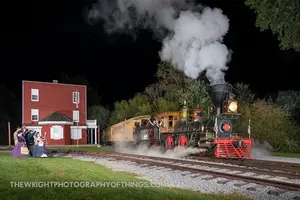
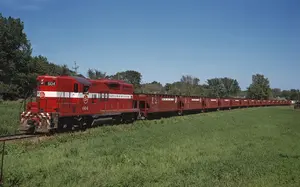
Rio Grande 2-8-0 #346 leads a short excursion at the Colorado Railroad Museum in Golden, summer 1965. Baldwin built the locomotive in 1881. It is still at the museum. American-Rails.com collection.
On this page: At a glance · Colorado railroads · Golden · Forney Museum · Pueblo · Castle Rock · Limon · Ridgway and Craig · Related reading
At a glance
| Place | Town | What it is known for | Site |
|---|---|---|---|
| Colorado Railroad Museum | Golden | D&RGW No. 346, Baldwin 1881, and No. 491, built in Denver in 1928, on a narrow-gauge loop. Burlington No. 5629 in the yard | coloradorailroadmuseum.org |
| Forney Museum of Transportation | Denver | Union Pacific Big Boy No. 4005, indoors, with Earhart’s Kissel and an 1888 Denver cable car | forneymuseum.org |
| Pueblo Railway Museum | Pueblo | Santa Fe 2900-class 4-8-4 No. 2912, Baldwin, January 1944, behind Union Depot since 1994 | pueblorailway.org |
| Castle Rock Museum | Castle Rock | Denver & Rio Grande rhyolite depot of 1875, moved to 420 Elbert Street in 1970 | castlerockhistoricalsociety.org |
| Limon Heritage Museum and Railroad Park | Limon | Rock Island combination depot of 1910, still at the Rock Island and Union Pacific junction | limonmuseum.com |
| Ridgway Railroad Museum | Ridgway | Rio Grande Southern Galloping Goose No. 4 and Motor No. 1 on a half-mile loop | ridgwayrailroadmuseum.org |
| Marcia | Craig | David H. Moffat’s Pullman private car of 1906, given to the city in 1953, on downtown track | City of Craig |
American-Rails.com does not operate these places and does not sell tickets. Confirm hours before you travel.
Colorado railroads
The railroad that shaped the state is the Denver & Rio Grande, chartered on October 27, 1870, by William Jackson Palmer and his partners. They chose a three-foot gauge for a line through the mountains. The company dates its operation from January 1, 1872. Palmer’s road built south from Denver, reached the mining country, and, by construction and purchase, reached Salt Lake City in 1883. What remained of the narrow gauge in the San Juans lasted into the 1960s. The Rio Grande Southern, the three-foot railroad around those mountains from Ridgway, shut down in 1951. North of Denver, David Moffat’s Denver, Northwestern & Pacific of 1902 became the Denver & Salt Lake after a 1912 bankruptcy. That railroad’s Moffat Tunnel opened in 1928 and replaced the temporary line over Rollins Pass. The Rio Grande acquired the Denver & Salt Lake in 1947. The Dotsero Cutoff, finished on June 15, 1934, tied the tunnel to the road west. The state map is the Colorado railroads page.
The Santa Fe crossed southeastern Colorado on the way to Raton and left a 4-8-4 in Pueblo. The Burlington came into Denver from the plains and left No. 5629 at Golden. The Rock Island met the Union Pacific at Limon and left the 1910 depot. Union Pacific operates the Moffat Tunnel route today. The passenger trains people cross the country to ride are scenic railroads on surviving pieces of that map: Durango & Silverton, the Cumbres & Toltec, the Georgetown Loop, the Royal Gorge Route, and the Pikes Peak cog. Their calendars, sold-out dates, and holiday trains are on the scenic-train guide. The places below kept the locomotives, the railcars, and the buildings.
Colorado Railroad Museum
Robert W. Richardson and Cornelius W. Hauck opened the Colorado Railroad Museum in 1959. Richardson had started the collection in Alamosa in the late 1940s, as the narrow-gauge companies quit. The Uintah closed in 1939, the Rio Grande Southern in 1951, and other short lines in the same years. The Alamosa building ran out of room. In 1958, with Hauck’s help, the collection moved to Golden. Richardson built a replica narrow-gauge depot as the main building. In 1964 the nonprofit Colorado Railroad Historical Foundation was formed to own and operate the museum. The mission on the history page is a tangible record of Colorado’s railroad era, and of the narrow-gauge mountain railroads in particular. The address is 17155 West 44th Avenue. The visit page describes a 15-acre yard. The Robert W. Richardson Railroad Library opened on April 12, 1997. The five-stall Cornelius Hauck roundhouse went up in 2000, with engine doors from the Rio Grande roundhouse at Alamosa and a 74-foot Armstrong turntable from the Burlington roundhouse at St. Francis, Kansas.
Two narrow-gauge engines carry the operating story, and the museum’s own locomotives page is the authority on both. Denver & Rio Grande Western No. 346 was built by Baldwin in 1881 and ran for the Rio Grande until 1947. While it was on loan to the Colorado & Southern in 1936 it wrecked in a runaway on Kenosha Pass, and the Burlington’s Denver shops rebuilt it. Bob Richardson bought it in 1950. The museum calls it the oldest operating steam locomotive in Colorado and says it runs at steam-ups. Denver & Rio Grande Western No. 491 is, in the museum’s words, the largest operating narrow-gauge steam locomotive in the Western Hemisphere. Stearns-Roger of Denver and the Rio Grande’s Burnham Shops built it in Colorado in the spring of 1928. It ran until 1963, went to the Colorado Historical Society, now History Colorado, and came to Golden on loan in 1985. History Colorado gave it to the museum in June 2013. It returned to service on August 28, 2014. The museum uses it with No. 346 at themed events. Ask which engine is fired before you go. A steam-up on the Golden loop is the museum’s own calendar. It is a different trip from the day in the San Juans.
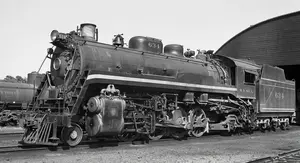
Burlington No. 5629 stands in the same yard. The museum says it is one of only four Burlington locomotives of its type still in existence. The yard also includes Rio Grande Southern Galloping Geese. At a 2026 operating weekend the museum put Geese Nos. 6 and 7 in the parade with its own steam. The library, the roundhouse, and the day’s train are on coloradorailroadmuseum.org.
Forney Museum of Transportation
The Forney Museum of Transportation, in Denver, is a general transportation museum with one locomotive people cross town to see. The homepage describes a collection of more than 800 artifacts that began more than seventy years ago with a single 1921 Kissel. It is a 501(c)(3). The collection was J. D. Forney’s. In 1968 the cars and the rail equipment moved into the Denver Tramway Powerhouse, built in 1901 to generate electricity for the city’s trolley system. The museum’s history page says Union Pacific donated an Alco Big Boy shortly after that move. The featured-exhibit page dates the gift of No. 4005 to June 1970. The museum later outgrew the powerhouse and occupies its present building. Hours and admission are on the museum’s site.
No. 4005 is a 4-8-8-4, one of twenty-five Big Boys Alco built for Union Pacific. The museum says eight survive, and that No. 4005 is the one converted to oil in 1946 as a test, a trial that lasted through March 1948, after which the engine went back to coal. It is displayed indoors. The stairway to the cab platform is open, and the museum opens the cab itself on days it posts. The Big Boy that Union Pacific operates is No. 4014. The type is the 4-8-8-4 page, and the railroad is the Union Pacific. Around 4005 the homepage names Amelia Earhart’s 1923 Kissel Gold Bug, a Forney locomotive, a Colorado & Southern caboose, an 1888 Denver cable car, and a Denver & Rio Grande dining car. The Moffat Modelers keep an N-scale layout of the Moffat Route in the building and post the Saturdays it is open. The railroad piece is the Big Boy. The rest of the floor is automobiles, motorcycles, and carriages, which is why the museum sits on this list and on a car-museum list at the same time.
Pueblo Railway Museum
The Pueblo Railway Foundation was formed in 2003 and took over the collection of the Pueblo Locomotive & Rail Historical Society. The museum’s piece of national rank is Atchison, Topeka & Santa Fe No. 2912, behind Pueblo Union Depot. Baldwin built it in January 1944, one of the thirty 2900-class 4-8-4s numbered 2900 through 2929. The Santa Fe page is the company history. The museum’s own account says wartime metals made the 2900s the heaviest Northerns built, and that No. 2912 went to work on troop trains in 1944 and 1945. On July 20, 1959 the railroad gave the engine to the City of Pueblo. It stood near City Hall for about thirty-five years. Construction of the Historic Arkansas River Project moved it. The city gave it to the society, and on September 10, 1994 it went to the tracks behind the depot, where it still is. It was added to the Colorado State Register of Historic Properties on September 13, 1995.
The foundation’s mission is to operate, preserve, and display. Train days are the ones the museum posts. Tickets and the calendar stay on pueblorailway.org. The yard has other equipment. This page names the locomotive the city has held since 1959.
Castle Rock Museum
The Castle Rock Museum is the Denver & Rio Grande depot, a rhyolite building the historical society dates to 1875. Palmer’s railroad had built south from Denver toward Colorado City, today’s Colorado Springs, in 1871. The society calls that line the first narrow-gauge railroad in the United States. Castle Rock became the Douglas County seat in 1874, and the town wanted a depot. The 1875 station went up on Third Street, of local stone, with wide eaves and drop-pendant brackets. The stonework is dressed at the corners, the sills, and the lintels. In 1970 Bill and Joyce Murray bought the building and moved it off the tracks to 420 Elbert Street. They kept the ticket window, the baggage room, and the names railroaders had written on the walls. The Castle Rock Historical Society bought the depot in 1996 and opened it as a museum in 1997. It was listed on the National Register of Historic Places in 1974 and on the Castle Rock Register of Local Landmarks in 1994. The room is a local-history museum inside a railroad building. The society posts the days.
Limon Heritage Museum
Limon was the junction of the Chicago, Rock Island & Pacific and the Union Pacific, on the high plains east of Denver. On June 28, 1910 a fire in the yards burned the depot then standing, along with freight cars and an oil house. The replacement, built later that year, is a one-story wood-frame combination depot on the triangle of land between the two railroads. History Colorado counts it among three Rock Island depots in Colorado that still stand where they worked. The Rock Island’s history is the Rock Island page. The building was modernized in the late 1930s. The Mid-States Port Authority gave it to the Limon Heritage Society in 1990. It is the centerpiece of the Limon Heritage Museum and Railroad Park, a complex the museum describes as five acres, with a caboose, a dining car, an 1894 one-room school, and the prairie exhibits in the newer gallery. The depot was listed on the State Register on December 12, 2001, and on the National Register on February 20, 2003. The museum posts a summer season. Check the year you are going.
Ridgway and Craig
The Ridgway Railroad Museum sits at 200 North Railroad Street, on a rail yard with a half-mile loop, in the town the Rio Grande Southern used as its north end. The museum’s own site is built around Galloping Goose No. 4 and Motor No. 1. Goose No. 4 came from the Telluride Volunteer Fire Department in May 2008. The museum finished the restoration in the spring of 2012 and calls the car, unrestored until then, the best surviving record of what a Goose looked like in 1951, the year the Rio Grande Southern shut down. Motor No. 1 shares the loop. The equipment can be seen in the yard when the museum is between operating days. Ride days are the ones the site posts, and they change with the season.
Craig, at the end of Moffat’s line, kept the car rather than a locomotive. Marcia is David H. Moffat’s private car, a Pullman of 1906. On August 1, 1953, Wilson McCarthy, president of the Denver & Rio Grande Western, gave it to the city. The Colorado Encyclopedia places it on a short stretch of rail downtown, owned by the chamber of commerce, which offers tours. The Museum of Northwest Colorado, in the old state armory, is the town’s history museum. The car is the railroad artifact, on its own track. The tunnel that finally put this country on a main line is the Moffat Tunnel page.
Related reading
- Railroad museums in the United States
- Denver & Rio Grande Western · Moffat Tunnel · Colorado railroads
- Santa Fe · Chicago, Burlington & Quincy · Rock Island · Union Pacific
- Big Boy 4-8-8-4s · Union Pacific 4014
- Colorado scenic train rides · Cumbres & Toltec
- Tourist trains · U.S. railroad history
- Neighbors: Arizona museums · New Mexico museums · Kansas museums
Sources
- Colorado Railroad Museum, coloradorailroadmuseum.org, history page: Robert W. Richardson and Cornelius W. Hauck opened the museum in 1959; collection begun in Alamosa in the late 1940s and moved to Golden in 1958; Colorado Railroad Historical Foundation formed in 1964; replica narrow-gauge depot as the main building. Closures named on that page include the Uintah in 1939 and the Rio Grande Southern in 1951. Staff and visit pages: 17155 West 44th Avenue, Golden; 15-acre yard. Iron Horse News, Fall 2017, on the museum’s site: Robert W. Richardson Railroad Library opened April 12, 1997; Cornelius Hauck roundhouse, five stalls, built in 2000, with doors from the Alamosa roundhouse and a 74-foot Armstrong turntable from the Chicago, Burlington & Quincy roundhouse at St. Francis, Kansas
- Colorado Railroad Museum locomotives page: No. 346, Baldwin, 1881, in service to 1947, wrecked on Kenosha Pass in 1936 while on loan to the Colorado & Southern, rebuilt at the Burlington’s Denver shops, purchased by Bob Richardson in 1950; the museum calls it the oldest operating steam locomotive in Colorado and says it runs at steam-ups. No. 491, built in Colorado in the spring of 1928 by Stearns-Roger and Denver Burnham Shops, in service to 1963, loaned by the Colorado Historical Society in 1985, donated by History Colorado in June 2013, returned to service August 28, 2014; the museum calls it the largest operating narrow-gauge steam locomotive in the Western Hemisphere. No. 5629: one of four Burlington locomotives of its type still in existence. Museum train-rides page for 2026 Colorado Crossings: Rio Grande Southern Galloping Geese Nos. 6 and 7 in that weekend’s parade
- Forney Museum of Transportation, forneymuseum.org, homepage checked October 2026: more than 800 artifacts; collection began more than seventy years ago with a 1921 Kissel; highlights include Union Pacific Big Boy No. 4005, Amelia Earhart’s 1923 Kissel Gold Bug, a Forney locomotive, a Colorado & Southern caboose, an 1888 Denver cable car, and a Denver & Rio Grande dining car; 501(c)(3). History page: collections moved into the 1901 Denver Tramway Powerhouse in 1968; Union Pacific then donated an Alco Big Boy; eight of the type remain. Featured-exhibit page: No. 4005 donated June 1970; converted to oil in 1946 as a test that lasted through March 1948; eight of the original twenty-five preserved; No. 4014 is the Big Boy in operation. Moffat Modelers N-scale layout is posted on the homepage. Hours and fares are on the admission page and are not copied here
- Pueblo Railway Museum, pueblorailway.org, ATSF 2912 page: Baldwin, January 1944; class 2900, engines 2900–2929; the museum calls them the heaviest Northerns built; troop-train service in 1944 and 1945; donated to the City of Pueblo on July 20, 1959; displayed near City Hall about thirty-five years; moved behind Pueblo Union Depot on September 10, 1994; Colorado State Register of Historic Properties, September 13, 1995; Pueblo Railway Foundation assumed the Pueblo Locomotive & Rail Historical Society assets, including No. 2912, in 2003
- Castle Rock Historical Society, castlerockhistoricalsociety.org: Denver & Rio Grande built Denver–Colorado City in 1871, which the society calls the first narrow-gauge line in the United States; depot erected on Third Street in 1875 of local rhyolite; Bill and Joyce Murray moved it in 1970 to 420 Elbert Street and kept the ticket window, baggage area, and wall names; society purchase 1996; museum opened 1997; National Register 1974; Castle Rock Register of Local Landmarks 1994. National Park Service: National Register reference 74000575, listed October 11, 1974. Denver & Rio Grande charter October 27, 1870, and operation from January 1, 1872, follow the American-Rails Rio Grande page. Salt Lake City by 1883 follows the American-Rails Rio Grande K-27 page
- History Colorado, Limon Railroad Depot: built 1910 after the June 28, 1910 fire; wood-frame combination depot at the Rock Island and Union Pacific junction; one of three Rock Island depots in Colorado remaining at the original location; modernized in the late 1930s; given to the Limon Heritage Society in 1990. National Register of Historic Places, reference 03000038, listed February 20, 2003; Colorado State Register, December 12, 2001. Limon Heritage Museum, limonmuseum.com: depot of 1910, caboose, dining car, 1894 schoolhouse, five-acre grounds. The published street number disagrees between sources and is omitted. Seasonal hours are on the museum site and are not copied here
- Ridgway Railroad Museum, ridgwayrailroadmuseum.org: 200 North Railroad Street; Galloping Goose No. 4 and Motor No. 1; half-mile loop. Goose No. 4 page: agreement with the Telluride Volunteer Fire Department; moved to Ridgway in May 2008; restoration completed in the spring of 2012; the museum treats the car as the 1951 appearance of a Goose. Rio Grande Southern shutdown in 1951 also appears on the Colorado Railroad Museum history page
- Colorado Encyclopedia, “David H. Moffat Private Car (‘Marcia’)”: Pullman, 1906, private car of David H. Moffat; given to Craig on August 1, 1953, by Wilson H. McCarthy of the Denver & Rio Grande Western; chamber of commerce ownership; displayed on downtown track, with tours. Museum of Northwest Colorado, museumnwco.org: town history museum in the former Colorado State Armory. The car is not described there as part of that museum
- Denver & Salt Lake and the Moffat Tunnel follow the American-Rails Moffat Tunnel page: Denver, Northwestern & Pacific, 1902; bankruptcy, 1912; Denver & Salt Lake; tunnel opened 1928, replacing the Rollins Pass line. Denver & Rio Grande Western acquisition of the Denver & Salt Lake, 1947, and the Dotsero Cutoff, June 15, 1934, follow the American-Rails Yampa Valley page. Scenic-train calendars are on the Colorado scenic-train guide
Confirm hours and which locomotive is on the property before you travel.
Recent Articles


-
Baldwin "Baby Face" Locomotives: Specs, Photos, Roster
Oct 30, 26 11:01 PM
 Baldwin's Babyface cab on the early road diesels: 50 short-cab units, 1946-1948, plus the related Centipede. Construction numbers, specs, and the sharknose that followed.
-
California High-Speed Rail Chief Resigns
Oct 30, 26 08:36 PM
 Ian Choudri resigned October 28, 2026 as chief executive of the California High-Speed Rail Authority. The board named Joe Stephenshaw interim chief executive.
-
The 1910 Portal Bridge Is Handed Over for Demolition
Oct 30, 26 04:03 PM
 Amtrak handed the 1910 Portal Bridge over for demolition on October 29, 2026, during the final cutover to Portal North. Regular NJ Transit and Amtrak schedules are expected November 15.
-
Union Pacific-Norfolk Southern Merger Review Runs to 2027
Oct 30, 26 03:59 PM
 Union Pacific says the Surface Transportation Board's review of the Norfolk Southern merger gathers information through May 28, 2027. A closing still depends on board approval.
-
Amtrak Board Will Hear Restructuring Comments on November 10
Oct 30, 26 03:41 PM
 Amtrak's board will hear public comments on its restructuring on November 10, 2026, from 2 to 3 p.m. Eastern. Written comments were due October 30. A proposal goes to the board in December.
-
Canadian Pacific Selkirk 5931 Restored in Calgary
Oct 30, 26 01:36 PM
 Heritage Park in Calgary unveiled a cosmetic restoration of Canadian Pacific 2-10-4 No. 5931 on October 27, 2026. One of two surviving Selkirks. It stays on display.
-
Gettysburg Railway to Host Steam for Lincoln
Oct 30, 26 01:18 PM
 Northern Central Railway of York No. 17 will recreate Lincoln's arrival at Gettysburg on November 18, 2026, with public steam trips November 19-21.
-
NC&StL No. 576 to Steam for the Public in Nashville
Oct 30, 26 01:00 PM
 Nashville Steam will fire NC&StL 4-8-4 No. 576 for the public on November 7, 2026, 9 a.m. to 3 p.m., at 220 Willow Street. Admission is free.
-
Pennsylvania Railroad E8s Join the T1 Trust
Oct 30, 26 12:38 PM
 The T1 Trust has acquired former Pennsylvania Railroad E8A diesels 5702A and 5761A from the Fort Wayne Railroad Historical Society. They are bound for Cumberland.
-
Ligonier Valley Railroad: History, Roster, Timetable
Oct 30, 26 12:03 PM
 The Ligonier Valley Railroad ran 10.5 miles from Latrobe to Ligonier, Pennsylvania. Opened December 1, 1877. Last day August 31, 1952.
-
Toledo, Peoria & Western Diesel Roster (All-Time)
Oct 30, 26 10:25 AM
 Toledo, Peoria & Western diesel locomotives, each frame once. Thirteen Alcos, three Lima-Hamilton switchers, and 26 Electro-Motive units.
-
Toledo, Peoria & Western Steam Roster
Oct 30, 26 09:14 AM
 Toledo, Peoria & Western steam locomotives from the Rogers Consolidations of 1895 through the 4-8-4s of 1937
-
Toledo, Peoria & Western Railway: Map, Roster, History
Oct 29, 26 11:12 PM
 History of the Toledo, Peoria & Western. The Peoria & Oquawka, George P. McNear, the Santa Fe and Pennsylvania years, and the railroad that came back in 1989.
-
Cotton Belt Diesel Roster (All-Time)
Oct 29, 26 07:58 PM
 St. Louis Southwestern diesel locomotives, each frame once. Baldwin switchers, F units, and new Cotton Belt-lettered power through the GP60s of May 1990.
-
Cotton Belt Steam Roster (Built Since 1900)
Oct 29, 26 06:52 PM
 St. Louis Southwestern steam locomotives built since 1900. Consolidations, Ten-Wheelers, and twenty class L-1 4-8-4s. The quantity column is 297.
-
Cotton Belt Railroad: Map, Logo, History, Rosters
Oct 29, 26 10:56 AM
 History of the St. Louis Southwestern, the Cotton Belt Route. The Tyler Tap, Paramore's silver spike, the Thebes Bridge, the Blue Streak, and Southern Pacific control. Steam and diesel rosters are sep…
-
Pere Marquette Steam Roster (Built Since 1900)
Oct 28, 26 11:54 PM
 Pere Marquette steam locomotives built since 1900. Consolidations, Mikados, Pacifics, and 39 Berkshires. The quantity column is 503.
-
Pere Marquette Diesel Roster (All-Time)
Oct 28, 26 11:48 PM
 Pere Marquette diesel locomotives, each frame once. Two SW1s, 14 NW2s, three GE 70-tonners, eight E7As, and six BL2s delivered lettered Chesapeake and Ohio. The quantity column is 33.
-
Pere Marquette Railway: Map, Logo, Rosters, History
Oct 28, 26 11:44 PM
 History of the Pere Marquette Railway. Timber roads, the Prince years, the Van Sweringens, the Ludington car ferries, and the Chesapeake and Ohio merger of June 6, 1947.
-
Nickel Plate Road (Railroad): Map, History, Rosters
Oct 28, 26 10:51 PM
 History of the Nickel Plate Road, the New York, Chicago and St. Louis. The Seney syndicate, the Van Sweringens, the Berkshires, and the Norfolk and Western absorption at 12:01 a.m. on October 16, 1964…
-
Nickel Plate Diesel Roster (All-Time)
Oct 28, 26 10:48 PM
 Nickel Plate diesel locomotives, each frame once. Alco switchers and PAs, GP7s and GP9s, and the GP30s. The quantity column is 440. The 1950 fleet was 117.
-
Nickel Plate Steam Roster (Built Since 1900)
Oct 28, 26 10:43 PM
 Nickel Plate steam locomotives built since 1900, including the Lake Erie and Western, the Clover Leaf, and the Wheeling engines that took Nickel Plate numbers. The quantity column is 786.
-
EMD "E9" Locomotives: Specs, Roster, History
Oct 28, 26 10:37 PM
 EMD E9 cab units and boosters, 2,400 horsepower, built April 1954 through January 1964. Gear ratios, specifications, and the production roster by owner, serial, and order.
-
NYC 4-6-4 #5344, "Commodore Vanderbilt"
Oct 28, 26 04:31 PM
 NYC J-1e Hudson 5344, the Commodore Vanderbilt. Alco, November 1931. Carl Kantola’s shroud, December 1934, then a Dreyfuss bullet nose in 1939. Scrapped at Collinwood in 1954.
-
New Jersey, Indiana & Illinois Railroad: A South Bend Shortline
Oct 28, 26 11:05 AM
 The New Jersey, Indiana & Illinois, the Jersey Line, ran from South Bend to Pine. Singer built it in 1905. Wabash stock control came in 1926. Two diesels, and the steam the record names.
-
Monon Diesel Roster (All-Time)
Oct 28, 26 10:13 AM
 Monon diesel locomotives, each frame once. F3s, nine BL2s, the C420s, and eight U23Bs. The quantity column is 96. The 1951 fleet was 57.
-
Monon Steam Roster (Built Since 1900)
Oct 28, 26 10:09 AM
 Monon steam locomotives built since 1900. Twelve-Wheelers, Mikados, light Pacifics, and thirteen six-wheel switchers. The quantity column is 148.
-
Monon Railroad: Map, Photos, History, Logo
Oct 28, 26 09:55 AM
 History of the Monon, the Hoosier Line. The New Albany & Salem, the X at Monon, Barriger's streamliners, and the Louisville & Nashville merger of July 31, 1971.
-
Missouri-Kansas-Texas Diesel Roster (All-Time)
Oct 28, 26 09:48 AM
 All-time diesel roster of the Missouri-Kansas-Texas. 406 locomotives, each frame once. Baldwin switchers, Alco cab units, F units, Geeps, and the SD40-2s.
-
Missouri-Kansas-Texas Steam Roster (Built Since 1900)
Oct 28, 26 09:43 AM
 Missouri-Kansas-Texas steam locomotives built since 1900. Moguls, Mikados, Pacifics, and the narrow-gauge shop tanks. The quantity column is 715.
-
Missouri-Kansas-Texas Railroad (Katy): Map, History, Rosters
Oct 27, 26 11:02 PM
 History of the Missouri-Kansas-Texas, the Katy. The race into Indian Territory, Gould, the 1923 railroad, the Texas Special, and the 1988 sale. Steam and diesel rosters are linked.
-
Soo Line Diesel Roster (All-Time)
Oct 27, 26 10:55 PM
 All-time diesel roster of the Soo Line and the Wisconsin Central. 786 locomotives, each frame once. Cab units, Geeps, the Milwaukee Road engines, and the SD60s. The South Shore's 24 stay on that page.
-
Soo Line Steam Roster (Built Since 1900)
Oct 27, 26 10:49 PM
 Soo Line and Wisconsin Central steam locomotives built since 1900. Consolidations, Mikados, Pacifics, 21 Mountains, and four Lima 4-8-4s.
-
Soo Line Railroad: Map, Logo, History, Rosters
Oct 27, 26 10:24 PM
 The Soo Line, from the flour millers' railroad around Chicago to the Sault, the Wisconsin Central, and the Milwaukee Road. Steam quantity 422. Diesels 786. Canadian Pacific took full control in 1990.
-
Minneapolis, Northfield and Southern Railway: Map, History, Rosters
Oct 27, 26 10:32 AM
 The Minneapolis, Northfield & Southern, the Dan Patch Line that became a Twin Cities belt. Steam, gas-electric mules, motor cars, and the 22 diesels, through the Soo Line.
-
Minneapolis & St. Louis Diesel Roster (All-Time)
Oct 27, 26 10:27 AM
 All-time diesel roster of the Minneapolis & St. Louis. 97 locomotives, each frame once. Switchers from 1938, 35 RS-1s, the FT and F-unit cabs, two SD7s, and 23 GP9s. Builder numbers included.
-
Minneapolis & St. Louis Steam Roster (Post 1900)
Oct 27, 26 10:25 AM
Minneapolis & St. Louis steam locomotives built since 1900. Moguls, Consolidations, 35 Mikados, and five Pacifics. -
Minneapolis and St Louis Railway: "The Peoria Gateway"
Oct 27, 26 09:52 AM
 The Minneapolis & St. Louis, the Tootin' Louie, from the 1870 charter to the Peoria Gateway and the Chicago & North Western sale on November 1, 1960.
-
Alco "PA" Locomotives: Restoration, Specs, Engine, Rosters
Oct 27, 26 12:12 AM
 Alco's PA passenger cab, 297 locomotives built from 1946 to 1953. The 244 engine, the production roster, the Delaware & Hudson PA-4s, and Nickel Plate Road 190.
-
Milwaukee Road Diesel Roster: (All Time)
Oct 26, 26 01:44 PM
 All-time diesel roster of the Milwaukee Road. 1,208 locomotives, each frame once. Alco, Baldwin, Davenport, EMD, Fairbanks-Morse, General Electric, and Whitcomb, with builder numbers.
-
Milwaukee Road Steam Roster (All-Time): Post-1900
Oct 26, 26 01:38 PM
 Milwaukee Road steam locomotives built since 1900. Prairies, Mikados, the N-class articulateds, the S-class 4-8-4s, and the Hiawatha Atlantics and Hudsons. Quantity column 1,974. Unique frames 1,951.
-
Milwaukee Road: Map, Electrification, Logo, History
Oct 26, 26 01:20 PM
 The Milwaukee Road, from the Milwaukee & Mississippi of 1850 to the Pacific Coast Extension, the Hiawathas, and the Soo Line sale. Why Lines West should have stayed.
-
Lake Superior & Ishpeming Railroad: Map, Roster, History
Oct 25, 26 11:38 PM
 Lake Superior & Ishpeming Railroad, reporting mark LSI, from the Marquette Range to the Presque Isle ore dock. The 1954 steam list and the diesels the railroad owned.
-
Kansas City Southern Steam Roster (Built Since 1900)
Oct 25, 26 09:09 PM
 Steam locomotives of the Kansas City Southern built since 1900, with the Louisiana & Arkansas and the Texas company.
-
Kansas City Southern Diesel Roster (Built New)
Oct 25, 26 11:46 AM
All-time diesel roster of the Kansas City Southern. E units, F units, Geeps, SD40s through SD70ACes, Fairbanks-Morse, Baldwin, Alco, and General Electric, with serials and order numbers. -
Kansas City Southern Railway: Map, Photos, History
Oct 25, 26 12:24 AM
The Kansas City Southern, from Arthur Stilwell's Gulf line to Canadian Pacific Kansas City on April 14, 2023. Steam and diesel rosters, the Southern Belle, and the Louisiana & Arkansas. -
Indiana Harbor Belt Diesel Roster (All-Time)
Oct 25, 26 12:17 AM
 All-time diesel roster of the Indiana Harbor Belt. 202 locomotive frames, each counted once. NW2s, SW7s, SW1500s, road switchers, and gensets. Slugs and boosters are outside the count.
-
Indiana Harbor Belt Steam Roster (Built Since 1900)
Oct 25, 26 12:13 AM
 Steam locomotives of the Indiana Harbor Belt built since 1900. 182 engines, each counted once. 0-6-0s, 2-6-0s, 0-8-0s, and 2-8-2s. The three U-4a switchers are three-cylinder Brooks engines of 1927.
-
Indiana Harbor Belt Railroad: Map, Rosters, History
Oct 25, 26 12:00 AM
 Indiana Harbor Belt, the inner belt across the Calumet, from the East Chicago Belt of May 16, 1896. Renamed June 29, 1907. Still operating, headquarters Hammond. Steam roster is the companion, 182 loc…
-
NYC's "P Motor" Electric Locomotives
Oct 24, 26 11:43 PM
 New York Central P motors: 22 Alco-GE 2-C+C-2 electrics, Cleveland Union Terminal 1050–1071, class P-1a. 3,030 hp one-hour on 3,000-volt DC catenary, then 660-volt third rail as P-2a and P-2b.