Baltimore–Washington Superconducting Maglev: A New Era Of Travel
Published: January 13, 2025
By: Adam Burns
The Baltimore–Washington corridor has long been an axis of significant economic and social activity on the East Coast of the United States. Connecting two major metropolitan areas, Baltimore, Maryland, and Washington, D.C., this region is notorious for its traffic congestion, which contributes to commuting delays and environmental concerns.
In response, a groundbreaking proposal has emerged: the establishment of a superconducting magnetic levitation (maglev) train system that promises to revolutionize travel between these cities.
This article delves into the details of this proposed project, exploring its potential benefits, challenges, and implications for the region.
Understanding Magnetic Levitation and the Superconducting Maglev Technology
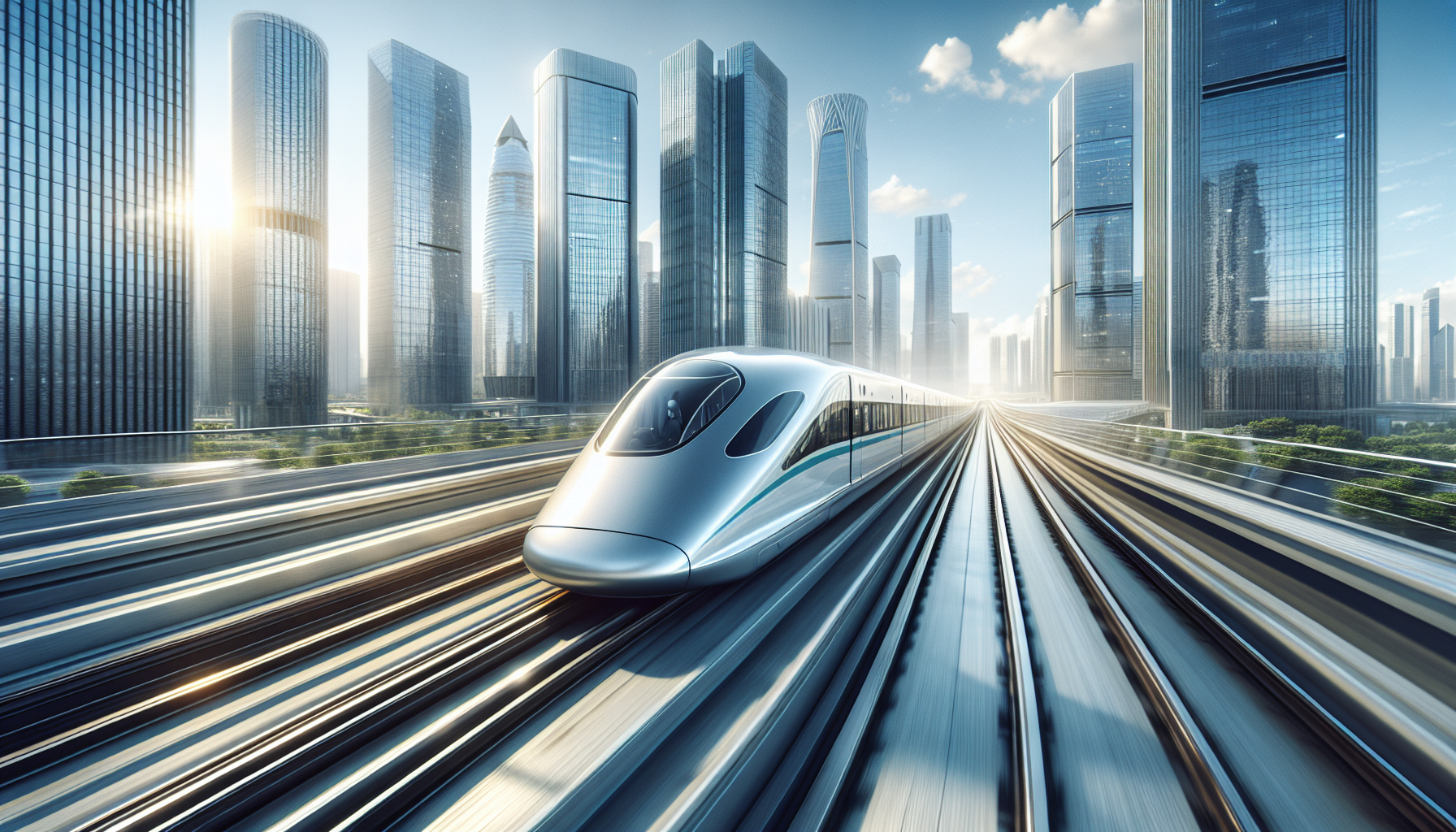
Magnetic levitation, often abbreviated as maglev, refers to a transportation technology that uses magnetic forces to lift and propel vehicles without physical contact with the ground. This lack of contact reduces friction significantly, enabling trains to achieve high speeds with increased efficiency.
The superconducting maglev train, specifically, employs superconducting magnets. These materials exhibit zero electrical resistance at very low temperatures, enabling the creation of strong magnetic fields using relatively little energy.
The train is levitated and guided along a track equipped with electrically conductive coils, forming a system that promises speed, efficiency, and a smooth riding experience.
The Baltimore–Washington Superconducting Maglev Proposal
Project Overview
The Baltimore–Washington Superconducting Maglev (SCMAGLEV) project aims to build a high-speed train system linking Baltimore and Washington, D.C., potentially extending southward to Richmond, Virginia, and northward to other Northeastern cities.
Back in the 1990s, the concept of a high-speed maglev transport link between Washington DC and Baltimore, along a 40-mile corridor, was first brought into the spotlight. This idea was given formal recognition with Section 1218 of the "Transportation Equity Act for the 21st Century," which introduced a National Magnetic Levitation Transportation Technology Deployment Program.
This initiative, managed by the Federal Railroad Administration (FRA) under the U.S. Department of Transportation, aimed to showcase high-speed maglev technology through a roughly 40-mile demonstration project.
The long-term vision was to assess its viability for longer intercity corridors. The act anticipated $1 billion in federal funding, requiring a 2-to-1 match from other sources. By May 1999, FRA had pinpointed seven projects for further scrutiny, offering them $55 million in additional funds for proposal development. From this group, the Baltimore–Washington and Pittsburgh projects emerged as semi-finalists in April 2001.
Federal financial support for these developments persisted up to the fiscal year 2004. Yet, due to legislative changes in Maryland that year, the Baltimore–Washington project was shelved, losing eligibility for federal funds in fiscal 2005. Instead, Pittsburgh and a proposed line linking Las Vegas to Anaheim received the funding, although the wider program saw its federal backing eliminated subsequently.
In 2010 a private company, Northeast Maglev, revived the endeavor. By 2016 it had been determined the line would cost between $10-$12 billion with three stops; one in each city and at Baltimore-Washington International Marshall Airport. However, despite this study - and additional discussions -no serious initiatives have been undertaken as of this writing to actually build the line.
The proposed train is expected to travel at speeds approaching 311 miles per hour (500 kilometers per hour), significantly reducing the travel time between Baltimore and Washington, D.C., to merely 15 minutes. Such a reduction could redefine commuting in one of the nation’s busiest corridors and impact both regional development and lifestyles.
Project Phases and Timeline
The development of the Baltimore–Washington maglev train is structured in phases. The first phase focuses on constructing the segment connecting Baltimore and Washington, D.C.—a critical link that, if successful, could pave the way for subsequent extensions.
Once operational, the system could fundamentally alter intercity travel dynamics in the region. The expectation is that it would offer an attractive alternative to crowded highways and conventional rail lines.
Potential Benefits of the Maglev System
Economic Growth and Job Creation
The construction and operation of the maglev line are expected to stimulate local economies significantly. The construction phase alone could create thousands of jobs, bolstering local employment rates. Additionally, improved transportation infrastructure typically catalyzes broader economic growth by attracting businesses and tourists.
Environmental Advantages
Compared to traditional forms of transportation, maglev trains offer substantial environmental benefits. Their operation emits no direct pollutants, thanks to electric propulsion, which can be powered by renewable energy sources. Moreover, the reduction in vehicular traffic due to better public transit options can help decrease overall carbon emissions in the region.
Alleviating Traffic Congestion
The Baltimore–Washington corridor is infamous for its congested highways, notably Interstate 95 and the Baltimore-Washington Parkway. The maglev train could significantly relieve this congestion, translating into reduced commuting times for countless individuals and potentially reshaping real estate patterns as proximity concerns diminish.
Enhancing Regional Connectivity
By reducing travel time drastically, the maglev system would enhance connectivity not only between Baltimore and Washington, D.C. but potentially along the entire Northeast corridor. A seamless and quick connection could facilitate easier access to opportunities and resources distributed across these urban hubs.

Challenges and Concerns
High Costs and Financing
One of the most pressing challenges facing the maglev proposal is its cost. High-speed rail systems, especially those using advanced technologies like superconducting maglev, require substantial investment.
The Baltimore–Washington project’s initial phase alone is expected to cost billions of dollars. Securing funding from private investors, government grants, and other sources is critical yet remains challenging amidst budget constraints and competing infrastructure priorities.
Regulatory and Political Hurdles
Infrastructure projects of this magnitude are subject to extensive regulatory scrutiny. Securing necessary permits and approvals involves navigating a complex landscape of federal, state, and local regulations. Additionally, political support is crucial; however, the project must appeal broadly across constituencies and overcome potential opposition from stakeholders resistant to change.
Community and Environmental Impact
While the maglev train promises environmental benefits, concerns remain regarding its construction phase. Communities along the proposed route might face disruptions, necessitating careful planning and communication to address such issues. Environmental assessments are needed to ensure that construction and operation minimize negative impacts on ecosystems and wildlife.
Technological and Logistical Feasibility
The implementation of superconducting maglev technology on a scale suitable for intercity travel poses technical challenges. Ensuring the reliability and safety of this novel system demands rigorous testing and validation. Moreover, integrating such a high-speed rail system with existing transportation networks requires thoughtful logistical planning.
Implications for the Region
Transformation of Urban Landscapes
If the maglev train succeeds in significantly reducing travel time between Baltimore and Washington, D.C., it could influence urban development patterns. Reduced travel time can make distant suburbs more attractive to commuters, potentially altering real estate values and spurring growth in areas previously overlooked.
Impact on Traditional Transportation Modes
The introduction of maglev technology may influence existing transportation providers. Rail companies like Amtrak could face increased pressure to improve service quality and efficiency. Additionally, some regional bus routes might see a reduction in demand as the maglev presents a faster alternative.
Setting a Precedent for Future Projects
The Baltimore–Washington project serves as a potential blueprint for future high-speed rail initiatives across the United States. Successful implementation could demonstrate the viability of superconducting maglev technology in urban settings, potentially influencing transportation policy and investment nationally.
Conclusion
The Baltimore–Washington Superconducting Maglev proposal represents a potential paradigm shift in the region's transportation landscape.
By promising unprecedented speed and efficiency, this project could address longstanding challenges while ushering in new opportunities for economic growth, environmental sustainability, and regional connectivity.
However, realizing this vision necessitates overcoming significant hurdles, from financing and regulatory compliance to technological integration and community dialogue.
Ultimately, the success of this transformative initiative hinges on collaboration across sectors and stakeholders. Policymakers, businesses, and communities must work together to navigate the complexities of project development and implementation.
With concerted effort and shared commitment, the Baltimore–Washington Maglev has the potential to be more than a transportation line; it could be a catalyst for bold, sustainable progress in urban mobility.
Recent Articles


-
Scenic Train Rides (USA 2026): State Guide to Tourist Railroads
Oct 04, 26 12:17 AM
 Scenic and tourist train rides in all 50 states for 2026. Colorado narrow gauge, Pennsylvania steam, Alaska’s White Pass, and the states with no full-size ride this month. Confirm on the railroad.
 -
Wyoming Scenic Train Rides (2026): A Complete Guide
Oct 03, 26 12:07 AM
 Wyoming has no full-size tourist railroad on the calendar in October 2026. Cheyenne Depot Museum and Douglas Railroad Museum are static. Union Pacific 4014’s posted public trip is a November run to De…
 -
Washington Scenic Train Rides (2026): A Complete Guide
Oct 02, 26 11:53 PM
 Washington tourist trains in 2026—Mount Rainier Scenic at Elbe, the Northwest Railway Museum, and Chehalis-Centralia. Lake Whatcom has no 2026 date on its ticket page.
 -
Wisconsin Scenic Train Rides (2026): A Complete Guide
Oct 02, 26 11:48 PM
 Wisconsin tourist trains in 2026—Wisconsin Great Northern, Osceola & St. Croix Valley, Mid-Continent, East Troy, and the National Railroad Museum.
 -
Pennsylvania Railroad Class Q2 4-4-6-4: Specs, Roster, History
Oct 02, 26 11:28 PM
 Pennsylvania Railroad Class Q2 4-4-6-4 duplexes. Twenty-six engines, 6131 and 6175–6199, Altoona 1944–45. Form 109-J specs, the 7,987 hp test of 6175, and a roster. All scrapped.
 -
Utah Scenic Train Rides (2026): A Complete Guide
Oct 02, 26 11:18 PM
 Utah tourist trains in 2026—Heber Valley Railroad from Heber City. Golden Spike at Promontory is a locomotive demonstration, not a line-haul ride.
 -
South Dakota Scenic Train Rides (2026): A Complete Guide
Oct 02, 26 11:06 PM
 South Dakota’s 2026 scenic train is the Black Hills Central 1880 Train, Hill City to Keystone. Steam is the summer assignment. Confirm the engine.
 -
Oregon Scenic Train Rides (2026): A Complete Guide
Oct 02, 26 11:04 PM
 Oregon tourist trains in 2026—Oregon Coast Scenic from Rockaway Beach, Mount Hood at Hood River, Eagle Cap from Elgin, and the Oregon Rail Heritage Center in Portland.
 -
Oklahoma Scenic Train Rides (2026): A Complete Guide
Oct 02, 26 10:36 PM
 Oklahoma has no full-size scenic railroad on an October 2026 calendar. Oklahoma Railway Museum Halloween and Polar trains, the El Reno trolley, and the Heartland Flyer.
 -
North Dakota Scenic Train Rides (2026): A Complete Guide
Oct 02, 26 01:14 PM
North Dakota has no tourist railroad on a 2026 calendar. Ride Amtrak’s daily Empire Builder. The Fort Lincoln Trolley in Mandan is not a current ticket. -
Nebraska Scenic Train Rides (2026): A Complete Guide
Oct 02, 26 10:11 AM
 Nebraska has no full-size scenic railroad in 2026. The Omaha Zoo Railroad runs weekends through October 4. Ride Amtrak’s California Zephyr across the state.
 -
Missouri Scenic Train Rides (2026): A Complete Guide
Oct 02, 26 09:56 AM
 Missouri tourist trains in 2026—Branson Scenic Railway and the St. Louis, Iron Mountain & Southern at Jackson. Belton has no 2026 schedule posted.
 -
Minnesota Scenic Train Rides (2026): A Complete Guide
Oct 02, 26 09:52 AM
 Minnesota tourist trains in 2026—North Shore Scenic Railroad in Duluth, the Duluth River Train, and the Como-Harriet streetcar.
 -
Kansas Scenic Train Rides (2026): A Complete Guide
Oct 02, 26 09:32 AM
 Kansas tourist trains in 2026—the Abilene & Smoky Valley Railroad. Santa Fe 3415 is in overhaul. Midland Railway at Baldwin City is closed.
 -
Iowa Scenic Train Rides (2026): A Complete Guide
Oct 02, 26 08:41 AM
 Iowa tourist trains in 2026—Boone & Scenic Valley across the Bass Point Creek High Bridge, and Midwest Central’s December North Pole trains
 -
Indiana Scenic Train Rides (2026): A Complete Guide
Oct 02, 26 08:35 AM
 Indiana tourist trains in 2026—French Lick Scenic Railway, Nickel Plate Express, Hoosier Valley, and Hesston. Whitewater Valley is suspended.
 -
Illinois Scenic Train Rides (2026): A Complete Guide
Oct 02, 26 12:28 AM
 Illinois tourist trains in 2026—Illinois Railway Museum, Monticello Railway Museum, Fox River Trolley, and Silver Creek & Stephenson.
 -
Texas Scenic Train Rides (2026): A Complete Guide
Oct 02, 26 12:14 AM
 Texas tourist trains in 2026—Texas State Railroad, Grapevine Vintage Railroad, Austin Steam Train's Hill Country Flyer, and the Galveston Railroad Museum.
 -
Tennessee Scenic Train Rides (2026): A Complete Guide
Oct 02, 26 12:03 AM
Tennessee tourist trains in 2026—Tennessee Valley Railroad Museum, Dollywood Express, Three Rivers Rambler Christmas trains, and the Tennessee Central Railway Museum. -
South Carolina Scenic Train Rides (2026): A Complete Guide
Oct 01, 26 11:52 PM
 South Carolina's tourist train is the South Carolina Railroad Museum in Winnsboro—Blue Granite Express, pumpkin trains, and Santa trains on the old Rockton & Rion.
 -
Mississippi Scenic Train Rides (2026): A Complete Guide
Oct 01, 26 11:38 PM
 Mississippi has no regular tourist railroad in 2026. Ride Amtrak through the state, or book the excursion lines in Alabama, Tennessee, Louisiana, or Arkansas.
 -
Louisiana Scenic Train Rides (2026): A Complete Guide
Oct 01, 26 02:52 PM
 Louisiana has no regular full-size tourist railroad in 2026. New Orleans Polar Express returns December 11–31. Museums at Long Leaf, DeQuincy, and Jackson.
 -
Kentucky Scenic Train Rides (2026): A Complete Guide
Oct 01, 26 02:45 PM
 Kentucky tourist trains in 2026—Big South Fork Scenic Railway, Bluegrass Scenic Railroad, Kentucky Railway Museum, and My Old Kentucky Dinner Train.
 -
Georgia Scenic Train Rides (2026): A Complete Guide
Oct 01, 26 02:27 PM
 Georgia tourist trains in 2026—Blue Ridge Scenic Railway, SAM Shortline, Azalea Sprinter, Savannah shop rides, and what to confirm at Stone Mountain.
 -
Arkansas Scenic Train Rides (2026): A Complete Guide
Oct 01, 26 01:02 PM
 Arkansas tourist trains in 2026—Arkansas & Missouri through the Boston Mountains, and the Eureka Springs & North Arkansas dinner and excursion trains.
 -
Alabama Scenic Train Rides (2026): A Complete Guide
Oct 01, 26 12:59 PM
Alabama tourist trains in 2026—Heart of Dixie Railroad Museum at Calera, North Alabama Railroad Museum at Chase, and the Wales West Light Railway at Silverhill. -
The Circus Train: How Such Attractions Reached Distant Cities
Oct 01, 26 12:22 PM
 How circuses moved by rail: Coup's 1872 flats, the Ringling train's sections and car counts, the 1918 Hammond wreck, and the last show on May 21, 2017.
 -
West Virginia Halloween Train Rides (2026)
Oct 01, 26 12:19 PM
 2026 West Virginia Halloween train. Cass Scenic Halloween Train, October 30 and 31, steam, 5:00 p.m. from Cass Depot. Adult $75. About two hours to Whittaker. Family ride.
 -
Wisconsin Halloween Train Rides (2026)
Oct 01, 26 12:11 PM
2026 Wisconsin Halloween trains. Mid-Continent Pumpkin Special October 24–25, adult $24, pumpkins extra. Halloween Flyer October 24 at 4:30 p.m., adult $30. Osceola Pumpkin Express boards in Osceola… -
Utah Halloween Train Rides (2026)
Oct 01, 26 12:00 PM
 2026 Utah Halloween trains at Heber Valley Railroad. Pumpkin Train, about 40 minutes, with a cookie and a pumpkin. Halloween Express, about 90 minutes to Grim Hollow, Monday, Thursday, and Friday even…
 -
Texas Halloween Train Rides (2026)
Oct 01, 26 11:28 AM
 2026 Texas Halloween train. Texas State Railroad Spooky Special, adult-only, October 24. Boards Palestine at 5:00 p.m. About five hours to Rusk and back. Dinner on the grounds. Not steam. No fare on t…
 -
Tennessee Halloween Train Rides (2026)
Oct 01, 26 12:15 AM
 2026 Tennessee Halloween trains. Tennessee Valley Railroad Museum Rails, Wizards & Spells, selected days September 18 through October 25, from $35, about 2.5 hours. Spells & Potions tea from $60. The…
 -
Frisco's "Firefly" (Train): Consist, Route, Timetable
Sep 30, 26 11:37 PM
 Frisco Firefly—daylight streamliner, Kansas City to Tulsa and Oklahoma City. Trains 117 and 118. Pacifics 1018, 1026, and 1031. Last run May 22, 1960.
 -
South Carolina Halloween Train Rides (2026)
Sep 30, 26 11:29 PM
 2026 South Carolina Halloween train. South Carolina Railroad Museum Pumpkin Patch Express, the two Saturdays before Halloween. About three miles to the Greenbriar pavilion. Pumpkin for children 12 and…
 -
Oregon Halloween Train Rides (2026)
Sep 30, 26 08:10 PM
2026 Oregon Halloween train. Sumpter Valley Railroad Halloween Express at the Sumpter Depot, calendar window October 31 at 11:00 a.m. through November 1 at 12:30 p.m. Fare and the individual clocks ar… -
Oklahoma Halloween Train Rides (2026)
Sep 30, 26 03:45 PM
2026 Oklahoma Halloween train. Oklahoma Railway Museum, October 30 and 31, from Oakwood Station in Oklahoma City. Adults $15, children 3–12 $8. A candy bag with the ride. -
McCloud River Railroad: Serving The Timber Industry (1897-2009)
Sep 30, 26 03:37 PM
 McCloud River Railroad—Mount Shasta City to McCloud, Hambone, and Burney. Opened August 1, 1897. Alco No. 25 and EMD SD38s. Dinner train through January 2010. Railbikes in 2026; a dinner train is stil…
 -
Nevada Halloween Train Rides (2026)
Sep 30, 26 03:30 PM
2026 Nevada Halloween trains in Ely. Nevada Northern Pumpkin Patch Caper and Haunted Ghost Train. Adult tickets start at $45. Dates are on the railroad’s ticket calendar. Boulder City stays off until… -
Missouri Halloween Train Rides (2026)
Sep 30, 26 11:12 AM
 2026 Missouri Halloween trains. St. Louis Iron Mountain & Southern Pumpkin Patch Train on October 3, 4, 10, and 11, and Halloween Express on October 31 at 1:00 p.m. Jackson depot. No fare on the sched…
 -
Minnesota Halloween Train Rides (2026)
Sep 30, 26 11:06 AM
 2026 Minnesota Halloween trains. North Shore Scenic Great Pumpkin Train in Duluth, October 15–18. Everyone gets a pumpkin. Terror Train is October 30, an adult costume party, about three hours. Fares…
 -
Maryland Halloween Train Rides (2026)
Sep 30, 26 10:42 AM
 2026 Maryland Halloween trains. Western Maryland Scenic Pumpkin Patch Limited, October 17, 18, 24, and 25, $14. Colesville Trolleyween October 24, 25, and 31.
 -
West Side Lumber Company Railroad: Roster, History, Lines
Sep 30, 26 09:45 AM
 West Side Lumber at Tuolumne, California. Three-foot Shay and Heisler logging railroad. Lima shop numbers, builder specs, and where the engines are in 2026.
 -
Kansas Halloween Train Rides (2026)
Sep 30, 26 09:41 AM
 2026 Kansas Halloween train. Abilene & Smoky Valley Pumpkin Harvest Express, October 17 through 31. About one hour. Shop prices $35.56 to $41.02. Everyone picks a pumpkin.
 -
Iowa Halloween Train Rides (2026)
Sep 29, 26 11:58 PM
2026 Iowa Halloween train. Boone & Scenic Valley Pumpkin Express, October 10, 10:00 a.m. from 225 10th Street. About 1 hour 15 minutes. Children pick a pumpkin. -
Arizona Halloween Train Rides (2026)
Sep 29, 26 11:43 PM
 2026 Arizona Halloween train. Grand Canyon Railway Pumpkin Patch Train from Williams, $39 with a pumpkin included. Select October dates on the ticket calendar. Haunted train cars are optional.
 -
Nevada Northern Halloween Trains (2026)
Sep 29, 26 06:18 PM
Nevada Northern 2026 Halloween trains in Ely. Pumpkin Patch Caper to Keystone Gulch and the Haunted Ghost Train. Adult tickets start at $45. Dates are on the railroad’s calendar. Confirm on nnry.com. -
Grand Canyon Railway Pumpkin Patch Train (2026)
Sep 29, 26 02:42 PM
Grand Canyon Railway Pumpkin Patch Train—select October 2026 dates from Williams, $39 with a pumpkin included. Haunted train cars are optional. Days are on the ticket calendar. Confirm on thetrain.com… -
Cass Scenic Railroad Halloween Trains (2026)
Sep 29, 26 02:37 PM
 Cass Scenic Halloween Trains—October 30 and 31, 2026, steam, 5:00 p.m. from Cass Depot. About two hours to Whittaker. Adult $75. Candy for every child. Confirm on mountainrailwv.com.
 -
Halloween Train Rides (2026): Pumpkin Patch, Haunted & Spooky Trips
Sep 29, 26 11:26 AM
 2026 Halloween train rides in nine checked states. Conway Scenic Halloween Express October 24–25. Strasburg’s three fall tickets. Great Smoky Mountains Railroad’s October trains are the gorge and rive…
 -
Maine Halloween Train Rides (2026)
Sep 29, 26 11:08 AM
 2026 Maine Halloween trains. Seashore Pumpkin Patch Trolley through October 18, adult $17. Happy Trolleyween October 23–25 at $15. WW&F Pumpkin Pickin’ October 3, 12, 17, and 24. Downeast’s booking it…