The Western Pacific’s Challenger Fleet: The M-100 Class 4-6-6-4s
Published: July 11, 2026
By: Adam Burns
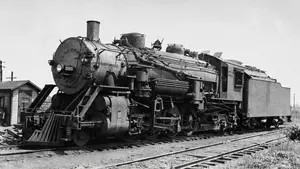
In the late 1930s, the Western Pacific Railroad (WP) stood at a crossroads. Traffic volumes were recovering from the Great Depression, and the railroad needed more powerful, faster locomotives to move longer freight trains efficiently across its transcontinental “Feather River Route.” While the WP had already invested in articulated power—primarily 2-6-6-2 Mallets and later 2-8-8-2 simple articulateds—it turned to the American Locomotive Company (ALCO) in 1938 for something different: seven 4-6-6-4 “Challenger” type locomotives. These engines, classified M-100 and numbered 401–407, represented the railroad’s only venture into the Challenger design and became its most powerful steam locomotives.
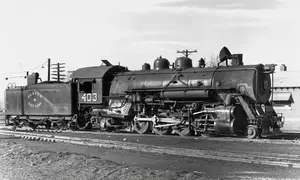
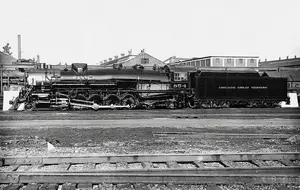
 An American Locomotive builder's photo featuring new Western Pacific 4-6-6-4 #402 at the company's Schenectady, New York plant in 1938.
The 4-6-6-4 wheel arrangement—four leading wheels, two groups of six driving wheels (articulated), and four trailing wheels—had been pioneered by the Union Pacific Railroad in the mid-1930s. UP engineers sought a locomotive that combined the high tractive effort of an articulated with the speed capability of a conventional engine.
Larger 69- or 70-inch driving wheels and simple (non-compound) expansion allowed these machines to sustain higher speeds than traditional drag-freight Mallets while still delivering massive starting power. The name “Challenger” reportedly came from a UP test engineer’s comment that the prototype would be “a challenge” on the Wasatch grades; the moniker stuck and was soon applied to the entire type.
Western Pacific’s M-100s were closely based on UP’s early “Fetter” (or Fetters) Challengers. ALCO’s Schenectady Works delivered all seven locomotives in January 1938 (builder’s numbers 68902–68908). They were coal-fired throughout their careers, reflecting the fuel practices of WP’s Eastern Division.
Technical Specifications
The M-100s were robust, relatively lightweight Challengers optimized for WP’s operating environment:
- Wheel Arrangement: 4-6-6-4 (Challenger)
- Builder: American Locomotive Company (ALCO), Schenectady Works
- Build Date: January 1938
- Road Numbers: 401–407
- Class: M-100
- Cylinders: Four, 22 in × 32 in
- Driving Wheel Diameter: 70 in
- Boiler Pressure: 265 psi
- Tractive Effort: 99,600 lbf
- Engine Weight: 590,000 lb
- Fuel: Coal (tender capacity 25 tons)
- Water Capacity (tender): 22,000 US gallons
- Grate Area: 108.2 sq ft
- Fuel Type: Coal (radial-stay firebox boiler)
These figures positioned the WP Challengers as powerful yet nimble machines. The 70-inch drivers and 265 psi boiler pressure gave them excellent speed potential on the relatively straight and level desert running between Elko, Nevada, and Salt Lake City, Utah, while the four 22 × 32-inch cylinders delivered strong starting tractive effort. The articulated design—front engine unit pivoting independently of the rear unit and boiler—allowed the long locomotive to negotiate the curves and alignments of the WP main line without excessive flange wear or speed restrictions.
Compared with later UP Challengers (which featured refinements such as 280 psi boilers and slightly smaller 21-inch cylinders on some subclasses), the WP engines were closer to the original 1936–1937 UP design philosophy: slightly larger cylinders and a lower boiler pressure optimized for the railroad’s specific needs and track conditions.
Operational History
The seven M-100s were assigned primarily to freight service on the Eastern Division, particularly between Salt Lake City and Elko. This territory featured long stretches of desert running across Utah and Nevada where the locomotives could stretch their legs, pulling longer trains at sustained higher speeds than the older Mallets or Mikados. The WP’s Feather River Route was engineered with comparatively gentle grades (maximum about 1% in many places) compared with Southern Pacific’s Donner Pass, allowing these fast, powerful articulateds to shine.
While the 2-8-8-2s (#251–260) handled the heaviest canyon helper work in the Feather River Canyon, the Challengers excelled at road service on the flatter eastern segments. They supplemented the railroad’s growing fleet of 2-8-2 Mikados and the 1936 secondhand 4-8-2 Mountains (#171–180) that handled most passenger trains.
Notable episodes in their careers include:
- 1949 Chicago Railroad Fair: Locomotive #402 was displayed at this major national exposition, giving thousands of visitors a rare look at Western Pacific motive power.
- 1950 UP Lease: In September and October 1950, engines 402–407 were leased to the Union Pacific. This temporary transfer likely supported UP’s heavy postwar and Korean War-era traffic demands. It also demonstrated the fundamental compatibility of the ALCO Challenger design across railroads.
The M-100s operated exclusively as coal burners and required special handling for major repairs—they were towed “dead” to and from the railroad’s Jeffery Shops because shop facilities and practices were increasingly oriented toward diesel locomotives.
Decline, Retirement, and Legacy
Western Pacific began dieselizing aggressively after World War II. By the early 1950s, new EMD and other diesel units were rapidly displacing steam across the system. The coal-fired Challengers, while still mechanically sound, became operationally cumbersome and economically disadvantaged compared with diesels that required less servicing, offered better availability, and eliminated the need for extensive coal and water infrastructure.
All seven M-100 locomotives were retired in 1952 and subsequently scrapped. No examples were preserved—unlike the Union Pacific, which retained two Challengers (one of which, #3985, operated in excursion service for decades). The rapid disappearance of WP steam was part of a broader industry trend; the last regular WP steam run occurred in June 1953.
Today the M-100s are remembered as a brief but impressive chapter in the railroad’s motive-power story. They bridged the gap between the railroad’s earlier compound Mallets and the diesel era, bringing modern articulated speed and power to the scenic Feather River Route. Although their service life was short—roughly 14 years—they demonstrated the WP’s willingness to invest in high-performance steam technology right up to the eve of dieselization.
Enthusiasts and historians value the M-100s for their clean ALCO styling, their role in fast desert freight service, and their connection to the broader Challenger family that included locomotives on the UP, Delaware & Hudson, Northern Pacific, Western Maryland, and other lines. Models produced by manufacturers such as MTH have helped keep the visual legacy alive for a new generation of railfans.
The Western Pacific’s seven Challengers may have been few in number and relatively short-lived, but they remain a distinctive and powerful footnote in the history of American articulated steam—and a testament to the engineering ambition of a railroad that always punched above its weight on the challenging terrain between the Bay Area and Salt Lake City.
Recent Articles


-
Kansas City Southern Steam Roster (Built Since 1900)
Oct 25, 26 11:50 AM
Steam locomotives of the Kansas City Southern built since 1900, with the Louisiana & Arkansas and the Texas company. -
Kansas City Southern Diesel Roster (Built New)
Oct 25, 26 11:46 AM
 All-time diesel roster of the Kansas City Southern. E units, F units, Geeps, SD40s through SD70ACes, Fairbanks-Morse, Baldwin, Alco, and General Electric, with serials and order numbers.
 -
Kansas City Southern Railway: Map, Photos, History
Oct 25, 26 12:24 AM
 The Kansas City Southern, from Arthur Stilwell's Gulf line to Canadian Pacific Kansas City on April 14, 2023. Steam and diesel rosters, the Southern Belle, and the Louisiana & Arkansas.
 -
Indiana Harbor Belt Diesel Roster (All-Time)
Oct 25, 26 12:17 AM
 All-time diesel roster of the Indiana Harbor Belt. 202 locomotive frames, each counted once. NW2s, SW7s, SW1500s, road switchers, and gensets. Slugs and boosters are outside the count.
 -
Indiana Harbor Belt Steam Roster (Built Since 1900)
Oct 25, 26 12:13 AM
 Steam locomotives of the Indiana Harbor Belt built since 1900. 182 engines, each counted once. 0-6-0s, 2-6-0s, 0-8-0s, and 2-8-2s. The three U-4a switchers are three-cylinder Brooks engines of 1927.
 -
Indiana Harbor Belt Railroad: Map, Rosters, History
Oct 25, 26 12:00 AM
 Indiana Harbor Belt, the inner belt across the Calumet, from the East Chicago Belt of May 16, 1896. Renamed June 29, 1907. Still operating, headquarters Hammond. Steam roster is the companion, 182 loc…
 -
NYC's "P Motor" Electric Locomotives
Oct 24, 26 11:43 PM
 New York Central P motors: 22 Alco-GE 2-C+C-2 electrics, Cleveland Union Terminal 1050–1071, class P-1a. 3,030 hp one-hour on 3,000-volt DC catenary, then 660-volt third rail as P-2a and P-2b.
 -
Illinois Terminal Car Roster
Oct 24, 26 11:40 PM
 Illinois Terminal cars. Mainline motors, the 1948 streamliners, sleepers, Alton and Valley Division cars, express motors, and the line cars rebuilt from pull cars.
 -
Illinois Terminal Diesel Roster
Oct 24, 26 09:31 PM
 All-time Illinois Terminal diesels, 62 frames. Alco S-2s and RS-1s, EMD switchers, GP7s, SD39s, GP38-2s, and the two GP20s. Serial numbers from the 1989 roster.
 -
Illinois Terminal Electric Locomotives
Oct 24, 26 08:22 PM
 Illinois Terminal electric locomotives, 57 frames. Class A through Class D, the Decatur-built motors, and the battery locomotives. Class D is the same five Class C frames, rebuilt.
 -
Illinois Terminal Steam Roster
Oct 24, 26 07:37 PM
 Illinois Terminal steam locomotives, 36 frames. Baldwin Moguls, three Class 30 Mikados, Florida East Coast 0-8-0s, and 2-6-0 No. 21, the last fire on June 30, 1950.
 -
Illinois Terminal Railroad: Map, Roster, Photos, History
Oct 24, 26 07:32 PM
 Illinois Terminal, McKinley's Illinois Traction System, from the Danville coal towns to St. Louis. The McKinley Bridge, the sleeping cars, the 1937 break with the power company, the 1948 streamliners…
 -
Southern Railway Diesel Roster (All-Time)
Oct 23, 26 11:00 PM
 All-time diesel roster of the Southern Railway. 2,505 locomotives in the system number series, from the 1939 demonstrator FT to GP50s and B30-7A1s. Serials included.
 -
Illinois Central Diesel Roster (All-Time)
Oct 23, 26 04:06 PM
 Illinois Central and Illinois Central Gulf diesel locomotives, each frame once. The quantity column is 886. Serials and order numbers from Electro-Motive's builder lists. Paducah rebuilds and Gulf, Mo…
 -
Illinois Central Gulf Diesel Roster
Oct 23, 26 04:02 PM
 Illinois Central Gulf operating numbers from August 10, 1972, to February 29, 1988. New frames stay on the Illinois Central diesel roster. Gulf, Mobile and Ohio frames stay on that roster. No Gulf fle…
 -
Illinois Central Railroad: Map, Logo, History
Oct 23, 26 03:50 PM
Illinois Central, the Main Line of Mid-America, from the 1850 land grant to Canadian National control on July 1, 1999. Charter lines, Cairo bridge, Paducah, and the Illinois Central Gulf. Steam quanti… -
Grand Trunk Western Diesel Roster (All-Time)
Oct 23, 26 12:53 PM
 Grand Trunk Western diesel locomotives, each frame once. The quantity column is 377. Serials are filled for the Detroit, Toledo and Ironton and Detroit and Toledo Shore Line engines the railroad kept…
 -
Grand Trunk Western Steam Roster
Oct 23, 26 12:14 PM
 Grand Trunk Western steam locomotives in service about 1937 to 1942, from Richard Leonard's class list. Drury has no chapter. The quantity column is the counted Grand Trunk Western rows. Two mixed Gra…
 -
Grand Trunk Western Railroad: Map, Roster, History
Oct 23, 26 12:09 PM
 Grand Trunk Western, reporting mark GTW, Canadian National's railroad between Port Huron and Chicago. Trade name adopted in 1923. Steam class list quantity 232. Diesel quantity column 377. Identity in…
 -
Green Bay and Western Railroad: Map, Rosters, History
Oct 22, 26 11:18 PM
 Green Bay & Western, the Green Bay Route, reporting mark GBW. From Kewaunee to Winona. Mailer's steam and diesel rosters, and the August 1993 sale to Fox Valley & Western.
 -
Chicago & North Western Class E-4: Streamlined 4-6-4 Hudsons
Oct 22, 26 10:28 PM
 C&NW Class E-4, nine streamlined 4-6-4s, 4001–4009, Alco 1938. 84-inch drivers, 25-by-29 cylinders, 300 psi. Conventional Chicago–Omaha trains. Oil in 1947–48. Retired 1953–1956.
 -
Gateway Western Railway: Map, Roster, History
Oct 22, 26 02:43 PM
 Gateway Western Railway, reporting mark GWWR. Class II from Kansas City to East St. Louis. Kansas City Southern control May 5, 1997. The 1992 diesel fleet, with serials and order numbers.
 -
Duluth, Winnipeg & Pacific Railway: Roster, Map, History
Oct 22, 26 01:51 PM
 Duluth, Winnipeg & Pacific, the Peg, reporting mark DWP. From the Rainy River to Duluth. CNRHA steam list 36. Fifteen RS-11s. Merged into Wisconsin Central Ltd. on December 31, 2011.
 -
Elgin, Joliet and Eastern Diesel Roster (All-Time)
Oct 22, 26 01:35 PM
 All-time diesel roster of the Elgin, Joliet and Eastern.
 -
Elgin, Joliet and Eastern Steam Roster
Oct 22, 26 01:25 PM
 Elgin, Joliet and Eastern steam locomotives of the final decade, which largely comprised switcher types, 2-8-0s, and a large fleet of Mikados.
 -
Elgin, Joliet and Eastern Railway: Map, Roster, History
Oct 22, 26 12:32 PM
 Elgin, Joliet & Eastern, the outer arc around Chicago, from the Joliet, Aurora & Northern of April 30, 1884. Illinois company March 18, 1887. Merged December 4, 1888. Principal lines sold Janu…
 -
Denver and Salt Lake Railway: History, Roster, Timetable
Oct 22, 26 09:47 AM
 Denver & Salt Lake, the Moffat Road, from Denver to Craig. Tunnel opened February 26, 1928. Dotsero Cutoff dedicated June 16, 1934. Merged April 11, 1947. Steam locomotives 59.
 -
Duluth, Missabe and Iron Range Diesel Roster (All-Time)
Oct 22, 26 09:43 AM
 All-time diesel roster of the Duluth, Missabe and Iron Range. 148 owned frames, each counted once. SW9s, SD9s, SD18s, SD38s, RSD-15s, and C630s. Serials and builder order numbers included. Helm SD40-3…
 -
Duluth, Missabe and Iron Range Steam Locomotives (Since 1900)
Oct 22, 26 09:22 AM
 Duluth, Missabe & Iron Range steam locomotives built since 1900. Duluth & Iron Range, Duluth, Missabe & Northern, and later DM&IR acquisitions. Quantity column 252. Yellowstones 220-23…
 -
Duluth, Missabe and Iron Range Railway: Roster, Map, Logo
Oct 22, 26 09:17 AM
Duluth, Missabe & Iron Range, reporting mark DMIR, from the Mesabi and the Vermilion to the Lake Superior docks. Formed July 1, 1937. Steam quantity 252. Owned diesels 148. On paper through Decemb… -
Duluth, South Shore, and Atlantic Railway: Map, Roster, Timetables
Oct 21, 26 11:21 PM
 Duluth, South Shore & Atlantic Railway, the South Shore. Marquette to the Sault, St. Ignace, Houghton, and Duluth-Superior. Soo Line on January 1, 1961. Twenty-four diesels.
 -
Detroit, Toledo and Ironton Diesel Roster (All-Time)
Oct 21, 26 02:55 PM
 All-time diesel roster of the Detroit, Toledo and Ironton. 119 frames, each counted once. Serials and builder order numbers included. Last steam was December 24, 1955.
 -
Detroit, Toledo and Ironton Steam Roster (Post 1900)
Oct 21, 26 02:49 PM
 Detroit, Toledo and Ironton steam locomotives built after 1900. Drury's class grid. The quantity column prints 141. Counted once, the frames are 137. Last steam was Mikado 805 on December 24, 1955.
 -
Detroit, Toledo and Ironton Railroad: Map, Roster, History
Oct 21, 26 02:40 PM
 Detroit, Toledo & Ironton, reporting mark DTI, from Detroit to Ironton, Ohio. Railway organized May 2, 1905. Railroad articles filed February 21, 1914. Henry Ford, 1920 to 1929. Steam and diesel r…
 -
Iowa, Chicago and Eastern Railroad: Roster, Map, History
Oct 21, 26 01:04 PM
 Iowa, Chicago & Eastern Railroad Corporation, reporting mark ICE. About 1,125 miles and about 275 miles of trackage rights from the I&M Rail Link. Operations at 12:01 a.m. July 30, 2002. Canad…
 -
Rapid City, Pierre & Eastern Railroad: Route, Roster, Overview
Oct 21, 26 10:16 AM
 Rapid City, Pierre & Eastern Railroad, reporting mark RCPE. Genesee & Wyoming Class II. Agreement of January 2, 2014, Finance Docket 35799. Freight service from June 1, 2014, on the Dakota, Mi…
 -
Dakota, Minnesota & Eastern Railroad: Roster, Map, History
Oct 21, 26 12:26 AM
 Dakota, Minnesota & Eastern Railroad, reporting mark DME. The July 2, 1986 Chicago & North Western sale, 826 miles and 139 miles of trackage rights. Canadian Pacific control October 30, 2008…
 -
Detroit and Mackinac Railway: Map, Roster, History
Oct 20, 26 11:58 PM
 Detroit & Mackinac Railway, the Turtle Line. Bay City to Cheboygan along Lake Huron. Incorporated December 29, 1894. Lake State Railway leased the operation in 1992 and bought the lines in 1997. E…
 -
Davenport, Rock Island and Northwestern Railroad
Oct 20, 26 11:22 PM
 Davenport, Rock Island and North Western Railway, the DRI Line. Clinton to East Moline across the Crescent Bridge. Burlington and Milwaukee. Merged into the Soo Line on June 29, 1995. Eighteen diesels…
 -
Chicago Great Western Steam Roster (Post 1900)
Oct 20, 26 11:17 PM
Chicago Great Western steam locomotives built or rebuilt since 1900. Drury's class grid. 320 frames, each once. The quantity column prints 376 because a rebuild is listed again. Last steam in the reti… -
Chicago Great Western Diesel Roster (All-Time)
Oct 20, 26 10:47 PM
All-time diesel roster of the Chicago Great Western. 157 frames, each counted once. Serials and builder order numbers included. Steam was gone by 1950. The 1963 glance figure of 141 is one year's flee… -
Chicago Great Western Railway: Map, Photos, History, Rosters
Oct 20, 26 10:43 PM
 The Chicago Great Western, the Corn Belt Route, linked Chicago, the Twin Cities, Omaha, and Kansas City from September 27, 1885, until the Chicago & North Western merger at 12:01 a.m. on July 1, 1968…
 -
Chicago, South Shore & South Bend Railroad: "The South Shore Line"
Oct 20, 26 05:48 PM
 Chicago South Shore & South Bend, the South Shore Line, from the 1901 Air Line through Samuel Insull's 1925 rebuild, the orange cars, the 800s, and the railroad NICTD and Anacostia still run.
 -
Northwestern Virginia Railroad: Map, History, Timetable
Oct 20, 26 04:18 PM
 Northwestern Virginia Railroad, chartered February 14, 1851, Grafton to Parkersburg, 104 miles. Opened May 1, 1857. Foreclosure sale February 15, 1865, as the Parkersburg Branch. Twenty-three tunnels…
 -
"Exposition Flyer" (Train): Consist, Timetable, History
Oct 20, 26 03:29 PM
 Exposition Flyer, Chicago to Oakland, June 10, 1939 to March 20, 1949. Burlington, Rio Grande, and Western Pacific. Heavyweight cars, then diesels and a vista-dome. Replaced by the California Zephyr.
 -
Chicago, St. Paul, Minneapolis & Omaha Railway, "The Omaha Road"
Oct 20, 26 02:13 PM
 The Omaha Road, reporting mark CMO. Formed May 26, 1880. North Western management on December 16, 1882. Leased January 1, 1957. Class K-1 No. 183 and the sublettered diesels.
 -
Chicago and Western Indiana Railroad: Map, Rosters, History
Oct 20, 26 01:17 PM
 Chicago and Western Indiana, chartered June 5, 1879. Five equal owners, Dearborn Station, and two main lines. Dolton suburban mile 16.6. Fifteen diesels. Railroad service ended in 1994. The Illinois c…
 -
Railroad Tell-Tales: Protecting The Brakeman
Oct 20, 26 12:58 PM
 Railroad tell-tales: hanging ropes that warned a man on a freight-car roof of a low bridge or tunnel. The 1897 bridge-warning report, the 1905 Wisconsin statute, retainers, and why the roof walk outla…
 -
Chicago & North Western Steam Roster (Post 1900)
Oct 20, 26 12:54 PM
 Chicago & North Western steam locomotives built since 1900, and the Omaha Road list beside it. Drury's parent quantity column sums to 1,445, with four rows left blank. The Omaha Road column sums to 24…
 -
Chicago & North Western Diesel Roster (All-Time)
Oct 20, 26 12:49 PM
 All-time diesel roster of the Chicago & North Western. 2,494 frames, each counted once, including Chicago Great Western, Minneapolis & St. Louis, and Omaha Road units that received North Western numbe…