Richmond, Fredericksburg & Potomac Steam Roster (Since 1900)
Published: October 14, 2026
By: Adam Burns
In 1926 the Richmond, Fredericksburg & Potomac renumbered its locomotives and classed the roster for the first time. There were still no class letters. Engines were known by their numbering series, and the only ones that received names were the 4-8-4s. The table below is George H. Drury’s list of steam locomotives built since 1900, with the post-1926 numbers in the second column.
Before the renumbering, road power was divided by mileage between the Richmond, Fredericksburg & Potomac and the Washington Southern. Washington Southern switchers worked Potomac Yard. Richmond switchers worked the Richmond yards. After 1904 the engines were lettered Richmond-Washington Line. The Washington Southern itself disappeared into the Richmond, Fredericksburg & Potomac in 1920. Its old numbers survive in the pre-1926 column, marked WS.
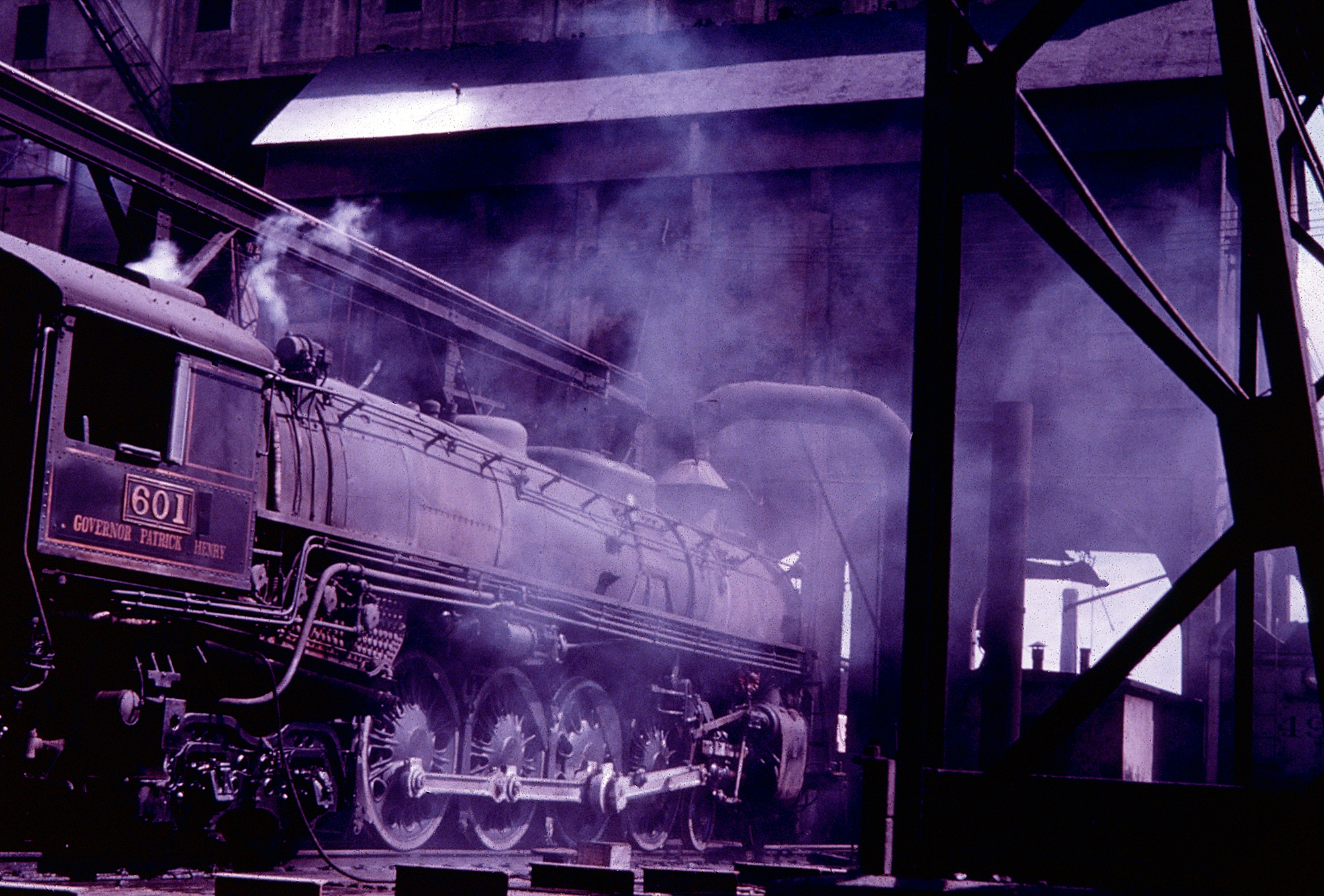
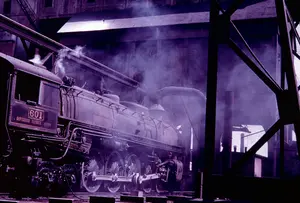
4-8-4 No. 601, “Governor Patrick Henry,” takes coal at Ivy City, Washington, D.C., during the 1950s. Ed Olsen photograph. American-Rails.com collection. Baldwin works number 62218, October 1938.
On this page: At a glance · Roster since 1900 · Pacifics and Mountains · Switchers and the hump · The named 4-8-4s
At a glance
| Item | Detail |
|---|---|
| Railroad | Richmond, Fredericksburg & Potomac. Mark RFP. Company history |
| This table | Steam locomotives built since 1900, in Drury’s post-1926 numbers |
| Renumbered | 1926. No class letters |
| Named engines | 4-8-4s only. Generals 551–555, Governors 601–612, Statesmen 613–622 |
| Last new steam | Statesmen 613–622, Baldwin, 1944–1945 |
| Last revenue steam | December 17, 1954 |
| After that | Statesmen 613–622 leased to the Chesapeake & Ohio about 1955, returned, scrapped in 1959 |
Roster since 1900
Drury’s columns are the wheel arrangement, the number after 1926, the number before 1926, the quantity, the builder, the year built, the year retired, and a note. A blank post-1926 number means the engine was sold before the renumbering. Richmond is the Richmond works. WS is the Washington Southern. BLW is Baldwin.
| Type | Post-1926 numbers | Pre-1926 numbers | Qty | Builder | Built | Retired | Notes |
|---|---|---|---|---|---|---|---|
| 0-6-0 | 1, 3 | RF&P 100, 101 | 2 | Baldwin | 1903, 1905 | 1940, 1941 | |
| 0-6-0 | 2, 4, 5 | WS 110–112 | 3 | Baldwin | 1903, 1905 | 1939–1945 | |
| 0-6-0 | 11–13 | RF&P 102–104 | 3 | Baldwin | 1906 | 1936 | |
| 0-6-0 | 14, 15 | WS 113, 114 | 2 | Baldwin | 1906 | 1936, 1945 | |
| 0-6-0 | 21, 22 | RF&P 105, 106 | 2 | Baldwin | 1912 | 1945, 1938 | |
| 0-6-0 | 25–27 | WS 115–117 | 3 | Richmond | 1908 | 1936–1945 | |
| 0-6-0 | 31, 32 | RF&P 107, 108 | 2 | Baldwin | 1919 | 1949 | |
| 0-6-0 | 35, 36 | WS 121, 122 | 2 | Baldwin | 1918 | 1947, 1948 | |
| 0-6-0 | 41 | WS 109 | 1 | Richmond | 1918 | 1949 | |
| 0-6-0 | 42–44 | RF&P 123–125 | 3 | Richmond | 1921, 1923 | 1949 | |
| 0-6-0 | 45, 46 | RF&P 127, 128 | 2 | Richmond | 1925 | 1949, 1953 | |
| 0-6-0 | 47, 48 | — | 2 | Richmond, Baldwin | 1918–1927 | — | Sold 1951 |
| 0-8-0 | 71–73 | WS 118–120 | 3 | Richmond | 1914, 1918 | 1948–1953 | |
| 0-8-0 | 74 | RF&P 126 | 1 | Richmond | 1923 | 1953 | |
| 0-8-0 | 91, 92 | RF&P 130, 131 | 2 | Richmond | 1923 | 1953 | |
| 2-8-4 | 571–580 | — | 10 | Lima | 1943 | 1952 | Virtual duplicates of Nickel Plate 730–739 |
| 2-8-8-2 | 1–3 | — | 3 | Schenectady | 1925 | 1949 | Former Chesapeake & Ohio. Bought 1943 for Potomac Yard hump service. Simple articulateds |
| 4-6-0 | 101–105 | RF&P 25–29 | 4 | Richmond | 1903 | 1930–1946 | |
| 4-6-0 | — | RF&P 30–35 | 6 | Richmond | 1900 | — | Sold 1916–1923 |
| 4-6-0 | — | RF&P 36, 37 | 2 | Baldwin | 1901 | — | Sold 1916 |
| 4-6-0 | 106–113 | RF&P 38–46 | 9 | Richmond | 1901, 1903 | 1927–1935 | No. 39 retired before renumbering |
| 4-6-2 | 151–160 | WS 60–69 | 10 | Baldwin | 1904 | 1929–1946 | |
| 4-6-2 | 161–165 | RF&P 70–74 | 5 | Richmond | 1905 | 1929, 1946 | |
| 4-6-2 | 201–206 | RF&P 80–85 | 6 | Baldwin | 1907 | 1937–1950 | |
| 4-6-2 | 251–255 | WS 51–55 | 5 | Baldwin | 1913 | 1937–1950 | |
| 4-6-2 | 256–259 | WS 56–59 | 4 | Richmond | 1911 | 1950 | |
| 4-6-2 | 260–263 | RF&P 86–89 | 4 | Richmond | 1912 | 1937–1950 | |
| 4-6-2 | 264–268 | RF&P 90–94 | 5 | Richmond | 1913 | 1937–1950 | |
| 4-6-2 | 301–312 | RF&P 10–21 | 12 | Baldwin, Richmond | 1918–1925 | 1950, 1952 | |
| 4-6-2 | 325–328 | — | 4 | Baldwin | 1927 | — | Sold to the Chesapeake & Ohio, 1947 |
| 4-6-2 | 401–406 | RF&P 1–6 | 6 | Baldwin | 1915, 1916 | 1950 | Freight Pacifics. Rebuilt in the late 1920s with Elesco feedwater heaters and booster trailing trucks |
| 4-8-2 | 501–504 | RF&P 200–203 | 4 | Richmond | 1924, 1925 | 1950 | Two in 1924 and two in 1925 |
| 4-8-2 | 515–520 | — | 6 | N&W | 1926 | — | Norfolk & Western class K3. Bought 1944, stored, sold to the Wheeling & Lake Erie in 1948 |
| 4-8-4 | 551–555 | — | 5 | Baldwin | 1937 | 1952 | Generals. Works 61974–61978. Freight engines. Names below |
| 4-8-4 | 601–622 | — | 22 | Baldwin | 1938–1945 | 1953–1954 | Governors 601–612 and Statesmen 613–622. 613–622 leased to the Chesapeake & Ohio about 1955 and scrapped in 1959 |
Pacifics and Mountains
The first Pacifics were freight engines. Baldwin built Washington Southern Nos. 60–69 in 1904, later 151–160, and Richmond built Richmond, Fredericksburg & Potomac Nos. 70–74 in 1905, later 161–165. Drivers were 68 inches. Cylinders were 20 by 26 inches or 21 by 26 inches. Sixty-nine-inch drivers later became the standard. Three engines of the 151 class were superheated and given outside-bearing trailing trucks, and they lasted until 1946. The rest of that early group was scrapped before the Second World War.
The 1907 Pacifics, Nos. 201–206, were passenger engines: 73-inch drivers, saturated steam, slide valves, Walschaerts gear, and inside-bearing trailing trucks. Nos. 256–263 were the same general engine, heavier at 252,000 pounds against 238,000 pounds, superheated, with piston valves and new trailing trucks. The 1913 engines still had inside-bearing trailing trucks. Baldwin’s 251–255 weighed 240,000 pounds and were slippery. Richmond’s 264–268 weighed 258,340 pounds. In the end the 200s had 23 by 28 inch cylinders and 34,500 pounds of tractive effort, and most of them finished in freight.
Baldwin’s six freight Pacifics, Nos. 401–406, were built in 1915 and 1916. They had 68-inch drivers, later 69, cylinders 26 by 28 inches, and 47,320 pounds of tractive effort. In the late 1920s they were rebuilt with Elesco feedwater heaters and cast trailing trucks with boosters. Nos. 301–312, Richmond in 1918 and 1920 and Baldwin in 1924 and 1925, had 75-inch drivers. Drury places them between the United States Railroad Administration light and heavy Pacifics, and about 14,000 pounds heavier than the heavy USRA engine. The last passenger Pacifics, Nos. 325–328, came from Baldwin in 1927: 75-inch drivers, 27 by 28 inch cylinders, 342,600 pounds, and 48,580 pounds of tractive effort. They were sold to the Chesapeake & Ohio in 1947.
Four Mountains, Nos. 501–504, were ordered from Richmond as two in 1924 and two in 1925. They were heavier than the USRA heavy Mountain, with smaller cylinders, 73-inch drivers, and slightly less power. The other six 4-8-2s were Norfolk & Western class K3 engines, built in 1926 with 63-inch drivers. The Richmond, Fredericksburg & Potomac bought them in 1944, stored them through the war, and sold them to the Wheeling & Lake Erie in 1948, where they met four other K3s that had spent the war on the Rio Grande.
The ten 2-8-4s, Nos. 571–580, were the quick wartime freight engines. Lima built them in 1943 as virtual duplicates of Nickel Plate 730–739, and at the same time. They were retired in 1952.
Switchers and the hump
The early 0-6-0s were slide-valve engines weighing from 110,000 to 150,000 pounds. Later six-wheel switchers had piston valves, were not superheated, and weighed about 170,000 pounds. The 0-8-0s were hump engines for Potomac Yard. Nos. 71–74 had 24 by 28 inch cylinders, 51-inch drivers, and weighed 229,000 pounds. The last two, Nos. 91 and 92, had 26-inch cylinders, 53-inch drivers, and weighed 259,000 pounds. Wartime traffic through the yard outgrew even those engines. In 1943 the railroad bought three simple 2-8-8-2s from the Chesapeake & Ohio, Nos. 1–3, built at Schenectady in 1925. They were retired in 1949.
The named 4-8-4s
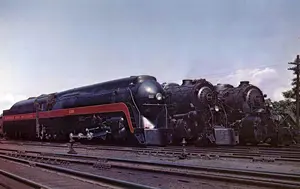
They were 4-8-4s, and the railroad named them Generals, Governors, and Statesmen. The five Generals were freight engines. Drury gives the reason: too wide for the Capitol Hill tunnel into Washington, and too heavy for the Long Bridge across the Potomac. Roller bearings were fitted only on the lead trucks. The other axles had friction bearings. Frames were one-piece cast steel. The 1947 Locomotive Cyclopedia card, as carried by Locobase, gives 77-inch drivers, 27 by 30 inch cylinders, 275 pounds of boiler pressure, 66,391 pounds of tractive effort, and an engine weight of 466,040 pounds. The tender held 20,000 gallons. Weight on the drivers was 277,245 pounds, and engine and tender together were 842,940 pounds. Valve gear was Walschaerts. Baldwin’s works numbers are 61974 through 61978. Drury’s year is 1937. Wiley Bryan rates them above 66,000 pounds of tractive effort, good for 3,000 tons northbound and 2,500 tons southbound.
| Number | Name | Works | Built |
|---|---|---|---|
| 551 | General Robert E. Lee | 61974 | 1937 |
| 552 | General T. J. Jackson | 61975 | 1937 |
| 553 | General J. E. B. Stuart | 61976 | 1937 |
| 554 | General A. P. Hill | 61977 | 1937 |
| 555 | General J. E. Johnson | 61978 | 1937 |
The Governors used the same cylinders and the same 77-inch drivers. Drury’s weight for the 1938 engines is 406,810 pounds, about 60,000 pounds under the Generals. They had long Vanderbilt tenders. Like the Generals they had one-piece cast steel frames, and the 1938 engines had friction bearings on all axles. Bryan rates the Governors and the Statesmen at about 63,000 pounds of tractive effort. Nos. 601–606 are Baldwin works 62218–62223. Nos. 607–612, works 64625–64630, arrived in 1942. On 607–622 the tender water rose to 18,000 gallons. The 1938 tenders had been 16,000 gallons.
| Number | Name | Works | Built |
|---|---|---|---|
| 601 | Governor Patrick Henry | 62218 | 1938 |
| 602 | Governor Thomas Jefferson | 62219 | 1938 |
| 603 | Governor Thomas Nelson | 62220 | 1938 |
| 604 | Governor Benjamin Harrison | 62221 | 1938 |
| 605 | Governor James Monroe | 62222 | 1938 |
| 606 | Governor John Tyler | 62223 | 1938 |
| 607 | Governor Edmund Randolph | 64625 | 1942 |
| 608 | Governor Henry A. Wise | 64626 | 1942 |
| 609 | Governor John Letcher | 64627 | 1942 |
| 610 | Governor Fitzhugh Lee | 64628 | 1942 |
| 611 | Governor William Smith | 64629 | 1942 |
| 612 | Governor Claude A. Swanson | 64630 | 1942 |
The ten Statesmen, Nos. 613–622, are Baldwin works 71992–72001, built in 1944 and 1945. They followed the Governors, with rectangular tenders and Timken roller bearings on all axles. The engine weight on the later card is 409,400 pounds. Drury’s retirement column for the whole 601–622 group is 1953–1954. The last revenue day for Richmond, Fredericksburg & Potomac steam was December 17, 1954. The Generals had already been retired in 1952. The Statesmen were leased to the Chesapeake & Ohio about 1955, returned, and scrapped in 1959.
| Number | Name | Works | Built |
|---|---|---|---|
| 613 | John Marshall | 71992 | 1944–1945 |
| 614 | George Washington | 71993 | 1944–1945 |
| 615 | Henry Clay | 71994 | 1944–1945 |
| 616 | George Mason | 71995 | 1944–1945 |
| 617 | John Randolph | 71996 | 1944–1945 |
| 618 | James Madison | 71997 | 1944–1945 |
| 619 | William Byrd | 71998 | 1944–1945 |
| 620 | George Wythe | 71999 | 1944–1945 |
| 621 | Richard Henry Lee | 72000 | 1944–1945 |
| 622 | Carter Braxton | 72001 | 1944–1945 |
Related reading on American-Rails.com
- Richmond, Fredericksburg & Potomac · Diesel roster · August 1952 timetable
- Chesapeake & Ohio · Norfolk & Western · Nickel Plate Road
- 4-8-4 · Pacific
Sources
- George H. Drury, Guide to North American Steam Locomotives, revised edition, pp. 279–280. The roster grid above, including builders, dates, quantities, and the pre-1926 numbers. Prose dimensions for the Pacifics, the 0-6-0s, the 0-8-0s, the 1927 passenger Pacifics, the Mountains, the Generals’ service limits, and the Governor weight of 406,810 pounds. Simple former Chesapeake & Ohio 2-8-8-2s, bought in 1943. Lima 2-8-4s as virtual duplicates of Nickel Plate 730–739. K3s bought in 1944 and sold to the Wheeling & Lake Erie in 1948. Statesmen leased to the Chesapeake & Ohio about 1955 and scrapped in 1959. Drury cites the Richmond, Fredericksburg & Potomac Railroad Historical Society and recommends Richard E. Prince, The Richmond-Washington Line and Related Railroads (1973). Published rosters: Railroad magazine, November 1932, p. 554, and March 1952, p. 102.
- Wiley Bryan, “Capital Cities Route,” Trains, November 1941. No class letters. Generals above 66,000 pounds of tractive effort, 3,000 tons northbound and 2,500 southbound. Governors and Statesmen about 63,000 pounds.
- Locobase, steamlocomotive.com, cards 10076 and 276, from the 1947 Locomotive Cyclopedia. General works 61974–61978. Drivers, cylinders, 275 psi, tractive effort 66,391 pounds, engine 466,040 pounds, drivers 277,245 pounds, engine and tender 842,940 pounds, tender 20,000 gallons. Governor and Statesman works 62218–62223, 64625–64630, and 71992–72001. Tender water 16,000 gallons, then 18,000 gallons on 607–622. Timken roller bearings on all axles and rectangular tenders on the last ten. Later engine weight 409,400 pounds. The name list, with George Wythe on 620 and James Monroe on 605.
- E. L. Thompson, “Richmond-Washington,” Trains, November 1946, for the immediate postwar count of about 115 locomotives. Last revenue steam on December 17, 1954, as carried on the company page.
Recent Articles


-
Escanaba & Lake Superior Railroad: In Service Since 1898
Oct 14, 26 09:04 PM
 Escanaba & Lake Superior Railroad, chartered November 17, 1898, and still operating from Wells, Michigan. Logging line to Channing, the Milwaukee Road lines, and the diesel roster.
 -
Richmond, Fredericksburg & Potomac Diesel Roster (All-Time)
Oct 14, 26 08:49 PM
 All-time diesel roster of the Richmond, Fredericksburg and Potomac. 107 locomotives: 22 Alco S2s, one SW1, and an Electro-Motive road fleet from E8s to GP40-2s. Serials and order numbers.
 -
Richmond, Fredericksburg & Potomac Steam Roster (Since 1900)
Oct 14, 26 08:46 PM
 Richmond, Fredericksburg and Potomac steam locomotives built since 1900. Pacifics, Mountains, Berkshire-type 2-8-4s, and the named 4-8-4s. Last revenue run December 17, 1954.
 -
Richmond, Fredericksburg and Potomac Railroad: Map, Rosters, Logo
Oct 14, 26 08:36 PM
 The Richmond, Fredericksburg and Potomac, chartered February 25, 1834. A 113-mile Richmond–Washington bridge line. Named 4-8-4s, Potomac Yard, and the CSX sale of October 10, 1991.
 -
North Dakota Railroad Museums (2026): A Complete Guide
Oct 14, 26 08:29 PM
 North Dakota railroad museums—Mandan’s state museum, the Railroad Museum of Minot, and Bonanzaville’s Northern Pacific 684. Confirm hours on each site.
 -
Oklahoma Railroad Museums (2026): A Complete Guide
Oct 14, 26 08:02 PM
Oklahoma railroad museums—the Oklahoma Railway Museum, Enid’s Frisco 1519, Waynoka’s Harvey House, and El Reno’s Rock Island depot. Confirm hours on each site. -
Oneida & Western Railroad: Map, History, Timetable
Oct 14, 26 06:47 PM
 Oneida & Western Railroad, a Tennessee short line from Oneida to Jamestown. Chartered in 1912, opened to East Jamestown in 1921, and to Jamestown on December 10, 1930. Last revenue train March 4, 1954…
 -
Oneida and Western Railroad (Shamrock Coal Company)
Oct 14, 26 03:20 PM
 Shamrock Coal's mint-green coal trains, 1979–1987. Eight EMD SD40-2s, OWTX 9950–9957, order 786246. Two 72-car gondola sets. Louisville & Nashville, then CSX. Sold to BC Rail.
 -
Rhode Island Railroad Museums (2026): A Complete Guide
Oct 14, 26 03:03 PM
 Rhode Island railroad museums—the Friends’ museum in the 1875 Kingston depot, on the old New York, Providence and Boston. Confirm what is on view.
 -
Original Norfolk Southern Diesel Roster (All-Time)
Oct 14, 26 12:40 PM
 All-time diesel roster of the original Norfolk Southern Railway. 59 locomotives: Baldwin switchers and AS-416s, three GE 70-tonners, 17 GP18s, and seven GP38s. Serials and order numbers.
 -
Original Norfolk Southern Railway: Map, Rosters, History
Oct 14, 26 10:09 AM
 The original Norfolk Southern Railway, chartered in 1870 as the Elizabeth City & Norfolk. Norfolk to Charlotte. Merged into the Southern Railway on January 1, 1974. Baldwin diesels and the GP18s and G…
 -
Nebraska Railroad Museums (2026): A Complete Guide
Oct 14, 26 10:00 AM
 Nebraska railroad museums—the Durham Museum, Kenefick Park, Cody Park, and the Golden Spike Tower over Bailey Yard. Confirm hours on each site.
 -
Nevada Railroad Museums (2026): A Complete Guide
Oct 14, 26 09:51 AM
 Nevada railroad museums—Carson City, Boulder City, the Nevada Northern at East Ely, and the Virginia City depot. Confirm hours on each site.
 -
Montana Railroad Museums (2026): A Complete Guide
Oct 14, 26 12:17 AM
 Montana railroad museums—the Livingston depot, Fort Missoula’s Willamette, the Harlowton Milwaukee depot, and the Whitefish station. Confirm hours on each site.
 -
"Jawn Henry" Locomotive: Specs, Diagram, Photos
Oct 14, 26 12:03 AM
 Norfolk & Western No. 2300, class TE-1, the steam turbine-electric Jawn Henry. Baldwin-Lima-Hamilton, Westinghouse, and Babcock & Wilcox, May 1954. Specifications, the road tests, and the Dece…
 -
Atlantic and Danville Railway: Serving Southern VA
Oct 13, 26 04:32 PM
 Atlantic and Danville Railway, chartered in 1882, incorporated September 1883. Three-foot line to Claremont, then Norfolk to Danville. Southern lease from September 1, 1899, to July 1, 1949. Alco RS2s…
 -
Norfolk, Franklin and Danville Railroad: Map, Roster, History
Oct 13, 26 04:26 PM
 Norfolk, Franklin and Danville Railway, chartered October 2, 1962, and operating from November 1, 1962. Norfolk to Danville, 210.8 miles. Two Alco RS36s and four RS11s. Merged into the N&W on December…
 -
Norfolk & Western Diesel Roster (All-Time)
Oct 12, 26 11:59 PM
 Norfolk & Western diesel roster, all-time. 1,464 locomotives built new for the railroad, from the 1955 GP9s and RS-3s through the C36-7s, plus the merger fleets.
 -
Norfolk & Western Steam Roster (Post 1900)
Oct 12, 26 11:52 PM
 Norfolk & Western steam since 1898. The Roanoke grid: 1,266 locomotives, the J, the A, and the Y, and the last road steam on May 7, 1960.
 -
Norfolk & Western Railway: Map, Logo, Rosters, History
Oct 12, 26 11:45 PM
 The Norfolk & Western, from the City Point Railroad of 1838 to Norfolk Southern. Pocahontas coal, Roanoke steam, and the 1964 expansion.
 -
Louisiana Railroad Museums (2026): A Complete Guide
Oct 12, 26 11:24 PM
 Louisiana railroad museums—the DeQuincy depot, the Long Leaf sawmill, Jackson’s model railroad, and Southern Pacific 745. Confirm hours on each site.
 -
Michigan Railroad Museums (2026): A Complete Guide
Oct 12, 26 11:14 PM
 Michigan railroad museums—Pere Marquette 1225 at Owosso, Durand Union Station, The Henry Ford, and the Mount Clemens depot. Confirm hours on each site.
 -
Mississippi Railroad Museums (2026): A Complete Guide
Oct 12, 26 10:52 PM
 Mississippi railroad museums—McComb’s rebuilt Illinois Central depot and Illinois Central 2542, and the Casey Jones museum at Water Valley. Confirm hours on each site.
 -
The "E2b": PRR's Experimental Freight Electrics
Oct 12, 26 10:33 PM
 PRR class E2b: six GE B-B freight electrics, 4939–4944, 2,500 hp, 11 kV AC. Specifications, roster, and the 1964 scrap.
 -
Alaska Railroad Museums (2026): A Complete Guide
Oct 12, 26 10:10 PM
 Alaska railroad museums—the Museum of Alaska in Wasilla, Tanana Valley No. 1 at Pioneer Park, and the Engine 557 shop. Confirm hours on each site.
 -
Western and Atlantic Railroad: Map, History, Timetables
Oct 12, 26 09:55 PM
 The Western & Atlantic Railroad of the State of Georgia, authorized December 21, 1836, from Atlanta to Chattanooga. The state still owns the 137.33-mile line. CSX leases it. The through railroad opene…
 -
Nashville, Chattanooga & St. Louis Steam Roster (Post 1900)
Oct 12, 26 09:52 PM
 Nashville, Chattanooga & St. Louis steam since 1900. Drury's class grid: Consolidations, 51 Mikados, three 2-8-8-2s, Pacifics, and 25 4-8-4s. Last steam was January 4, 1953.
 -
Nashville, Chattanooga & St. Louis Diesel Roster (All-Time)
Oct 12, 26 09:27 PM
 Nashville, Chattanooga & St. Louis diesel roster, all-time. Switchers from 1941, 37 GP7s, and the F3s and F7s. The quantity column totals 132 locomotives.
 -
Nashville, Chattanooga and St. Louis Railway: Map, History, Logo
Oct 12, 26 08:41 PM
 The Nashville, Chattanooga & St. Louis, the Dixie Line. Charter of December 11, 1845, the Cumberland tunnel, and the Louisville & Nashville merger of August 30, 1957.
 -
Idaho Railroad Museums (2026): A Complete Guide
Oct 12, 26 02:44 PM
Idaho railroad museums—Nampa’s 1903 depot, Wallace’s Northern Pacific depot, and Boise’s 1925 Union Pacific depot. Confirm hours on each site. -
Hawaii Railroad Museums (2026): A Complete Guide
Oct 12, 26 12:50 PM
Hawaii railroad museums—the Hawaiian Railway Society at Ewa Beach and the Laupahoehoe Train Museum on the Big Island. Confirm hours on each site. -
Marietta and Cincinnati Railroad: Map, History, Timetable
Oct 12, 26 11:44 AM
 Marietta and Cincinnati Railroad, chartered March 8, 1845 as the Belpre & Cincinnati. Opened in April 1857, sold under foreclosure December 9, 1882, and succeeded by the Baltimore & Ohio Southwestern…
 -
Tennessee Railroad Museums (2026): A Complete Guide
Oct 12, 26 11:39 AM
Tennessee railroad museums—TVRM and Southern 4501 in Chattanooga, the Tennessee Central museum in Nashville, Casey Jones in Jackson, and the depots at Cookeville, Cowan, and Townsend. -
Virginia Railroad Museums (2026): A Complete Guide
Oct 12, 26 09:40 AM
 Virginia railroad museums—Roanoke’s Virginia Museum of Transportation and the O. Winston Link Museum, the C&O center at Clifton Forge, and the depots in Richmond, Fairfax Station, Suffolk, Parksley, a…
 -
Louisville & Nashville Diesel Roster (All-Time)
Oct 12, 26 12:15 AM
 Louisville & Nashville diesel roster, all-time. Switchers from 1939, the cab units, and EMD, Alco, and GE hoods through the SD50s. The quantity column totals 1948 locomotives, plus 29 yard slugs.
 -
Louisville & Nashville Steam Roster (Post 1900)
Oct 11, 26 05:44 PM
Louisville & Nashville steam since 1900. Drury's class grid: Consolidations, 165 heavy Mikados, 42 Big Emma 2-8-4s, Pacifics, and 22 Mountains. Last steam January 1957. -
Louisville and Nashville Railroad: Map, Rosters, History
Oct 11, 26 05:39 PM
 Louisville & Nashville, the Old Reliable. Charter of March 5, 1850, Milton H. Smith, the 921-mile main line, Big Emma, and the December 29, 1982 merger. Steam and diesel rosters are companion pages.
 -
Oregon Railroad Museums (2026): A Complete Guide
Oct 11, 26 05:19 PM
 Oregon railroad museums—the Oregon Rail Heritage Center, Brooks trolleys, Canby’s 1891 depot, Medford’s Willamette, and Train Mountain. Confirm hours on each site.
 -
Texas Railroad Museums (2026): A Complete Guide
Oct 11, 26 05:15 PM
 Texas railroad museums—Frisco’s Big Boy 4018, Galveston’s Santa Fe depot, Temple’s 1911 station, Plano’s interurban, and Fort Worth & Denver 304. Confirm hours on each site.
 -
Wisconsin Railroad Museums (2026): A Complete Guide
Oct 10, 26 11:51 PM
Wisconsin railroad museums—Green Bay’s Big Boy 4017 and Eisenhower’s A4, Mid-Continent at North Freedom, East Troy’s interurban, and the Riverside & Great Northern. Confirm hours on each site. -
Interstate Railroad (Virginia): Map, Roster, Logo, History
Oct 10, 26 11:22 PM
 Interstate Railroad, a Virginia coal road chartered February 18, 1896. Andover shops. Ten Alco RS3s, 30–39. Southern control in 1961. The company ended October 31, 1985.
 -
North Carolina Railroad Museums (2026): A Complete Guide
Oct 10, 26 11:16 PM
North Carolina railroad museums—Spencer Shops, Wilmington’s Atlantic Coast Line 250, Hamlet’s Seaboard depot, and the New Hope Valley Railway. Confirm hours on each site. -
New Mexico Railroad Museums (2026): A Complete Guide
Oct 10, 26 10:54 PM
 New Mexico railroad museums—Santa Fe 2926 in Albuquerque, the Clovis depot, Alamogordo’s Toy Train Depot, and Belen. Confirm hours on each site.
 -
New York Railroad Museums (2026): A Complete Guide
Oct 10, 26 09:33 PM
 New York railroad museums—Phoenicia, Medina’s New York Central freight house, the Transit Museum, Long Island 35 and 39, and GG1 4933. Confirm hours on each site.
 -
Columbia, Newberry & Laurens Railroad: History, Timetable, Roster
Oct 10, 26 09:08 PM
 Columbia, Newberry & Laurens Railroad, Columbia to Laurens, 75 miles. Chartered in 1885. Five Atlantic Coast Line GP7s, 100–104. Merged into the Seaboard System on April 30, 1984.
 -
New Haven Diesel Roster (All-Time)
Oct 10, 26 06:35 PM
 New Haven diesel roster, all-time. 558 road numbers: 60 DL-109s, 30 FA-1s, 27 PA-1s, 60 FL9s, and the switchers from HH600 0900. Serials and order numbers.
 -
New Haven Steam Roster (Post 1900)
Oct 10, 26 06:31 PM
New Haven steam since 1900. Drury's class grid: 226 Moguls, 33 Mikados, 50 Santa Fes, 70 Mountains, 141 Pacifics, and 10 Hudsons. Last fan trip July 19, 1953. -
New Haven Railroad: Rosters, Map, Logo, History, Trains
Oct 10, 26 06:26 PM
 New York, New Haven and Hartford. The Shore Line, Hell Gate, the 1952 map at 1,838.89 miles, and the railroad Penn Central took at 11:59:59 p.m. on December 31, 1968.
 -
C&O's 4-6-4 "Hudson" Locomotives (Class L): Specs, Roster, History
Oct 10, 26 05:36 PM
 Chesapeake & Ohio Class L 4-6-4 Hudsons. Eight L-2s, five L-1 rebuilds, five L-2-As. Specs, Baldwin works numbers, and the roster. No. 490 survives.
 -
Alton Railroad: Map, History, Timetables
Oct 09, 26 10:31 PM
 Alton Railroad, chartered February 27, 1847 as the Alton & Sangamon. Chicago, St. Louis, and Kansas City, the 1937 Official Guide, and the May 31, 1947 merger into the Gulf, Mobile & Ohio.