Baltimore & Ohio Boxcab Diesel #50: EMC's 1800 HP Locomotive
Published: June 28, 2026
By: Adam Burns
In the depths of the Great Depression, American railroads faced immense pressure to modernize. Steam locomotives dominated, but they were dirty, maintenance-intensive, and increasingly restricted in urban areas due to smoke ordinances. The Baltimore & Ohio Railroad (B&O), America’s first common carrier railroad chartered in 1827, sought innovative solutions. In 1935, it acquired a groundbreaking machine: the Electro-Motive Corporation (EMC) 1800-hp B-B boxcab diesel-electric locomotive numbered #50.
This locomotive represented one of the earliest successful experiments in mainline diesel power for passenger service. It was not merely a switcher but a full road unit capable of hauling named trains over long distances. Its story spans pioneering technology, service on iconic trains like the Royal Blue and Abraham Lincoln, corporate mergers, and eventual preservation as a museum artifact. Today, it stands as a tangible link to the dawn of the diesel era in North American railroading.
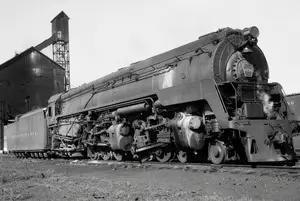
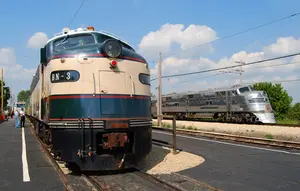
 Baltimore & Ohio boxcab #50 on display at EMD's McCook, Illinois plant on September 9, 1972 during the company's celebration of fifty years of locomotive production. Paul Schumann photo.
The Dawn of Diesel Experimentation at EMC
Electro-Motive Corporation, originally a designer and marketer rather than a full manufacturer in the early 1930s, collaborated with General Electric (GE) and others to develop diesel-electric technology. By 1935, EMC had advanced beyond early switchers (like the 1925 Alco-GE-Ingersoll-Rand 60-ton units) to create experimental road locomotives.
The EMC 1800 hp B-B design emerged as a proof-of-concept. EMC subcontracted carbodies: most to GE’s Erie, Pennsylvania plant, with others built by St. Louis Car Company.
Five units were produced in August 1935:
- EMC demonstrators #511 and #512
- B&O #50 (serial 532)
- Atchison, Topeka & Santa Fe (AT&SF) #1A and #1B
These featured a distinctive boxcab body style—rectangular, utilitarian, and functional—with control cabs at both ends, a relatively rare feature. This allowed bidirectional operation without turning the locomotive. Power came from two Winton 201-A V12 diesel engines, each rated at 900 hp, for a total of 1,800 hp. The diesel-electric transmission used generators and traction motors on the B-B trucks (two two-axle powered trucks).
The twin-engine setup provided redundancy and “headroom” for reliability, as early diesel engines were less mature than steam technology. These units pioneered multiple-unit (MU) control systems, enabling locomotives to be coupled and operated by a single crew—an innovation that shaped future designs like the EMC/EMD E-units.
B&O #50 was built specifically as a testbed/purchase unit for the railroad. Funding assistance came via a Public Works Administration (PWA) loan in 1934, which also supported streamlined passenger cars and the rebuilding of a steam locomotive. This New Deal support helped B&O modernize during economic hardship.
Entry into Service: The Royal Blue Era (1935–1937)
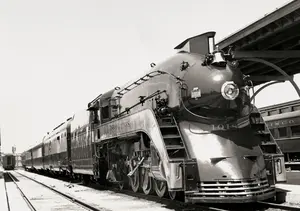
B&O #50 entered revenue service in August 1935 on the prestigious Royal Blue, the railroad’s flagship New York–Washington, D.C. passenger train. It replaced steam power, including the famous streamlined Pacific Lord Baltimore. This marked one of the first instances of a diesel-electric locomotive hauling a long-distance named passenger train in regular service in the United States.
Contemporary accounts described the boxcab as a “strange, 66-foot long, boxlike locomotive.” Its smooth, quiet operation and lack of smoke impressed passengers and crews alike. The unit demonstrated diesel reliability on the busy Northeast Corridor route. B&O positioned #50 as a symbol of progress, aligning with the railroad’s long history of innovation (it had operated the first steam locomotive in the U.S. for common carrier service decades earlier).
The experiment proved successful enough that B&O soon ordered streamlined EMC EA/EB units (#51 and others) in 1937 to fully dieselize the Royal Blue and other trains. #50 had served its pioneering role and was reassigned.
Transfer to the Chicago & Alton and the Abraham Lincoln
In April 1936, B&O transferred #50 to its subsidiary, the Chicago & Alton Railroad (later fully integrated). To better suit passenger aesthetics, the railroad added a semi-streamlined “shovel nose” to one end, giving it a more modern profile while retaining the boxcab body.
On the Alton, #50 hauled the Abraham Lincoln, a streamlined Chicago–St. Louis passenger train. This service highlighted the locomotive’s versatility across different routes and terrains in the Midwest. The dual-cab design proved advantageous for frequent terminal operations.
GM&O Era and Post-War Service (1940s–1950s)
When the Alton Railroad was merged into the Gulf, Mobile & Ohio Railroad (GM&O) in 1947, #50 became GM&O #1200. The shovel-nose modification was eventually removed after World War II, restoring its original boxcab appearance.
In the GM&O years, the locomotive shifted primarily to local freight and secondary passenger duties. By the 1950s, it operated alongside more modern first-generation diesels. Its early design, while reliable, lacked the power, speed, and amenities of the newer EMD E-units and F-units that had become standard. It was retired from service in 1956 after roughly 21 years of operation.
Preservation at the National Museum of Transportation
Following retirement, GM&O donated the locomotive to the National Museum of Transportation (now often called the Museum of Transportation) in St. Louis, Missouri. It remains on static display there, preserved in its later boxcab configuration.
The unit received special recognition in 1972 when it was photographed at the EMD plant in La Grange, Illinois, during celebrations of Electro-Motive’s 50th anniversary. This underscored its historical importance as one of the very first production road diesels.
Today, visitors can view #50 alongside other pioneering diesels, including early switchers and streamliners. It serves as an educational artifact illustrating the transition from steam to diesel power.
Technical Specifications
Here is a compiled HTML table of key specifications for B&O #50 (based on historical records for the EMC 1800 hp B-B class):
| Parameter | Specification | Notes |
|---|---|---|
| Builder | Electro-Motive Corporation (EMC); carbodies by General Electric (Erie, PA) | Design by EMC; one of five experimental units built in 1935 |
| Build Date | August 1935 | Serial number 532; Order E127 |
| Model / Type | EMC 1800 hp B-B experimental boxcab | Testbed / road diesel; dual-end control cabs |
| Wheel Arrangement | B-B (AAR classification) | Two two-axle powered trucks; all axles driven |
| Power Output | 1,800 hp (1,342 kW) | Total from two engines |
| Prime Movers | Two Winton 201-A V12 diesel engines | Each rated 900 hp (670 kW); early diesel technology |
| Transmission | Diesel-electric | Generators powering traction motors |
| Length | Approximately 66 feet (20.1 m) | Classic boxcab proportions |
| Weight | Not precisely documented in primary sources (est. 200,000–250,000 lbs / 90–113 metric tons) | Comparable to contemporary experimental units |
| Tractive Effort | Not specifically recorded for this unit | Sufficient for named passenger trains of the era |
| Brakes | Westinghouse air brakes (locomotive and train) | Standard for the period |
| Fuel Capacity | Not documented in detail | Typical for early road diesels |
| Original Road Number | B&O #50 | Later: Chicago & Alton #50; GM&O #1200 |
| Disposition | Preserved | National Museum of Transportation, St. Louis, MO |
Historical Significance
B&O #50 was more than just another locomotive—it was a technological bridge. While not the absolute first diesel in any service (earlier switchers existed), it was among the very first self-contained diesel-electric units placed in regular mainline passenger road service. Its success helped validate diesel power for high-profile trains and accelerated the industry-wide shift away from steam.
The design directly influenced the streamlined EMC EA/EB units that followed and the broader E-unit family that dominated passenger service for decades. The MU control system and twin-engine reliability concepts carried forward into production models.
In the broader context of the 1930s, #50 exemplified how railroads leveraged federal support (PWA) and private innovation to survive economic turmoil. Its preservation ensures future generations can appreciate this pivotal moment when the diesel revolution began reshaping American railroading.
Today, standing quietly in St. Louis, B&O #50 reminds us of an era when bold engineering choices transformed transportation. From hauling the Royal Blue in the 1930s to its quiet retirement in the 1950s, this pioneering boxcab earned its place in railroad history as a true trailblazer. Its story continues to inspire rail enthusiasts, historians, and anyone fascinated by the evolution of motive power.
Recent Articles


-
Pennsylvania Railroad Museums (2026): A Complete Guide
Oct 06, 26 12:09 AM
 Pennsylvania railroad museums—Strasburg, Steamtown, the Horseshoe Curve, the East Broad Top, and the depots and towers in between. Confirm hours on each site.
 -
Maryland Railroad Museums (2026): A Complete Guide
Oct 05, 26 11:53 PM
 Maryland railroad museums—the Baltimore roundhouse, Ellicott City station, Bowie, Gaithersburg’s Buffalo Creek & Gauley 14, and the Western Maryland collections.
 -
Ohio Railroad Museums (2026): A Complete Guide
Oct 05, 26 05:51 PM
 Ohio railroad museums—the Age of Steam Roundhouse, Bellevue, Worthington, Conneaut’s Nickel Plate 755, and the Dennison depot. Confirm hours on each site.
 -
Delaware Railroad Museums (2026): A Complete Guide
Oct 05, 26 02:43 PM
 Delaware railroad museums—Wilmington & Western at Greenbank, the Harrington tower and N5 caboose, Felton's 1868 depot, and the Selbyville station museum.
 -
C&O's M-1 Steam Turbine Locomotives: Specs, Roster, History
Oct 05, 26 12:13 PM
 Chesapeake & Ohio Class M-1 steam-turbine-electrics. Three Baldwin-Westinghouse locomotives, 500–502, built 1947–48 for The Chessie. Specs, the 2-C1+2-C1-B arrangement, and a roster. All scrapped…
 -
N&W 2-6-6-2 Locomotives (Class Z): Specs, Roster, History
Oct 05, 26 11:44 AM
 Norfolk & Western Class Z 2-6-6-2s. One hundred ninety compound Mallets, 1300–1489, from Richmond, Baldwin, and Schenectady, 1912–1918. Diagram specs, the Z-1b rebuilds, Z-2 1399, and a roster. No…
 -
Scenic Train Rides (USA 2026): State Guide to Tourist Railroads
Oct 04, 26 12:17 AM
 Scenic and tourist train rides in all 50 states for 2026. Colorado narrow gauge, Pennsylvania steam, Alaska’s White Pass, and the states with no full-size ride this month. Confirm on the railroad.
 -
Wyoming Scenic Train Rides (2026): A Complete Guide
Oct 03, 26 12:07 AM
 Wyoming has no full-size tourist railroad on the calendar in October 2026. Cheyenne Depot Museum and Douglas Railroad Museum are static. Union Pacific 4014’s posted public trip is a November run to De…
 -
Washington Scenic Train Rides (2026): A Complete Guide
Oct 02, 26 11:53 PM
 Washington tourist trains in 2026—Mount Rainier Scenic at Elbe, the Northwest Railway Museum, and Chehalis-Centralia. Lake Whatcom has no 2026 date on its ticket page.
 -
Wisconsin Scenic Train Rides (2026): A Complete Guide
Oct 02, 26 11:48 PM
 Wisconsin tourist trains in 2026—Wisconsin Great Northern, Osceola & St. Croix Valley, Mid-Continent, East Troy, and the National Railroad Museum.
 -
Pennsylvania Railroad Class Q2 4-4-6-4: Specs, Roster, History
Oct 02, 26 11:28 PM
 Pennsylvania Railroad Class Q2 4-4-6-4 duplexes. Twenty-six engines, 6131 and 6175–6199, Altoona 1944–45. Form 109-J specs, the 7,987 hp test of 6175, and a roster. All scrapped.
 -
Utah Scenic Train Rides (2026): A Complete Guide
Oct 02, 26 11:18 PM
 Utah tourist trains in 2026—Heber Valley Railroad from Heber City. Golden Spike at Promontory is a locomotive demonstration, not a line-haul ride.
 -
South Dakota Scenic Train Rides (2026): A Complete Guide
Oct 02, 26 11:06 PM
 South Dakota’s 2026 scenic train is the Black Hills Central 1880 Train, Hill City to Keystone. Steam is the summer assignment. Confirm the engine.
 -
Oregon Scenic Train Rides (2026): A Complete Guide
Oct 02, 26 11:04 PM
 Oregon tourist trains in 2026—Oregon Coast Scenic from Rockaway Beach, Mount Hood at Hood River, Eagle Cap from Elgin, and the Oregon Rail Heritage Center in Portland.
 -
Oklahoma Scenic Train Rides (2026): A Complete Guide
Oct 02, 26 10:36 PM
 Oklahoma has no full-size scenic railroad on an October 2026 calendar. Oklahoma Railway Museum Halloween and Polar trains, the El Reno trolley, and the Heartland Flyer.
 -
North Dakota Scenic Train Rides (2026): A Complete Guide
Oct 02, 26 01:14 PM
North Dakota has no tourist railroad on a 2026 calendar. Ride Amtrak’s daily Empire Builder. The Fort Lincoln Trolley in Mandan is not a current ticket. -
Nebraska Scenic Train Rides (2026): A Complete Guide
Oct 02, 26 10:11 AM
 Nebraska has no full-size scenic railroad in 2026. The Omaha Zoo Railroad runs weekends through October 4. Ride Amtrak’s California Zephyr across the state.
 -
Missouri Scenic Train Rides (2026): A Complete Guide
Oct 02, 26 09:56 AM
 Missouri tourist trains in 2026—Branson Scenic Railway and the St. Louis, Iron Mountain & Southern at Jackson. Belton has no 2026 schedule posted.
 -
Minnesota Scenic Train Rides (2026): A Complete Guide
Oct 02, 26 09:52 AM
 Minnesota tourist trains in 2026—North Shore Scenic Railroad in Duluth, the Duluth River Train, and the Como-Harriet streetcar.
 -
Kansas Scenic Train Rides (2026): A Complete Guide
Oct 02, 26 09:32 AM
 Kansas tourist trains in 2026—the Abilene & Smoky Valley Railroad. Santa Fe 3415 is in overhaul. Midland Railway at Baldwin City is closed.
 -
Iowa Scenic Train Rides (2026): A Complete Guide
Oct 02, 26 08:41 AM
 Iowa tourist trains in 2026—Boone & Scenic Valley across the Bass Point Creek High Bridge, and Midwest Central’s December North Pole trains
 -
Indiana Scenic Train Rides (2026): A Complete Guide
Oct 02, 26 08:35 AM
 Indiana tourist trains in 2026—French Lick Scenic Railway, Nickel Plate Express, Hoosier Valley, and Hesston. Whitewater Valley is suspended.
 -
Illinois Scenic Train Rides (2026): A Complete Guide
Oct 02, 26 12:28 AM
 Illinois tourist trains in 2026—Illinois Railway Museum, Monticello Railway Museum, Fox River Trolley, and Silver Creek & Stephenson.
 -
Texas Scenic Train Rides (2026): A Complete Guide
Oct 02, 26 12:14 AM
 Texas tourist trains in 2026—Texas State Railroad, Grapevine Vintage Railroad, Austin Steam Train's Hill Country Flyer, and the Galveston Railroad Museum.
 -
Tennessee Scenic Train Rides (2026): A Complete Guide
Oct 02, 26 12:03 AM
Tennessee tourist trains in 2026—Tennessee Valley Railroad Museum, Dollywood Express, Three Rivers Rambler Christmas trains, and the Tennessee Central Railway Museum. -
South Carolina Scenic Train Rides (2026): A Complete Guide
Oct 01, 26 11:52 PM
 South Carolina's tourist train is the South Carolina Railroad Museum in Winnsboro—Blue Granite Express, pumpkin trains, and Santa trains on the old Rockton & Rion.
 -
Mississippi Scenic Train Rides (2026): A Complete Guide
Oct 01, 26 11:38 PM
 Mississippi has no regular tourist railroad in 2026. Ride Amtrak through the state, or book the excursion lines in Alabama, Tennessee, Louisiana, or Arkansas.
 -
Louisiana Scenic Train Rides (2026): A Complete Guide
Oct 01, 26 02:52 PM
 Louisiana has no regular full-size tourist railroad in 2026. New Orleans Polar Express returns December 11–31. Museums at Long Leaf, DeQuincy, and Jackson.
 -
Kentucky Scenic Train Rides (2026): A Complete Guide
Oct 01, 26 02:45 PM
 Kentucky tourist trains in 2026—Big South Fork Scenic Railway, Bluegrass Scenic Railroad, Kentucky Railway Museum, and My Old Kentucky Dinner Train.
 -
Georgia Scenic Train Rides (2026): A Complete Guide
Oct 01, 26 02:27 PM
 Georgia tourist trains in 2026—Blue Ridge Scenic Railway, SAM Shortline, Azalea Sprinter, Savannah shop rides, and what to confirm at Stone Mountain.
 -
Arkansas Scenic Train Rides (2026): A Complete Guide
Oct 01, 26 01:02 PM
 Arkansas tourist trains in 2026—Arkansas & Missouri through the Boston Mountains, and the Eureka Springs & North Arkansas dinner and excursion trains.
 -
Alabama Scenic Train Rides (2026): A Complete Guide
Oct 01, 26 12:59 PM
Alabama tourist trains in 2026—Heart of Dixie Railroad Museum at Calera, North Alabama Railroad Museum at Chase, and the Wales West Light Railway at Silverhill. -
The Circus Train: How Such Attractions Reached Distant Cities
Oct 01, 26 12:22 PM
 How circuses moved by rail: Coup's 1872 flats, the Ringling train's sections and car counts, the 1918 Hammond wreck, and the last show on May 21, 2017.
 -
West Virginia Halloween Train Rides (2026)
Oct 01, 26 12:19 PM
 2026 West Virginia Halloween train. Cass Scenic Halloween Train, October 30 and 31, steam, 5:00 p.m. from Cass Depot. Adult $75. About two hours to Whittaker. Family ride.
 -
Wisconsin Halloween Train Rides (2026)
Oct 01, 26 12:11 PM
2026 Wisconsin Halloween trains. Mid-Continent Pumpkin Special October 24–25, adult $24, pumpkins extra. Halloween Flyer October 24 at 4:30 p.m., adult $30. Osceola Pumpkin Express boards in Osceola… -
Utah Halloween Train Rides (2026)
Oct 01, 26 12:00 PM
 2026 Utah Halloween trains at Heber Valley Railroad. Pumpkin Train, about 40 minutes, with a cookie and a pumpkin. Halloween Express, about 90 minutes to Grim Hollow, Monday, Thursday, and Friday even…
 -
Texas Halloween Train Rides (2026)
Oct 01, 26 11:28 AM
 2026 Texas Halloween train. Texas State Railroad Spooky Special, adult-only, October 24. Boards Palestine at 5:00 p.m. About five hours to Rusk and back. Dinner on the grounds. Not steam. No fare on t…
 -
Tennessee Halloween Train Rides (2026)
Oct 01, 26 12:15 AM
 2026 Tennessee Halloween trains. Tennessee Valley Railroad Museum Rails, Wizards & Spells, selected days September 18 through October 25, from $35, about 2.5 hours. Spells & Potions tea from $60. The…
 -
Frisco's "Firefly" (Train): Consist, Route, Timetable
Sep 30, 26 11:37 PM
 Frisco Firefly—daylight streamliner, Kansas City to Tulsa and Oklahoma City. Trains 117 and 118. Pacifics 1018, 1026, and 1031. Last run May 22, 1960.
 -
South Carolina Halloween Train Rides (2026)
Sep 30, 26 11:29 PM
 2026 South Carolina Halloween train. South Carolina Railroad Museum Pumpkin Patch Express, the two Saturdays before Halloween. About three miles to the Greenbriar pavilion. Pumpkin for children 12 and…
 -
Oregon Halloween Train Rides (2026)
Sep 30, 26 08:10 PM
2026 Oregon Halloween train. Sumpter Valley Railroad Halloween Express at the Sumpter Depot, calendar window October 31 at 11:00 a.m. through November 1 at 12:30 p.m. Fare and the individual clocks ar… -
Oklahoma Halloween Train Rides (2026)
Sep 30, 26 03:45 PM
2026 Oklahoma Halloween train. Oklahoma Railway Museum, October 30 and 31, from Oakwood Station in Oklahoma City. Adults $15, children 3–12 $8. A candy bag with the ride. -
McCloud River Railroad: Serving The Timber Industry (1897-2009)
Sep 30, 26 03:37 PM
 McCloud River Railroad—Mount Shasta City to McCloud, Hambone, and Burney. Opened August 1, 1897. Alco No. 25 and EMD SD38s. Dinner train through January 2010. Railbikes in 2026; a dinner train is stil…
 -
Nevada Halloween Train Rides (2026)
Sep 30, 26 03:30 PM
2026 Nevada Halloween trains in Ely. Nevada Northern Pumpkin Patch Caper and Haunted Ghost Train. Adult tickets start at $45. Dates are on the railroad’s ticket calendar. Boulder City stays off until… -
Missouri Halloween Train Rides (2026)
Sep 30, 26 11:12 AM
 2026 Missouri Halloween trains. St. Louis Iron Mountain & Southern Pumpkin Patch Train on October 3, 4, 10, and 11, and Halloween Express on October 31 at 1:00 p.m. Jackson depot. No fare on the sched…
 -
Minnesota Halloween Train Rides (2026)
Sep 30, 26 11:06 AM
 2026 Minnesota Halloween trains. North Shore Scenic Great Pumpkin Train in Duluth, October 15–18. Everyone gets a pumpkin. Terror Train is October 30, an adult costume party, about three hours. Fares…
 -
Maryland Halloween Train Rides (2026)
Sep 30, 26 10:42 AM
 2026 Maryland Halloween trains. Western Maryland Scenic Pumpkin Patch Limited, October 17, 18, 24, and 25, $14. Colesville Trolleyween October 24, 25, and 31.
 -
West Side Lumber Company Railroad: Roster, History, Lines
Sep 30, 26 09:45 AM
 West Side Lumber at Tuolumne, California. Three-foot Shay and Heisler logging railroad. Lima shop numbers, builder specs, and where the engines are in 2026.
 -
Kansas Halloween Train Rides (2026)
Sep 30, 26 09:41 AM
 2026 Kansas Halloween train. Abilene & Smoky Valley Pumpkin Harvest Express, October 17 through 31. About one hour. Shop prices $35.56 to $41.02. Everyone picks a pumpkin.
 -
Iowa Halloween Train Rides (2026)
Sep 29, 26 11:58 PM
2026 Iowa Halloween train. Boone & Scenic Valley Pumpkin Express, October 10, 10:00 a.m. from 225 10th Street. About 1 hour 15 minutes. Children pick a pumpkin.