B&O Track Charts: Monongah Division Branches
Published: June 26, 2026
By: Adam Burns
A Brief History Of The Division
The Baltimore & Ohio’s Monongah Division was a vital operational unit serving north-central West Virginia’s coal fields, industrial centers, and connecting routes. Centered around Grafton as a major hub, it encompassed the Parkersburg Branch (a key segment of the B&O’s St. Louis main line route) and an extensive network of secondary lines and mine spurs that funneled coal, timber, oil, and other traffic. Named after the coal town of Monongah near Fairmont, the division played a crucial role in the region’s economic development from the mid-19th century through the late 20th century.
While comprehensive single-volume histories are limited, pieced-together details from track charts, employee timetables, railroad historical sites, and archival records reveal a story of ambitious construction, Civil War significance, coal-driven expansion, engineering challenges, modernization, and eventual decline under Chessie System and CSX.
Origins and Early Construction (1850s–1860s)
The foundation of the Monongah Division’s western reach was the Parkersburg Branch, originally the Northwestern Virginia Railroad (NVRR). Chartered by the Virginia legislature in 1851 and backed by Parkersburg interests, Baltimore financing, and the B&O itself, construction began in 1852. The line from Grafton (where it connected to the B&O’s main route from Baltimore/Cumberland) to Parkersburg on the Ohio River was completed in 1857.
The B&O operated the NVRR under agreement starting in 1856. During the Civil War, the line was strategically important for Union troop and supply movements and was repeatedly targeted by Confederate forces. Post-war financial difficulties led to foreclosure; the B&O purchased the property in 1865 and integrated it into its system.
In 1871, the B&O completed a major bridge across the Ohio River between Parkersburg, West Virginia, and Belpre, Ohio, eliminating ferry transfers and solidifying the route’s role in through traffic to the Midwest. This segment became a core part of the B&O’s path toward Cincinnati and St. Louis connections.
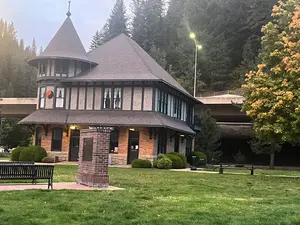
Grafton emerged as a quintessential railroad town and division point, with extensive yards, shops, and later a grand station and Willard Hotel (built 1911) that served passengers and crews.
Expansion, Coal, and the Branch Network (Late 19th–Mid-20th Century)
As West Virginia’s coal industry boomed in the late 19th and early 20th centuries, the B&O aggressively expanded its Monongah Division with branches and spurs to serve mines. The Parkersburg Branch acted as the primary artery, with numerous secondary lines radiating from it and from Grafton, Clarksburg, and other points to tap coal fields in counties such as Barbour, Upshur, Randolph, Braxton, and others.
Major named branches documented in 1947/1963 B&O track charts for the Monongah Division included:
- Monongahela River Branch (Clarksburg to Fairmont area; sometimes referenced with Grafton & Belington elements).
- Grafton & Belington Branch (serving coal areas around Belington; parts later affected by Tygart Lake flooding and realignments).
- Coalton Branch.
- Norton Branch.
- Gassaway Branch.
- Pickens Branch.
- Little Kanawha River Spur.
- Coal & Coke Branch (Milvale to Elkins; remnants or connections from the former Coal & Coke Railway).
Additional trackage rights existed over Western Maryland lines (e.g., Belington to Norton). Short mine-specific spurs were numerous, including those to operations like Haywood, Robinson Run, Kilarm, Annabelle, Willard, Century, Rex Mine, Lawbar Mine, and others listed in ICC valuation maps and timetables.
Other secondary lines and connections included the Short Line (Clarksburg toward New Martinsville), elements of the former West Virginia & Pittsburgh route (south toward Weston and Richwood, acquired around 1912), and various oil- and timber-related spurs from the boom eras. Examples of short-lived lines were the Laurel Fork & Sand Hill (Petroleum to Volcano during the oil boom), Harrisville Southern (Cornwallis to Harrisville, 1907–mid-1920s), and Cairo & Kanawha.
A Kingwood Subdivision/branch served mines in that area. Many of these were short, steep spurs built specifically for coal loading, often with their own small yards or tipples. The division also handled glass, oil/gas, and general freight, but coal was the dominant commodity.
Engineering Challenges and Operations on the Parkersburg Branch
The Parkersburg Branch (roughly 81 miles from Parkersburg to Clarksburg) was scenic but operationally demanding. It featured approximately 23 tunnels (most between Cairo and Ellenboro), numerous bridges over creeks and rivers, and grades reaching about 1% in places, with notable ascents like West Union to Wolf Summit. Mark Twain reportedly likened parts of the B&O’s tunneling to “the longest subway in the world” (though primarily referencing another segment, the description captured the experience).
In the steam era, tunnels were smoky and hot; the B&O installed exhaust fans in the longest ones (e.g., Carr’s/Lodgeville #1, Doe Run/Central #6, and Bee Tree/Eaton #21) in the early 1900s, operated until the 1930s. The line was single-track with passing sidings, using train orders initially and later color-position light signals. Centralized Traffic Control (CTC) was installed in 1951, dispatching from Grafton.
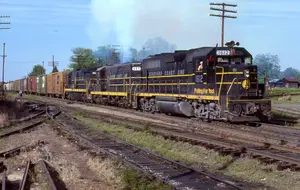
Passenger service included notable trains such as the National Limited, Diplomat, Cincinnatian, and others. Freight encompassed manifests, coal extras, and later TOFC (trailer-on-flatcar) movements. Eastbounds often faced the tougher grades. Motive power evolved from Consolidations and Mikados to diesels (GP and SD series) by the late 1950s.
Modernization: The 1963 Tunnel Clearance Project
A landmark event was the 1963 clearance improvement program on the Parkersburg Branch. To accommodate larger equipment and TOFC for competition on routes to Cincinnati and St. Louis, the B&O invested about $8.5 million. The line was shut down for months (traffic rerouted via the Short Line and Ohio River routes), and 21 tunnels were addressed: floors lowered in five, roofs raised in four, eight daylighted into open cuts, three bypassed with new alignments, and one new bore drilled after a collapse (replacing original #21 at Eaton). Some portals and linings from this era remain visible today.
This project modernized the line but highlighted its maintenance-intensive nature.
Decline, Mergers, and Abandonment (1970s–1990s)
Passenger service waned with the rise of automobiles and air travel; many trains ended by the 1960s–1970s, with Amtrak’s Shenandoah running briefly until 1981. The 1972 formation of the Chessie System (B&O + C&O + Western Maryland) and 1980 creation of CSX brought corporate changes and rationalization.
Coal traffic declined in some areas, online shippers diminished, and the line’s clearances (even post-1963 at about 17’6”) proved inadequate for emerging double-stack intermodal standards. In 1985, under Chessie/CSX, the Parkersburg Branch segment was downgraded; through traffic was rerouted (often via the Short Line or Chicago mainline routes). The ICC approved abandonment of the Parkersburg-to-Clarksburg (and broader) segment. Track removal occurred progressively from 1988 onward, with the final stub near Wilsonburg removed around 1999 after local coal operations ended.
Much of the abandoned right-of-way became the popular North Bend Rail Trail (a multi-use path preserving tunnels, cuts, and scenic sections). Some segments near Parkersburg and Clarksburg remained or were repurposed for local service or storage.
Legacy
The Monongah Division was instrumental in opening West Virginia’s interior to national markets, fueling the coal industry that powered much of the eastern U.S., and supporting towns like Grafton, Clarksburg, Parkersburg, and numerous smaller communities. Grafton remains tied to its railroad heritage, with its historic station preserved. The division’s tunnels, grades, and branches exemplify the engineering feats (and costs) of Appalachian railroading.
Today, remnants include active CSX operations on parallel or connecting routes (such as the Short Line), the North Bend Rail Trail for recreation and history, and model railroad layouts that recreate its 1950s steam-to-diesel transition era operations. Archival materials—track charts, timetables, seniority rosters from the 1960s, and ICC valuation maps—preserve detailed records of its many branches and mine spurs for researchers and enthusiasts.
While exact mile-by-mile histories of every short coal spur are scattered across specialized sources, the overall story of the Monongah Division illustrates the B&O’s westward ambition, adaptation to industrial needs, and the challenges of maintaining a complex Appalachian network into the modern era. Its legacy endures in West Virginia’s landscape and railroad history.
Charts


Recent Articles


-
Baldwin "Centipede" Locomotives: Specs, Roster, Photos
Oct 16, 26 03:58 PM
 Baldwin DR-12-8-1500/2 Centipede—2-D+D-2, two 608SC engines, 3,000 hp. SAL 4500 from the 1943 test bed. 54 on the serial list, 52 sold. PRR BP60 then BH50. None preserved.
-
Louisville & Nashville Class M-1 2-8-4s: The Big Emmas
Oct 16, 26 03:52 PM
 Louisville & Nashville class M-1, 42 Big Emma 2-8-4s. Baldwin in 1942 and 1944, Lima in 1949. Coal trains from Neon to DeCoursey. No locomotive survives.
-
Tennessee, Alabama and Georgia Railway: Map, History, Rosters
Oct 16, 26 03:21 PM
 Tennessee, Alabama and Georgia Railway, Chattanooga to Gadsden. The May 1929 card is 91.7 miles. Southern stock control closed on a January 1, 1971 schedule. Five diesels and Prince's steam list.
-
Railroad Museums In The USA (2026): State Guides & Collections
Oct 16, 26 02:29 PM
 U.S. railroad museums—what they are vs tourist railroads, preservation history (R&LHS, NRHS, IRM, Steamtown), state guides, and destination collections. Confirm hours on each museum’s site.
-
Wyoming Railroad Museums (2026): A Complete Guide
Oct 16, 26 02:26 PM
 Wyoming railroad museums—the Cheyenne Depot, Burlington 5633 at Douglas, Big Boy 4004, and the Laramie depot. Confirm hours and which locomotive is on the property.
-
West Virginia Railroad Museums (2026): A Complete Guide
Oct 16, 26 12:52 PM
 West Virginia railroad museums—Cass Scenic’s geared steam, the Hinton C&O collection, and the Martinsburg B&O roundhouse. Confirm hours and which locomotive is assigned.
-
Washington Railroad Museums (2026): A Complete Guide
Oct 16, 26 12:46 PM
 Washington railroad museums—Snoqualmie, Elbe, Chehalis, Reardan, and the Northern Pacific depot at Toppenish. Confirm hours and which locomotive is assigned.
-
Vermont Railroad Museums (2026): A Complete Guide
Oct 16, 26 12:42 PM
 Vermont railroad museums—the Shelburne Museum’s 1890 station, Central Vermont No. 220, and the private car Grand Isle. Confirm hours on the site.
-
Tennessee Central Railway: Map, Logo, Rosters, History
Oct 16, 26 11:32 AM
 Tennessee Central Railway, Harriman to Hopkinsville. Reorganized January 26, 1922. Last day August 31, 1968. Thirty-one diesels and the railroad's steam roster.
-
Southern Railway Steam Roster (Post 1900)
Oct 16, 26 09:40 AM
 Southern Railway steam locomotives built since 1900. Ps-4 Pacifics, Ts Mountains, USRA Santa Fes, and the subsidiary grids for the CNO&TP, Alabama Great Southern, and New Orleans and Northeastern.
-
Southern Railway (USA): Map, Locomotives, Logo, History
Oct 16, 26 09:28 AM
 The Southern Railway, formed July 1, 1894 from the Richmond and Danville and the East Tennessee, Virginia and Georgia. Washington. Norfolk Southern Railway on December 31, 1990.
-
Seaboard Coast Line Diesel Roster (All-Time)
Oct 15, 26 04:21 PM
 All-time diesel roster of the Seaboard Coast Line. Inherited Coast Line and Seaboard locomotives, then 623 new locomotives in the printed orders, plus 28 acquired from other railroads.
-
Seaboard Coast Line Railroad: Map, History, Photos
Oct 15, 26 04:17 PM
 The Seaboard Coast Line, formed July 1, 1967 from the Atlantic Coast Line and the Seaboard Air Line. Jacksonville. Family Lines, then the Seaboard System on December 29, 1982.
-
South Carolina Railroad Museums (2026): A Complete Guide
Oct 15, 26 02:54 PM
 South Carolina railroad museums—Winnsboro’s Rockton & Rion line, Spartanburg’s Hub City depot, Greenwood’s Baldwin No. 19, and the Best Friend replica. Confirm hours on each site.
-
South Dakota Railroad Museums (2026): A Complete Guide
Oct 15, 26 10:55 AM
 South Dakota railroad museums—the Hill City museum beside the 1880 Train, and Prairie Village at Madison. Confirm hours, and confirm whether Hill City is still open.
-
Seaboard Air Line Diesel Roster (All-Time)
Oct 15, 26 10:46 AM
 All-time diesel roster of the Seaboard Air Line. 734 locomotives: E4s in 1938, Centipedes, Alco road switchers, and GP40s through February 1967. Serials included.
-
Seaboard Air Line Steam Roster (Post 1900)
Oct 15, 26 10:39 AM
 Seaboard Air Line steam locomotives built since 1900. Mikados, Russian Decapods, 2-10-2s, and the 2-6-6-4s sold to the Baltimore and Ohio in 1947. Drury's class grid.
-
Seaboard Air Line Railroad: Map, Rosters, History
Oct 15, 26 10:34 AM
 The Seaboard Air Line, chartered in the Portsmouth and Roanoke of 1832 and formed July 1, 1900. Inland route to Florida. Merged into the Seaboard Coast Line on July 1, 1967.
-
Utah Railroad Museums (2026): A Complete Guide
Oct 15, 26 12:04 AM
 Utah railroad museums—Ogden Union Station, Golden Spike at Promontory, the Helper mining museum, and the Heber Valley Railroad. Confirm hours on each site.
-
Escanaba & Lake Superior Diesel Roster (All-Time)
Oct 14, 26 10:44 PM
All-time diesel roster of the Escanaba & Lake Superior. 30 locomotives: Baldwin switchers and RS-12s, two RF16s, three GP38s, three SD40-2s, and the Reserve Mining units. Serials and order numbers. -
Escanaba & Lake Superior Railroad: In Service Since 1898
Oct 14, 26 09:04 PM
 Escanaba & Lake Superior Railroad, chartered November 17, 1898, and still operating from Wells, Michigan. Logging line to Channing, the Milwaukee Road lines, and the diesel roster.
-
Richmond, Fredericksburg & Potomac Diesel Roster (All-Time)
Oct 14, 26 08:49 PM
 All-time diesel roster of the Richmond, Fredericksburg and Potomac. 107 locomotives: 22 Alco S2s, one SW1, and an Electro-Motive road fleet from E8s to GP40-2s. Serials and order numbers.
-
Richmond, Fredericksburg & Potomac Steam Roster (Since 1900)
Oct 14, 26 08:46 PM
 Richmond, Fredericksburg and Potomac steam locomotives built since 1900. Pacifics, Mountains, Berkshire-type 2-8-4s, and the named 4-8-4s. Last revenue run December 17, 1954.
-
Richmond, Fredericksburg and Potomac Railroad: Map, Rosters, Logo
Oct 14, 26 08:36 PM
 The Richmond, Fredericksburg and Potomac, chartered February 25, 1834. A 113-mile Richmond–Washington bridge line. Named 4-8-4s, Potomac Yard, and the CSX sale of October 10, 1991.
-
North Dakota Railroad Museums (2026): A Complete Guide
Oct 14, 26 08:29 PM
North Dakota railroad museums—Mandan’s state museum, the Railroad Museum of Minot, and Bonanzaville’s Northern Pacific 684. Confirm hours on each site. -
Oklahoma Railroad Museums (2026): A Complete Guide
Oct 14, 26 08:02 PM
Oklahoma railroad museums—the Oklahoma Railway Museum, Enid’s Frisco 1519, Waynoka’s Harvey House, and El Reno’s Rock Island depot. Confirm hours on each site. -
Oneida & Western Railroad: Map, History, Timetable
Oct 14, 26 06:47 PM
Oneida & Western Railroad, a Tennessee short line from Oneida to Jamestown. Chartered in 1912, opened to East Jamestown in 1921, and to Jamestown on December 10, 1930. Last revenue train March 4, 1954… -
Oneida and Western Railroad (Shamrock Coal Company)
Oct 14, 26 03:20 PM
 Shamrock Coal's mint-green coal trains, 1979–1987. Eight EMD SD40-2s, OWTX 9950–9957, order 786246. Two 72-car gondola sets. Louisville & Nashville, then CSX. Sold to BC Rail.
-
Rhode Island Railroad Museums (2026): A Complete Guide
Oct 14, 26 03:03 PM
 Rhode Island railroad museums—the Friends’ museum in the 1875 Kingston depot, on the old New York, Providence and Boston. Confirm what is on view.
-
Original Norfolk Southern Diesel Roster (All-Time)
Oct 14, 26 12:40 PM
 All-time diesel roster of the original Norfolk Southern Railway. 59 locomotives: Baldwin switchers and AS-416s, three GE 70-tonners, 17 GP18s, and seven GP38s. Serials and order numbers.
-
Original Norfolk Southern Railway: Map, Rosters, History
Oct 14, 26 10:09 AM
 The original Norfolk Southern Railway, chartered in 1870 as the Elizabeth City & Norfolk. Norfolk to Charlotte. Merged into the Southern Railway on January 1, 1974. Baldwin diesels and the GP18s and G…
-
Nebraska Railroad Museums (2026): A Complete Guide
Oct 14, 26 10:00 AM
 Nebraska railroad museums—the Durham Museum, Kenefick Park, Cody Park, and the Golden Spike Tower over Bailey Yard. Confirm hours on each site.
-
Nevada Railroad Museums (2026): A Complete Guide
Oct 14, 26 09:51 AM
 Nevada railroad museums—Carson City, Boulder City, the Nevada Northern at East Ely, and the Virginia City depot. Confirm hours on each site.
-
Montana Railroad Museums (2026): A Complete Guide
Oct 14, 26 12:17 AM
 Montana railroad museums—the Livingston depot, Fort Missoula’s Willamette, the Harlowton Milwaukee depot, and the Whitefish station. Confirm hours on each site.
-
"Jawn Henry" Locomotive: Specs, Diagram, Photos
Oct 14, 26 12:03 AM
 Norfolk & Western No. 2300, class TE-1, the steam turbine-electric Jawn Henry. Baldwin-Lima-Hamilton, Westinghouse, and Babcock & Wilcox, May 1954. Specifications, the road tests, and the Dece…
-
Atlantic and Danville Railway: Serving Southern VA
Oct 13, 26 04:32 PM
 Atlantic and Danville Railway, chartered in 1882, incorporated September 1883. Three-foot line to Claremont, then Norfolk to Danville. Southern lease from September 1, 1899, to July 1, 1949. Alco RS2s…
-
Norfolk, Franklin and Danville Railroad: Map, Roster, History
Oct 13, 26 04:26 PM
 Norfolk, Franklin and Danville Railway, chartered October 2, 1962, and operating from November 1, 1962. Norfolk to Danville, 210.8 miles. Two Alco RS36s and four RS11s. Merged into the N&W on December…
-
Norfolk & Western Diesel Roster (All-Time)
Oct 12, 26 11:59 PM
 Norfolk & Western diesel roster, all-time. 1,464 locomotives built new for the railroad, from the 1955 GP9s and RS-3s through the C36-7s, plus the merger fleets.
-
Norfolk & Western Steam Roster (Post 1900)
Oct 12, 26 11:52 PM
 Norfolk & Western steam since 1898. The Roanoke grid: 1,266 locomotives, the J, the A, and the Y, and the last road steam on May 7, 1960.
-
Norfolk & Western Railway: Map, Logo, Rosters, History
Oct 12, 26 11:45 PM
 The Norfolk & Western, from the City Point Railroad of 1838 to Norfolk Southern. Pocahontas coal, Roanoke steam, and the 1964 expansion.
-
Louisiana Railroad Museums (2026): A Complete Guide
Oct 12, 26 11:24 PM
 Louisiana railroad museums—the DeQuincy depot, the Long Leaf sawmill, Jackson’s model railroad, and Southern Pacific 745. Confirm hours on each site.
-
Michigan Railroad Museums (2026): A Complete Guide
Oct 12, 26 11:14 PM
 Michigan railroad museums—Pere Marquette 1225 at Owosso, Durand Union Station, The Henry Ford, and the Mount Clemens depot. Confirm hours on each site.
-
Mississippi Railroad Museums (2026): A Complete Guide
Oct 12, 26 10:52 PM
Mississippi railroad museums—McComb’s rebuilt Illinois Central depot and Illinois Central 2542, and the Casey Jones museum at Water Valley. Confirm hours on each site. -
The "E2b": PRR's Experimental Freight Electrics
Oct 12, 26 10:33 PM
 PRR class E2b: six GE B-B freight electrics, 4939–4944, 2,500 hp, 11 kV AC. Specifications, roster, and the 1964 scrap.
-
Alaska Railroad Museums (2026): A Complete Guide
Oct 12, 26 10:10 PM
 Alaska railroad museums—the Museum of Alaska in Wasilla, Tanana Valley No. 1 at Pioneer Park, and the Engine 557 shop. Confirm hours on each site.
-
Western and Atlantic Railroad: Map, History, Timetables
Oct 12, 26 09:55 PM
 The Western & Atlantic Railroad of the State of Georgia, authorized December 21, 1836, from Atlanta to Chattanooga. The state still owns the 137.33-mile line. CSX leases it. The through railroad opene…
-
Nashville, Chattanooga & St. Louis Steam Roster (Post 1900)
Oct 12, 26 09:52 PM
 Nashville, Chattanooga & St. Louis steam since 1900. Drury's class grid: Consolidations, 51 Mikados, three 2-8-8-2s, Pacifics, and 25 4-8-4s. Last steam was January 4, 1953.
-
Nashville, Chattanooga & St. Louis Diesel Roster (All-Time)
Oct 12, 26 09:27 PM
 Nashville, Chattanooga & St. Louis diesel roster, all-time. Switchers from 1941, 37 GP7s, and the F3s and F7s. The quantity column totals 132 locomotives.
-
Nashville, Chattanooga and St. Louis Railway: Map, History, Logo
Oct 12, 26 08:41 PM
 The Nashville, Chattanooga & St. Louis, the Dixie Line. Charter of December 11, 1845, the Cumberland tunnel, and the Louisville & Nashville merger of August 30, 1957.
-
Idaho Railroad Museums (2026): A Complete Guide
Oct 12, 26 02:44 PM
Idaho railroad museums—Nampa’s 1903 depot, Wallace’s Northern Pacific depot, and Boise’s 1925 Union Pacific depot. Confirm hours on each site.