Chicago, West Pullman & Southern Railroad: History & Diesel Roster
Published: September 3, 2026
By: Adam Burns
The Chicago West Pullman & Southern Railroad (reporting mark CWP) was International Harvester’s captive switching road on Chicago’s far South Side. It did not look like a short line in the usual sense. It looked like a mill railroad that had been given a common-carrier charter so it could pocket originating divisions and reach two IH plants that were not next to each other. One end was the West Pullman industrial district—the old Plano Manufacturing works and the foundries around 119th and 120th Streets. The other was Wisconsin Steel at Irondale / South Deering, on the Calumet River around 106th and Torrence. Between them the CWP ran on its own industrial track, on plant track it did not own, and on trackage rights over the Illinois Central and the Chicago, Rock Island & Pacific.
The corporate name is 1900 and 1909. The industrial job is older. Crews nicknamed it Chicago We Push and Shove. The paint railfans remember is red and white. Steam was still working slag trains when Don Ross visited in 1948. Diesels—Alco S-2s, then a flock of EMD SW8s, SW1s, NW2s, and an SW9—did the rest. Wisconsin Steel shut without notice on March 27, 1980. A new holding company bought the railroad from the mill’s bankrupt estate in 1983 and lived for a while on scrap extra and car storage. OmniTRAX took the property in 1991. On August 15, 1996 the CWP disappeared into today’s Chicago Rail Link.
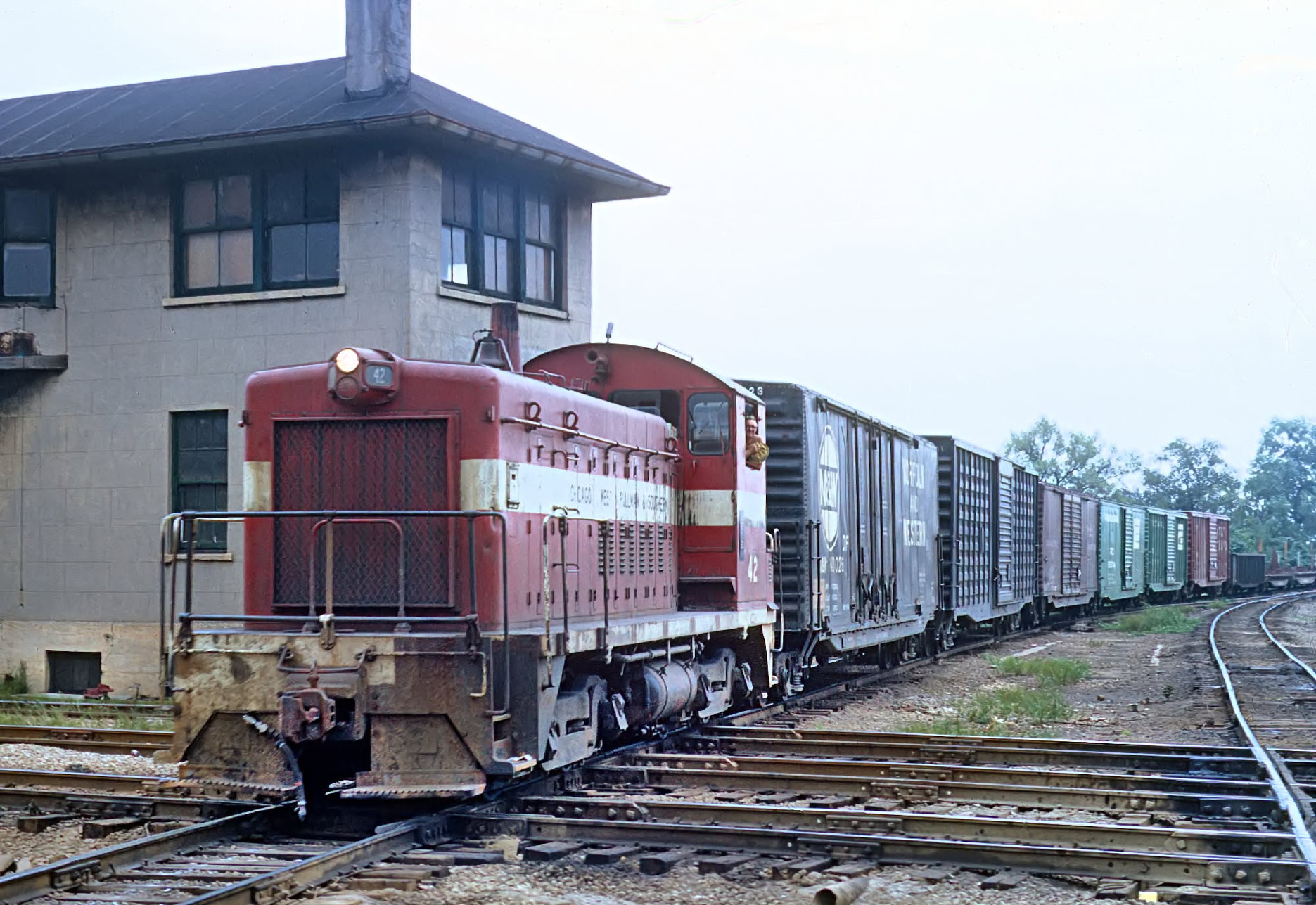
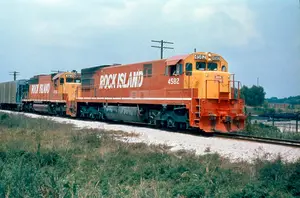
Chicago West Pullman & Southern 42 (SW8 built 6/51) on the Rock Island passing UD Tower, Joliet, IL on August 30, 1973. Marty Bernard photo.
On this page: At a glance · Harvester steel · Two plant railroads, one charter · How the map worked · Steam and slag · Red-and-white diesels · 1980, 1983, 1996 · Complete diesel roster · Known steam · Sources
At a Glance
| Item | Detail |
|---|---|
| Reporting mark | CWP |
| Nickname | Chicago We Push and Shove (crew lore) |
| Owner (operating years) | International Harvester interests; Wisconsin Steel after the 1977 spinoff; Chicago West Pullman Corp. from 1983; OmniTRAX from 1991 |
| Incorporation | Chicago, West Pullman & Southern Railway, 1900; reorganized as the Railroad, 1909, absorbing the Calumet & Southeastern (1902) |
| Job | Captive switching between Wisconsin Steel (Irondale / South Deering) and IH’s West Pullman / Plano Works, plus independent industries in the West Pullman district |
| Headquarters / yard | 104th Street and Torrence Avenue (100th Street Yard and roundhouse at the south end of that yard) |
| Track operated (ICC, c. 1915) | 31.00 miles total: 7.56 owned, 9.41 trunk-line trackage rights, 13.03 industry tracks. About 11.70 miles counted as main track |
| Capital (ICC) | $400,000, all paid in |
| Equipment (ICC, June 30, 1914 era) | 10 standard-gauge locomotives, 45 freight cars; public team tracks and an LCL freight house at West Pullman |
| Connections | Illinois Central; Rock Island; Pennsylvania (PCC&StL); Calumet Western |
| Signature power | Baldwin 0-6-0s, then EMD SW8s in red and white. Bicentennial SW8 #41 |
| Successor | Chicago Rail Link (OmniTRAX), merged August 15, 1996 |
Harvester steel, West Pullman to Irondale
Cyrus McCormick wanted control of the steel that went into the reaper. William Deering, who had moved a harvester factory from Plano, Illinois, into Chicago, already had a mill on the Calumet. When McCormick Harvesting, Deering Harvester, the Plano Manufacturing Company, and two smaller implement makers combined as International Harvester in 1902, the new company inherited both a West Pullman plant and a South Deering steel works.
Plano Manufacturing had about 1,400 people at West Pullman at the merger. That is the “Plano Works” in the Interstate Commerce Commission industrial-railways reports—the plant along 120th Street, Racine to Peoria, that later made bearings, engines, axles, and transmission parts, and that in World War II also made bomb components. Wisconsin Steel was the mill. It sat on about 202 acres at East 106th Street, with its own slips on the Calumet River and, at mid-century, roughly 5,000 employees and two company ore boats, The Harvester and The International. The mill’s genealogy ran back to Joseph H. Brown Iron & Steel (cornerstone 1875), then Calumet Iron and Steel, South Chicago Furnace, and Deering.
Leftover steel that Harvester did not use went to George Pullman’s car works a few miles east. The geography is why a railroad existed at all. The plants were in the same city and not on the same property. A house carrier could move heat, billets, slag, and finished steel on IH’s clock, interchange with the trunks, and keep the originating haulage in the family. Harvester’s other Chicago industrial road, the Illinois Northern (incorporated May 15, 1901), did the same job for the McCormick Works on the southwest side. The CWP even loaned the Illinois Northern $125,000 of its $400,000 capital.
Two plant railroads, one 1909 charter
The ICC described the ownership chain without romance. The West Pullman industrial tracks were originally held with the Plano Works, Whitman & Barnes, and Chicago Malleable Castings. Harvester took control when it took the plants. Wisconsin Steel’s mill railroad was the Calumet & Southeastern, incorporated 1902, which owned almost no right-of-way: seven locomotives and 81 freight cars, operating over the mill’s own rails.
The Chicago, West Pullman & Southern Railway was organized under Illinois railroad law in 1900. In 1909 it was recast as the Chicago, West Pullman & Southern Railroad and absorbed the Calumet & Southeastern. Illinois Central granted trackage rights from December 1, 1909 (West Pullman to Burnside, 5.20 miles in the IC valuation; the CWP’s own ICC write-up uses 4.07 miles IC plus 4.04 miles Rock Island Burnside to the mill). That 1909 date is the one most later summaries treat as the start of the railroad as a going common carrier. The 1880s language on some company histories is McCormick’s vertical-integration story, not a charter date.
Stock sat in individual names for the benefit of International Harvester. Before 1913 the railroad and both industries belonged to the old IH company; after the 1913 dissolution the Plano Works sat with International Harvester Corporation and Wisconsin Steel with International Harvester Company of New Jersey, with the same people holding both. The ICC still treated the plants as proprietary industries. Other Chicago roads were, as a Railway Age excerpt later put it, miffed that IH used the CWP and the Illinois Northern to keep originating fees in-house.
How the map worked
The CWP never owned a conventional main line from mill to foundry. The ICC’s circa-1915 inventory is the cleanest snapshot:
- 31.00 miles of track operated, of which only 7.56 were owned.
- 9.41 miles of Illinois Central and Rock Island trackage rights or lease.
- 13.03 miles of Wisconsin Steel, Plano Works, and other industry rails, used without rental.
- Owned main track was only about 1.8 miles, all at West Pullman, tying the Plano Works and neighboring plants to the Rock Island.
- The 100th Street Yard was CWP property. A roundhouse at the south end of that yard was reached by switches, not a turntable; a 1947 Sanborn sheet and a 1939 photograph show a slip switch feeding the stalls.
- The company also claimed, as main line, Wisconsin Steel tracks from the Rock Island connection to the Grand Calumet and to the Calumet Western.
Trackage-rights payments to IC and Rock Island were 50 cents a car (loaded or empty), 75 cents an engine, $5 minimum per train, plus a separate Rock Island lease giving joint use from the mill into the 100th Street Yard at 2.5 percent a year on the agreed value of those tracks. Besides the two proprietary plants the railroad served nine independent industries—eight at West Pullman, one at 100th Street. It was freight only. It did keep public team tracks and a small freight house for less-than-carload business at West Pullman, which is how a mill road stayed a common carrier on paper.
A 1915 map in the Southeast Chicago Historical Society collection, and a 1952 plat of the West Pullman industrial tracks, show the same geometry later crews remembered: West Pullman on the IC Blue Island branch and the Rock Island, a PRR (PCC&StL) connection in the district, and the long reach east to Irondale and the slag dumps east of Torrence. Kevin Piper, who watched the red-and-white switchers as a boy along 119th Street east of Ashland, put the main office and yard at 104th and Torrence. That is still Chicago Rail Link territory.
Steam and slag
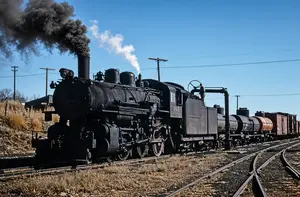
Everything photographed in steam is a six-coupled switcher. Baldwin 0-6-0s dominate the surviving negatives: #22 (Baldwin, March 1916, construction no. 43012), #25 (February 1925, 58212), #27 (August 1928, 60603), and #29, a new Baldwin in August 1937 (62081)—late for a plant road to buy new steam. Don Ross photographed #22, #23, #26, #27, and #29. Railroad Picture Archives also has #12, with no builder data posted. Bill Molony photographed #25 steamed up on April 18, 1939.
That is not a roster. Numbers 12 through 29 imply earlier 0-6-0s and gaps (13–21, 24, 28, and anything below 12). The Calumet & Southeastern brought seven locomotives into the 1909 merger; the ICC counted ten on the combined company around 1914–15. Builder lists, construction numbers, and dispositions for most of those engines are not on the open web. The known-steam table at the bottom of this page is the documented remainder, not an all-time list.
Don Ross came through in 1948 and found steam still at work. Most of what he saw was slag, hauled from the open hearths to the dumps east of Torrence—Slag Valley, in later neighborhood language. The slag extra outlived steam. Wayne Evans photographed cinder dumps from the Wisconsin Steel open hearths about 1968. Steven J. Brown photographed a CWP switcher dumping slag near Pullman Junction in February 1976. Dwayne Stegner caught SW8 #46 on a slag train on February 12, 1978. Switchmen who grew up around the mill still talk about those jobs as the two worst on the board, next to the coke plant.
Red-and-white diesels
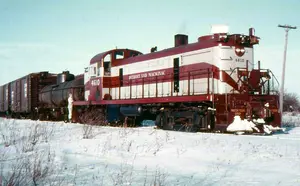
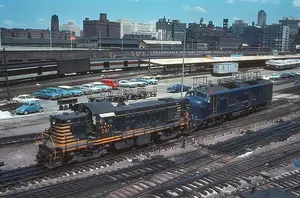
Dieselization started in the 1940s while steam was still on the property. Two Alco S-2s, #40 (October 1944) and #41 (November 1949), were the first. Electro-Motive SW8s #42–48 arrived new in 1951–52. Railroad Magazine’s October 1959 Illinois shortline roster still shows that 1940s–50s fleet: Alcos 40–41, SW8s 42–46, and 47–48 listed there as 1,200-horsepower SW9s. The Alcos went to Republic Steel as 154–155 about 1961–62. Two ex-Detroit, Toledo & Ironton NW2s, #49–50, came in May 1961 via G. R. Silcott. Ex-Mississippi Central SW9 #51 arrived in February 1966. The 40–41 numbers were reused in 1970 on two ex-Cincinnati Union Terminal SW8s, also via Silcott. Three ex-Chicago & North Western SW1s, #37–39, filled in during the 1970s as C&NW retired them.
Paint changed in front of the cameras. Andre Kristopans, reading the photographs, put the early dark scheme in the 1960s and before, red in the late 1960s, blue very near the end, and at least #43 in green and white still lettered CWP in its last days. The red-and-white years are the ones that stuck: Kam Miller watching transfers at IC Homewood from the old rattan-seat MUs, Piper on his bicycle at the foundry, Mark Hinsdale’s July and September 1977 views of a still-busy Irondale. #41, the second SW8 to wear that number, was the Bicentennial unit.
Marty Bernard’s August 30, 1973 photograph of #42 is the railroad off its own map. The unit is an SW8, Electro-Motive 14282, built June 1951, later rebuilt by EMD in 1967. Bernard found it on the Rock Island at UD Tower in Joliet, the crossing of the Rock Island, the GM&O, and the Santa Fe, well southwest of Irondale. The CWP’s home trackage rights were on the Rock Island too, but Joliet is a Class I junction, not a mill lead. The caption is the fact; the errand is not in the published roster notes. #42 left the CWP for International Harvester as 42 in April 1975, then U.S. Steel–Gary as 41 on March 4, 1976.
Wisconsin Steel goes dark, the railroad hangs on
International Harvester sold Wisconsin Steel in 1977 to Envirodyne / EDC Holdings, a leveraged buyout financed in part with IH paper. On March 27, 1980 IH called the loans, reclaimed collateral that included the mill’s mines and railroads, and the plant closed the same day. About 3,300 people were out. Chase Manhattan told workers in April that their last paychecks were no good. Wisconsin Steel was among the first of the Calumet mills to go; the rest of the district followed through the 1980s.
The CWP outlived the mill by sixteen years, in poorer and poorer business. Dave Arganbright photographed the railroad still looking sharp in 1980 with the plant shutting around it. Through the 1980s the work was tearing Wisconsin Steel down and storing other people’s cars and locomotives. Paul Fortini remembered six or seven CWP engines in the yard in the late 1980s.
In 1983 Chicago West Pullman Corp. (later described by the successor Chicago West Pullman LLC as CWP) bought the railroad from the Wisconsin Steel estate. The new owners brought operating managers in as shareholders and used the name as a shortline holding company. By 1990 Chicago West Pullman Transportation Corporation was telling Modern Railroads it ran six short lines, CWP&S included. A 1986 Chicago Tribune note, when the company bought U.S. Steel’s Joliet rod mill and two Ohio plants, still identified the Chicago, West Pullman & Southern as the unit “formed to serve the now shuttered Wisconsin Steel plant.”
Kevin Piper’s summary of the last change of control is the one that matches the successor’s corporate line: sold in 1991 to OmniTRAX of Denver, then merged into Chicago Rail Link on August 15, 1996. CRL itself had started as the LaSalle & Bureau County on leftover Rock Island in 1980. What remains of the CWP is the Torrence Avenue corridor, Irondale, and the South Side industrial track CRL still switches. SW8s 43 and 46 and SW9 51 went onto the CRL roster with their CWP numbers.
Complete diesel roster
All-time CWP diesels, unit by unit. Serials, dates, and dispositions follow John Komanesky’s Diesel Shop roster (revised June 19, 2019; Extra 2200 South, Railroad Magazine, the Unofficial EMD Homepage, and Bob Van Derveer). Don Ross’s Don’s Depot notes are used for shop numbers, sale months, and a few prior identities. Railroad Magazine (October 1959) is the contemporary in-service check on the original Alco/SW8/SW9 fleet.
Two conflicts are left visible rather than split down the middle. Diesel Shop and Don Ross list 47–48 as SW8s, serials 16829–16830; Railroad Picture Archives and the 1959 magazine list them as SW9s (the magazine gives 1,200 hp and 246,700 pounds, against 230,000 for the SW8s). Diesel Shop lists SW1 37 as October 1940; Don Ross says September 1942, same serial 1741. The table uses Diesel Shop in the date column and puts the disagreement in the notes. CWP 52 is a blank on the Diesel Shop sheet; Chicago Rail Link later had an SW1200 52, which is not treated here as a CWP engine. RRPA’s CWP 8480 (SW1, serial 1263, ex-Conrail 8480) is a late/CRL-era photograph, not a documented CWP-proper roster unit.
| CWP no. | Builder / model | Serial | Built | Prior identity / notes | Disposition |
|---|---|---|---|---|---|
| 37 | EMD SW1 | 1741 | Oct. 1940 | Ex-C&NW 615 < C&NW 1210 (1st). Don Ross: FN E489-4, built Sept. 1942; C&NW renumbered 615 on Aug. 23, 1971, then sold to CWP | Retired from C&NW and sold to CWP. Further disposition not on the Diesel Shop sheet |
| 38 | EMD SW1 | 18101 | May 1953 | Ex-C&NW 1268. Don Ross: FN 4177-1; C&NW retired June 1, 1978; Wilson-Cramer, then CWP | Later Midwest Steel |
| 39 | EMD SW1 | 18105 | May 1953 | Ex-C&NW 1273. Don Ross: FN 4177-5; C&NW retired Nov. 10, 1977; Wilson-Cramer, then CWP | Hollis & Eastern 39 |
| 40 (1st) | Alco S-2 | 72854 | Oct. 1944 | New to CWP. Railroad Magazine 1959 lists the pair as “S1” but at 1,000 hp, which is S-2 | Republic Steel 154, c. 1961–62 |
| 41 (1st) | Alco S-2 | 77824 | Nov. 1949 | New to CWP | Republic Steel 155, c. 1961–62 |
| 40 (2nd) | EMD SW8 | 14567 | Aug. 1951 | Ex-Cincinnati Union Terminal 33. Acquired 1970 via G. R. Silcott. Don Ross: FN 6264-4 | U.S. Steel–Gary Works 40, May 1976 |
| 41 (2nd) | EMD SW8 | 14566 | Aug. 1951 | Ex-CUT 32. Acquired 1970 via Silcott. Don Ross: FN 6264-3. Bicentennial paint | Left CWP after the Bicentennial years; further disposition not closed on Diesel Shop |
| 42 | EMD SW8 | 14282 | June 1951 | New to CWP. Don Ross: FN 6247-1; rebuilt by EMD 1967. Marty Bernard photo, RI at UD Tower, Joliet, Aug. 30, 1973 | International Harvester 42, April 1975; U.S. Steel–Gary 41, March 4, 1976 |
| 43 | EMD SW8 | 16825 | Nov. 1952 | New to CWP. Don Ross: FN 6381-1. Green-and-white CWP lettering in last days | Chicago Rail Link 43, 1996 |
| 44 | EMD SW8 | 16826 | Nov. 1952 | New to CWP. Don Ross: FN 6381-2 | International Harvester 44, Aug. 1974; Alter Corp. 1 |
| 45 | EMD SW8 | 16827 | Nov. 1952 | New to CWP. Don Ross: FN 6462-1 | Georgia Woodlands 45; Hudson Bay Railway 2512; Mandak Metals 2002; scrapped |
| 46 | EMD SW8 | 16828 | Nov. 1952 | New to CWP. Don Ross: FN 6462-2. Photographed on a slag train Feb. 12, 1978 | Chicago Rail Link 46, 1996 |
| 47 | EMD SW8 | 16829 | Nov. 1952 | New to CWP. Don Ross: FN 4193-1. Diesel Shop/Don Ross: SW8. Railroad Magazine Oct. 1959 and RRPA: SW9, 1,200 hp | Bayou Steel (no number), July 1981. Don Ross keeps the 47 |
| 48 | EMD SW8 | 16830 | Nov. 1952 | New to CWP. Don Ross: FN 4193-2. Same SW8/SW9 disagreement as 47 | Empire Coke 48; Watco 48, 2007 |
| 49 | EMD NW2 | 5757 | Sept. 1948 | Ex-DT&I 910. Don Ross: built Sept. 10, 1948, FN E945-5; to CWP May 1961 via Silcott. Bernard photo at 104th St., March 31, 1964 | Dierks Forests D-10, 1969; Texas, Oklahoma & Eastern D-10 |
| 50 | EMD NW2 | 5758 | Sept. 1948 | Ex-DT&I 911. Don Ross: FN E945-6; to CWP May 1961 via Silcott | Acme-Newport Steel 5, then Interlake 5 (2nd), then Newport Steel 5 (2nd), c. 1969 |
| 51 | EMD SW9 | 17997 | March 1953 | Ex-Mississippi Central 210. Don Ross: April 1953, FN 6503-10; purchased Feb. 1966. A Rick Burn photo is captioned at 104th and Torrence in Jan. 1963—three years earlier than Ross’s purchase date; one of the two dates is wrong | Chicago Rail Link 51, 1996 |
Sources and what survives
History is stitched from the ICC industrial-railways reports (37 I.C.C., discussing the CWP with the earlier Industrial Railways Cases at 29 I.C.C. 212 and 32 I.C.C. 129); the IC valuation trackage note of December 1, 1909; the Encyclopedia of Chicago on International Harvester and West Pullman; Chicago Public Library and Southeast Chicago Historical Society material on Wisconsin Steel; Dennis DeBruler’s Industrial History compilation of first-hand posts (Kevin Piper, David Daruszka, Bob Lalich, Mark Hinsdale, and others); Chicago West Pullman LLC’s own corporate history; the 1986 Tribune sale note; and the Chicago Rail Link / OmniTRAX corporate line (UP shortline profile: CWP merged into CRL August 15, 1996).
The diesel table is Komanesky at the Diesel Shop, checked against Don Ross and the 1959 Railroad Magazine roster. Steam numbers are Don Ross plus Railroad Picture Archives, with the Molony #25 date from the Industrial History thread.
On the ground, the mill is gone. An asphalt plant and a truck-parts yard sit on pieces of the Wisconsin Steel property; the rest has been vacant for decades. Chicago Rail Link still works the Torrence corridor from 2728 East 104th Street. Three CWP switchers kept their numbers into the CRL era: SW8s 43 and 46, and SW9 51. The rest scattered—Gary Works, Hollis & Eastern, Bayou Steel, Empire Coke / Watco, Georgia Woodlands, a Hudson Bay unit that ended at Mandak. No CWP steam engine is known to survive. The railroad that remains is a South Side switching job with a different reporting mark.
Recent Articles


-
Dakota, Minnesota & Eastern Railroad: Roster, Map, History
Oct 21, 26 12:26 AM
 Dakota, Minnesota & Eastern Railroad, reporting mark DME. The July 2, 1986 Chicago & North Western sale, 826 miles and 139 miles of trackage rights. Canadian Pacific control October 30, 2008…
-
Detroit and Mackinac Railway: Map, Roster, History
Oct 20, 26 11:58 PM
 Detroit & Mackinac Railway, the Turtle Line. Bay City to Cheboygan along Lake Huron. Incorporated December 29, 1894. Lake State Railway leased the operation in 1992 and bought the lines in 1997. E…
-
Davenport, Rock Island and Northwestern Railroad
Oct 20, 26 11:22 PM
 Davenport, Rock Island and North Western Railway, the DRI Line. Clinton to East Moline across the Crescent Bridge. Burlington and Milwaukee. Merged into the Soo Line on June 29, 1995. Eighteen diesels…
-
Chicago Great Western Steam Roster (Post 1900)
Oct 20, 26 11:17 PM
 Chicago Great Western steam locomotives built or rebuilt since 1900. Drury's class grid. 320 frames, each once. The quantity column prints 376 because a rebuild is listed again. Last steam in the reti…
-
Chicago Great Western Diesel Roster (All-Time)
Oct 20, 26 10:47 PM
 All-time diesel roster of the Chicago Great Western. 157 frames, each counted once. Serials and builder order numbers included. Steam was gone by 1950. The 1963 glance figure of 141 is one year's flee…
-
Chicago Great Western Railway: Map, Photos, History, Rosters
Oct 20, 26 10:43 PM
 The Chicago Great Western, the Corn Belt Route, linked Chicago, the Twin Cities, Omaha, and Kansas City from September 27, 1885, until the Chicago & North Western merger at 12:01 a.m. on July 1, 1968…
-
Chicago, South Shore & South Bend Railroad: "The South Shore Line"
Oct 20, 26 05:48 PM
 Chicago South Shore & South Bend, the South Shore Line, from the 1901 Air Line through Samuel Insull's 1925 rebuild, the orange cars, the 800s, and the railroad NICTD and Anacostia still run.
-
Northwestern Virginia Railroad: Map, History, Timetable
Oct 20, 26 04:18 PM
 Northwestern Virginia Railroad, chartered February 14, 1851, Grafton to Parkersburg, 104 miles. Opened May 1, 1857. Foreclosure sale February 15, 1865, as the Parkersburg Branch. Twenty-three tunnels…
-
"Exposition Flyer" (Train): Consist, Timetable, History
Oct 20, 26 03:29 PM
 Exposition Flyer, Chicago to Oakland, June 10, 1939 to March 20, 1949. Burlington, Rio Grande, and Western Pacific. Heavyweight cars, then diesels and a vista-dome. Replaced by the California Zephyr.
-
Chicago, St. Paul, Minneapolis & Omaha Railway, "The Omaha Road"
Oct 20, 26 02:13 PM
 The Omaha Road, reporting mark CMO. Formed May 26, 1880. North Western management on December 16, 1882. Leased January 1, 1957. Class K-1 No. 183 and the sublettered diesels.
-
Chicago and Western Indiana Railroad: Map, Rosters, History
Oct 20, 26 01:17 PM
 Chicago and Western Indiana, chartered June 5, 1879. Five equal owners, Dearborn Station, and two main lines. Dolton suburban mile 16.6. Fifteen diesels. Railroad service ended in 1994. The Illinois c…
-
Railroad Tell-Tales: Protecting The Brakeman
Oct 20, 26 12:58 PM
 Railroad tell-tales: hanging ropes that warned a man on a freight-car roof of a low bridge or tunnel. The 1897 bridge-warning report, the 1905 Wisconsin statute, retainers, and why the roof walk outla…
-
Chicago & North Western Steam Roster (Post 1900)
Oct 20, 26 12:54 PM
 Chicago & North Western steam locomotives built since 1900, and the Omaha Road list beside it. Drury's parent quantity column sums to 1,445, with four rows left blank. The Omaha Road column sums to 24…
-
Chicago & North Western Diesel Roster (All-Time)
Oct 20, 26 12:49 PM
 All-time diesel roster of the Chicago & North Western. 2,494 frames, each counted once, including Chicago Great Western, Minneapolis & St. Louis, and Omaha Road units that received North Western numbe…
-
Chicago and North Western Railroad: Map, History, Logo
Oct 20, 26 12:37 PM
 The Chicago & North Western, chartered as the Galena & Chicago Union in 1836 and formed in June 1859. Granger railroad of the 400s, the Cowboy Line, and Powder River coal. Union Pacific common control…
-
Chicago & Illinois Midland Steam Roster (Post 1900)
Oct 20, 26 12:30 AM
 Chicago & Illinois Midland steam locomotives built since 1900. Drury's class grid, 57 engines. Twenty-six 2-10-2s, including nine from the Wabash and nine from the Atlantic Coast Line. Last road steam…
-
Chicago & Illinois Midland Diesel Roster (All-Time)
Oct 20, 26 12:20 AM
 All-time diesel roster of the Chicago & Illinois Midland. 28 frames, each counted once. Six SW1200s, five SD9s, the only two RS1325s, two SD18s, six SD38-2s, and four SD20s. Serials included.
-
Chicago and Illinois Midland Railroad: Map, Rosters, History
Oct 20, 26 12:17 AM
 The Chicago & Illinois Midland moved Illinois coal for Commonwealth Edison, Taylorville and Springfield to Pekin, with Peoria over the Peoria & Pekin Union. The 1906 railway began operating February 1…
-
Chicago & Eastern Illinois Diesel Roster (All-Time)
Oct 19, 26 04:23 PM
 All-time diesel roster of the Chicago & Eastern Illinois. 143 frames, each counted once. Switchers, F3s, FP7s, E7s, the BL1, and the GP7s through GP35s. Serials included.
-
Chicago & Eastern Illinois Steam Roster (Post 1900)
Oct 19, 26 04:19 PM
Chicago & Eastern Illinois steam locomotives built or rebuilt since 1900. 146 Consolidations, 60 Mikados, and 24 Pacifics. Drury's class grid. Last steam was Mikado 1944 at Vincennes on May 5, 1950. -
Chicago and Eastern Illinois Railroad: Map, Rosters, History
Oct 19, 26 03:57 PM
 The Chicago & Eastern Illinois ran from Chicago to Evansville, St. Louis, and Thebes. First company of the name, August 28, 1877. The remainder merged into the Missouri Pacific on October 15, 1976. St…
-
Rock Island Diesel Roser: All-Time
Oct 19, 26 11:05 AM
 Chicago, Rock Island and Pacific diesel locomotives, 1,029 frames counted once. Switchers, cab units, road-switchers, two acquired slugs, five RDCs, and bi-power 10000. Serial and order are separate c…
-
Rock Island Steam Roster: Post 1900
Oct 19, 26 11:01 AM
Chicago, Rock Island and Pacific steam locomotives built or rebuilt since 1900. Drury's class grid, 1,482 frames counted once, including 85 4-8-4s. Last revenue steam was July 1953. -
Rock Island Railroad: Map, Pictures, Logo, History
Oct 19, 26 10:51 AM
 The Chicago, Rock Island and Pacific ran from Chicago to the Twin Cities, Denver, Tucumcari, and the Gulf. First train October 10, 1852. Directed service ended March 23, 1980. Steam and diesel rosters…
-
EMD "F7" Locomotives: Cab, Top Speed, Specs, Rosters
Oct 19, 26 12:27 AM
 EMD F7 cab units and boosters, 1,500 horsepower, built February 1949 through December 1953. Gear ratios, specifications, and the production roster by owner, serial, and order.
-
Harlem Transfer Company: An NYC Terminal System
Oct 19, 26 12:01 AM
 Harlem Transfer Company, the Lackawanna's offline freight terminal on the Bronx side of the Harlem River at East 135th Street. Carfloats to Hoboken, boxcab No. 2, and GE 44-tonner 53.
-
Belpre Industrial Parkersburg Railroad: Roster, History, Photos
Oct 18, 26 11:44 PM
 Belpre Industrial Parkersburg Railroad, a Class III short line leasing about 46.9 miles of CSX track at Parkersburg since 2020. The Ohio River bridge, the Marietta Subdivision, and five GP38-3s.
-
Chicago, Peoria & St. Louis Railroad: Map, Timetables, History
Oct 18, 26 10:57 PM
 Chicago, Peoria & St. Louis Railroad, an Illinois line from Pekin and Peoria through Springfield to Madison. Chartered in 1853. Sold in parcels on November 20, 1924. The Pekin line is today the Illino…
-
Chicago, Burlington & Quincy Diesel Roster (All-Time)
Oct 18, 26 10:54 PM
 All-time diesel roster of the Chicago, Burlington & Quincy. 951 parent frames, 72 Colorado & Southern, and 36 Fort Worth & Denver, each counted once. Serials included.
-
Burlington Railroad (CB&Q): Map, History, Rosters, Photos
Oct 18, 26 10:49 PM
 The Chicago, Burlington & Quincy, the Burlington Route, ran from Chicago to Denver, the Twin Cities, and the Gulf. Steam built since 1900 and the diesel fleets are companion rosters. Burlington Northe…
-
Chicago, Burlington & Quincy Steam Roster (Post 1900)
Oct 18, 26 10:33 PM
 Chicago, Burlington & Quincy steam locomotives built or rebuilt since 1900. 429 Prairies, 383 Mikados, the Hudsons, and the O-5 4-8-4s. Drury's class grid.
-
Virginian Railway's 2-6-6-6 Locomotives (Class AG)
Oct 18, 26 01:38 PM
 Virginian Railway class AG. Eight Lima 2-6-6-6s, Nos. 900-907, built in 1945 for the east end. Billed at 753,000 pounds. Scrapped in 1960.
-
Pennsylvania (PRR) Steam Roster: Post 1906
Oct 18, 26 01:05 PM
ennsylvania steam after 1906—H8, H9, and H10 Consolidations, 574 L1s Mikados, 598 I1s Decapods, 425 K4s Pacifics, 301 M1 Mountains. Drury’s grid. Last steam November 30, 1957. -
Chicago, Aurora and Elgin Railroad: The "Roarin' Elgin"
Oct 18, 26 10:54 AM
The Chicago, Aurora & Elgin, the Roarin' Elgin, ran 600-volt third-rail trains from Chicago to Aurora, Batavia, and Elgin. Passenger service ended at noon on July 3, 1957. Freight ended June 11, 1959. -
Algoma Central Railway: Map, Logo, Rosters
Oct 17, 26 10:49 PM
 Algoma Central Railway, Sault Ste. Marie to Hearst. Wisconsin Central on February 1, 1995. Fifty-nine steam locomotives and forty-two diesels.
-
Akron, Canton and Youngstown Railroad: Map, History, Rosters
Oct 17, 26 05:49 PM
 Akron, Canton and Youngstown Railroad, Mogadore to Delphos. The rails never reached Canton or Youngstown. Norfolk & Western control on October 16, 1964. Twenty-six diesels and the historical society's…
-
Georgia Railroad: Map, History, Logo, Rosters
Oct 17, 26 12:59 PM
 Georgia Railroad, the Georgia Railroad and Banking Company, Augusta to Atlanta, with the Athens branch and the Macon Road. Mark GA. The railroad properties were sold on November 4, 1982.
-
West Point Route (Railroad): Map, History, Logo
Oct 16, 26 11:26 PM
 The West Point Route was a trademarked name comprising the Atlanta & West Point and Western Railway of Alabama, which were controlled by the Georgia Railroad.
-
Virginian Railway Diesel Roster (All-Time)
Oct 16, 26 11:11 PM
 All-time diesel roster of the Virginian Railway. 40 Fairbanks-Morse H16-44s, 25 H24-66 Train Masters, and one GE 44-tonner. Serials included.
-
Virginian Railway Steam Roster (Post 1900)
Oct 16, 26 10:55 PM
 Virginian Railway steam locomotives built since 1900. Mikados, 2-8-8-2s, the Triplex, class AE 2-10-10-2s, and the 1945 2-6-6-6s.
-
Virginian Railway: Map, Rosters, History, Electrification
Oct 16, 26 10:51 PM
 Virginian Railway, Deepwater to Norfolk. Combined in 1907 and completed in 1909. Electrified from Roanoke to Elmore. Absorbed by the Norfolk & Western on December 1, 1959.
-
Baldwin "Centipede" Locomotives: Specs, Roster, Photos
Oct 16, 26 03:58 PM
 Baldwin DR-12-8-1500/2 Centipede—2-D+D-2, two 608SC engines, 3,000 hp. SAL 4500 from the 1943 test bed. 54 on the serial list, 52 sold. PRR BP60 then BH50. None preserved.
-
Louisville & Nashville Class M-1 2-8-4s: The Big Emmas
Oct 16, 26 03:52 PM
Louisville & Nashville class M-1, 42 Big Emma 2-8-4s. Baldwin in 1942 and 1944, Lima in 1949. Coal trains from Neon to DeCoursey. No locomotive survives. -
Tennessee, Alabama and Georgia Railway: Map, History, Rosters
Oct 16, 26 03:21 PM
 Tennessee, Alabama and Georgia Railway, Chattanooga to Gadsden. The May 1929 card is 91.7 miles. Southern stock control closed on a January 1, 1971 schedule. Five diesels and Prince's steam list.
-
Railroad Museums In The USA (2026): State Guides & Collections
Oct 16, 26 02:29 PM
 U.S. railroad museums—what they are vs tourist railroads, preservation history (R&LHS, NRHS, IRM, Steamtown), state guides, and destination collections. Confirm hours on each museum’s site.
-
Wyoming Railroad Museums (2026): A Complete Guide
Oct 16, 26 02:26 PM
 Wyoming railroad museums—the Cheyenne Depot, Burlington 5633 at Douglas, Big Boy 4004, and the Laramie depot. Confirm hours and which locomotive is on the property.
-
West Virginia Railroad Museums (2026): A Complete Guide
Oct 16, 26 12:52 PM
 West Virginia railroad museums—Cass Scenic’s geared steam, the Hinton C&O collection, and the Martinsburg B&O roundhouse. Confirm hours and which locomotive is assigned.
-
Washington Railroad Museums (2026): A Complete Guide
Oct 16, 26 12:46 PM
 Washington railroad museums—Snoqualmie, Elbe, Chehalis, Reardan, and the Northern Pacific depot at Toppenish. Confirm hours and which locomotive is assigned.
-
Vermont Railroad Museums (2026): A Complete Guide
Oct 16, 26 12:42 PM
 Vermont railroad museums—the Shelburne Museum’s 1890 station, Central Vermont No. 220, and the private car Grand Isle. Confirm hours on the site.
-
Tennessee Central Railway: Map, Logo, Rosters, History
Oct 16, 26 11:32 AM
 Tennessee Central Railway, Harriman to Hopkinsville. Reorganized January 26, 1922. Last day August 31, 1968. Thirty-one diesels and the railroad's steam roster.