Railroads In The 1920s: Transportation Act, Shopmen, Super Power & the Auto
Last revised: September 8, 2026
By: Adam Burns
The 1920s opened with the government handing the railroads back and closed with the stock market handing the country a depression. In between, the map stopped growing, the automobile took the local passenger, shopmen walked out, and steam and diesel both found their next shapes. John Stover’s first-track series put the all-time peak at 254,037 miles in 1916. By 1930 the same series, as printed on the 1930s leaf, stood at 249,052. Don DeNevi noted only about 6,000 miles built from 1920 through 1929. The country was still laying some rail. Net, it was taking more up.
Federal control ended at 12:01 a.m. on March 1, 1920. The statute the roads came home to is the Transportation Act of February 28, 1920 (Esch–Cummins), written as the 1910s closer on Railroads In The 1910s. How the United States Railroad Administration was staffed, paid, and standardized is on the USRA page. Wartime traffic is on Railroads During World War I. Streamliners, the FT, and the bankruptcies of the 1930s belong to the 1930s. What follows here is 1920 through 1930.
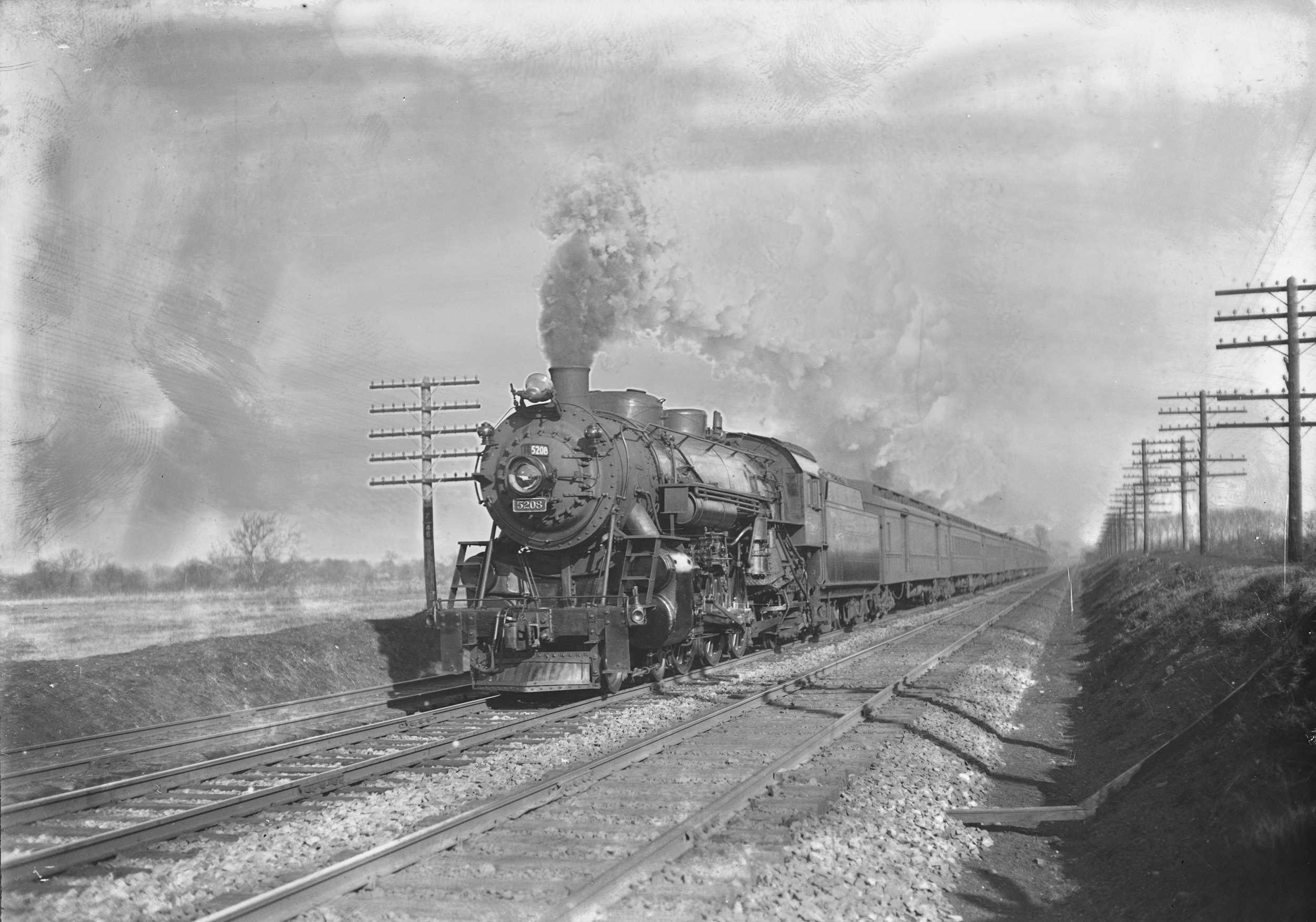
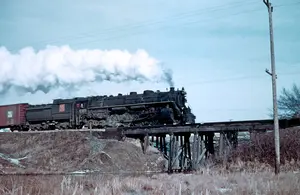
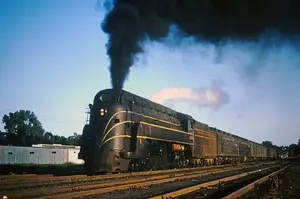
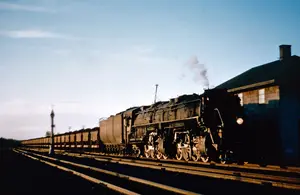
Baltimore & Ohio 4-6-2 #5208 (Class P-5a) was photogaphered here by John Powell at Folsom, Pennsylvanie at 10:32 am with westbound train 505, the "Washington Express", on March 14, 1927. Library of Congress collection.
On this page: At a glance · Living under the Transportation Act · Mileage after the peak · Shopmen, 1922 · The automobile and the passenger · Interurbans · Diesel switchers that stayed · Super Power steam · Named trains · October 1929
At a glance
| Item | Detail |
|---|---|
| Peak miles (already past) | 254,037 first track in 1916 (Stover / ICC) |
| Miles, 1930 | 249,052 (Stover series as used on the 1930s leaf) |
| New construction, 1920–29 | About 6,000 miles (DeNevi). Net miles fell |
| Return from USRA | March 1, 1920. Statute: Transportation Act, February 28, 1920 |
| Railroad Labor Board | Created by the 1920 act. Replaced by the Railway Labor Act, May 20, 1926 |
| Shopmen’s strike | July 1, 1922. About 400,000 shop-craft employees. Wilkerson / Daugherty injunction September 1, 1922 |
| Passengers | About 1 billion in 1916; about 700 million by 1930. In 1929, 34 billion passenger-miles by rail against 175 billion by automobile |
| Motor vehicles | About 3 million registered in 1916; about 23 million by 1929. Model T about $260 by 1925 |
| Interurban miles | 15,337 (1920); 10,422 (1930). Peak had been 15,580 in 1916 |
| First commercial diesel switchers | Alco–GE–Ingersoll-Rand boxcabs, 1925 (Central Railroad of New Jersey and others). Jay Street Connecting No. 4 (1918) had been returned |
| Super Power / new Whyte types | Lima A-1 2-8-4 Berkshire, 1925. Northern Pacific Class A 4-8-4, December 1926. NYC J-1a Hudson No. 5200, February 14, 1927 |
| Cascade Tunnel | Great Northern’s new bore opened January 12, 1929 |
| Crash | October 1929. Depression receiverships are the next decade |
Mileage is the Stover / ICC first-track series. Construction and net miles are different figures. Information compiled September 8, 2026.
Living under the Transportation Act
The Esch–Cummins Act is a 1910s statute. The 1920s had to live with it. The ICC gained a fair-return idea (commonly 5½ percent, with recapture of half the excess above 6 percent), power to approve or block mergers, and a showing before a line could be abandoned. Duplicate branches from the 1880s building boom now had a federal lock. The act also created the Railroad Labor Board, a nine-member panel to settle wages. Coolidge signed the Railway Labor Act on May 20, 1926, and the Labor Board went away. That 1926 statute is this decade’s labor closer. The 1920 consolidation mandate is this decade’s unfinished business.
Congress had told the Commission to group the railroads into a limited number of systems. Plans were drawn. The Van Sweringens came closest in the East, assembling Nickel Plate, Clover Leaf, and a path toward Chesapeake & Ohio and Pere Marquette. The ICC never forced a national map. October 1929 ended the argument for a generation. Company encyclopedias stay on the company leaves. The 1920s fact is that the great consolidation did not happen.
Private management came home in March 1920 to worn rail, deferred shop work, and a wartime wage bill. The roads spent the early 1920s putting the plant back together. When the second war came they were determined not to be taken again. That determination is a 1920s inheritance. The war itself is Railroads In World War II.
Mileage after the peak
The network was as large as it would ever be in 1916. The 1920s did not add a new transcontinental. They added about 6,000 miles of new construction and lost more than that to abandonment, once the ICC would allow a showing. Kansas and Iowa still sat near their state peaks. The long run from 1916 to the present is decline. This decade is where net decline became the normal condition, not a wartime pause.
Chicago Union Station opened in 1925. Great Northern drove a new Cascade Tunnel and opened it on January 12, 1929, eight miles under the mountain, electric through the bore. Milwaukee’s Pacific Coast electrification reached completion in this decade; the Rocky Mountain electrification was already a 1910s fact. Pennsylvania kept building electric territory in the East. The full New York–Washington catenary is 1935, the next decade. Stations and tunnels have their own leaves. The 1920s point is that the big civil works were now reconstruction and bypass, not a new map.
Shopmen, 1922
The Railroad Labor Board cut shop-craft wages effective July 1, 1922. Contracting-out of repairs—the open shop in the back shops—was already eating the crafts. Seven shop unions walked. About 400,000 men left at 10 a.m. on July 1. Train-service brotherhoods stayed at work. Freight and mail still moved, badly, with strikebreakers and shop work farmed out.
Board chairman Ben W. Hooper declared the strikers had forfeited their rights under the 1920 act. Harding floated a settlement in late July; the companies rejected it. On September 1, 1922, Attorney General Harry M. Daugherty obtained from Judge James H. Wilkerson in Chicago an injunction that swept picketing, assembly, and much of the strike’s speech with it. The walkout collapsed into local settlements. The 1877 strike remains the first national industrial walkout, on its own page. 1922 is the shopmen’s war under the Labor Board. It is why the 1926 Railway Labor Act exists.
The automobile and the passenger
Henry Ford’s Model T is a 1908 machine. The Federal Aid Road Act is a 1916 statute. What the 1920s did was make both ordinary. Registrations ran from about 3 million vehicles in 1916 to about 23 million by 1929. By 1925 the Model T sold around $260. Roads were still poor by later Interstate standards. Convenience beat the timetable anyway.
Railroads handled about a billion passengers in 1916. By 1930 the figure was about 700 million. In 1929 they recorded 34 billion passenger-miles; the automobile, 175 billion. Buses already held about 15 percent of the commercial passenger market. The long-distance limited still paid in prestige and sometimes in cash. The local mixed train and the short-haul coach did not. That split is the passenger story of this decade. The streamliner as an answer is 1934.
Interurbans
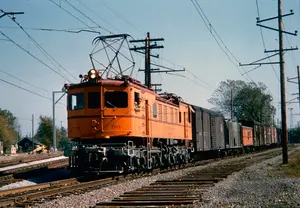
George W. Hilton and John F. Due remain the standard account. Interurban mileage peaked at 15,580 in 1916, stood at 15,337 in 1920, and had fallen to 10,422 by 1930. They dated a marked decline from about 1918. The Model T and hard roads did not wreck the steam railroad in the 1910s. They wrecked the interurban’s prospectus in the 1920s. The Depression finished most of what remained. Lines that lasted did so as freight railroads. The national overview is Interurbans & Streetcars.
Diesel switchers that stayed
A GE diesel-electric for the Jay Street Connecting Railroad in Brooklyn, No. 4, had been delivered late in 1918 and sent back within months. That experiment is the 1910s. What sold in this decade was the Alco–GE–Ingersoll-Rand boxcab of 1925, first on the Central Railroad of New Jersey and then on other terminal roads. They were switchers. They stayed on the property. They did not take the main line. Electro-Motive’s passenger boxcabs of 1935, the EA, and the FT of 1939 are the next decade. For the locomotive story see diesel locomotives.
Super Power steam
Steam was not a dying art in the 1920s. It was getting a larger firebox. Lima, under William E. Woodard, outshopped the A-1 2-8-4 Berkshire in 1925 for the Boston & Albany: Super Power, a four-wheel trailing truck under a grate that could make steam at speed. Northern Pacific took the idea onto a dual-service passenger and freight engine and put the first production 4-8-4s in service in December 1926—Class A, 2600–2611. The type encyclopedia is 4-8-4 Northerns. How Super Power works is on the steam hub.
New York Central needed something that could take four to six extra heavyweight cars that a K-5 Pacific could not. Alco delivered J-1a No. 5200 on February 14, 1927, the first North American 4-6-4 in regular design. President Patrick E. Crowley named it the Hudson, after the river. The class encyclopedia is NYC Hudsons. Streamlined Hudsons and the Dreyfuss J-3a are 1930s styling on a 1920s wheel arrangement.
Named trains
The 1920s still launched heavyweight name trains. Baltimore & Ohio’s Capitol Limited appeared in 1923. Santa Fe’s Chief left Chicago on November 14, 1926. Southern’s Crescent Limited dated from 1925. Great Northern’s Empire Builder from June 10, 1929. The heavyweight Daylight Limited of 1922 is not the 1937 streamlined Daylight. The 20th Century Limited was already a 1902 train. The Super Chief, the Hiawatha, the Zephyrs, and the M-10000 are 1930s. Named-train encyclopedias stay on those leaves and on Streamliners.
October 1929
The decade did not know it was a golden-age sunset. Freight still paid. The limiteds still ran. Super Power and the Hudson were new, not nostalgic. The automobile had already taken the short ride. The interurban was already shrinking. The ICC held rates and abandonments. Consolidation had been studied and not done.
October 1929 ended the easy credit that had papered over weak roads. Rock Island, Milwaukee, Erie, North Western, New Haven, and others went into the 1930s toward receivership. Those filings, the streamliners built to fill empty coaches, and Electro-Motive’s freight diesel are Railroads In The 1930s. The 1920s did not invent the Depression. They ran the last decade in which the steam railroad was still, in most towns, the default way to go.
Related Reading on American-Rails.com
- Railroad History (USA)
- Railroads In The 1910s
- United States Railroad Administration
- Railroads During World War I
- Railroads In The 1930s
- Great Railroad Strike of 1877
- Diesel Locomotives
- Steam Locomotives
- 4-8-4 Northerns
- NYC Hudsons
- Interurbans & Streetcars
- Streamliners
- Stations And Depots
- Railroads In World War II
Sources
- Stover, John F. The Routledge Historical Atlas of the American Railroads. New York: Routledge, 1999. First-track peak 254,037 (1916); 249,052 (1930). Passenger-mile comparison, 1929. Vehicle registrations
- DeNevi, Don. America’s Fighting Railroads. About 6,000 miles built 1920–29
- Transportation Act (Esch–Cummins), February 28, 1920. Railroad Labor Board. Return from federal control, March 1, 1920
- Railway Labor Act, May 20, 1926
- Great Railroad Strike of 1922: shop crafts, July 1, 1922; about 400,000 men. Railroad Labor Board Decision 1036, wage cut effective July 1. Wilkerson injunction, Chicago, September 1, 1922 (Daugherty)
- Hilton, George W., and John F. Due. The Electric Interurban Railways in America. Stanford: Stanford University Press, 1960. 15,337 (1920); 10,422 (1930); peak 15,580 (1916)
- Alco–GE–Ingersoll-Rand boxcab switchers, 1925. Jay Street Connecting GE No. 4, 1918, returned 1919
- Lima A-1 2-8-4 Berkshire, 1925. Northern Pacific Class A 4-8-4, December 1926. NYC J-1a Hudson 5200, February 14, 1927. See also The Diesel Spotter’s Guide (Pinkepank); Schafer, Vintage Diesel Locomotives
- Great Northern Cascade Tunnel opened January 12, 1929. Chicago Union Station, 1925
- B&O Capitol Limited, 1923. Santa Fe Chief, November 14, 1926. Southern Crescent Limited, 1925. GN Empire Builder, June 10, 1929
Recent Articles


-
Kansas City Southern Steam Roster (Built Since 1900)
Oct 25, 26 09:09 PM
 Steam locomotives of the Kansas City Southern built since 1900, with the Louisiana & Arkansas and the Texas company.
-
Kansas City Southern Diesel Roster (Built New)
Oct 25, 26 11:46 AM
 All-time diesel roster of the Kansas City Southern. E units, F units, Geeps, SD40s through SD70ACes, Fairbanks-Morse, Baldwin, Alco, and General Electric, with serials and order numbers.
-
Kansas City Southern Railway: Map, Photos, History
Oct 25, 26 12:24 AM
 The Kansas City Southern, from Arthur Stilwell's Gulf line to Canadian Pacific Kansas City on April 14, 2023. Steam and diesel rosters, the Southern Belle, and the Louisiana & Arkansas.
-
Indiana Harbor Belt Diesel Roster (All-Time)
Oct 25, 26 12:17 AM
 All-time diesel roster of the Indiana Harbor Belt. 202 locomotive frames, each counted once. NW2s, SW7s, SW1500s, road switchers, and gensets. Slugs and boosters are outside the count.
-
Indiana Harbor Belt Steam Roster (Built Since 1900)
Oct 25, 26 12:13 AM
 Steam locomotives of the Indiana Harbor Belt built since 1900. 182 engines, each counted once. 0-6-0s, 2-6-0s, 0-8-0s, and 2-8-2s. The three U-4a switchers are three-cylinder Brooks engines of 1927.
-
Indiana Harbor Belt Railroad: Map, Rosters, History
Oct 25, 26 12:00 AM
 Indiana Harbor Belt, the inner belt across the Calumet, from the East Chicago Belt of May 16, 1896. Renamed June 29, 1907. Still operating, headquarters Hammond. Steam roster is the companion, 182 loc…
-
NYC's "P Motor" Electric Locomotives
Oct 24, 26 11:43 PM
 New York Central P motors: 22 Alco-GE 2-C+C-2 electrics, Cleveland Union Terminal 1050–1071, class P-1a. 3,030 hp one-hour on 3,000-volt DC catenary, then 660-volt third rail as P-2a and P-2b.
-
Illinois Terminal Car Roster
Oct 24, 26 11:40 PM
 Illinois Terminal cars. Mainline motors, the 1948 streamliners, sleepers, Alton and Valley Division cars, express motors, and the line cars rebuilt from pull cars.
-
Illinois Terminal Diesel Roster
Oct 24, 26 09:31 PM
 All-time Illinois Terminal diesels, 62 frames. Alco S-2s and RS-1s, EMD switchers, GP7s, SD39s, GP38-2s, and the two GP20s. Serial numbers from the 1989 roster.
-
Illinois Terminal Electric Locomotives
Oct 24, 26 08:22 PM
 Illinois Terminal electric locomotives, 57 frames. Class A through Class D, the Decatur-built motors, and the battery locomotives. Class D is the same five Class C frames, rebuilt.
-
Illinois Terminal Steam Roster
Oct 24, 26 07:37 PM
 Illinois Terminal steam locomotives, 36 frames. Baldwin Moguls, three Class 30 Mikados, Florida East Coast 0-8-0s, and 2-6-0 No. 21, the last fire on June 30, 1950.
-
Illinois Terminal Railroad: Map, Roster, Photos, History
Oct 24, 26 07:32 PM
 Illinois Terminal, McKinley's Illinois Traction System, from the Danville coal towns to St. Louis. The McKinley Bridge, the sleeping cars, the 1937 break with the power company, the 1948 streamliners…
-
Southern Railway Diesel Roster (All-Time)
Oct 23, 26 11:00 PM
 All-time diesel roster of the Southern Railway. 2,505 locomotives in the system number series, from the 1939 demonstrator FT to GP50s and B30-7A1s. Serials included.
-
Illinois Central Diesel Roster (All-Time)
Oct 23, 26 04:06 PM
 Illinois Central and Illinois Central Gulf diesel locomotives, each frame once. The quantity column is 886. Serials and order numbers from Electro-Motive's builder lists. Paducah rebuilds and Gulf, Mo…
-
Illinois Central Gulf Diesel Roster
Oct 23, 26 04:02 PM
 Illinois Central Gulf operating numbers from August 10, 1972, to February 29, 1988. New frames stay on the Illinois Central diesel roster. Gulf, Mobile and Ohio frames stay on that roster. No Gulf fle…
-
Illinois Central Railroad: Map, Logo, History
Oct 23, 26 03:50 PM
Illinois Central, the Main Line of Mid-America, from the 1850 land grant to Canadian National control on July 1, 1999. Charter lines, Cairo bridge, Paducah, and the Illinois Central Gulf. Steam quanti… -
Grand Trunk Western Diesel Roster (All-Time)
Oct 23, 26 12:53 PM
 Grand Trunk Western diesel locomotives, each frame once. The quantity column is 377. Serials are filled for the Detroit, Toledo and Ironton and Detroit and Toledo Shore Line engines the railroad kept…
-
Grand Trunk Western Steam Roster
Oct 23, 26 12:14 PM
 Grand Trunk Western steam locomotives in service about 1937 to 1942, from Richard Leonard's class list. Drury has no chapter. The quantity column is the counted Grand Trunk Western rows. Two mixed Gra…
-
Grand Trunk Western Railroad: Map, Roster, History
Oct 23, 26 12:09 PM
 Grand Trunk Western, reporting mark GTW, Canadian National's railroad between Port Huron and Chicago. Trade name adopted in 1923. Steam class list quantity 232. Diesel quantity column 377. Identity in…
-
Green Bay and Western Railroad: Map, Rosters, History
Oct 22, 26 11:18 PM
 Green Bay & Western, the Green Bay Route, reporting mark GBW. From Kewaunee to Winona. Mailer's steam and diesel rosters, and the August 1993 sale to Fox Valley & Western.
-
Chicago & North Western Class E-4: Streamlined 4-6-4 Hudsons
Oct 22, 26 10:28 PM
 C&NW Class E-4, nine streamlined 4-6-4s, 4001–4009, Alco 1938. 84-inch drivers, 25-by-29 cylinders, 300 psi. Conventional Chicago–Omaha trains. Oil in 1947–48. Retired 1953–1956.
-
Gateway Western Railway: Map, Roster, History
Oct 22, 26 02:43 PM
 Gateway Western Railway, reporting mark GWWR. Class II from Kansas City to East St. Louis. Kansas City Southern control May 5, 1997. The 1992 diesel fleet, with serials and order numbers.
-
Duluth, Winnipeg & Pacific Railway: Roster, Map, History
Oct 22, 26 01:51 PM
 Duluth, Winnipeg & Pacific, the Peg, reporting mark DWP. From the Rainy River to Duluth. CNRHA steam list 36. Fifteen RS-11s. Merged into Wisconsin Central Ltd. on December 31, 2011.
-
Elgin, Joliet and Eastern Diesel Roster (All-Time)
Oct 22, 26 01:35 PM
 All-time diesel roster of the Elgin, Joliet and Eastern.
-
Elgin, Joliet and Eastern Steam Roster
Oct 22, 26 01:25 PM
 Elgin, Joliet and Eastern steam locomotives of the final decade, which largely comprised switcher types, 2-8-0s, and a large fleet of Mikados.
-
Elgin, Joliet and Eastern Railway: Map, Roster, History
Oct 22, 26 12:32 PM
 Elgin, Joliet & Eastern, the outer arc around Chicago, from the Joliet, Aurora & Northern of April 30, 1884. Illinois company March 18, 1887. Merged December 4, 1888. Principal lines sold Janu…
-
Denver and Salt Lake Railway: History, Roster, Timetable
Oct 22, 26 09:47 AM
 Denver & Salt Lake, the Moffat Road, from Denver to Craig. Tunnel opened February 26, 1928. Dotsero Cutoff dedicated June 16, 1934. Merged April 11, 1947. Steam locomotives 59.
-
Duluth, Missabe and Iron Range Diesel Roster (All-Time)
Oct 22, 26 09:43 AM
 All-time diesel roster of the Duluth, Missabe and Iron Range. 148 owned frames, each counted once. SW9s, SD9s, SD18s, SD38s, RSD-15s, and C630s. Serials and builder order numbers included. Helm SD40-3…
-
Duluth, Missabe and Iron Range Steam Locomotives (Since 1900)
Oct 22, 26 09:22 AM
 Duluth, Missabe & Iron Range steam locomotives built since 1900. Duluth & Iron Range, Duluth, Missabe & Northern, and later DM&IR acquisitions. Quantity column 252. Yellowstones 220-23…
-
Duluth, Missabe and Iron Range Railway: Roster, Map, Logo
Oct 22, 26 09:17 AM
Duluth, Missabe & Iron Range, reporting mark DMIR, from the Mesabi and the Vermilion to the Lake Superior docks. Formed July 1, 1937. Steam quantity 252. Owned diesels 148. On paper through Decemb… -
Duluth, South Shore, and Atlantic Railway: Map, Roster, Timetables
Oct 21, 26 11:21 PM
 Duluth, South Shore & Atlantic Railway, the South Shore. Marquette to the Sault, St. Ignace, Houghton, and Duluth-Superior. Soo Line on January 1, 1961. Twenty-four diesels.
-
Detroit, Toledo and Ironton Diesel Roster (All-Time)
Oct 21, 26 02:55 PM
 All-time diesel roster of the Detroit, Toledo and Ironton. 119 frames, each counted once. Serials and builder order numbers included. Last steam was December 24, 1955.
-
Detroit, Toledo and Ironton Steam Roster (Post 1900)
Oct 21, 26 02:49 PM
 Detroit, Toledo and Ironton steam locomotives built after 1900. Drury's class grid. The quantity column prints 141. Counted once, the frames are 137. Last steam was Mikado 805 on December 24, 1955.
-
Detroit, Toledo and Ironton Railroad: Map, Roster, History
Oct 21, 26 02:40 PM
 Detroit, Toledo & Ironton, reporting mark DTI, from Detroit to Ironton, Ohio. Railway organized May 2, 1905. Railroad articles filed February 21, 1914. Henry Ford, 1920 to 1929. Steam and diesel r…
-
Iowa, Chicago and Eastern Railroad: Roster, Map, History
Oct 21, 26 01:04 PM
 Iowa, Chicago & Eastern Railroad Corporation, reporting mark ICE. About 1,125 miles and about 275 miles of trackage rights from the I&M Rail Link. Operations at 12:01 a.m. July 30, 2002. Canad…
-
Rapid City, Pierre & Eastern Railroad: Route, Roster, Overview
Oct 21, 26 10:16 AM
 Rapid City, Pierre & Eastern Railroad, reporting mark RCPE. Genesee & Wyoming Class II. Agreement of January 2, 2014, Finance Docket 35799. Freight service from June 1, 2014, on the Dakota, Mi…
-
Dakota, Minnesota & Eastern Railroad: Roster, Map, History
Oct 21, 26 12:26 AM
 Dakota, Minnesota & Eastern Railroad, reporting mark DME. The July 2, 1986 Chicago & North Western sale, 826 miles and 139 miles of trackage rights. Canadian Pacific control October 30, 2008…
-
Detroit and Mackinac Railway: Map, Roster, History
Oct 20, 26 11:58 PM
 Detroit & Mackinac Railway, the Turtle Line. Bay City to Cheboygan along Lake Huron. Incorporated December 29, 1894. Lake State Railway leased the operation in 1992 and bought the lines in 1997. E…
-
Davenport, Rock Island and Northwestern Railroad
Oct 20, 26 11:22 PM
 Davenport, Rock Island and North Western Railway, the DRI Line. Clinton to East Moline across the Crescent Bridge. Burlington and Milwaukee. Merged into the Soo Line on June 29, 1995. Eighteen diesels…
-
Chicago Great Western Steam Roster (Post 1900)
Oct 20, 26 11:17 PM
Chicago Great Western steam locomotives built or rebuilt since 1900. Drury's class grid. 320 frames, each once. The quantity column prints 376 because a rebuild is listed again. Last steam in the reti… -
Chicago Great Western Diesel Roster (All-Time)
Oct 20, 26 10:47 PM
All-time diesel roster of the Chicago Great Western. 157 frames, each counted once. Serials and builder order numbers included. Steam was gone by 1950. The 1963 glance figure of 141 is one year's flee… -
Chicago Great Western Railway: Map, Photos, History, Rosters
Oct 20, 26 10:43 PM
 The Chicago Great Western, the Corn Belt Route, linked Chicago, the Twin Cities, Omaha, and Kansas City from September 27, 1885, until the Chicago & North Western merger at 12:01 a.m. on July 1, 1968…
-
Chicago, South Shore & South Bend Railroad: "The South Shore Line"
Oct 20, 26 05:48 PM
 Chicago South Shore & South Bend, the South Shore Line, from the 1901 Air Line through Samuel Insull's 1925 rebuild, the orange cars, the 800s, and the railroad NICTD and Anacostia still run.
-
Northwestern Virginia Railroad: Map, History, Timetable
Oct 20, 26 04:18 PM
 Northwestern Virginia Railroad, chartered February 14, 1851, Grafton to Parkersburg, 104 miles. Opened May 1, 1857. Foreclosure sale February 15, 1865, as the Parkersburg Branch. Twenty-three tunnels…
-
"Exposition Flyer" (Train): Consist, Timetable, History
Oct 20, 26 03:29 PM
 Exposition Flyer, Chicago to Oakland, June 10, 1939 to March 20, 1949. Burlington, Rio Grande, and Western Pacific. Heavyweight cars, then diesels and a vista-dome. Replaced by the California Zephyr.
-
Chicago, St. Paul, Minneapolis & Omaha Railway, "The Omaha Road"
Oct 20, 26 02:13 PM
 The Omaha Road, reporting mark CMO. Formed May 26, 1880. North Western management on December 16, 1882. Leased January 1, 1957. Class K-1 No. 183 and the sublettered diesels.
-
Chicago and Western Indiana Railroad: Map, Rosters, History
Oct 20, 26 01:17 PM
 Chicago and Western Indiana, chartered June 5, 1879. Five equal owners, Dearborn Station, and two main lines. Dolton suburban mile 16.6. Fifteen diesels. Railroad service ended in 1994. The Illinois c…
-
Railroad Tell-Tales: Protecting The Brakeman
Oct 20, 26 12:58 PM
 Railroad tell-tales: hanging ropes that warned a man on a freight-car roof of a low bridge or tunnel. The 1897 bridge-warning report, the 1905 Wisconsin statute, retainers, and why the roof walk outla…
-
Chicago & North Western Steam Roster (Post 1900)
Oct 20, 26 12:54 PM
 Chicago & North Western steam locomotives built since 1900, and the Omaha Road list beside it. Drury's parent quantity column sums to 1,445, with four rows left blank. The Omaha Road column sums to 24…
-
Chicago & North Western Diesel Roster (All-Time)
Oct 20, 26 12:49 PM
 All-time diesel roster of the Chicago & North Western. 2,494 frames, each counted once, including Chicago Great Western, Minneapolis & St. Louis, and Omaha Road units that received North Western numbe…