History of the Railroad Conductor: From Caboose Office to Head-End Authority
Published: August 12, 2026
By: Adam Burns
On every properly crewed train, someone must answer for the movement: what is in the consist, whether the air test is good, which switches get lined, whether passengers are clear, and whether the work matches the dispatcher’s authority. That someone is the conductor—the oldest continuous idea of “boss of the train,” even as offices moved from cabooses to locomotive cabs and paper train orders gave way to screens.
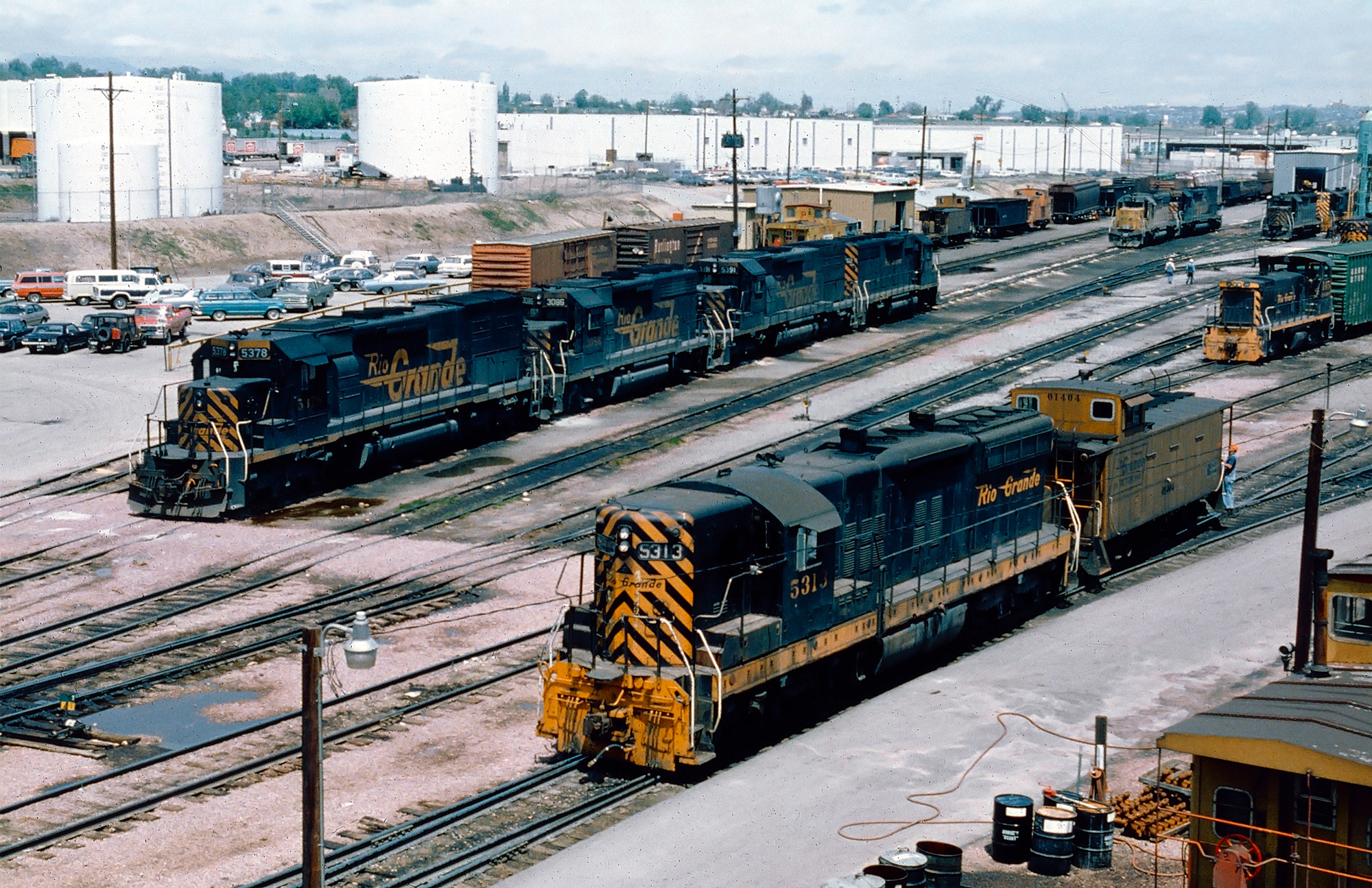
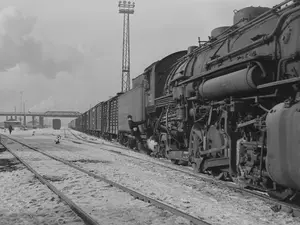
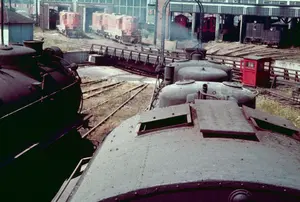
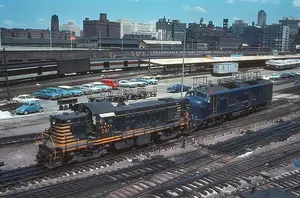
Yards and terminals were where conductors and yard foremen built the trains that road crews inherited. Rio Grande North Yard, Denver, 1983. Mike Bledsoe photo. American-Rails.com collection.
This essay is the historical deep dive. For 2026 hiring, pay, and certification, see Railroad Conductor Jobs (2026). Part of American-Rails.com’s craft-history series (with brakeman, engineer, dispatcher, and related essays).
Authority Older Than the Diesel
From the early common-carrier era, railroads needed a person responsible for the commercial and operating integrity of a train—not only the person who opened the throttle. The conductor filled that role. Engineers developed legendary skill at train handling; conductors held the waybills, the passenger tickets, the knowledge of what must be set out or picked up, and the duty to see that the crew worked as a unit under the rules.
That split still defines American practice: the engineer operates the locomotives; the conductor owns the job. Junior trainmen—brakemen, switchmen, flagmen—historically advanced by learning the property under a conductor’s direction. Brian Solomon and other craft writers have long noted that the freight conductor’s path typically ran through exhausting physical apprenticeship as a brakeman before the responsibility of the waybill and the crew.
The Passenger Conductor America Remembers
Public memory favors the passenger conductor: uniform, punch, “All aboard,” and a wave to the engineer. On name trains and locals alike he (almost always he, in the classic era) managed coaches and sleepers, soothed complaints, enforced tickets, and coordinated with porters, trainmen, and station forces. The job mixed hospitality with operating authority—a combination that still exists on Amtrak and commuter railroads, even when titles read “assistant conductor” or crew base jargon differs.
Passenger conductors also lived by the timetable and the book of rules. A late connection, a misrouted car, or a medical emergency became their problem as much as the dispatcher’s. As private passenger trains withered after World War II and most intercity service passed to Amtrak in 1971, that public-facing craft shrank with the timetable. What remained concentrated on public agencies and tourist operations—while the numerical bulk of U.S. conductor employment stayed in freight.
Freight: Waybills, Cabooses, and the Rolling Office
On freights the conductor was less a ticket-taker than a rolling logistics manager. Before electronic inventory, paper waybills and wheel reports defined what the train was. The caboose served as office, bunk, and rear observation post. From there the conductor and rear trainman watched for hot boxes and shifted loads, handled paperwork, and—when the train stopped unexpectedly—sent flag protection back along the rails in the pre-radio age.
Communication with the head end was limited. Whistle signals, emergency brake applications, and eventual radio filled different eras. Without continuous voice contact, splitting crews between locomotive and caboose was not romantic redundancy; it was how you kept eyes on a half-mile of freight. The flagman and head brakeman extended the conductor’s reach to the ground.
Train Orders, Timetables, and the Book of Rules
For much of railroad history the conductor shared with the engineer the duty of possessing and understanding the authorities that kept trains apart: timetable schedules, train orders delivered at stations, clearance forms, and later track warrants and DTC/CTC authorities. Grabbing orders on the fly—a hoop or fork held up by an operator—was a practiced art into the late twentieth century on some lines. Missed orders could mean collision; the conductor’s signature and attention were part of the safety system.
As Centralized Traffic Control and radio spread, the paper ritual thinned, but the principle did not: someone on the train must know what authority they hold and what work they are to perform. Modern job briefings and electronic documents are descendants of that obligation.
Yards: Conductor as Foreman
In terminals the same craft often wore the title yard foreman (conductor) directing switchmen. Classification work—building blocks, spotting industries, making up road freights—taught judgment under time pressure. Where a yardmaster ran the tower plan, the conductor still ran the crew on the ground. Many road conductors carried yard-honed instincts about how cars roll, how long a cut takes, and when a plan will fail at the switch.
Radio, FRED, and the Two-Person Freight
Mid- and late-twentieth-century technology rewrote the conductor’s workplace without abolishing the job. Radio put the entire crew in continuous conversation with each other and the dispatcher. The end-of-train device (EOT/FRED) monitored brake-pipe pressure and marked the rear, undercutting the caboose’s technical necessity. Cabooses largely left Class I freights in the 1980s; the conductor moved to the head end beside the engineer.
Crew-consist reductions removed firemen and extra brakemen from many road freights. The conductor absorbed more ground work on locals and industrials while remaining the rules and paperwork authority. Today’s typical Class I road freight—engineer plus conductor—is the compressed heir of a five-person culture. The title did not shrink; the supporting cast did.
Labor, Seniority, and the Entry Craft
Conductors organized early in railroad labor history; their agreements, with engineers’ and trainmen’s organizations, shaped bids, extra boards, and promotion. Seniority decided who worked preferred locals and who lived on the call list. That structure still defines lifestyle more than any single technology.
Ironically, as classic multi-person freights vanished, the conductor role became the primary paid doorway into train service on many carriers. Where young men once hired as brakemen and waited for a conductor’s board, companies now recruit conductor trainees directly, then promote into engine service. History folded the apprenticeship into formal training programs and FRA certification frameworks.
Hazardous Materials, Special Trains, and Modern Complexity
Late-twentieth-century regulation thickened the conductor’s book. Hazardous materials documentation, key trains, distributed power coordination, and longer freights raised the cost of a paperwork or securement error. Passenger conductors absorbed ADA-era expectations, onboard service standards, and emergency leadership that go beyond punching tickets. The title is stable; the checklist behind it grew.
Special moves—dimensional loads, passenger extras, military trains, circus and exhibition consists in earlier decades—always demanded a conductor who could think beyond the ordinary local. That improvisational skill remains part of the craft’s self-image even on routine intermodal turns.
What Endures
Strip away cabooses and ticket punches and the core remains: one person on the train must integrate commercial work, operating rules, crew leadership, and real-time problems. That is why the craft survived dieselization, radio, and Precision Scheduled Railroading debates when other titles became historical footnotes. The passenger public may still picture a uniformed “All aboard”; the industry’s volume story is the freight conductor with a radio, a list, and responsibility for a mile of iron and lading.
Related Reading
- Conductor jobs (2026) · Jobs hub
- Engineer history · Brakeman history · Flagman
- Dispatcher history · Yards · Railroad history
Sources
- Solomon, Brian. Working on the Railroad (craft roles, caboose-era practice, advancement paths)
- Standard rule-book and train-order practice in U.S. operating history
- Crew-consist, caboose elimination, and EOT adoption in late-20th-century freights
- Passenger conductor culture in the private-car and streamliner eras; Amtrak transition (1971)
- American-Rails.com craft series cross-references (brakeman, flagman, engineer, yards)
Craft-history series essay, August 2026. Companion career page: conductor.html.
Recent Articles


-
Kansas City Southern Steam Roster (Built Since 1900)
Oct 25, 26 09:09 PM
 Steam locomotives of the Kansas City Southern built since 1900, with the Louisiana & Arkansas and the Texas company.
-
Kansas City Southern Diesel Roster (Built New)
Oct 25, 26 11:46 AM
 All-time diesel roster of the Kansas City Southern. E units, F units, Geeps, SD40s through SD70ACes, Fairbanks-Morse, Baldwin, Alco, and General Electric, with serials and order numbers.
-
Kansas City Southern Railway: Map, Photos, History
Oct 25, 26 12:24 AM
 The Kansas City Southern, from Arthur Stilwell's Gulf line to Canadian Pacific Kansas City on April 14, 2023. Steam and diesel rosters, the Southern Belle, and the Louisiana & Arkansas.
-
Indiana Harbor Belt Diesel Roster (All-Time)
Oct 25, 26 12:17 AM
 All-time diesel roster of the Indiana Harbor Belt. 202 locomotive frames, each counted once. NW2s, SW7s, SW1500s, road switchers, and gensets. Slugs and boosters are outside the count.
-
Indiana Harbor Belt Steam Roster (Built Since 1900)
Oct 25, 26 12:13 AM
 Steam locomotives of the Indiana Harbor Belt built since 1900. 182 engines, each counted once. 0-6-0s, 2-6-0s, 0-8-0s, and 2-8-2s. The three U-4a switchers are three-cylinder Brooks engines of 1927.
-
Indiana Harbor Belt Railroad: Map, Rosters, History
Oct 25, 26 12:00 AM
 Indiana Harbor Belt, the inner belt across the Calumet, from the East Chicago Belt of May 16, 1896. Renamed June 29, 1907. Still operating, headquarters Hammond. Steam roster is the companion, 182 loc…
-
NYC's "P Motor" Electric Locomotives
Oct 24, 26 11:43 PM
 New York Central P motors: 22 Alco-GE 2-C+C-2 electrics, Cleveland Union Terminal 1050–1071, class P-1a. 3,030 hp one-hour on 3,000-volt DC catenary, then 660-volt third rail as P-2a and P-2b.
-
Illinois Terminal Car Roster
Oct 24, 26 11:40 PM
 Illinois Terminal cars. Mainline motors, the 1948 streamliners, sleepers, Alton and Valley Division cars, express motors, and the line cars rebuilt from pull cars.
-
Illinois Terminal Diesel Roster
Oct 24, 26 09:31 PM
 All-time Illinois Terminal diesels, 62 frames. Alco S-2s and RS-1s, EMD switchers, GP7s, SD39s, GP38-2s, and the two GP20s. Serial numbers from the 1989 roster.
-
Illinois Terminal Electric Locomotives
Oct 24, 26 08:22 PM
 Illinois Terminal electric locomotives, 57 frames. Class A through Class D, the Decatur-built motors, and the battery locomotives. Class D is the same five Class C frames, rebuilt.
-
Illinois Terminal Steam Roster
Oct 24, 26 07:37 PM
 Illinois Terminal steam locomotives, 36 frames. Baldwin Moguls, three Class 30 Mikados, Florida East Coast 0-8-0s, and 2-6-0 No. 21, the last fire on June 30, 1950.
-
Illinois Terminal Railroad: Map, Roster, Photos, History
Oct 24, 26 07:32 PM
 Illinois Terminal, McKinley's Illinois Traction System, from the Danville coal towns to St. Louis. The McKinley Bridge, the sleeping cars, the 1937 break with the power company, the 1948 streamliners…
-
Southern Railway Diesel Roster (All-Time)
Oct 23, 26 11:00 PM
 All-time diesel roster of the Southern Railway. 2,505 locomotives in the system number series, from the 1939 demonstrator FT to GP50s and B30-7A1s. Serials included.
-
Illinois Central Diesel Roster (All-Time)
Oct 23, 26 04:06 PM
 Illinois Central and Illinois Central Gulf diesel locomotives, each frame once. The quantity column is 886. Serials and order numbers from Electro-Motive's builder lists. Paducah rebuilds and Gulf, Mo…
-
Illinois Central Gulf Diesel Roster
Oct 23, 26 04:02 PM
 Illinois Central Gulf operating numbers from August 10, 1972, to February 29, 1988. New frames stay on the Illinois Central diesel roster. Gulf, Mobile and Ohio frames stay on that roster. No Gulf fle…
-
Illinois Central Railroad: Map, Logo, History
Oct 23, 26 03:50 PM
Illinois Central, the Main Line of Mid-America, from the 1850 land grant to Canadian National control on July 1, 1999. Charter lines, Cairo bridge, Paducah, and the Illinois Central Gulf. Steam quanti… -
Grand Trunk Western Diesel Roster (All-Time)
Oct 23, 26 12:53 PM
 Grand Trunk Western diesel locomotives, each frame once. The quantity column is 377. Serials are filled for the Detroit, Toledo and Ironton and Detroit and Toledo Shore Line engines the railroad kept…
-
Grand Trunk Western Steam Roster
Oct 23, 26 12:14 PM
 Grand Trunk Western steam locomotives in service about 1937 to 1942, from Richard Leonard's class list. Drury has no chapter. The quantity column is the counted Grand Trunk Western rows. Two mixed Gra…
-
Grand Trunk Western Railroad: Map, Roster, History
Oct 23, 26 12:09 PM
 Grand Trunk Western, reporting mark GTW, Canadian National's railroad between Port Huron and Chicago. Trade name adopted in 1923. Steam class list quantity 232. Diesel quantity column 377. Identity in…
-
Green Bay and Western Railroad: Map, Rosters, History
Oct 22, 26 11:18 PM
 Green Bay & Western, the Green Bay Route, reporting mark GBW. From Kewaunee to Winona. Mailer's steam and diesel rosters, and the August 1993 sale to Fox Valley & Western.
-
Chicago & North Western Class E-4: Streamlined 4-6-4 Hudsons
Oct 22, 26 10:28 PM
 C&NW Class E-4, nine streamlined 4-6-4s, 4001–4009, Alco 1938. 84-inch drivers, 25-by-29 cylinders, 300 psi. Conventional Chicago–Omaha trains. Oil in 1947–48. Retired 1953–1956.
-
Gateway Western Railway: Map, Roster, History
Oct 22, 26 02:43 PM
 Gateway Western Railway, reporting mark GWWR. Class II from Kansas City to East St. Louis. Kansas City Southern control May 5, 1997. The 1992 diesel fleet, with serials and order numbers.
-
Duluth, Winnipeg & Pacific Railway: Roster, Map, History
Oct 22, 26 01:51 PM
 Duluth, Winnipeg & Pacific, the Peg, reporting mark DWP. From the Rainy River to Duluth. CNRHA steam list 36. Fifteen RS-11s. Merged into Wisconsin Central Ltd. on December 31, 2011.
-
Elgin, Joliet and Eastern Diesel Roster (All-Time)
Oct 22, 26 01:35 PM
 All-time diesel roster of the Elgin, Joliet and Eastern.
-
Elgin, Joliet and Eastern Steam Roster
Oct 22, 26 01:25 PM
 Elgin, Joliet and Eastern steam locomotives of the final decade, which largely comprised switcher types, 2-8-0s, and a large fleet of Mikados.
-
Elgin, Joliet and Eastern Railway: Map, Roster, History
Oct 22, 26 12:32 PM
 Elgin, Joliet & Eastern, the outer arc around Chicago, from the Joliet, Aurora & Northern of April 30, 1884. Illinois company March 18, 1887. Merged December 4, 1888. Principal lines sold Janu…
-
Denver and Salt Lake Railway: History, Roster, Timetable
Oct 22, 26 09:47 AM
 Denver & Salt Lake, the Moffat Road, from Denver to Craig. Tunnel opened February 26, 1928. Dotsero Cutoff dedicated June 16, 1934. Merged April 11, 1947. Steam locomotives 59.
-
Duluth, Missabe and Iron Range Diesel Roster (All-Time)
Oct 22, 26 09:43 AM
 All-time diesel roster of the Duluth, Missabe and Iron Range. 148 owned frames, each counted once. SW9s, SD9s, SD18s, SD38s, RSD-15s, and C630s. Serials and builder order numbers included. Helm SD40-3…
-
Duluth, Missabe and Iron Range Steam Locomotives (Since 1900)
Oct 22, 26 09:22 AM
 Duluth, Missabe & Iron Range steam locomotives built since 1900. Duluth & Iron Range, Duluth, Missabe & Northern, and later DM&IR acquisitions. Quantity column 252. Yellowstones 220-23…
-
Duluth, Missabe and Iron Range Railway: Roster, Map, Logo
Oct 22, 26 09:17 AM
Duluth, Missabe & Iron Range, reporting mark DMIR, from the Mesabi and the Vermilion to the Lake Superior docks. Formed July 1, 1937. Steam quantity 252. Owned diesels 148. On paper through Decemb… -
Duluth, South Shore, and Atlantic Railway: Map, Roster, Timetables
Oct 21, 26 11:21 PM
 Duluth, South Shore & Atlantic Railway, the South Shore. Marquette to the Sault, St. Ignace, Houghton, and Duluth-Superior. Soo Line on January 1, 1961. Twenty-four diesels.
-
Detroit, Toledo and Ironton Diesel Roster (All-Time)
Oct 21, 26 02:55 PM
 All-time diesel roster of the Detroit, Toledo and Ironton. 119 frames, each counted once. Serials and builder order numbers included. Last steam was December 24, 1955.
-
Detroit, Toledo and Ironton Steam Roster (Post 1900)
Oct 21, 26 02:49 PM
 Detroit, Toledo and Ironton steam locomotives built after 1900. Drury's class grid. The quantity column prints 141. Counted once, the frames are 137. Last steam was Mikado 805 on December 24, 1955.
-
Detroit, Toledo and Ironton Railroad: Map, Roster, History
Oct 21, 26 02:40 PM
 Detroit, Toledo & Ironton, reporting mark DTI, from Detroit to Ironton, Ohio. Railway organized May 2, 1905. Railroad articles filed February 21, 1914. Henry Ford, 1920 to 1929. Steam and diesel r…
-
Iowa, Chicago and Eastern Railroad: Roster, Map, History
Oct 21, 26 01:04 PM
 Iowa, Chicago & Eastern Railroad Corporation, reporting mark ICE. About 1,125 miles and about 275 miles of trackage rights from the I&M Rail Link. Operations at 12:01 a.m. July 30, 2002. Canad…
-
Rapid City, Pierre & Eastern Railroad: Route, Roster, Overview
Oct 21, 26 10:16 AM
 Rapid City, Pierre & Eastern Railroad, reporting mark RCPE. Genesee & Wyoming Class II. Agreement of January 2, 2014, Finance Docket 35799. Freight service from June 1, 2014, on the Dakota, Mi…
-
Dakota, Minnesota & Eastern Railroad: Roster, Map, History
Oct 21, 26 12:26 AM
 Dakota, Minnesota & Eastern Railroad, reporting mark DME. The July 2, 1986 Chicago & North Western sale, 826 miles and 139 miles of trackage rights. Canadian Pacific control October 30, 2008…
-
Detroit and Mackinac Railway: Map, Roster, History
Oct 20, 26 11:58 PM
 Detroit & Mackinac Railway, the Turtle Line. Bay City to Cheboygan along Lake Huron. Incorporated December 29, 1894. Lake State Railway leased the operation in 1992 and bought the lines in 1997. E…
-
Davenport, Rock Island and Northwestern Railroad
Oct 20, 26 11:22 PM
 Davenport, Rock Island and North Western Railway, the DRI Line. Clinton to East Moline across the Crescent Bridge. Burlington and Milwaukee. Merged into the Soo Line on June 29, 1995. Eighteen diesels…
-
Chicago Great Western Steam Roster (Post 1900)
Oct 20, 26 11:17 PM
Chicago Great Western steam locomotives built or rebuilt since 1900. Drury's class grid. 320 frames, each once. The quantity column prints 376 because a rebuild is listed again. Last steam in the reti… -
Chicago Great Western Diesel Roster (All-Time)
Oct 20, 26 10:47 PM
All-time diesel roster of the Chicago Great Western. 157 frames, each counted once. Serials and builder order numbers included. Steam was gone by 1950. The 1963 glance figure of 141 is one year's flee… -
Chicago Great Western Railway: Map, Photos, History, Rosters
Oct 20, 26 10:43 PM
 The Chicago Great Western, the Corn Belt Route, linked Chicago, the Twin Cities, Omaha, and Kansas City from September 27, 1885, until the Chicago & North Western merger at 12:01 a.m. on July 1, 1968…
-
Chicago, South Shore & South Bend Railroad: "The South Shore Line"
Oct 20, 26 05:48 PM
 Chicago South Shore & South Bend, the South Shore Line, from the 1901 Air Line through Samuel Insull's 1925 rebuild, the orange cars, the 800s, and the railroad NICTD and Anacostia still run.
-
Northwestern Virginia Railroad: Map, History, Timetable
Oct 20, 26 04:18 PM
 Northwestern Virginia Railroad, chartered February 14, 1851, Grafton to Parkersburg, 104 miles. Opened May 1, 1857. Foreclosure sale February 15, 1865, as the Parkersburg Branch. Twenty-three tunnels…
-
"Exposition Flyer" (Train): Consist, Timetable, History
Oct 20, 26 03:29 PM
 Exposition Flyer, Chicago to Oakland, June 10, 1939 to March 20, 1949. Burlington, Rio Grande, and Western Pacific. Heavyweight cars, then diesels and a vista-dome. Replaced by the California Zephyr.
-
Chicago, St. Paul, Minneapolis & Omaha Railway, "The Omaha Road"
Oct 20, 26 02:13 PM
 The Omaha Road, reporting mark CMO. Formed May 26, 1880. North Western management on December 16, 1882. Leased January 1, 1957. Class K-1 No. 183 and the sublettered diesels.
-
Chicago and Western Indiana Railroad: Map, Rosters, History
Oct 20, 26 01:17 PM
 Chicago and Western Indiana, chartered June 5, 1879. Five equal owners, Dearborn Station, and two main lines. Dolton suburban mile 16.6. Fifteen diesels. Railroad service ended in 1994. The Illinois c…
-
Railroad Tell-Tales: Protecting The Brakeman
Oct 20, 26 12:58 PM
 Railroad tell-tales: hanging ropes that warned a man on a freight-car roof of a low bridge or tunnel. The 1897 bridge-warning report, the 1905 Wisconsin statute, retainers, and why the roof walk outla…
-
Chicago & North Western Steam Roster (Post 1900)
Oct 20, 26 12:54 PM
 Chicago & North Western steam locomotives built since 1900, and the Omaha Road list beside it. Drury's parent quantity column sums to 1,445, with four rows left blank. The Omaha Road column sums to 24…
-
Chicago & North Western Diesel Roster (All-Time)
Oct 20, 26 12:49 PM
 All-time diesel roster of the Chicago & North Western. 2,494 frames, each counted once, including Chicago Great Western, Minneapolis & St. Louis, and Omaha Road units that received North Western numbe…