Central Vermont Steam Locomotives: History, Roster & Photos
Published: September 17, 2026
By: Adam Burns
Central Vermont’s biggest locomotives—and the heaviest in New England—were ten 2-10-4s built in 1928. The last of them was scrapped in 1959. George H. Drury, in Guide to North American Steam Locomotives, is the book for how that fleet sat on one roster. The company that ran them is Central Vermont. Diesels are the diesel roster. This page is the steam.
The railroad was the last in New England to dieselize. Steam was still at work in early 1957, when the New Haven and the Boston & Maine were already replacing first-generation diesels. The last Central Vermont steam run was April 4, 1957: 4-8-2 no. 602 on a freight. On May 20 that year two Canadian National 4-8-4s took extra sections of the Montrealer from White River Junction to Montreal. The table below is Drury’s post-1900 class grid. Pre-1900 4-4-0s and early Ten-Wheelers are the opening paragraphs, not a second builder list. Parent Canadian National steam keeps its own numbers; Central Vermont’s T-3-a 700s are not the CN T-3-a 4200s.

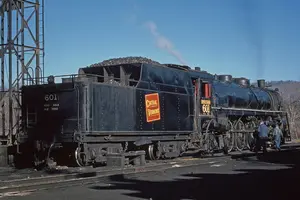
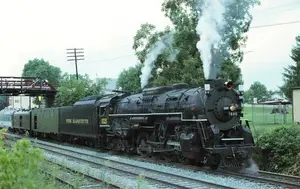
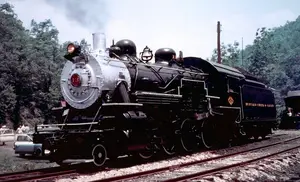
Central Vermont 4-8-2 #601, class U-1-a, being serviced at White River Junction, Vermont, on October 31, 1953. Photographer unknown. Four of these Mountains arrived in 1927 for the Montrealer and the Ambassador.
On this page: At a glance · Feedwater heaters · Consolidations and the 2-10-4s · Pacifics, Ten-Wheelers, Mountains · Switchers · April 4, 1957 · All-time roster (built since 1900)
At a glance
| Item | Detail |
|---|---|
| Railroad | Central Vermont Railway. Mark CV. Parent Grand Trunk from 1898, Canadian National from January 20, 1923 |
| This roster | Classes built since 1900, after Drury, page 103. Pre-1900 in the narrative |
| Standard freight to 1928 | 2-8-0. Six Alco 1915–16; sixteen more in 1923, owned by CN and leased to CV |
| 2-10-4s | T-3-a 700–709. Ten, Alco Schenectady, 1928. 419,000 lb. Lightest 2-10-4s built. Restricted north of Brattleboro |
| Mountains | U-1-a 600–603. Four, Schenectady, 1927. Montrealer and Ambassador. Photo: #601 White River Junction |
| Pacifics | K-3-b 230–232, Baldwin, 1912. Five leased ex-Grand Trunk 4-6-2s, April 1925–July 1927 |
| Last steam run | April 4, 1957, 4-8-2 no. 602, freight. Last steam scrapped 1959 |
| Shops | St. Albans, Vermont |
| Survivor | I-7-a 4-6-0 #220, Shelburne Museum, Shelburne, Vermont |
Class table follows Drury, Guide to North American Steam Locomotives (revised edition), page 103. Information compiled September 17, 2026.
Feedwater heaters, and a horse-collar smokebox
In 1898, after decades of financial ups and downs, the Central Vermont came under Grand Trunk control. The main ran from the north end of Lake Champlain southeast across Vermont to the Connecticut River at White River Junction, south along the river to the Massachusetts line (partly on the Boston & Maine), then southeast again to tidewater and the steamship connection at New London. A few branches, and a Boston interchange with the Boston & Maine at White River Junction, completed the map. South of East Northfield, Massachusetts, the Connecticut River line was branch-line in character.
Most Central Vermont engines carried feedwater heaters. The 2-10-4s had Elesco units; the 4-8-2s had Coffin heaters, some of them concealed in the smokebox. Smaller locomotives were usually 2-8-0s, many of them rebuilt with feedwater heaters on their smokebox fronts. A few 4-4-0s carried theirs over the smokebox like a horse collar.
Consolidations, then ten Texas types
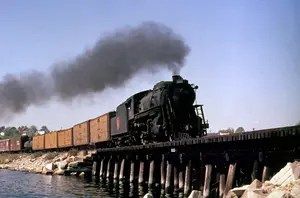
The railroad’s standard freight engine until 1928 was the 2-8-0. Six were delivered by Alco in 1915 and 1916, class M-3-a, later numbered 450–455 (they had been 420–425). In 1923, the year the Grand Trunk became part of Canadian National, sixteen more arrived, class N-5-a 460–475, all owned by CN and leased to Central Vermont. Earlier Schenectady Consolidations of 1905 and 1906, M-2-a and N-4-h, had already sent four engines each to Canadian National in 1928. A 2-8-0 on the company page works a northbound at Smith Cove on the Thames, near Quaker Hill, Connecticut, about 1952. #465 at Amherst, below, is an N-5-a on the Brattleboro–New London local in 1945.
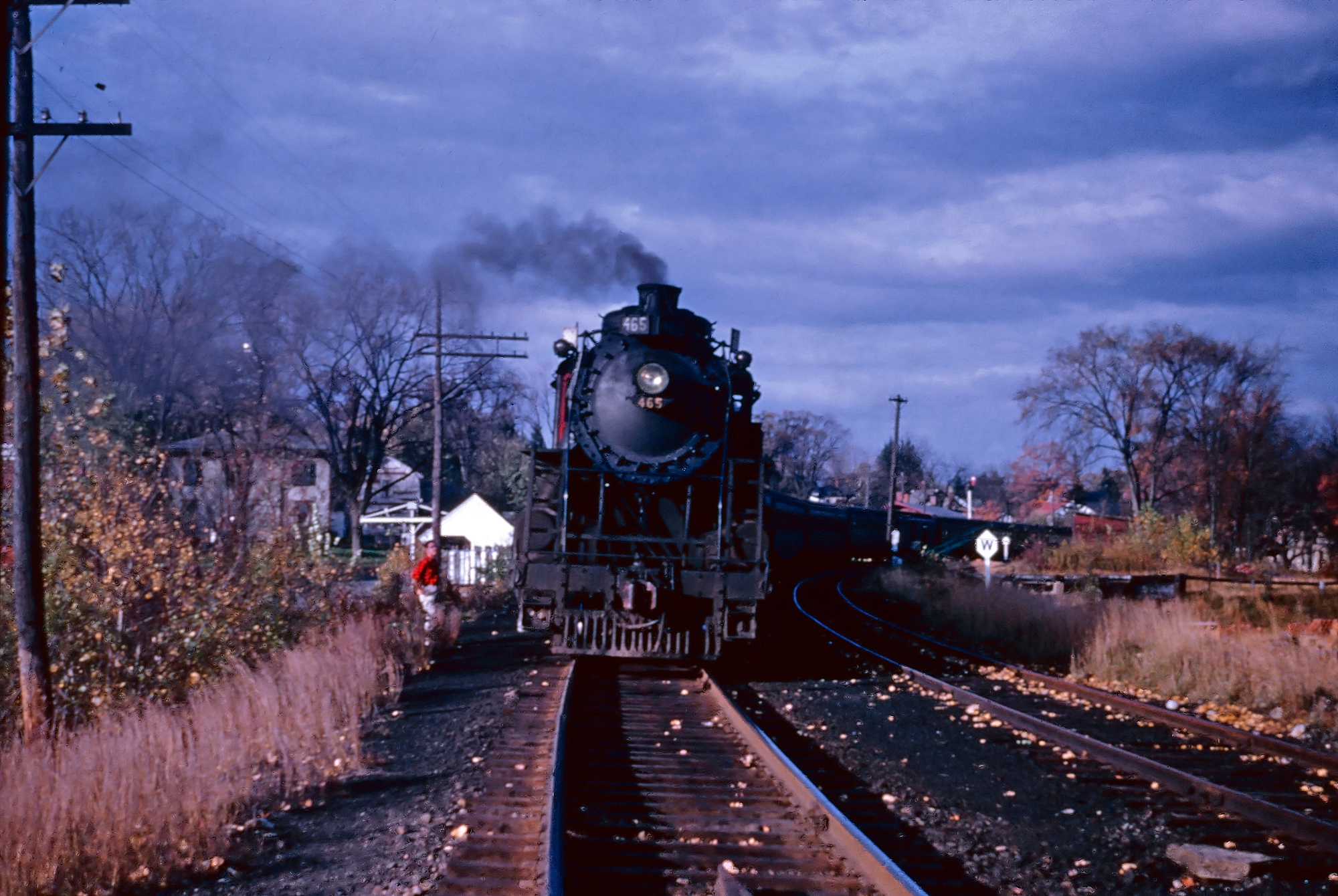
A railfan looks on as Central Vermont 2-8-0 #465 simmers at Amherst, Massachusetts, with train #2, the southbound Brattleboro–New London run, fall 1945. American-Rails.com collection. Class N-5-a, Schenectady, 1923.
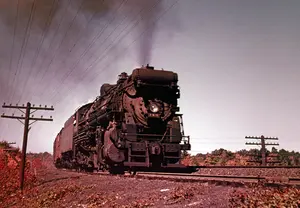
Central Vermont is best known for ten 2-10-4s, class T-3-a 700–709, built by Alco at Schenectady in 1928. At 419,000 pounds they were the lightest 2-10-4s built. Even so they were restricted to the main line north of Brattleboro. Sixty-inch drivers limited them to 55 mph. The grate was a modest 84.4 square feet; a Pennsylvania J1 had 121.7. They were drag-freight engines, really 2-10-2s with another axle to spread the weight. They looked impressive, and they survived into the mid-1950s. Last scrapped, 1959. They are not the CN T-3-a 4200s, which were ex-Boston & Albany engines; those stay on the Canadian National steam page.
Three Pacifics, four Ten-Wheelers, four Mountains
The first modern passenger locomotives were three Pacifics, class K-3-b 230–232, Baldwin, 1912. In 1915 and 1916 the railroad received four Ten-Wheelers, class I-7-a 218–221—a regression of a sort. From April 1925 to July 1927 it leased five ex-Grand Trunk 4-6-2s from parent Canadian National until the 1927 delivery of four racy 4-8-2s intended for Central Vermont’s leg of the Boston–Montreal and New York–Montreal trains, the Ambassador and the Montrealer. Class U-1-a 600–603. Like the 1923 locomotives, they were owned by CN and leased to Central Vermont. They were about the same size as Florida East Coast’s 400-series 4-8-2s. #601 at White River Junction in 1953 is that quartet, six years from the last steam run.
Three earlier Ten-Wheelers, class I-6, were Schenectady engines of 1904 and 1906, numbered in the 211–217 series. Drury counts three locomotives, not a sequential seven. I-7-a 220, a 1915 Schenectady engine, is the one that survives: on display at the Shelburne Museum in Shelburne, Vermont.
Lima 0-6-0s and Schenectady 0-8-0s
In 1912 Central Vermont took delivery of three 0-6-0s from Lima, class O-9-a 387–389. In 1923 Alco at Schenectady built eight 0-8-0s, class P-1-a 500–507. Like the 1923 Consolidations they were owned by Canadian National and leased to Central Vermont. Four of the 0-8-0s went to CN in 1942.
April 4, 1957
Steam remained active into early 1957. The last Central Vermont steam run was April 4: 4-8-2 no. 602 on a freight. On May 20 two CN 4-8-4s handled extra Montrealer sections from White River Junction to Montreal. The last of the 2-10-4s and Mountains were cut up in 1959. Diesels from the parent—Alco switchers from 1942, then RS-3s, RS-11s, and Electro-Motive GP9s—are the diesel roster.
All-time roster (built since 1900)
Drury’s grid is classes built from 1900 on. Quantities are his. Retirement years are the span he prints. Notes are his transfer and renumber lines. Builder “Schenectady” is Alco’s Schenectady Works. Pre-1900 4-4-0s are the horse-collar feedwater engines in the narrative, not a second list.
| Type | Class | Numbers | Qty | Builder | Built | Scrapped | Notes |
|---|---|---|---|---|---|---|---|
| 0-6-0 | O-9-a | 387–389 | 3 | Lima | 1912 | 1952–1954 | |
| 0-8-0 | P-1-a | 500–507 | 8 | Schenectady | 1923 | 1956–1959 | 4 to Canadian National, 1942 |
| 2-8-0 | M-2-a | 400–408 | 9 | Schenectady | 1905 | 1944–1954 | 4 to Canadian National, 1928 |
| 2-8-0 | N-4-h | 409–418 | 10 | Schenectady | 1906 | 1941–1957 | 4 to Canadian National, 1928 |
| 2-8-0 | M-3-a | 450–455 | 6 | Schenectady | 1916 | 1955–1960 | Ex-420–425 |
| 2-8-0 | N-5-a | 460–475 | 16 | Schenectady | 1923 | 1955–1960 | Owned by CN, leased to CV. Photo: #465 Amherst |
| 2-10-4 | T-3-a | 700–709 | 10 | Schenectady | 1928 | 1954–1959 | Lightest 2-10-4s built; north of Brattleboro only |
| 4-6-0 | I-6 | 211–217 | 3 | Schenectady | 1904, 1906 | 1928–1941 | Three engines; numbers not sequential |
| 4-6-0 | I-7-a | 218–221 | 4 | Schenectady | 1915–1916 | 1943–1955 | #220 preserved, Shelburne Museum |
| 4-6-2 | K-3-b | 230–232 | 3 | Baldwin | 1912 | 1952–1954 | First modern CV passenger power |
| 4-8-2 | U-1-a | 600–603 | 4 | Schenectady | 1927 | 1956–1959 | Owned by CN, leased to CV. Photo: #601 White River Junction. Last steam run: #602, April 4, 1957 |
Drury prints N-4-h retirement as two years, 1941 and 1957; the table lists them in chronological order. I-6 quantity is three, not a full 211–217 sequence.
Related reading on American-Rails.com
- Central Vermont Railway · Central Vermont diesel roster · Canadian National steam
- 2-10-4 Texas · 4-8-2 Mountain · 4-6-2 Pacific · 4-8-4 Northern · Feedwater heaters
- Canadian National · Grand Trunk Railway · Ambassador / New Englander · Montrealer / Washingtonian
Sources
- Drury, George H. Guide to North American Steam Locomotives, revised edition, p. 103. Post-1900 class table; 2-10-4 weight and grate; last steam April 4, 1957; May 20, 1957 4-8-4 extras
- Clegg, Anthony, and Ray Corley. Canadian National Steam Power. 1969. Class book Drury recommends
- Railroad magazine. Published CV rosters: December 1935, p. 88; August 1947, p. 117
- Central Vermont Railway Historical Society. cvrhs.com
- American-Rails.com: Central Vermont company; Canadian National steam (T-3-a 4200s are not CV 700s); 2-10-4 type; 4-8-2 type
Recent Articles


-
Central Vermont Diesel Locomotives: History, Roster & Photos
Sep 17, 26 11:35 AM
 Central Vermont diesel—Alco S-2s 1942, RS-3s, RS-11s from DW&P, EMD GP9s 1956–57, GP38ACs 1971. All-time roster. Last steam April 4, 1957.
 -
Central Vermont Steam Locomotives: History, Roster & Photos
Sep 17, 26 11:19 AM
 Central Vermont steam—ten Alco 2-10-4s of 1928, four U-1-a Mountains, Consolidations. Post-1900 class roster after Drury. Last steam April 4, 1957.
 -
Central Vermont Railway: Map, Logo, Rosters
Sep 17, 26 11:03 AM
 Central Vermont Railway—Vermont Central charter October 1843, Bethel–White River Junction June 26, 1848. Grand Trunk 1898, CN 1923, RailTex/NECR 1995. Complete corporate history.
 -
Fitchburg Railroad: Map, History, Timetables
Sep 17, 26 10:40 AM
 Fitchburg Railroad—chartered March 3, 1842, Boston–Fitchburg March 5, 1845. Alvah Crocker, Hoosac west door, Vermont & Massachusetts, Cheshire. B&M 99-year lease July 1, 1900. Complete corpora…
 -
Steam Railroading Institute Dining (2026)
Sep 17, 26 10:30 AM
 2026 SRI Owosso dining—vintage dining cars, select evenings. 2026 dinner calendar not posted; 2025 Up In Smoke is the recent example. Confirm on michigansteamtrain.com.
 -
Canadian Pacific Railway: Map, History, Logo, Photos
Sep 17, 26 12:06 AM
 Canadian Pacific Railway—incorporated February 16, 1881. Last spike Craigellachie November 7, 1885. Soo, Milwaukee, D&H, DM&E. CPKC April 14, 2023. Complete corporate history.
 -
Canadian Pacific Diesel Locomotives: History, Roster & Photos
Sep 17, 26 12:03 AM
 Canadian Pacific diesel—E8A 1800 in 1949, FP7/FP9, FA-2, C424, SD40-2, SD40-2F Red Barns, AC4400CW, ES44AC, SD30C-ECO, SD70ACu heritage. All-time roster. Last steam November 6, 1960.
 -
Canadian Pacific Steam Locomotives: History, Roster & Photos
Sep 16, 26 11:35 PM
 Canadian Pacific steam—3,257 engines 1881–1949. D10 Ten-Wheelers, G3 Pacifics, Royal Hudsons, Selkirk 2-10-4s. Post-1900 class roster after Drury. Last steam November 6, 1960.
 -
Woodstown Central Dining in Motion (2026)
Sep 16, 26 11:31 PM
 2026 Woodstown Central Dining in Motion—Salem County table car, 50–60 minutes, private table of four from $190. Confirm on woodstowncentral.com.
 -
NCTM Wine & Dine on the Rails (2026)
Sep 16, 26 11:28 PM
 2026 NCTM Wine & Dine on the Rails in Spencer—Feb. 13–15, three-course dinner, 21+, $145/$140. Sold out. Confirm next season on nctransportationmuseum.org.
 -
Southern Railway 4-6-2 1380: The Streamlined Ps-4
Sep 16, 26 10:34 PM
 Southern Railway Ps-4 4-6-2 1380—Alco 1923, serial 64857. Otto Kuhler streamlining at Spencer 1940–41 for the Tennessean. Only streamlined steam locomotive on the Southern. Scrapped Baltimore 1953.
 -
Texas Mexican Railway: Serving The Border Since The 1880s
Sep 16, 26 09:58 PM
 Texas Mexican Railway—Corpus Christi, San Diego & Rio Grande March 1875, 3-foot. Tex-Mex June 1881, Laredo Sept 1881, Rio Grande bridge 1883. Standard gauge July 17 1902. Mexican government 1900–1…
 -
Mount Hood Railroad Dining (2026): No Plated Dinner Train This Season
Sep 16, 26 09:53 PM
 2026 Mount Hood Railroad in Hood River is scenic Fruit Loop trains with snacks and sandwiches—not a plated dinner train. Confirm on mthoodrr.com.
 -
Peoria and Eastern Railway: Map, Timetables, History
Sep 16, 26 09:39 PM
 Peoria & Eastern—Danville, Urbana, Bloomington & Pekin 1866, IB&W 1869, OI&W 1887. Incorporated Feb 21 1890, Big Four next day. NYC 1930, Conrail 1976. GP7s 5612–5625. Complete corporate history.
 -
Boston and Maine Railroad: "Route Of The Minute Man"
Sep 16, 26 11:30 AM
 Boston & Maine—Andover & Wilmington 1833, NH charter June 27 1835. Eastern, Boston & Lowell, Fitchburg/Hoosac, Concord & Montreal. Section 77 March 12 1970. Guilford June 30 1983. CSX June 1 2…
 -
Smoky Valley Limited Dinner Train (2026)
Sep 16, 26 11:24 AM
 2026 Abilene & Smoky Valley Smoky Valley Limited—two-hour dinner from the 1887 Rock Island Depot. Kansas catering, ~$72–$110. Confirm on asvrr.org.
 -
Canadian National Diesel Locomotives: History, Roster & Photos
Sep 16, 26 11:14 AM
 Canadian National diesel—CLC boxcabs 1929, GMD FP9 and GP9, MLW FPA-4 and RS-18, GMD1, wide-cab SD40-2W, Dash-9s, ES44AC and ET44AC. All-time roster.
 -
Canadian National Steam Locomotives: History, Roster & Photos
Sep 16, 26 10:07 AM
 Canadian National steam—CGR, Canadian Northern, Grand Trunk, GTP. 4-8-4 Confederations, U-1 Mountains, J and K Pacifics. Post-1900 class roster. Last scheduled steam April 25, 1960.
 -
Canadian National Railway: Map, Logo, History, Photos
Sep 16, 26 08:55 AM
 Canadian National—name Dec 20 1918, incorporated June 6 1919, Grand Trunk Jan 20 1923. Crown corporation, IPO Nov 17 1995. IC, Wisconsin Central, BC Rail, EJ&E. Class I, mark CN.
 -
Buffalo, Rochester and Pittsburgh Railway: "Safety and Service"
Sep 16, 26 12:12 AM
 Buffalo, Rochester & Pittsburgh—Rochester & State Line 1869, BR&P March 12 1887. Pennsylvania coal to Buffalo and Rochester. B&O January 1 1932. All-time steam roster, LL 2-6-6-2s, XX…
 -
Buffalo Creek & Gauley Railroad: Map, Roster, Logo, Photos
Sep 15, 26 11:55 PM
 Buffalo Creek & Gauley—Elk River Coal & Lumber, April 1 1904, Dundon–Widen. Last all-steam WV coal road, February 27 1965. All-time steam roster, #4 Baldwin 59472, Majestic and Elk River diesels…
 -
Buffalo and Susquehanna Railroad: Map & History
Sep 15, 26 11:42 PM
 Buffalo & Susquehanna—Goodyear hemlock railroad, Sinnemahoning Valley December 14 1885, 1893 merger, coal to Sagamore, Buffalo extension, bankruptcy May 6 1910, B&O 1932, WAG 1956.
 -
WMSR Allegheny Mountain Dinner Train (2026): Dates & Tickets
Sep 15, 26 11:36 PM
 2026 Western Maryland Scenic Allegheny Mountain Dinner Train—Cumberland, 3 hours, 21+, Saturday 7 p.m. Confirm on wmsr.com.
 -
Boston and Albany Railroad: Map & History
Sep 15, 26 11:28 PM
 Boston & Albany Railroad—Boston & Worcester June 23 1831, Western Railroad across the Berkshires, merger 1867–70. NYC 99-year lease July 1 1900. Berkshires, New England States, CSX and MBTA today.
 -
Grand Bellevue Dinner Train (2026): Portsmouth, Rhode Island
Sep 15, 26 11:14 PM
 2026 Grand Bellevue Rail Dining in Portsmouth, RI—2.5-hour seated dinner on Narragansett Bay. Fall/winter TBA after Aug. 29. Confirm on thegrandbell.com.
 -
The "John Bull": The C&A's First Locomotive (1831)
Sep 15, 26 11:01 PM
 John Bull locomotive—Stephenson Planet-type 0-4-0, 1831. Dripps assembly, 4-2-0 rebuild, cowcatcher. Specs, Camden & Amboy career, Smithsonian 1884, 1981 steam-up, 1939 replica.
 -
Napa Valley Wine Train Dining (2026): Lunch, Dinner & Vista Dome
Sep 15, 26 10:56 PM
 2026 Napa Valley Wine Train dining—downtown Napa, 36-mile round trip, gourmet lunch and dinner, Vista Dome. Confirm packages on winetrain.com.
 -
My Old Kentucky Dinner Train (2026): Dates, Tickets & What to Expect
Sep 15, 26 10:50 PM
 2026 My Old Kentucky Dinner Train in Bardstown—2.5 hours, 35-mile round trip, four-course dinner from $116. Confirm on kydinnertrain.com.
 -
LaSalle Street Station: One Of Chicago's Great Terminals
Sep 15, 26 10:42 PM
 LaSalle Street Station—Rock Island October 10, 1852. Frost & Granger July 1, 1903. 20th Century Limited, Rockets, Golden State. Headhouse razed 1981. Metra Rock Island District today.
 -
Charlie Russell Chew Choo (2026): Montana Dinner Train from Lewistown
Sep 15, 26 10:39 PM
 2026 Charlie Russell Chew Choo dinner train—Hanover/Lewistown, 4.5 hours, 56-mile round trip, prime rib. Adult $151. Remaining listed dates sold out. Confirm on montanadinnertrain.com.
 -
Central Pacific Railroad: Map, History, Facts, Logo
Sep 15, 26 10:30 PM
 Central Pacific—Judah, Big Four, June 28 1861. Sierra, Chinese labor, Donner Summit Tunnel. Ten-mile day April 28 1869. Promontory May 10. Southern Pacific lease April 1 1885. Dissolved June 30 1959…
 -
Bessemer & Lake Erie Railroad: "The Bessemer Road"
Sep 15, 26 05:20 PM
 Bessemer & Lake Erie—Bear Creek 1865, Carnegie 1897, U.S. Steel 1901. Ore south from Conneaut, coal north. 2-10-4s, Missabe sister road. CN May 10, 2004. Complete corporate history.
 -
Bangor and Aroostook Railroad: "Serving Northern Maine"
Sep 15, 26 05:05 PM
 Bangor & Aroostook—chartered February 13, 1891, first trains January 1, 1894. Potatoes, paper, Searsport, State of Maine reefers. MM&A 2003, Lac-Mégantic 2013, CP 2020, CPKC today. Complete co…
 -
Baltimore & Ohio Chicago Terminal Railroad: Map and History
Sep 15, 26 03:11 PM
 B&OCT—formed January 6, 1910 to buy Chicago Terminal Transfer. Grand Central, Barr Yard, 78 route-miles. Assigned B&O steam. Complete diesel roster. CSX paper subsidiary, mark BOCT.
 -
The "Alphabet Route" (Railroad): Photos and History
Sep 15, 26 02:53 PM
 Alphabet Route—eight railroads, not one company. P&WV to Connellsville February 11, 1931. Alpha Jets Chicago/St. Louis–New York/Boston. NKP, W&LE, P&WV, WM, Reading, CNJ, L&HR, New Hav…
 -
Milwaukee Road Livestock Operations: Cattle, Dakotas & Montana
Sep 15, 26 02:36 PM
 Milwaukee Road livestock traffic—Dakota and Montana cattle, Iowa hogs, Chicago markets, 28-hour law, head-end stock cars. By 1974 mostly Montana. Rick Burn’s Helena speech. Operations history, not the…
 -
Spirit of Jasper Ride & Dine (2026): Season Pause
Sep 15, 26 02:29 PM
 Spirit of Jasper Ride & Dine in Jasper, Indiana—seated meal on board. Operator: not running public trains for 2026. Depot remains open as a rental. Confirm on spiritofjaspertrain.com.
 -
South Carolina Canal & Rail Road Company: Map and History
Sep 15, 26 01:59 PM
 South Carolina Canal & Rail Road—chartered December 19, 1827. Best Friend of Charleston, 136 miles Charleston–Hamburg October 1833, Aiken inclined plane. South Carolina Railroad 1844, Southern 189…
 -
The Practice of Double-Heading: The Steam Era
Sep 15, 26 01:43 PM
 Doubleheading—two locomotives on the point, each with its own steam crew. Not a rear helper, not diesel MU. How it worked, PRR 1877, mountain grades, and what MU ended.
 -
Mohawk and Hudson Railroad: Map, Pictures, Locomotives
Sep 15, 26 01:20 PM
 Mohawk & Hudson Railroad—New York’s first railroad, chartered April 17, 1826. DeWitt Clinton, inclined planes, Albany & Schenectady 1847, first New York Central May 17, 1853. Complete corporat…
 -
Essex Clipper Dinner Train (2026): Dates, Tickets & What to Expect
Sep 15, 26 01:09 PM
 2026 Essex Clipper Dinner Train in Essex, CT—2.5 hours, four-course meal $129.99, 18+. Fall dates through Oct. 25. Confirm on essexsteamtrain.com.
 -
Camden & Amboy Railroad: Map, History, Photos
Sep 15, 26 12:53 PM
 Camden & Amboy Railroad—chartered February 4, 1830. Joint Companies monopoly with the Delaware & Raritan Canal, John Bull, T-rail. United New Jersey 1872, PRR 999-year lease 1871. Complete corpora…
 -
Cafe Lafayette Dinner Train (2026): Dates, Tickets & What to Expect
Sep 15, 26 12:47 PM
2026 Cafe Lafayette Dinner Train in North Woodstock, NH—2 hours, 20 miles, five-course meal from $125. May–October. Confirm on nhdinnertrain.com. -
Christmas Train Ride Locations (2026): A Complete Guide
Sep 15, 26 10:47 AM
 2026 Christmas train rides by state—Santa, North Pole Express, and holiday trains. Not Polar Express. State guides and product pages. Confirm dates on each railroad.
 -
Baltimore & Ohio Railroad: Linking 13 Great States With The Nation
Sep 15, 26 10:22 AM
 Baltimore & Ohio Railroad—first U.S. common carrier, chartered February 28, 1827. Wheeling 1853, Chicago 1874, C&O control 1963, Chessie 1973, into CSX April 30, 1987. Complete corporate history.
 -
Delaware & Hudson Railway: The Bridge Line
Sep 15, 26 09:59 AM
 Delaware & Hudson Railway—Wurts brothers canal 1823, gravity railroad 1829, Stourbridge Lion, Bridge Line to Montreal. Guilford 1984, CP 1991, NS south line 2015, CPKC north.
 -
Delaware & Hudson Diesel Roster (All-Time)
Sep 15, 26 12:17 AM
 All-time Delaware & Hudson diesel roster—Alco S-2s through C-628s and PA-4s, GE U-boats, Baldwin RF-16s, EMD SD45s and GP38-2/GP39-2s. Serials, dates, dispositions.
 -
Granite Railway, Our Country's First Railroad
Sep 14, 26 11:28 PM
 Granite Railway of Quincy, Massachusetts—chartered March 4, 1826, opened October 7, 1826. Gridley Bryant, 5-foot gauge, horses, Bunker Hill Monument stone. First commercial U.S. railroad.
 -
Milwaukee Road Skytop Lounges: History, Specs & Floor Plans
Sep 14, 26 11:09 PM
 Milwaukee Road Skytop observation cars—Brooks Stevens, 1948. Four Rapids parlor-lounges from Milwaukee Shops, six Creek sleeper-lounges from Pullman-Standard. Floor plans, roster, preservation.
 -
West Virginia Christmas Train Rides (2026): A Complete Guide
Sep 14, 26 11:02 PM
2026 West Virginia Christmas trains—Potomac Eagle North Pole Express in Romney and Christmas at Cass. Not Polar Express. Elkins Polar is not listed for 2026.