Arizona Dinner Train Rides From Williams
Published: August 14, 2026
By: Adam Burns
For more than a century, the Grand Canyon Railway has offered one of America’s most memorable approaches to Grand Canyon National Park: not by traffic-choked highway, but by steel rails threading through Arizona’s high-country forests. Today’s experience blends Old West showmanship, historic depots, and a comfortable round-trip journey from Williams to the South Rim—while also giving travelers a surprisingly convenient mix of onboard snacks and off-train dining options (even if it isn’t a traditional “dinner train”).
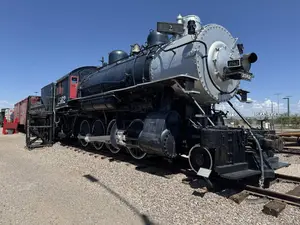
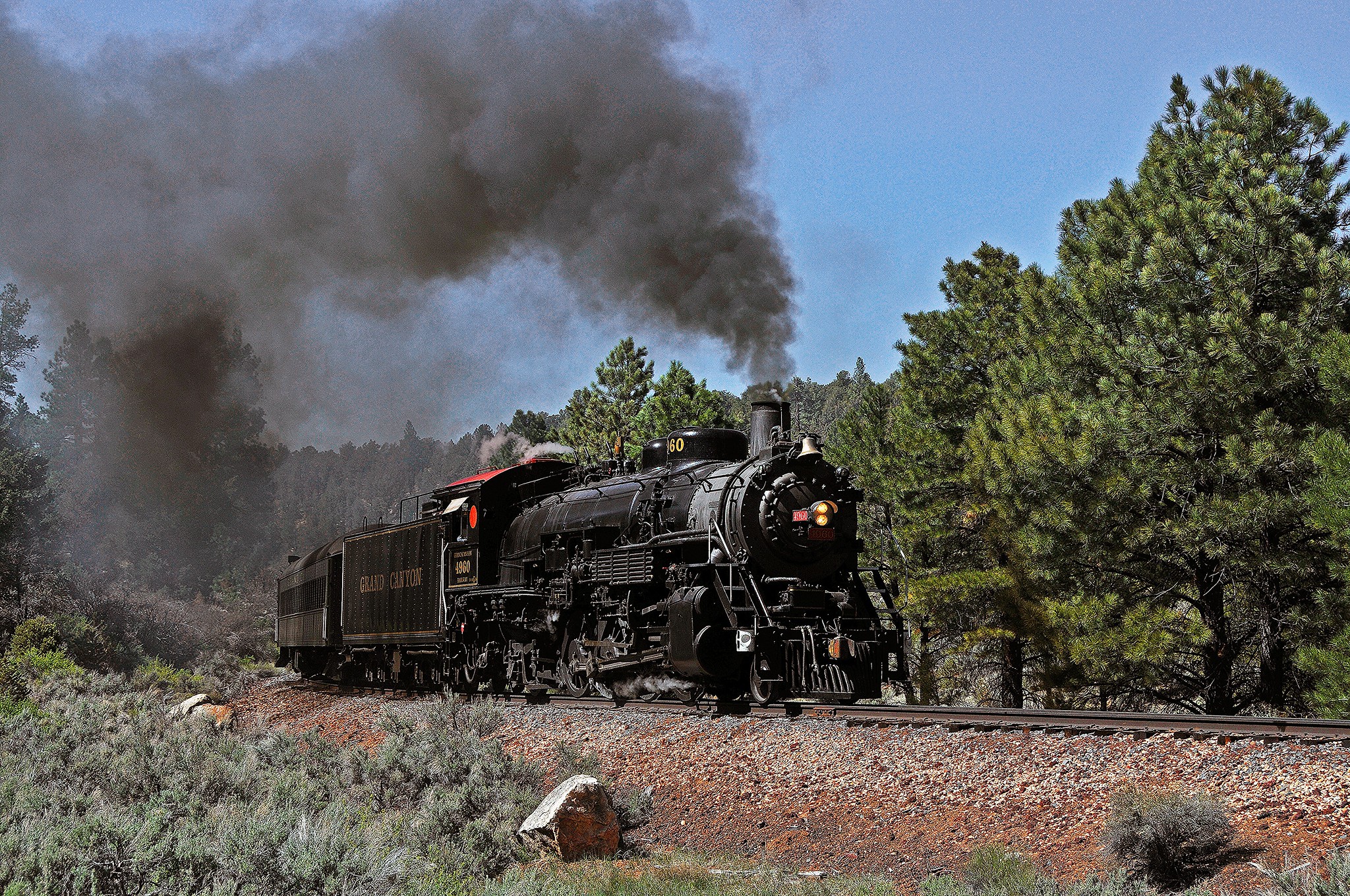 Grand Canyon Railway 2-8-2 #4960 - a former CB&Q engine -leads a photo special in the Coconino Canyon on May 15, 2011. Drew Jacksich photo.
A railroad born from boomtown ambitions
The story starts in the late 1890s, when promoters saw opportunity in northern Arizona’s timber and mining prospects—and in the growing national fascination with the Grand Canyon. The Santa Fe and Grand Canyon Railroad (SF&GC) was incorporated in 1897 and built south of the canyon’s rim with dreams of serving both minerals and tourists. Financial troubles arrived quickly; the line went into receivership and, in 1901, was sold under foreclosure to the Atchison, Topeka & Santa Fe Railway (Santa Fe).
Santa Fe’s involvement proved decisive. Where the earlier venture had stalled short of the canyon, Santa Fe pushed the remaining miles to reach the South Rim. The branch to the Grand Canyon Village was completed in September 1901. Under AT&SF this 64-mile line was long known as simply the Williams Branch where it veered north from the Santa Fe's main line.
From the beginning, this was more than a “track-to-nowhere” built for freight. Santa Fe understood something timeless: the canyon wasn’t merely a place to visit; it was an experience to be curated. Trains made the canyon accessible to travelers who might never attempt a rugged wagon road or early automobile journey. The rail link helped turn Grand Canyon tourism into a national phenomenon and anchored the South Rim as the park’s primary visitor gateway.
Depots, a sense of place, and the classic arrival
Part of the current railroad's charm is that it still feels like a proper railroad journey—starting at a historic depot, rolling through changing scenery, and concluding at another classic station where the landscape suddenly becomes the main attraction.
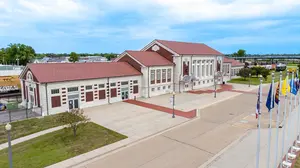
In Williams, the railroad’s home base, the historic depot dates to the Santa Fe era (built in 1908) and remains a focal point for the modern operation.
At the north end of the line, the Grand Canyon Depot—built in 1910—welcomes passengers right in Grand Canyon Village, a short walk from the rim viewpoints and key village amenities.
That “arrival at the depot” moment is part of what the railway does best. Instead of stepping out of a car into a parking lot, you step off a train into the historic core of the South Rim—an arrival style that feels both vintage and remarkably convenient.
The AT&SF Bows Out
Like many American passenger services, especially on branch lines, faced stiff competition after World War II. As highways improved and car travel became the default vacation mode, ridership weakened. Santa Fe ultimately ceased passenger service to the canyon in 1968, and the line later fell quiet.
For railfans and preservationists, it was an all-too-familiar arc: a beloved branch line, a world-class destination, and then silence—despite the canyon’s popularity. But the railway’s story wasn’t over.
Revival
The line’s return is one of the great American railroad revival stories. In the late 1980s, private investors Max and Thelma Biegert took on the challenge of restoring service. The railway officially reopened on September 17, 1989—intentionally timed to align with the anniversary of the original 1901-era service.
That relaunch wasn’t just a symbolic ribbon-cutting. It created a sustainable tourism railroad that could carry large volumes of visitors to the South Rim—an alternative to adding more cars, more parking, and more congestion at one of the nation’s most treasured landscapes.
In the 2000s, the operation entered another chapter when Xanterra Travel Collection took ownership (announced in connection with the mid-2000s sale of the railroad and its associated properties).
Present Day
Today’s Grand Canyon Railway is, first and foremost, an easy way to do a South Rim day trip (or start a longer stay) without driving. The railroad operates a regular schedule and emphasizes an “experience journey,” with onboard entertainment and multiple classes of service.
A typical operating-day pattern looks like this:
- Depart Williams in the morning (commonly 9:30 a.m., with seasonal exceptions in November/December when departures are earlier).
- Arrive at Grand Canyon Depot late morning (commonly 11:45 a.m., with seasonal timing shifts).
- Enjoy several hours at the South Rim, then return to Williams in the afternoon.
The route itself is part of the appeal. You’re traveling through northern Arizona’s high plateau country—open meadows and Ponderosa pine forests—rather than staring at a steering wheel and brake lights. In Williams, the experience is often kicked off with a bit of Wild West flair near the depot before departure, setting the tone for a “vacation ride,” not mere transportation.
Onboard Food Service
While the Grand Canyon Railway doesn’t position itself as a classic white-tablecloth dinner train, it does offer practical—and enjoyable—ways to snack and sip during the ride.
The core offering is the Café Car, available to passengers across classes, where you can purchase snacks, sandwiches, refreshments, and alcoholic beverages (with rules around outside alcohol).
Depending on your class of service, there can also be complimentary snacks and non-alcoholic beverages provided as part of the experience. In other words: you can keep it simple with a coffee and a snack, or you can ride in a higher-service car where the “treats included” vibe becomes part of the day.
This is worth highlighting for families and first-timers: even if you plan to eat your main meal at the canyon (or in Williams), the onboard options are a big part of comfort—especially for a round trip that spans a good portion of the day.
Off-Train Dining
If you want to pair the rail journey with a more substantial meal, the easiest way is to do it off the train, either before departure or after you return.
The signature option tied directly to the railway is the Fred Harvey Restaurant in Williams—located near the depot and adjacent to the Grand Canyon Railway Hotel campus. The restaurant is known for buffet-style service and is positioned as a convenient start or finish to your rail day.
Also on the hotel property is Spencer’s Pub, which (as part of the hotel’s evolution) has been renovated over the years and functions as another casual dining and drinks option for overnight guests or post-trip unwinding.
Put together, the experience becomes a flexible “rail day” itinerary:
- Morning: breakfast buffet (or a quick bite) in Williams
- Midday: ride to the South Rim with Café Car snacks available
- Afternoon: explore Grand Canyon Village and viewpoints
- Evening: return to Williams and cap the day with a buffet dinner or pub meal nearby
It isn’t a “dinner train” in the classic sense—but for many travelers, it’s actually more relaxing: you get your dining experience without balancing plates on a moving train, and you still get the romance of rail travel for the canyon itself.
Final Thoughts
Plenty of heritage railroads offer scenic rides. Fewer provide a genuine transport-to-a-wonder-of-the-world function the way this one does. The Grand Canyon Railway is part transportation, part performance, part preservation story—an operation that brings people to the South Rim with a lighter footprint than adding thousands of additional vehicles to the park’s roads each day.
For rail enthusiasts, it’s an opportunity to experience classic depots and vintage-inspired passenger travel in a setting that feels historically appropriate. For families and vacationers, it’s one of the easiest ways to turn “we went to the canyon” into “we arrived at the canyon”—with a built-in sense of occasion, plus straightforward food options both onboard and steps from the platform in Williams. To learn more about the Grand Canyon Railway and planning your trip please click here to visit their website.
Recent Articles


-
Milwaukee Road X3800: Deer Lodge’s Shop Goat
Oct 08, 26 04:28 PM
 Milwaukee Road X3800, the a home-built shop goat that served the Deer Lodge, MT yard. It was a 220-volt DC switcher, powered through an extension cord that moved electrics into a roundhouse where the…
 -
Key West Extension (Overseas Railroad): History, Construction, Decline
Oct 08, 26 03:59 PM
 Henry Flagler's Overseas Railroad, Miami to Key West, 1905–1935. The Seven Mile Bridge, the 1935 Labor Day Hurricane, and the road that became U.S. 1.
 -
Florida East Coast Steam Roster (Post 1900)
Oct 08, 26 02:34 PM
 Florida East Coast steam since 1897. Seventeen Ten-Wheelers, twenty Atlantics, eighty-seven Pacifics, ninety Mountains, fifteen Mikados, and the switchers.
 -
Florida East Coast Diesel Roster (All-Time)
Oct 08, 26 02:12 PM
 Florida East Coast diesel roster, all-time. E units from 1939, F3s, BL2s, GP7s and GP9s, the GP40-2 orders, 22 SD40-2s, and 24 ES44C4s. Serials and EMD order numbers.
 -
Florida East Coast Railway: Map, History, Rosters
Oct 08, 26 01:46 PM
 Florida East Coast Railway, Henry Flagler's line from Jacksonville to Miami and Key West. Receivership in 1931, the 1963 strike, Grupo México in 2017, and Brightline on the same track.
 -
Minnesota Railroad Museums (2026): A Complete Guide
Oct 08, 26 10:32 AM
 Minnesota railroad museums—the Lake Superior Railroad Museum, Two Harbors, Jackson Street, Willmar’s Great Northern 2523, and Currie. Confirm hours on each site.
 -
Maine Railroad Museums (2026): A Complete Guide
Oct 08, 26 09:24 AM
 Maine railroad museums—Seashore Trolley, the two-foot lines at Portland, Alna, and Phillips, Boothbay, and the Bangor & Aroostook depots. Confirm hours on each site.
 -
Massachusetts Railroad Museums (2026): A Complete Guide
Oct 08, 26 12:08 AM
 Massachusetts railroad museums—Berkshire Scenic at Lenox, Shelburne Falls trolley No. 10, Edaville, Chatham’s 1887 depot, and Lowell. Confirm hours on each site.
 -
Clinchfield Steam Roster (Post 1900)
Oct 07, 26 12:09 PM
 Clinchfield steam since 1900. Fifteen H-4 Consolidations, K-1 Mikados, M-2 and M-3 Mallets, L-class 2-8-8-2s, eighteen Challengers. Class grid after Drury. Last steam April 16, 1954.
 -
Clinchfield Diesel Roster (All-Time)
Oct 07, 26 12:05 PM
 Clinchfield diesel roster, all-time. F3A 800, FP7 200, the F7s, GP7s, 25 SD40s, 18 SD45-2s, seven U36Cs, and the Family Lines hoods. Serials and EMD order numbers.
 -
Clinchfield Railroad: Map, Steam Locomotives, Roster, Logo
Oct 07, 26 12:02 PM
 Clinchfield Railroad, Elkhorn City to Spartanburg. George L. Carter, the Carolina, Clinchfield & Ohio, the 1924 lease, coal, the loops, and CSX. Steam and diesel rosters are companion pages.
 -
Kentucky Railroad Museums (2026): A Complete Guide
Oct 07, 26 11:39 AM
 Kentucky railroad museums—the Kentucky Railway Museum, Bowling Green’s L&N depot, Paducah, Versailles, and Covington. Confirm hours on each site.
 -
Kansas Railroad Museums (2026): A Complete Guide
Oct 07, 26 11:26 AM
 Kansas railroad museums—Santa Fe 3768 at Wichita, Santa Fe 132 in Topeka, the Great Overland Station, and Abilene. Confirm hours on each site.
 -
Cincinnati, New Orleans and Texas Pacific Diesel Roster (All-Time)
Oct 07, 26 10:38 AM
 All-time diesel roster of Southern locomotives lettered for the Cincinnati, New Orleans and Texas Pacific. Serials, order numbers, and builder dates.
 -
Cincinnati, New Orleans and Texas Pacific Railway
Oct 07, 26 10:31 AM
 Cincinnati, New Orleans and Texas Pacific Railway, incorporated September 8, 1881, to lease Cincinnati’s railroad to Chattanooga. Queen and Crescent route, Rathole, and the 2024 sale to Norfolk Southe…
 -
Indiana Railroad Museums (2026): A Complete Guide
Oct 07, 26 12:26 AM
 Indiana railroad museums—Nickel Plate 765, Elkhart’s New York Central collection, French Lick, Linden’s junction depot, and Haley Tower. Confirm hours on each site.
 -
"Triplex" Steam Locomotive: Specs, History, Photos
Oct 06, 26 11:52 PM
 Erie class P-1 Triplex 2-8-8-8-2s. Three Baldwin compounds, 2603–2605, later 5014–5016, built 1914 and 1916. Matt H. Shay, the 1930 class card, and Virginian XA 700.
 -
Illinois Railroad Museums (2026): A Complete Guide
Oct 06, 26 11:47 PM
 Illinois railroad museums—the Illinois Railway Museum, Monticello, the Pioneer Zephyr, Galesburg’s Burlington 3006, and the depots. Confirm hours on each site.
 -
Iowa Railroad Museums (2026): A Complete Guide
Oct 06, 26 11:41 PM
 Iowa railroad museums—the Union Pacific Railroad Museum, RailsWest, Sioux City, Boone, and the National Hobo Museum in Britt. Confirm hours on each site.
 -
Charleston and Western Carolina Diesel Roster (All-Time)
Oct 06, 26 11:29 PM
 Charleston and Western Carolina diesel roster. Twenty-one GP7s, two SW7s, two SW9s, and six F7As, all built 1950–1952. Serials, order numbers, and ACL and SCL numbers.
 -
Charleston and Western Carolina Railway: Map, History, Timetables
Oct 06, 26 11:18 PM
 Charleston and Western Carolina Railway, incorporated September 16, 1896. Port Royal to Spartanburg, with branches to Anderson and Greenville. Merged into the Atlantic Coast Line on December 31, 1959.
 -
Central of Georgia Steam Roster (Post 1900)
Oct 06, 26 04:00 PM
 Central of Georgia steam since 1900. Cooke Consolidations, Harriman Mikados, 32 Mountains, and eight Lima 4-8-4s. Class grid after Drury. Last steam May 1953.
 -
Central of Georgia Diesel Roster (All-Time)
Oct 06, 26 03:44 PM
 Central of Georgia diesel roster. SW1 No. 1 in 1939, E7s and E8s, nine F3As, 39 RS3s, GP7s through SD35s. Serials and order numbers.
 -
Central of Georgia Railway: Map, Logo, History, Rosters
Oct 06, 26 03:42 PM
 Central of Georgia Railway, from the 1833 Savannah charter to Southern control on June 17, 1963. Map, logos, Nancy Hanks II, and links to the steam and diesel rosters.
 -
Georgia Railroad Museums (2026): A Complete Guide
Oct 06, 26 03:33 PM
Georgia railroad museums—Savannah’s Central shops, Duluth, the General at Kennesaw, the Texas in Atlanta, Tifton, Waycross, and Albany. Confirm hours on each site. -
Florida Railroad Museums (2026): A Complete Guide
Oct 06, 26 03:18 PM
 Florida railroad museums—Boca Raton, Winter Garden, Whitehall, the Gold Coast, Parrish, Fort Myers, Milton, and Plant City. Confirm hours on each site.
 -
Connecticut Railroad Museums (2026): A Complete Guide
Oct 06, 26 01:05 PM
 Connecticut railroad museums—the Shore Line Trolley, East Windsor, the Naugatuck Railroad, Danbury Union Station, Willimantic, and the SoNo tower. Confirm hours on each site.
 -
Colorado Railroad Museums (2026): A Complete Guide
Oct 06, 26 12:47 PM
 Colorado railroad museums—Golden, the Forney’s Big Boy 4005, Pueblo’s Santa Fe 2912, and the depots at Castle Rock, Limon, and Ridgway. Confirm hours on each site.
 -
Atlantic Coast Line Steam Roster (Post 1900)
Oct 06, 26 12:44 PM
 Atlantic Coast Line steam since 1900. Copper Head Ten-Wheelers, 235 P-5 Pacifics, Q-1 Santa Fes, twelve R-1 4-8-4s. Class grid after Drury. Last steam June 30, 1955.
 -
Atlantic Coast Line Diesel Roster (All-Time)
Oct 06, 26 11:57 AM
 Atlantic Coast Line diesel roster. HH660 1900 in 1939, E3s for the Champion, FTs and F2s, GP7s 100–279, GP30s, U25Cs, and the 1967 SCL numbers. Serials and orders.
 -
Atlantic Coast Line Railroad: "Standard Railroad of the South"
Oct 06, 26 11:53 AM
 Atlantic Coast Line, the Standard Railroad of the South. April 21, 1900 to July 1, 1967. Plant System, L&N, Clinchfield, the Champion, and the Seaboard Coast Line merger.
 -
California Railroad Museums (2026): A Complete Guide
Oct 06, 26 09:50 AM
California railroad museums—the California State Railroad Museum, Perris, Portola, Railtown 1897, and the depots that still stand. Confirm hours on each site. -
Arizona Railroad Museums (2026): A Complete Guide
Oct 06, 26 09:46 AM
Arizona railroad museums—the Arizona Railway Museum in Chandler, Southern Pacific 1673 at Tucson, and the McCormick-Stillman park in Scottsdale. -
Arkansas Railroad Museums (2026): A Complete Guide
Oct 06, 26 09:07 AM
 Arkansas railroad museums—Cotton Belt 819 at Pine Bluff, the Fort Smith trolley, the Mammoth Spring depot, and the Eureka Springs railway.
 -
Alabama Railroad Museums (2026): A Complete Guide
Oct 06, 26 09:03 AM
Alabama railroad museums—Heart of Dixie at Calera, the North Alabama museum at Chase, Huntsville’s 1860 depot, and Fort Payne. Confirm hours on each site. -
Pennsylvania Railroad Museums (2026): A Complete Guide
Oct 06, 26 12:09 AM
 Pennsylvania railroad museums—Strasburg, Steamtown, the Horseshoe Curve, the East Broad Top, and the depots and towers in between. Confirm hours on each site.
 -
Maryland Railroad Museums (2026): A Complete Guide
Oct 05, 26 11:53 PM
 Maryland railroad museums—the Baltimore roundhouse, Ellicott City station, Bowie, Gaithersburg’s Buffalo Creek & Gauley 14, and the Western Maryland collections.
 -
Ohio Railroad Museums (2026): A Complete Guide
Oct 05, 26 05:51 PM
 Ohio railroad museums—the Age of Steam Roundhouse, Bellevue, Worthington, Conneaut’s Nickel Plate 755, and the Dennison depot. Confirm hours on each site.
 -
Delaware Railroad Museums (2026): A Complete Guide
Oct 05, 26 02:43 PM
 Delaware railroad museums—Wilmington & Western at Greenbank, the Harrington tower and N5 caboose, Felton's 1868 depot, and the Selbyville station museum.
 -
C&O's M-1 Steam Turbine Locomotives: Specs, Roster, History
Oct 05, 26 12:13 PM
 Chesapeake & Ohio Class M-1 steam-turbine-electrics. Three Baldwin-Westinghouse locomotives, 500–502, built 1947–48 for The Chessie. Specs, the 2-C1+2-C1-B arrangement, and a roster. All scrapped…
 -
N&W 2-6-6-2 Locomotives (Class Z): Specs, Roster, History
Oct 05, 26 11:44 AM
 Norfolk & Western Class Z 2-6-6-2s. One hundred ninety compound Mallets, 1300–1489, from Richmond, Baldwin, and Schenectady, 1912–1918. Diagram specs, the Z-1b rebuilds, Z-2 1399, and a roster. No…
 -
Scenic Train Rides (USA 2026): State Guide to Tourist Railroads
Oct 04, 26 12:17 AM
 Scenic and tourist train rides in all 50 states for 2026. Colorado narrow gauge, Pennsylvania steam, Alaska’s White Pass, and the states with no full-size ride this month. Confirm on the railroad.
 -
Wyoming Scenic Train Rides (2026): A Complete Guide
Oct 03, 26 12:07 AM
Wyoming has no full-size tourist railroad on the calendar in October 2026. Cheyenne Depot Museum and Douglas Railroad Museum are static. Union Pacific 4014’s posted public trip is a November run to De… -
Washington Scenic Train Rides (2026): A Complete Guide
Oct 02, 26 11:53 PM
 Washington tourist trains in 2026—Mount Rainier Scenic at Elbe, the Northwest Railway Museum, and Chehalis-Centralia. Lake Whatcom has no 2026 date on its ticket page.
 -
Wisconsin Scenic Train Rides (2026): A Complete Guide
Oct 02, 26 11:48 PM
 Wisconsin tourist trains in 2026—Wisconsin Great Northern, Osceola & St. Croix Valley, Mid-Continent, East Troy, and the National Railroad Museum.
 -
Pennsylvania Railroad Class Q2 4-4-6-4: Specs, Roster, History
Oct 02, 26 11:28 PM
Pennsylvania Railroad Class Q2 4-4-6-4 duplexes. Twenty-six engines, 6131 and 6175–6199, Altoona 1944–45. Form 109-J specs, the 7,987 hp test of 6175, and a roster. All scrapped. -
Utah Scenic Train Rides (2026): A Complete Guide
Oct 02, 26 11:18 PM
 Utah tourist trains in 2026—Heber Valley Railroad from Heber City. Golden Spike at Promontory is a locomotive demonstration, not a line-haul ride.
 -
South Dakota Scenic Train Rides (2026): A Complete Guide
Oct 02, 26 11:06 PM
 South Dakota’s 2026 scenic train is the Black Hills Central 1880 Train, Hill City to Keystone. Steam is the summer assignment. Confirm the engine.
 -
Oregon Scenic Train Rides (2026): A Complete Guide
Oct 02, 26 11:04 PM
 Oregon tourist trains in 2026—Oregon Coast Scenic from Rockaway Beach, Mount Hood at Hood River, Eagle Cap from Elgin, and the Oregon Rail Heritage Center in Portland.
 -
Oklahoma Scenic Train Rides (2026): A Complete Guide
Oct 02, 26 10:36 PM
Oklahoma has no full-size scenic railroad on an October 2026 calendar. Oklahoma Railway Museum Halloween and Polar trains, the El Reno trolley, and the Heartland Flyer.