Delaware Christmas Train Rides In Wilmington!
Published: December 1, 2025
By: Adam Burns
Running through the rolling hills and wooded valleys of northern Delaware, the Wilmington & Western Railroad (W&W) stands as one of America’s most cherished heritage railroads.
What began as a 19th-century country branch line has been reborn as a thriving tourist railroad that showcases the region’s history, scenery, and small-town charm.
Today, the W&W is known not only for its vintage steam and diesel locomotives, but also for its exceptional roster of themed excursions—especially its magical holiday trains, the Santa Claus Express and the Holiday Lights Express.
For more than half a century, the Wilmington & Western has provided a memorable way for families, railfans, and travelers to experience the beauty of the Red Clay Valley and the enduring legacy of American railroading.

Origins of the Wilmington & Western
The Wilmington & Western Railroad traces its roots to the Wilmington & Western Railroad Company, chartered in 1867 with the goal of connecting Wilmington—Delaware’s largest industrial city—with the rural mills, farms, and quarries of the Red Clay Creek Valley. Construction began in 1871, and by 1872, trains were running westward from Wilmington through the small communities of Greenbank, Ashland, and Hockessin.
Although the line was originally envisioned as a link to Pennsylvania’s coal country, the full route was never completed. Instead, the railroad found steady business hauling:
- Iron and kaolin clay for local industries
- Lumber and farm products
- Mill goods from the many water-powered operations along the creek
- Passengers commuting between rural villages and Wilmington
In 1881, the line was leased to the Baltimore & Ohio Railroad (B&O), which operated it as the Landenberg Branch for nearly a century. Under B&O ownership, the branch thrived as a local freight and passenger line, but as automobiles and trucks took over regional transportation in the 20th century, service gradually declined. Passenger trains stopped running in the early 1930s, and freight operations tapered off in the postwar years.
Preservation and Rebirth as a Tourist Railroad
By the 1960s, the Landenberg Branch seemed destined for abandonment. But a group of local historians, rail enthusiasts, and civic leaders recognized its potential as a heritage attraction. In 1966, the non-profit Historic Red Clay Valley, Inc. (HRCV) was formed to acquire and operate the railroad for public excursions.
The Wilmington & Western Railroad began excursion service on Memorial Day 1966, establishing itself as one of the earliest and most successful heritage railroads in the United States. HRCV’s mission was—and remains—to preserve both the physical railroad and the cultural history of the Red Clay Valley.
Over time, volunteers and staff restored historic locomotives, acquired vintage coaches, rebuilt depots, and created a thriving tourist operation centered on nostalgia, education, and scenic charm.
Trials, Floods, and Restoration
The W&W has faced major challenges throughout its modern history, most notably devastating floods in 1999 and 2003. The Red Clay Creek swelled far beyond its banks, washing out bridges, undermining track, and damaging infrastructure.
Despite millions of dollars in damage, the railroad chose not only to rebuild but to rebuild better. Support came from federal transportation grants, community donations, volunteers, and state assistance. By 2007, the railroad had fully restored its right-of-way, using modernized bridges and upgraded track that preserved the historic appearance while improving reliability.
These rebuilding efforts demonstrated the railroad’s deep community roots and the widespread belief in its cultural importance.
The Route Today
The present-day Wilmington & Western Railroad operates 10 miles of track through the Red Clay Valley, running from Greenbank (just outside Wilmington) to the village of Hockessin near the Pennsylvania border.
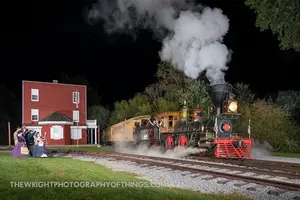
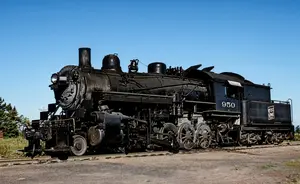
The railroad offers both steam and diesel excursions, depending on the season and equipment availability. Its star locomotive is ex-Mississippi Central 4-4-0 steam locomotive No. 98, a beautifully maintained American-type engine built in 1909. Its classic outline and polished brass make it a favorite for photographers and holiday passengers alike.
Excursions and Special Events
The Wilmington & Western runs a full calendar of themed trips throughout the year, such as:
- Autumn Leaf Specials
- Easter Bunny Trains
- Fireworks Express
- Fall Foliage Photo Specials
- Mother’s and Father’s Day rides
- Summer picnic specials
But nothing matches the popularity and magic of the railroad’s annual Christmas excursions, which transform the Red Clay Valley into one of the region’s most enchanting holiday experiences.
Christmas Rides
The Santa Claus Express
The railroad’s most popular daytime Christmas excursion is the Santa Claus Express, a joyful blend of seasonal celebration and historic train travel.
What the Ride Offers
-
Daytime Christmas Ambience
Passengers board vintage coaches decked out in festive decorations—garland, bows, ornaments, and cheerful signage. -
Santa Claus Visits Each Child
Santa moves through the train to greet every passenger, pose for photos, and give children a small treat. -
Scenic Winter Views
The Red Clay Valley in December often features bare trees, quiet meadows, and crisp creekside scenery—perfect for holiday photos. -
A Comfortable Family Outing
The ride typically lasts 60–90 minutes, ideal for younger children and multigenerational families. -
Historic Locomotives
Whenever possible, the train is powered by steam locomotive No. 98, adding nostalgic charm. On other dates, a classic diesel handles the trip.
The Santa Claus Express is designed to be relaxed, heartwarming, and immersive—a holiday tradition for thousands of families across Delaware, Pennsylvania, Maryland, and New Jersey.
The Holiday Lights Express
If the Santa Claus Express celebrates daytime charm, the Holiday Lights Express brings the Red Clay Valley to life at night.
This evening excursion is one of the region’s most visually spectacular holiday train experiences.
A Train Covered in Lights
The coaches are illuminated from end to end with thousands of colorful LED lights arranged in dazzling patterns—snowflakes, candy canes, stars, holiday scenes, and themed displays. As the train glides along the darkened valley, it becomes a moving Christmas spectacle.
The Onboard Experience
Passengers ride in open-air (but roof-covered) “Harriman” coaches, allowing a full sensory immersion in the winter night. Many families bring blankets, hats, and gloves for warmth, as Delaware evenings can be brisk.
During the trip:
- Holiday music fills the air
- Light displays reflect off the creek and trees
- Homes along the route often decorate in greeting
- The whole valley glows with color and movement
It is a completely different feel from the Santa Claus Express—less focused on Santa, more about visual wonder and peaceful nighttime atmosphere.
A Community Favorite
The Holiday Lights Express often sells out weeks in advance, thanks to:
- The unique nighttime scenery
- The train’s festive decorations
- The family-friendly running time
- The spectacular photo opportunities
It has become one of Delaware’s signature holiday experiences, drawing visitors from multiple states.
A Living Railroad, Rooted in Community
Today, the Wilmington & Western Railroad stands as:
- One of the oldest continuous heritage railroads in the United States
- A vital cultural institution in northern Delaware
- A tourist attraction that draws tens of thousands annually
- A volunteer-driven organization preserving local history
- A seasonal highlight with some of the Mid-Atlantic’s best holiday train rides
Whether steaming through the valley in autumn or sparkling with lights in December, the W&W remains a beloved tradition for families and railfans alike.
And each Christmas season, the Santa Claus Express and Holiday Lights Express capture the magic of the holidays in ways only a historic railroad can—through nostalgia, atmosphere, and the timeless rhythm of steel wheels on polished rails.
To learn about these trains and purchasing tickets please click here to visit the Wilmington & Western's website.
Recent Articles


-
California High-Speed Rail Chief Resigns
Oct 30, 26 08:36 PM
 Ian Choudri resigned October 28, 2026 as chief executive of the California High-Speed Rail Authority. The board named Joe Stephenshaw interim chief executive.
-
The 1910 Portal Bridge Is Handed Over for Demolition
Oct 30, 26 04:03 PM
 Amtrak handed the 1910 Portal Bridge over for demolition on October 29, 2026, during the final cutover to Portal North. Regular NJ Transit and Amtrak schedules are expected November 15.
-
Union Pacific-Norfolk Southern Merger Review Runs to 2027
Oct 30, 26 03:59 PM
 Union Pacific says the Surface Transportation Board's review of the Norfolk Southern merger gathers information through May 28, 2027. A closing still depends on board approval.
-
Amtrak Board Will Hear Restructuring Comments on November 10
Oct 30, 26 03:41 PM
 Amtrak's board will hear public comments on its restructuring on November 10, 2026, from 2 to 3 p.m. Eastern. Written comments were due October 30. A proposal goes to the board in December.
-
Canadian Pacific Selkirk 5931 Restored in Calgary
Oct 30, 26 01:36 PM
 Heritage Park in Calgary unveiled a cosmetic restoration of Canadian Pacific 2-10-4 No. 5931 on October 27, 2026. One of two surviving Selkirks. It stays on display.
-
Gettysburg Railway to Host Steam for Lincoln
Oct 30, 26 01:18 PM
 Northern Central Railway of York No. 17 will recreate Lincoln's arrival at Gettysburg on November 18, 2026, with public steam trips November 19-21.
-
NC&StL No. 576 to Steam for the Public in Nashville
Oct 30, 26 01:00 PM
 Nashville Steam will fire NC&StL 4-8-4 No. 576 for the public on November 7, 2026, 9 a.m. to 3 p.m., at 220 Willow Street. Admission is free.
-
Pennsylvania Railroad E8s Join the T1 Trust
Oct 30, 26 12:38 PM
 The T1 Trust has acquired former Pennsylvania Railroad E8A diesels 5702A and 5761A from the Fort Wayne Railroad Historical Society. They are bound for Cumberland.
-
Ligonier Valley Railroad: History, Roster, Timetable
Oct 30, 26 12:03 PM
 The Ligonier Valley Railroad ran 10.5 miles from Latrobe to Ligonier, Pennsylvania. Opened December 1, 1877. Last day August 31, 1952.
-
Toledo, Peoria & Western Diesel Roster (All-Time)
Oct 30, 26 10:25 AM
 Toledo, Peoria & Western diesel locomotives, each frame once. Thirteen Alcos, three Lima-Hamilton switchers, and 26 Electro-Motive units.
-
Toledo, Peoria & Western Steam Roster
Oct 30, 26 09:14 AM
 Toledo, Peoria & Western steam locomotives from the Rogers Consolidations of 1895 through the 4-8-4s of 1937
-
Toledo, Peoria & Western Railway: Map, Roster, History
Oct 29, 26 11:12 PM
 History of the Toledo, Peoria & Western. The Peoria & Oquawka, George P. McNear, the Santa Fe and Pennsylvania years, and the railroad that came back in 1989.
-
Cotton Belt Diesel Roster (All-Time)
Oct 29, 26 07:58 PM
 St. Louis Southwestern diesel locomotives, each frame once. Baldwin switchers, F units, and new Cotton Belt-lettered power through the GP60s of May 1990.
-
Cotton Belt Steam Roster (Built Since 1900)
Oct 29, 26 06:52 PM
 St. Louis Southwestern steam locomotives built since 1900. Consolidations, Ten-Wheelers, and twenty class L-1 4-8-4s. The quantity column is 297.
-
Cotton Belt Railroad: Map, Logo, History, Rosters
Oct 29, 26 10:56 AM
 History of the St. Louis Southwestern, the Cotton Belt Route. The Tyler Tap, Paramore's silver spike, the Thebes Bridge, the Blue Streak, and Southern Pacific control. Steam and diesel rosters are sep…
-
Pere Marquette Steam Roster (Built Since 1900)
Oct 28, 26 11:54 PM
 Pere Marquette steam locomotives built since 1900. Consolidations, Mikados, Pacifics, and 39 Berkshires. The quantity column is 503.
-
Pere Marquette Diesel Roster (All-Time)
Oct 28, 26 11:48 PM
 Pere Marquette diesel locomotives, each frame once. Two SW1s, 14 NW2s, three GE 70-tonners, eight E7As, and six BL2s delivered lettered Chesapeake and Ohio. The quantity column is 33.
-
Pere Marquette Railway: Map, Logo, Rosters, History
Oct 28, 26 11:44 PM
 History of the Pere Marquette Railway. Timber roads, the Prince years, the Van Sweringens, the Ludington car ferries, and the Chesapeake and Ohio merger of June 6, 1947.
-
Nickel Plate Road (Railroad): Map, History, Rosters
Oct 28, 26 10:51 PM
 History of the Nickel Plate Road, the New York, Chicago and St. Louis. The Seney syndicate, the Van Sweringens, the Berkshires, and the Norfolk and Western absorption at 12:01 a.m. on October 16, 1964…
-
Nickel Plate Diesel Roster (All-Time)
Oct 28, 26 10:48 PM
 Nickel Plate diesel locomotives, each frame once. Alco switchers and PAs, GP7s and GP9s, and the GP30s. The quantity column is 440. The 1950 fleet was 117.
-
Nickel Plate Steam Roster (Built Since 1900)
Oct 28, 26 10:43 PM
 Nickel Plate steam locomotives built since 1900, including the Lake Erie and Western, the Clover Leaf, and the Wheeling engines that took Nickel Plate numbers. The quantity column is 786.
-
EMD "E9" Locomotives: Specs, Roster, History
Oct 28, 26 10:37 PM
 EMD E9 cab units and boosters, 2,400 horsepower, built April 1954 through January 1964. Gear ratios, specifications, and the production roster by owner, serial, and order.
-
NYC 4-6-4 #5344, "Commodore Vanderbilt"
Oct 28, 26 04:31 PM
 NYC J-1e Hudson 5344, the Commodore Vanderbilt. Alco, November 1931. Carl Kantola’s shroud, December 1934, then a Dreyfuss bullet nose in 1939. Scrapped at Collinwood in 1954.
-
New Jersey, Indiana & Illinois Railroad: A South Bend Shortline
Oct 28, 26 11:05 AM
 The New Jersey, Indiana & Illinois, the Jersey Line, ran from South Bend to Pine. Singer built it in 1905. Wabash stock control came in 1926. Two diesels, and the steam the record names.
-
Monon Diesel Roster (All-Time)
Oct 28, 26 10:13 AM
 Monon diesel locomotives, each frame once. F3s, nine BL2s, the C420s, and eight U23Bs. The quantity column is 96. The 1951 fleet was 57.
-
Monon Steam Roster (Built Since 1900)
Oct 28, 26 10:09 AM
 Monon steam locomotives built since 1900. Twelve-Wheelers, Mikados, light Pacifics, and thirteen six-wheel switchers. The quantity column is 148.
-
Monon Railroad: Map, Photos, History, Logo
Oct 28, 26 09:55 AM
 History of the Monon, the Hoosier Line. The New Albany & Salem, the X at Monon, Barriger's streamliners, and the Louisville & Nashville merger of July 31, 1971.
-
Missouri-Kansas-Texas Diesel Roster (All-Time)
Oct 28, 26 09:48 AM
 All-time diesel roster of the Missouri-Kansas-Texas. 406 locomotives, each frame once. Baldwin switchers, Alco cab units, F units, Geeps, and the SD40-2s.
-
Missouri-Kansas-Texas Steam Roster (Built Since 1900)
Oct 28, 26 09:43 AM
 Missouri-Kansas-Texas steam locomotives built since 1900. Moguls, Mikados, Pacifics, and the narrow-gauge shop tanks. The quantity column is 715.
-
Missouri-Kansas-Texas Railroad (Katy): Map, History, Rosters
Oct 27, 26 11:02 PM
 History of the Missouri-Kansas-Texas, the Katy. The race into Indian Territory, Gould, the 1923 railroad, the Texas Special, and the 1988 sale. Steam and diesel rosters are linked.
-
Soo Line Diesel Roster (All-Time)
Oct 27, 26 10:55 PM
 All-time diesel roster of the Soo Line and the Wisconsin Central. 786 locomotives, each frame once. Cab units, Geeps, the Milwaukee Road engines, and the SD60s. The South Shore's 24 stay on that page.
-
Soo Line Steam Roster (Built Since 1900)
Oct 27, 26 10:49 PM
 Soo Line and Wisconsin Central steam locomotives built since 1900. Consolidations, Mikados, Pacifics, 21 Mountains, and four Lima 4-8-4s.
-
Soo Line Railroad: Map, Logo, History, Rosters
Oct 27, 26 10:24 PM
 The Soo Line, from the flour millers' railroad around Chicago to the Sault, the Wisconsin Central, and the Milwaukee Road. Steam quantity 422. Diesels 786. Canadian Pacific took full control in 1990.
-
Minneapolis, Northfield and Southern Railway: Map, History, Rosters
Oct 27, 26 10:32 AM
 The Minneapolis, Northfield & Southern, the Dan Patch Line that became a Twin Cities belt. Steam, gas-electric mules, motor cars, and the 22 diesels, through the Soo Line.
-
Minneapolis & St. Louis Diesel Roster (All-Time)
Oct 27, 26 10:27 AM
 All-time diesel roster of the Minneapolis & St. Louis. 97 locomotives, each frame once. Switchers from 1938, 35 RS-1s, the FT and F-unit cabs, two SD7s, and 23 GP9s. Builder numbers included.
-
Minneapolis & St. Louis Steam Roster (Post 1900)
Oct 27, 26 10:25 AM
Minneapolis & St. Louis steam locomotives built since 1900. Moguls, Consolidations, 35 Mikados, and five Pacifics. -
Minneapolis and St Louis Railway: "The Peoria Gateway"
Oct 27, 26 09:52 AM
 The Minneapolis & St. Louis, the Tootin' Louie, from the 1870 charter to the Peoria Gateway and the Chicago & North Western sale on November 1, 1960.
-
Alco "PA" Locomotives: Restoration, Specs, Engine, Rosters
Oct 27, 26 12:12 AM
 Alco's PA passenger cab, 297 locomotives built from 1946 to 1953. The 244 engine, the production roster, the Delaware & Hudson PA-4s, and Nickel Plate Road 190.
-
Milwaukee Road Diesel Roster: (All Time)
Oct 26, 26 01:44 PM
 All-time diesel roster of the Milwaukee Road. 1,208 locomotives, each frame once. Alco, Baldwin, Davenport, EMD, Fairbanks-Morse, General Electric, and Whitcomb, with builder numbers.
-
Milwaukee Road Steam Roster (All-Time): Post-1900
Oct 26, 26 01:38 PM
 Milwaukee Road steam locomotives built since 1900. Prairies, Mikados, the N-class articulateds, the S-class 4-8-4s, and the Hiawatha Atlantics and Hudsons. Quantity column 1,974. Unique frames 1,951.
-
Milwaukee Road: Map, Electrification, Logo, History
Oct 26, 26 01:20 PM
 The Milwaukee Road, from the Milwaukee & Mississippi of 1850 to the Pacific Coast Extension, the Hiawathas, and the Soo Line sale. Why Lines West should have stayed.
-
Lake Superior & Ishpeming Railroad: Map, Roster, History
Oct 25, 26 11:38 PM
 Lake Superior & Ishpeming Railroad, reporting mark LSI, from the Marquette Range to the Presque Isle ore dock. The 1954 steam list and the diesels the railroad owned.
-
Kansas City Southern Steam Roster (Built Since 1900)
Oct 25, 26 09:09 PM
 Steam locomotives of the Kansas City Southern built since 1900, with the Louisiana & Arkansas and the Texas company.
-
Kansas City Southern Diesel Roster (Built New)
Oct 25, 26 11:46 AM
All-time diesel roster of the Kansas City Southern. E units, F units, Geeps, SD40s through SD70ACes, Fairbanks-Morse, Baldwin, Alco, and General Electric, with serials and order numbers. -
Kansas City Southern Railway: Map, Photos, History
Oct 25, 26 12:24 AM
The Kansas City Southern, from Arthur Stilwell's Gulf line to Canadian Pacific Kansas City on April 14, 2023. Steam and diesel rosters, the Southern Belle, and the Louisiana & Arkansas. -
Indiana Harbor Belt Diesel Roster (All-Time)
Oct 25, 26 12:17 AM
 All-time diesel roster of the Indiana Harbor Belt. 202 locomotive frames, each counted once. NW2s, SW7s, SW1500s, road switchers, and gensets. Slugs and boosters are outside the count.
-
Indiana Harbor Belt Steam Roster (Built Since 1900)
Oct 25, 26 12:13 AM
 Steam locomotives of the Indiana Harbor Belt built since 1900. 182 engines, each counted once. 0-6-0s, 2-6-0s, 0-8-0s, and 2-8-2s. The three U-4a switchers are three-cylinder Brooks engines of 1927.
-
Indiana Harbor Belt Railroad: Map, Rosters, History
Oct 25, 26 12:00 AM
 Indiana Harbor Belt, the inner belt across the Calumet, from the East Chicago Belt of May 16, 1896. Renamed June 29, 1907. Still operating, headquarters Hammond. Steam roster is the companion, 182 loc…
-
NYC's "P Motor" Electric Locomotives
Oct 24, 26 11:43 PM
 New York Central P motors: 22 Alco-GE 2-C+C-2 electrics, Cleveland Union Terminal 1050–1071, class P-1a. 3,030 hp one-hour on 3,000-volt DC catenary, then 660-volt third rail as P-2a and P-2b.
-
Illinois Terminal Car Roster
Oct 24, 26 11:40 PM
 Illinois Terminal cars. Mainline motors, the 1948 streamliners, sleepers, Alton and Valley Division cars, express motors, and the line cars rebuilt from pull cars.