Connecticut Christmas Train Rides In Danbury!
Published: November 26, 2025
By: Adam Burns
Tucked into the heart of downtown Danbury, Connecticut, the Danbury Railway Museum brings more than a century of American railroading into vivid focus.
Set within the beautifully restored former Danbury Union Station, the museum is both a tribute to the region’s transportation heritage and a hands-on destination for families, railfans, and anyone with a curiosity for how trains shaped New England.
From its evocative indoor exhibits to an expansive rail yard with a working turntable and short train rides, the museum offers a rare blend of authenticity and fun. And when the holidays roll around, its beloved Santa Train transforms the experience into pure seasonal magic.

A Brief History
Housed in the 1903 station built by the New York, New Haven and Hartford Railroad, the museum preserves the architectural charm and historical context of the era when rail travel was the backbone of commerce and daily life.
Volunteers and staff have worked for decades to restore the station’s period details and build a collection that tells stories from the golden age of steam through the rise of diesel and the modern commuter era. That sense of continuity is part of the museum’s appeal: you are not just looking at rail history; you are standing in a place where it happened.
Inside, exhibits invite you to get up close to the tools and technologies that made railroads run. You’ll find signaling equipment, dispatching instruments, lanterns, uniforms, timetables, maps, photographs, and interpretive displays that reveal how railroads operated and how they affected the people and towns along the line. Model railroad layouts offer a miniature, dynamic view of railroading, captivating kids and adults alike with intricate scenery and rolling stock. A well-stocked gift shop sells books, toys, souvenirs, and model train gear, perfect for finding a memento or inspiring a new hobbyist.
Step outside and the experience expands. The museum’s rail yard spans several acres and includes a diverse collection of locomotives, cabooses, coaches, and maintenance-of-way equipment. Interpretive signs and guided explanations help bring each artifact to life. One of the standout features is the operating turntable, a piece of historic infrastructure that enables locomotives to be turned around. Seeing it in action is a highlight for many visitors and a reminder of how ingenious and practical rail technology can be.
Short train rides run seasonally and on special event days, typically pulled by a vintage diesel or yard switcher. These rides are not long-distance excursions; they are immersive, family-friendly jaunts through the yard and nearby trackage that let you feel the rhythm of the rails and enjoy the vantage point that only a train can offer. It’s a thrill for children experiencing their first ride and a nostalgic return for adults who grew up with the sound of steel wheels and the smell of creosote.
The museum is run by a dedicated nonprofit organization supported by volunteers, members, and donors. Restoration projects are a constant labor of love, from repainting historic cars to mechanical work that keeps equipment safe and operable. Education is woven throughout the mission: school groups visit for curriculum-aligned programs, merit badge workshops introduce scouts to rail heritage and safety, and special events connect broader audiences to the living history outside their doorstep.
The Santa Train
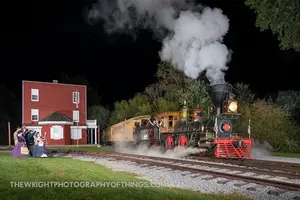
Among those special events, none is more anticipated than the museum’s Santa Train during the Christmas season. Each year, on select dates between Thanksgiving and Christmas, the rail yard transforms into a festive landscape of twinkling lights, cheerful music, and seasonal decor.
Families arrive bundled in hats and scarves, and excited children clutch letters to Santa as volunteers dressed as elves help everyone aboard. The Santa Train is a short, joyful ride designed for young riders, but it taps into a timeless delight that resonates with every age.
What To Expect
The experience typically includes boarding a vintage coach or decorated car for a relaxed ride, with Santa making time to greet children, pose for photos, and listen to wish lists. Many years, Mrs. Claus joins the fun, and volunteers hand out small treats or gifts.
Warm beverages, crafts, a mailbox for letters to the North Pole, and holiday-themed model train displays often round out the visit. Every season’s details can vary, but the constant is the atmosphere: welcoming, warm, and brimming with holiday spirit.
Because this seasonal holiday favorite is immensely popular, tickets frequently sell out, and advance reservations are strongly recommended. Dates, times, and ticketing details are always best confirmed on the museum’s official website before you go.
Why It's Special
What makes the Santa Train special, beyond the photo ops and cocoa, is how authentically it connects the season to a deeper story. Railroads were once essential to holiday traditions—moving mail, parcels, and passengers home for the holidays.
Experiencing a festive ride in a historic setting evokes that nostalgia while creating new memories. Parents often comment on how approachable and engaging the volunteers are, and how the manageable scale of the event—short ride, easy parking, intimate setting—keeps the focus on family time rather than logistics.
Practical Tips and Considerations
Planning a visit to the Danbury Railway Museum is straightforward. It’s located just off downtown at 120 White Street, with free parking nearby and close proximity to restaurants and shops. The site is also adjacent to Metro-North’s Danbury Branch, making it easy to combine a museum visit with a train trip from elsewhere in the region.
The museum operates year-round, but hours, ride schedules, and event offerings vary by season, and special programs like the Santa Train have their own ticketing windows. Check the museum’s website or call ahead for current information, especially during winter months or around holidays.
If you’re visiting with children, a few tips can help. Build in time to explore both the indoor exhibits and the rail yard—some kids are captivated by the models, while others can’t wait to climb aboard a vintage caboose.
Dress for the weather; much of the yard experience is outdoors. On busy days, consider arriving at opening time to enjoy a quieter start. And if you’re a hobbyist or collector, leave extra time in the gift shop; the selection often includes hard-to-find titles and unique railroadiana.
Final Thoughts
For railfans, Danbury Railway Museum offers a rewarding blend of access and authenticity. The ability to see diverse equipment up close, watch or ride over a historic turntable, and engage with volunteers who know the stories behind each artifact makes it more than a static display—it is a living museum. Photographers will find great angles in the yard and around the station’s architecture, and the changing New England light adds character across the seasons.
Ultimately, the Danbury Railway Museum delivers on two fronts: it preserves and interprets a crucial chapter of American transportation history, and it translates that history into experiences that delight.
Whether you are a parent planning a first Santa Train ride, a lifelong rail enthusiast, or a traveler seeking a distinctive stop in western Connecticut, this museum offers the rare chance to touch, ride, and revel in the enduring charm of the rails.
Make your plans early for the holiday season, keep an eye on the official schedule for rides and events, and prepare to leave with a deeper appreciation for the trains that built and connected communities—plus, if you time it right, a little extra holiday magic.
Recent Articles


-
Baldwin "Baby Face" Locomotives: Specs, Photos, Roster
Oct 30, 26 11:01 PM
 Baldwin's Babyface cab on the early road diesels: 50 short-cab units, 1946-1948, plus the related Centipede. Construction numbers, specs, and the sharknose that followed.
-
California High-Speed Rail Chief Resigns
Oct 30, 26 08:36 PM
 Ian Choudri resigned October 28, 2026 as chief executive of the California High-Speed Rail Authority. The board named Joe Stephenshaw interim chief executive.
-
The 1910 Portal Bridge Is Handed Over for Demolition
Oct 30, 26 04:03 PM
 Amtrak handed the 1910 Portal Bridge over for demolition on October 29, 2026, during the final cutover to Portal North. Regular NJ Transit and Amtrak schedules are expected November 15.
-
Union Pacific-Norfolk Southern Merger Review Runs to 2027
Oct 30, 26 03:59 PM
 Union Pacific says the Surface Transportation Board's review of the Norfolk Southern merger gathers information through May 28, 2027. A closing still depends on board approval.
-
Amtrak Board Will Hear Restructuring Comments on November 10
Oct 30, 26 03:41 PM
 Amtrak's board will hear public comments on its restructuring on November 10, 2026, from 2 to 3 p.m. Eastern. Written comments were due October 30. A proposal goes to the board in December.
-
Canadian Pacific Selkirk 5931 Restored in Calgary
Oct 30, 26 01:36 PM
 Heritage Park in Calgary unveiled a cosmetic restoration of Canadian Pacific 2-10-4 No. 5931 on October 27, 2026. One of two surviving Selkirks. It stays on display.
-
Gettysburg Railway to Host Steam for Lincoln
Oct 30, 26 01:18 PM
 Northern Central Railway of York No. 17 will recreate Lincoln's arrival at Gettysburg on November 18, 2026, with public steam trips November 19-21.
-
NC&StL No. 576 to Steam for the Public in Nashville
Oct 30, 26 01:00 PM
 Nashville Steam will fire NC&StL 4-8-4 No. 576 for the public on November 7, 2026, 9 a.m. to 3 p.m., at 220 Willow Street. Admission is free.
-
Pennsylvania Railroad E8s Join the T1 Trust
Oct 30, 26 12:38 PM
 The T1 Trust has acquired former Pennsylvania Railroad E8A diesels 5702A and 5761A from the Fort Wayne Railroad Historical Society. They are bound for Cumberland.
-
Ligonier Valley Railroad: History, Roster, Timetable
Oct 30, 26 12:03 PM
 The Ligonier Valley Railroad ran 10.5 miles from Latrobe to Ligonier, Pennsylvania. Opened December 1, 1877. Last day August 31, 1952.
-
Toledo, Peoria & Western Diesel Roster (All-Time)
Oct 30, 26 10:25 AM
 Toledo, Peoria & Western diesel locomotives, each frame once. Thirteen Alcos, three Lima-Hamilton switchers, and 26 Electro-Motive units.
-
Toledo, Peoria & Western Steam Roster
Oct 30, 26 09:14 AM
 Toledo, Peoria & Western steam locomotives from the Rogers Consolidations of 1895 through the 4-8-4s of 1937
-
Toledo, Peoria & Western Railway: Map, Roster, History
Oct 29, 26 11:12 PM
 History of the Toledo, Peoria & Western. The Peoria & Oquawka, George P. McNear, the Santa Fe and Pennsylvania years, and the railroad that came back in 1989.
-
Cotton Belt Diesel Roster (All-Time)
Oct 29, 26 07:58 PM
 St. Louis Southwestern diesel locomotives, each frame once. Baldwin switchers, F units, and new Cotton Belt-lettered power through the GP60s of May 1990.
-
Cotton Belt Steam Roster (Built Since 1900)
Oct 29, 26 06:52 PM
 St. Louis Southwestern steam locomotives built since 1900. Consolidations, Ten-Wheelers, and twenty class L-1 4-8-4s. The quantity column is 297.
-
Cotton Belt Railroad: Map, Logo, History, Rosters
Oct 29, 26 10:56 AM
 History of the St. Louis Southwestern, the Cotton Belt Route. The Tyler Tap, Paramore's silver spike, the Thebes Bridge, the Blue Streak, and Southern Pacific control. Steam and diesel rosters are sep…
-
Pere Marquette Steam Roster (Built Since 1900)
Oct 28, 26 11:54 PM
 Pere Marquette steam locomotives built since 1900. Consolidations, Mikados, Pacifics, and 39 Berkshires. The quantity column is 503.
-
Pere Marquette Diesel Roster (All-Time)
Oct 28, 26 11:48 PM
 Pere Marquette diesel locomotives, each frame once. Two SW1s, 14 NW2s, three GE 70-tonners, eight E7As, and six BL2s delivered lettered Chesapeake and Ohio. The quantity column is 33.
-
Pere Marquette Railway: Map, Logo, Rosters, History
Oct 28, 26 11:44 PM
 History of the Pere Marquette Railway. Timber roads, the Prince years, the Van Sweringens, the Ludington car ferries, and the Chesapeake and Ohio merger of June 6, 1947.
-
Nickel Plate Road (Railroad): Map, History, Rosters
Oct 28, 26 10:51 PM
 History of the Nickel Plate Road, the New York, Chicago and St. Louis. The Seney syndicate, the Van Sweringens, the Berkshires, and the Norfolk and Western absorption at 12:01 a.m. on October 16, 1964…
-
Nickel Plate Diesel Roster (All-Time)
Oct 28, 26 10:48 PM
 Nickel Plate diesel locomotives, each frame once. Alco switchers and PAs, GP7s and GP9s, and the GP30s. The quantity column is 440. The 1950 fleet was 117.
-
Nickel Plate Steam Roster (Built Since 1900)
Oct 28, 26 10:43 PM
 Nickel Plate steam locomotives built since 1900, including the Lake Erie and Western, the Clover Leaf, and the Wheeling engines that took Nickel Plate numbers. The quantity column is 786.
-
EMD "E9" Locomotives: Specs, Roster, History
Oct 28, 26 10:37 PM
 EMD E9 cab units and boosters, 2,400 horsepower, built April 1954 through January 1964. Gear ratios, specifications, and the production roster by owner, serial, and order.
-
NYC 4-6-4 #5344, "Commodore Vanderbilt"
Oct 28, 26 04:31 PM
 NYC J-1e Hudson 5344, the Commodore Vanderbilt. Alco, November 1931. Carl Kantola’s shroud, December 1934, then a Dreyfuss bullet nose in 1939. Scrapped at Collinwood in 1954.
-
New Jersey, Indiana & Illinois Railroad: A South Bend Shortline
Oct 28, 26 11:05 AM
 The New Jersey, Indiana & Illinois, the Jersey Line, ran from South Bend to Pine. Singer built it in 1905. Wabash stock control came in 1926. Two diesels, and the steam the record names.
-
Monon Diesel Roster (All-Time)
Oct 28, 26 10:13 AM
 Monon diesel locomotives, each frame once. F3s, nine BL2s, the C420s, and eight U23Bs. The quantity column is 96. The 1951 fleet was 57.
-
Monon Steam Roster (Built Since 1900)
Oct 28, 26 10:09 AM
 Monon steam locomotives built since 1900. Twelve-Wheelers, Mikados, light Pacifics, and thirteen six-wheel switchers. The quantity column is 148.
-
Monon Railroad: Map, Photos, History, Logo
Oct 28, 26 09:55 AM
 History of the Monon, the Hoosier Line. The New Albany & Salem, the X at Monon, Barriger's streamliners, and the Louisville & Nashville merger of July 31, 1971.
-
Missouri-Kansas-Texas Diesel Roster (All-Time)
Oct 28, 26 09:48 AM
 All-time diesel roster of the Missouri-Kansas-Texas. 406 locomotives, each frame once. Baldwin switchers, Alco cab units, F units, Geeps, and the SD40-2s.
-
Missouri-Kansas-Texas Steam Roster (Built Since 1900)
Oct 28, 26 09:43 AM
 Missouri-Kansas-Texas steam locomotives built since 1900. Moguls, Mikados, Pacifics, and the narrow-gauge shop tanks. The quantity column is 715.
-
Missouri-Kansas-Texas Railroad (Katy): Map, History, Rosters
Oct 27, 26 11:02 PM
 History of the Missouri-Kansas-Texas, the Katy. The race into Indian Territory, Gould, the 1923 railroad, the Texas Special, and the 1988 sale. Steam and diesel rosters are linked.
-
Soo Line Diesel Roster (All-Time)
Oct 27, 26 10:55 PM
 All-time diesel roster of the Soo Line and the Wisconsin Central. 786 locomotives, each frame once. Cab units, Geeps, the Milwaukee Road engines, and the SD60s. The South Shore's 24 stay on that page.
-
Soo Line Steam Roster (Built Since 1900)
Oct 27, 26 10:49 PM
 Soo Line and Wisconsin Central steam locomotives built since 1900. Consolidations, Mikados, Pacifics, 21 Mountains, and four Lima 4-8-4s.
-
Soo Line Railroad: Map, Logo, History, Rosters
Oct 27, 26 10:24 PM
 The Soo Line, from the flour millers' railroad around Chicago to the Sault, the Wisconsin Central, and the Milwaukee Road. Steam quantity 422. Diesels 786. Canadian Pacific took full control in 1990.
-
Minneapolis, Northfield and Southern Railway: Map, History, Rosters
Oct 27, 26 10:32 AM
 The Minneapolis, Northfield & Southern, the Dan Patch Line that became a Twin Cities belt. Steam, gas-electric mules, motor cars, and the 22 diesels, through the Soo Line.
-
Minneapolis & St. Louis Diesel Roster (All-Time)
Oct 27, 26 10:27 AM
 All-time diesel roster of the Minneapolis & St. Louis. 97 locomotives, each frame once. Switchers from 1938, 35 RS-1s, the FT and F-unit cabs, two SD7s, and 23 GP9s. Builder numbers included.
-
Minneapolis & St. Louis Steam Roster (Post 1900)
Oct 27, 26 10:25 AM
Minneapolis & St. Louis steam locomotives built since 1900. Moguls, Consolidations, 35 Mikados, and five Pacifics. -
Minneapolis and St Louis Railway: "The Peoria Gateway"
Oct 27, 26 09:52 AM
 The Minneapolis & St. Louis, the Tootin' Louie, from the 1870 charter to the Peoria Gateway and the Chicago & North Western sale on November 1, 1960.
-
Alco "PA" Locomotives: Restoration, Specs, Engine, Rosters
Oct 27, 26 12:12 AM
 Alco's PA passenger cab, 297 locomotives built from 1946 to 1953. The 244 engine, the production roster, the Delaware & Hudson PA-4s, and Nickel Plate Road 190.
-
Milwaukee Road Diesel Roster: (All Time)
Oct 26, 26 01:44 PM
 All-time diesel roster of the Milwaukee Road. 1,208 locomotives, each frame once. Alco, Baldwin, Davenport, EMD, Fairbanks-Morse, General Electric, and Whitcomb, with builder numbers.
-
Milwaukee Road Steam Roster (All-Time): Post-1900
Oct 26, 26 01:38 PM
 Milwaukee Road steam locomotives built since 1900. Prairies, Mikados, the N-class articulateds, the S-class 4-8-4s, and the Hiawatha Atlantics and Hudsons. Quantity column 1,974. Unique frames 1,951.
-
Milwaukee Road: Map, Electrification, Logo, History
Oct 26, 26 01:20 PM
 The Milwaukee Road, from the Milwaukee & Mississippi of 1850 to the Pacific Coast Extension, the Hiawathas, and the Soo Line sale. Why Lines West should have stayed.
-
Lake Superior & Ishpeming Railroad: Map, Roster, History
Oct 25, 26 11:38 PM
 Lake Superior & Ishpeming Railroad, reporting mark LSI, from the Marquette Range to the Presque Isle ore dock. The 1954 steam list and the diesels the railroad owned.
-
Kansas City Southern Steam Roster (Built Since 1900)
Oct 25, 26 09:09 PM
 Steam locomotives of the Kansas City Southern built since 1900, with the Louisiana & Arkansas and the Texas company.
-
Kansas City Southern Diesel Roster (Built New)
Oct 25, 26 11:46 AM
All-time diesel roster of the Kansas City Southern. E units, F units, Geeps, SD40s through SD70ACes, Fairbanks-Morse, Baldwin, Alco, and General Electric, with serials and order numbers. -
Kansas City Southern Railway: Map, Photos, History
Oct 25, 26 12:24 AM
The Kansas City Southern, from Arthur Stilwell's Gulf line to Canadian Pacific Kansas City on April 14, 2023. Steam and diesel rosters, the Southern Belle, and the Louisiana & Arkansas. -
Indiana Harbor Belt Diesel Roster (All-Time)
Oct 25, 26 12:17 AM
 All-time diesel roster of the Indiana Harbor Belt. 202 locomotive frames, each counted once. NW2s, SW7s, SW1500s, road switchers, and gensets. Slugs and boosters are outside the count.
-
Indiana Harbor Belt Steam Roster (Built Since 1900)
Oct 25, 26 12:13 AM
 Steam locomotives of the Indiana Harbor Belt built since 1900. 182 engines, each counted once. 0-6-0s, 2-6-0s, 0-8-0s, and 2-8-2s. The three U-4a switchers are three-cylinder Brooks engines of 1927.
-
Indiana Harbor Belt Railroad: Map, Rosters, History
Oct 25, 26 12:00 AM
 Indiana Harbor Belt, the inner belt across the Calumet, from the East Chicago Belt of May 16, 1896. Renamed June 29, 1907. Still operating, headquarters Hammond. Steam roster is the companion, 182 loc…
-
NYC's "P Motor" Electric Locomotives
Oct 24, 26 11:43 PM
 New York Central P motors: 22 Alco-GE 2-C+C-2 electrics, Cleveland Union Terminal 1050–1071, class P-1a. 3,030 hp one-hour on 3,000-volt DC catenary, then 660-volt third rail as P-2a and P-2b.