Revitalizing the Rails: Engineering and Technological Advancements
Published: January 23, 2025
By: Adam Burns
The U.S. railroad system, a backbone of America's infrastructure, has been undergoing a transformative era marked by engineering innovations and technological advancements.
As the demands for efficiency, safety, and environmental responsibility intensify, the rail industry is embracing cutting-edge solutions. This article explores key areas of technological progress: propulsion systems, signaling, and safety mechanisms.
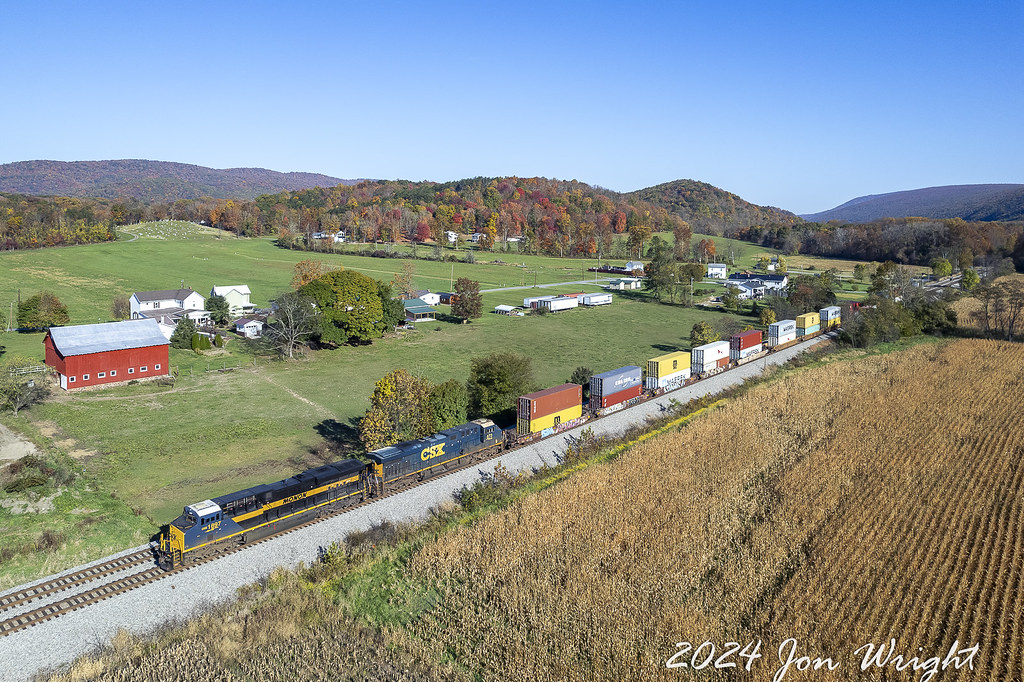 CSX's 'Monon' heritage unit, ES44AH #1897, leads intermodal freight I136 at Cooks Mill, Pennsylvania on Sanda Patch on October 22, 2024. Jon Wright photo.
Propulsion Systems Evolution: Towards Sustainability
Historically, diesel-electric locomotives dominated the U.S. rail landscape, combining diesel engines with electric generators to create a reliable means of moving freight. However, increasing environmental concerns and the push for reducing greenhouse gas emissions have prompted the industry to explore new propulsion technologies.
Electrification: While the U.S. lags behind countries like Japan and Switzerland in electrifying its railroads, initiatives are underway to expand electrification. Electrified railroads are not only cleaner but also allow for consistent speeds and improved energy efficiency. The Northeast Corridor serves as a model, showcasing the benefits of reduced emissions and improved service frequency due to its electrified tracks.
Battery-Electric Locomotives: The advent of battery technology has opened new avenues for rail propulsion. Companies like Wabtec are pioneering battery-electric locomotives that offer a significant reduction in emissions compared to traditional diesel engines. These locomotives can charge during deceleration (regenerative braking) and from on-board charging stations, presenting a promising supplement to existing systems.
Hydrogen Fuel Cells: Hydrogen-powered trains are gaining traction as a sustainable alternative. By converting hydrogen gas into electricity, these fuel cells power the train without emitting pollutants. The technology is still in its nascent stages in the U.S., but successful trials in Europe signal a potential shift towards hydrogen's adoption in American rail.
Advancements in Signaling Systems: PTC and Beyond
Modern railroad operations rely heavily on advanced signaling systems to ensure safe and efficient train movement. The most significant stride in this area has been the implementation of Positive Train Control (PTC).
Positive Train Control (PTC): PTC is an advanced system designed to automatically stop a train before certain types of accidents occur.
Mandated by the Rail Safety Improvement Act of 2008, PTC combines satellite-based GPS, on-train computers, and digital communication networks to monitor and control train movements.
The technology significantly reduces human error by preventing train-to-train collisions, derailments caused by excessive speed, and unauthorized track incursions.
Communication-Based Train Control (CBTC): As an evolution of traditional signaling, CBTC uses high-capacity bi-directional communications between the train and track equipment to manage traffic more efficiently. While predominantly used in urban transit systems, its application in freight and passenger rail could enhance network capacity and flexibility.
Autonomous Train Operations (ATO): While fully autonomous trains are a futuristic concept for most railroads, semi-autonomous systems have been implemented in freight operations.
These systems utilize on-board computers and sensors to optimize fuel efficiency, adjust speeds, and even maneuver locomotives in rail yards, thereby streamlining operations and reducing costs.
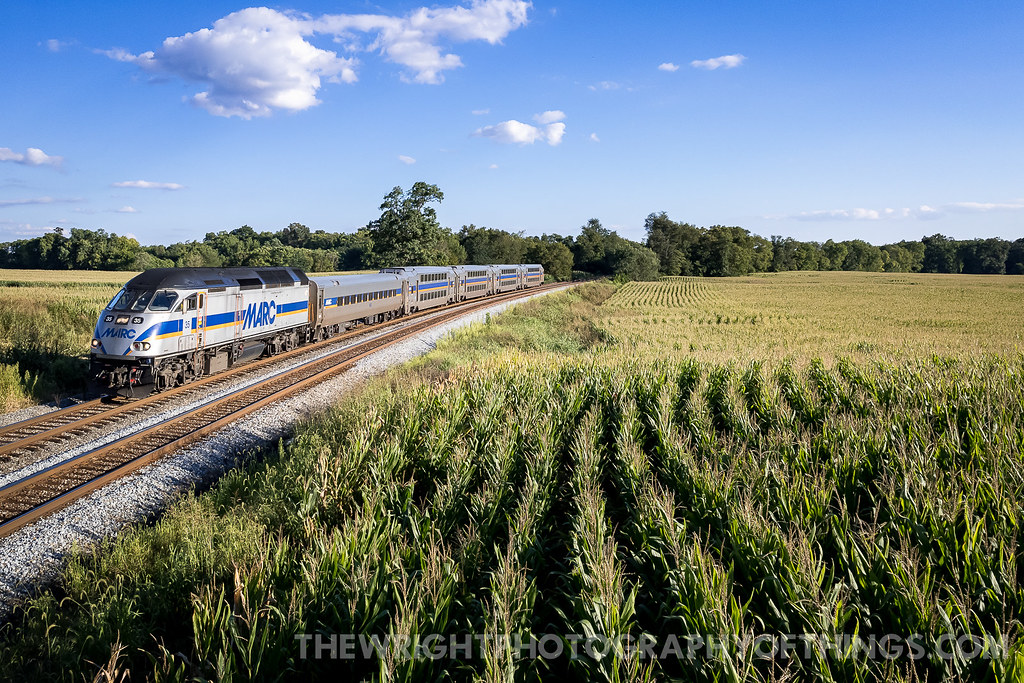 A MARC Train commuter run is near Kearneysville, West Virginia on August 31, 2022. Jon Wright photo.
Evolving Safety Systems: Embracing Technology for Risk Mitigation
Safety remains paramount in rail operations. The industry is continuously developing technologies to enhance safety for both passengers and employees.
Enhanced Grade Crossing Systems: Railroads are integrating advanced technologies like LIDAR and AI-based image processing to improve safety at grade crossings. These systems provide real-time data on potential hazards, enabling proactive measures to prevent incidents involving vehicles and pedestrians.
Track Inspection Innovations: Traditional track inspection methods are being supplemented with sophisticated technologies like drones and machine vision systems. These tools offer detailed inspections, spotting potential issues such as track misalignments or structural weaknesses, which are then addressed before they escalate into major problems.
Wearable Safety Technology: Wearables equipped with GPS and biometric sensors are improving worker safety across rail operations. These devices can monitor vitals, detect falls, and send alerts if a worker enters a hazardous area, ensuring quicker response times in emergencies.
Emerging Trends and Future Directions
As U.S. railroads strive for innovation, several emerging trends suggest the future direction of the industry:
1. Digital Twins: Railroads are adopting digital twin technology, creating virtual models of their networks to simulate and analyze performance under various conditions. This approach enables predictive maintenance and strategic planning, reducing downtime and improving efficiency.
2. Big Data Analytics: The proliferation of sensors and data-collecting devices is transforming operations. Railroads are leveraging big data analytics to optimize schedules, track energy usage, and improve asset management strategies.
3. Cybersecurity Enhancements: As technology becomes more integral to operations, the risk of cyber threats grows. Railroads are investing in robust cybersecurity measures to protect critical infrastructure from attacks that could disrupt service or compromise safety.
4. Advanced Material: The development of lightweight, strong materials is revolutionizing design and construction. New composites and alloys hold the promise of more durable trains and infrastructure with reduced maintenance needs.
Challenges and the Path Forward
Despite these advancements, U.S. railroads face numerous challenges. Infrastructure aging, regulatory complexities, and funding constraints pose barriers to rapid technological adoption. However, with the support of federal initiatives, public-private partnerships, and continued investment in R&D, these obstacles can be overcome.
The shift towards sustainability is particularly critical. As sectors push for reduced carbon footprints, railroads must continue exploring eco-friendly options, balancing economic viability with environmental responsibility. Collaborative efforts between government, industry leaders, and technological innovators will be key in navigating this transition.
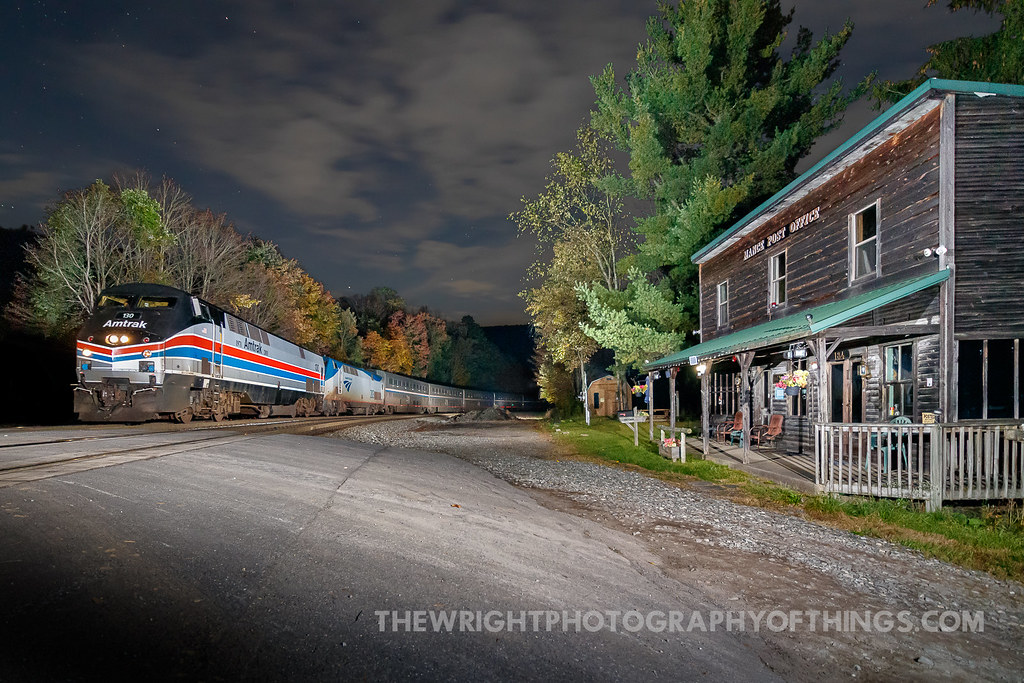 Amtrak P42DC #130 wearing the road's Phase III heritage livery has the "Capitol Limited" at Mance, Pennsylvania on October 14, 2021. Jon Wright photo.
The U.S. railroad industry stands on the brink of a technological renaissance, driven by innovations in propulsion, signaling, and safety systems.
These advancements not only promise to enhance efficiency and reliability but also ensure rail transport remains a safe and environmentally sound mode of transportation.
As railroads embrace these changes, they hold the potential to lead the U.S. into a new era of transportation, one that meets the modern demands of connectivity, sustainability, and technological integration. With continued focus and collaboration, the future of rail travel is set to be as transformative as its storied past.
Recent Articles


-
Western Maryland Railway: Map, Rosters, Logo, History
Sep 25, 26 10:24 AM
 Western Maryland Railway—the Fast Freight Line. Baltimore, Carroll & Frederick, May 27, 1852. Connellsville Extension 1912. Chessie, then into the B&O May 1, 1983.
 -
Illinois Dinner Train Rides (2026): A Complete Guide
Sep 25, 26 09:52 AM
 2026 Monticello Railway Museum Murder Mystery Dinner Train—June 13, July 11, August 1, and September 5 have run. Three courses, about 2 hours, $112. Confirm on mrym.org.
 -
Georgia Dinner Train Rides (2026): A Complete Guide
Sep 25, 26 12:29 AM
 2026 Azalea Sprinter dinner train from Nashville and Willacoochee, Georgia—2½ hours. Club Car adult $147, Executive adult $177. Confirm on azaleasprinter.com.
 -
Baldwin "Centipede" Locomotives: Specs, Roster, Photos
Sep 25, 26 12:02 AM
 Baldwin DR-12-8-1500/2 Centipede—2-D+D-2, two 608SC engines, 3,000 hp. SAL 4500 from the 1943 test bed. 54 on the serial list, 52 sold. PRR BP60 then BH50. None preserved.
 -
Florida Dinner Train Rides (2026): A Complete Guide
Sep 24, 26 11:56 PM
 2026 Seminole Gulf Murder Mystery Dinner Train in Fort Myers—five courses cooked onboard, 3½ hours, $129 or $135 Saturday, plus tax and gratuity. Confirm on semgulf.com.
 -
West Virginia Northern Railroad: Map, Photos, History
Sep 24, 26 11:27 PM
 West Virginia Northern—Kingwood to Tunnelton, 11 miles of Preston County coal. Narrow gauge 1888, standard gauge 1895. Last freight February 19, 1991. Consolidations 8 and 9 survive.
 -
Rutland Railroad: Map, Rosters, History, Logo
Sep 24, 26 01:18 PM
 Rutland Railroad—Follett’s Champlain & Connecticut River, November 1, 1843. Bellows Falls–Burlington December 18, 1849. Green Mountain Gateway. Last train September 25, 1961. Vermont Railway Janua…
 -
Arkansas Dinner Train Rides (2026): A Complete Guide
Sep 24, 26 01:12 PM
 2026 Eureka Springs & North Arkansas Dinner Train—Eurekan dining car, about 2 hours, $53.62 tax included, opens May 9, Tuesday, Wednesday, Friday, and Saturday. Confirm on esnarailway.com.
 -
Arizona Dinner Train Rides (2026): A Complete Guide
Sep 24, 26 01:01 PM
 2026 Arizona has no plated dinner train. Grand Canyon Railway sells snacks in the cars and meals in Williams or at the rim. Verde Canyon includes a charcuterie tray.
 -
Rail News, The Latest
Sep 24, 26 12:36 PM
This page provides a portal to the latest in rail news, from preservation and restortation subjects to other notable topics. -
Cotton Belt 819 Moved Outside at Pine Bluff for Evaluation
Sep 24, 26 12:35 PM
 Cotton Belt 819 left the Pine Bluff shop on September 22, 2026, first time outside in about 30 years. RDG Steam Services is evaluating the engine. No donation link posted.
 -
Reading Steam Locomotives: History, Roster & Photos
Sep 24, 26 12:14 PM
 Reading steam—Wootten fireboxes, Camelback Consolidations, Mallets, K-1 Santa Fes, G-3 Pacifics, T-1 4-8-4s. Post-1900 roster after Drury. Rambles ended October 17, 1964.
 -
Reading Diesel Roster: All-Time
Sep 24, 26 12:10 PM
 Reading diesel roster—AGEIR boxcabs, FTs, FA-1s, RS-3s, Train Masters, GP30s through GP39-2s. Serials and order numbers. Conrail April 1, 1976.
 -
Reading Railroad: Map, Logo, History, Rosters
Sep 24, 26 12:08 PM
 Reading Company—Philadelphia & Reading, 1833. Anthracite, Port Richmond, Reading Terminal. Operating company January 1, 1924. Conrail April 1, 1976.
 -
Nevada Dinner Train Rides (2026): A Complete Guide
Sep 24, 26 12:02 PM
 2026 Nevada Northern Taste of Italy—adults-only gala from East Ely. The September 19 date has run. Confirm any later night on nnry.com.
 -
North Carolina Dinner Train Rides (2026): A Complete Guide
Sep 24, 26 11:24 AM
 2026 North Carolina dinner trains—NCTM Wine & Dine in Spencer sold out February 13–15. GSMR First Class is the plated meal on the Nantahala Gorge excursion. Confirm on the railroad.
 -
Railway Express Agency (REA): Signs, Trucks, Logo & History
Sep 24, 26 09:40 AM
 Railway Express Agency—railroad-owned express company. Incorporated December 7, 1928. Operations March 1, 1929. Red diamond, green trucks. Last regular express November 7, 1975.
 -
Michigan Dinner Train Rides (2026): A Complete Guide
Sep 24, 26 09:28 AM
 2026 Steam Railroading Institute dining in Owosso—select evenings, no public dinner dates posted. Confirm on michigansteamtrain.com.
 -
Pittsburgh and West Virginia Railway: Map, Rosters, History
Sep 24, 26 12:24 AM
 Pittsburgh & West Virginia—the Hi-Line. Wabash-Pittsburgh Terminal 1904. Railway January 29, 1917. Connellsville February 11, 1931. N&W lease October 16, 1964. Wheeling & Lake Erie from May 17, 1990.
 -
Indiana Dinner Train Rides (2026): A Complete Guide
Sep 24, 26 12:13 AM
2026 Spirit of Jasper Ride & Dine is paused. No public trains. Depot at 201 Mill Street stays open as a rental. Confirm on spiritofjaspertrain.com. -
New Jersey Dinner Train Rides (2026): A Complete Guide
Sep 24, 26 12:01 AM
2026 Woodstown Central Dining in Motion—private table of four from $190, about an hour, Salem County. Confirm on woodstowncentral.com. -
Maryland Dinner Train Rides (2026): A Complete Guide
Sep 23, 26 05:19 PM
 2026 Western Maryland Scenic Allegheny Mountain Dinner Train—Cumberland, 3 hours, 21+, Saturday 7 p.m. Confirm on wmsr.com.
 -
Pittsburgh and Lake Erie Railroad: Map, Rosters, Photos
Sep 23, 26 03:28 PM
 Pittsburgh & Lake Erie—the Little Giant. Chartered 1875, Pittsburgh to Youngstown February 10, 1879. New York Central from 1883. Independent May 15, 1979. Last day September 11, 1992.
 -
Kansas Dinner Train Rides (2026): A Complete Guide
Sep 23, 26 01:11 PM
 2026 Abilene & Smoky Valley Smoky Valley Limited—two hours from the Rock Island Depot, about $72–$110, dates into December 31. Confirm on asvrr.org.
 -
The Belpaire Firebox: Simplicity and Greater Power
Sep 23, 26 01:03 PM
 Belpaire firebox—Alfred Belpaire, 1864. Square crown, straight staybolts at right angles. Pennsylvania standard after the 1880s. Great Northern was the other big user.
 -
Pennsylvania Railroad (PRR) Electric Roster: All Classes
Sep 23, 26 12:57 PM
Pennsylvania Railroad electrics—DD1s into Penn Station, P5s, 139 GG1s, B1 switchers, and 66 E44s. Class roster, 1905–1963. No unit-by-unit GG1 list. -
Penn Central Diesel Roster: All-Time
Sep 23, 26 12:46 PM
 Penn Central diesel roster—PRR classes on NYC, PRR, and New Haven power. New orders carry serials. GP38-2s are 7940-8162. Conrail April 1, 1976.
 -
Penn Central Railroad: Map, History, Logo
Sep 23, 26 12:32 PM
 Penn Central—Pennsylvania and New York Central merged February 1, 1968. New Haven January 1, 1969. Section 77 bankruptcy June 21, 1970. Conrail April 1, 1976.
 -
Iowa Dinner Train Rides (2026): A Complete Guide
Sep 23, 26 11:42 AM
 2026 Boone & Scenic Valley Wolf Dinner Train—Saturdays May–October, Union Pacific dining cars, Bass Point Creek High Bridge. Confirm on bsvrr.com.
 -
Pennsylvania-Reading Seashore Lines: Map, Roster, History
Sep 23, 26 12:32 AM
 Pennsylvania-Reading Seashore Lines—Atlantic City Railroad renamed July 15, 1933. Pennsylvania two-thirds, Reading one-third. Camden to Atlantic City, Cape May, and Millville. Conrail April 1, 1976.
 -
Wisconsin Dinner Train Rides (2026): A Complete Guide
Sep 23, 26 12:28 AM
2026 Wisconsin Great Northern dinner train in Trego—$105, Namekagon River, January 8–31 and May 5–December 17. Mid-Continent’s remaining 2026 calendar is snack and scenic. Confirm on the railroad. -
New Hampshire Dinner Train Rides (2026): A Complete Guide
Sep 23, 26 12:21 AM
2026 Cafe Lafayette Dinner Train in North Woodstock—five courses, 2 hours, from $125. Children under 6 not allowed. Confirm on nhdinnertrain.com. -
PRR "GG-1" Locomotives: Roster, Photos, Specs
Sep 23, 26 12:13 AM
 PRR GG1 electric: 139 locomotives, 4800–4938, built 1934–1943. Specs, Loewy shell, Amtrak numbers, and the last revenue trip on October 28, 1983.
 -
Montana Dinner Train Rides (2026): A Complete Guide
Sep 23, 26 12:04 AM
2026 Charlie Russell Chew Choo from Hanover, near Lewistown—4.5 hours, prime rib, adult $151. Remaining listed dates sold out. Confirm on montanadinnertrain.com. -
Kentucky Dinner Train Rides (2026): A Complete Guide
Sep 22, 26 11:52 PM
2026 My Old Kentucky Dinner Train in Bardstown—four courses, 2.5 hours, adult $116. Confirm on kydinnertrain.com. -
Tennessee Dinner Train Rides (2026): A Complete Guide
Sep 22, 26 11:45 PM
2026 TVRM Chattanooga Dinner Train—Grand Junction, select Fri/Sat March 6–October 24, 6 p.m., from $110. Confirm on tvrail.com. -
The Trainphone: PRR's Wireless Radio System
Sep 22, 26 11:17 PM
 Pennsylvania Trainphone—Union Switch & Signal inductive telephone. Bel-Del trial 1941, Frenchtown November 29, 1943. Carriers at 88 kHz and 144 kHz. Out of service April 30, 1967.
 -
Pennsylvania (PRR) Steam Roster: Post 1906
Sep 22, 26 11:13 PM
 ennsylvania steam after 1906—H8, H9, and H10 Consolidations, 574 L1s Mikados, 598 I1s Decapods, 425 K4s Pacifics, 301 M1 Mountains. Drury’s grid. Last steam November 30, 1957.
 -
Pennsylvania Railroad (PRR) Diesel Roster: All-Time List
Sep 22, 26 10:59 PM
 Pennsylvania diesel roster—SW 3908 in June 1937, then Alco, Baldwin, EMD, Fairbanks-Morse, GE, and Lima. Serials and Alco order numbers. Penn Central February 1, 1968.
 -
Pennsylvania Railroad: Map, Logo, History, Rosters
Sep 22, 26 10:02 PM
 Pennsylvania Railroad—chartered April 13, 1846, Harrisburg–Pittsburgh, Horseshoe Curve 1854, Penn Station 1910. Standard Railroad of the World. Penn Central February 1, 1968.
 -
Pennsylvania Dinner Train Rides (2026): A Complete Guide
Sep 22, 26 04:48 PM
 2026 Pennsylvania dinner trains—Colebrookdale Dining Class in Boyertown and Strasburg Dinner on the Rails. Confirm on each railroad.
 -
New York, Ontario & Western Steam Locomotives: History & Roster
Sep 22, 26 04:40 PM
 NYO&W steam—camelback 2-8-0s and 2-6-0s, Class X Bull Moose 2-10-2s, Class Y and Y-2 Mountains. All-time class roster. Steam finished in the summer of 1948. None saved.
 -
New York, Ontario & Western Diesel Roster: All-Time
Sep 22, 26 04:36 PM
 NYO&W diesel—five GE 44-tonners 101-105, eighteen FTs, seven F3s, twenty-one NW2s. Serials and the NW2 order E824. Railroad liquidated March 29 1957.
 -
New York, Ontario & Western Railway: Map, Roster, History
Sep 22, 26 04:26 PM
 New York, Ontario & Western—New York & Oswego Midland chartered January 11 1866, O&W January 21 1880. Scranton coal, West Shore rights. Last train March 29 1957.
 -
Massachusetts Dinner Train Rides (2026): A Complete Guide
Sep 22, 26 04:16 PM
 2026 Cape Cod Dinner Train—Hyannis, Buzzards Bay, and North Falmouth. Four-course, 3–3½ hours, from $99.99. Confirm on capetrain.com.
 -
Colorado Dinner Train Rides (2026): A Complete Guide
Sep 22, 26 03:51 PM
 2026 Royal Gorge Route First Class Dinner and Lunch from Cañon City. About 2 hours, 12+, from $199+. Confirm on royalgorgeroute.com.
 -
New York and Long Branch Railroad: A PRR & CNJ Subsidiary
Sep 22, 26 03:11 PM
 New York & Long Branch—chartered April 8 1868, Perth Amboy–Long Branch July 1 1875, Bay Head Junction 1881. Jersey Central and Pennsylvania trains. Conrail April 1 1976. NJ Transit North Jersey Co…
 -
Monongahela Railway Steam Locomotives: History & Roster
Sep 22, 26 01:34 PM
 Monongahela steam—H-5 Consolidations, USRA light Mikados 170–179, Baldwin L-2s, ex-P&LE L-3s. All-time roster. Last steam May 26, 1954.
 -
Monongahela Railway Diesel Roster: All-Time
Sep 22, 26 01:16 PM
 Monongahela diesel—27 Baldwin S-12s, NYC RF-16 sharks, P&LE GP7s, GP38s 2000–2004, Super 7s 2300–2310. Serials and orders. Last steam May 26, 1954.
 -
Monongahela Railway: Map, Rosters, History
Sep 22, 26 01:14 PM
 Monongahela Railway—incorporated December 31 1900, Railway July 1 1915. Brownsville–Fairmont coal road. Last steam May 26 1954. Conrail May 1 1993.