Diesel Locomotives (USA): History, Builders, Models & How They Work
Last revised: August 13, 2026
By: Adam Burns
Diesel locomotives—technically diesel-electrics—came into widespread mainline use after Electro-Motive Corporation (later General Motors’ Electro-Motive Division) proved passenger power with the EA/EB family (B&O tests often dated to 1937) and, more decisively, freight power with the FT demonstrator of 1939–40. The idea is older still: experimental and switching diesels date to the World War I era, and internal-combustion railcars even earlier. Steam remained the preferred mainline choice for years; the FT tour and the postwar flood of F-units, Geeps, and SDs finished the conversion.
Today’s newest units—from Progress Rail (EMD heritage) and Wabtec (GE Transportation heritage)—are heavily computerized, monitoring almost every aspect of the machine in service. Models such as the SD70ACe-T4 and ES44AC family have changed how engineers work. The core idea has not: a diesel engine generates electricity that drives traction motors in the trucks.
This hub explains how a diesel-electric works, traces early development from McKeen cars and boxcabs through the FT breakthrough, covers competitive dieselization and why EMD won, and provides directories of builders and models linked to detailed American-Rails.com profiles—the same spirit as our History and Fallen Flags hubs: keep the research map, improve navigation.
On this page: How they work · At a glance · Timeline · Early examples · FT demonstrator · Why EMD won · Builders · Model directories · Types & special topics · 21st century · Related reading
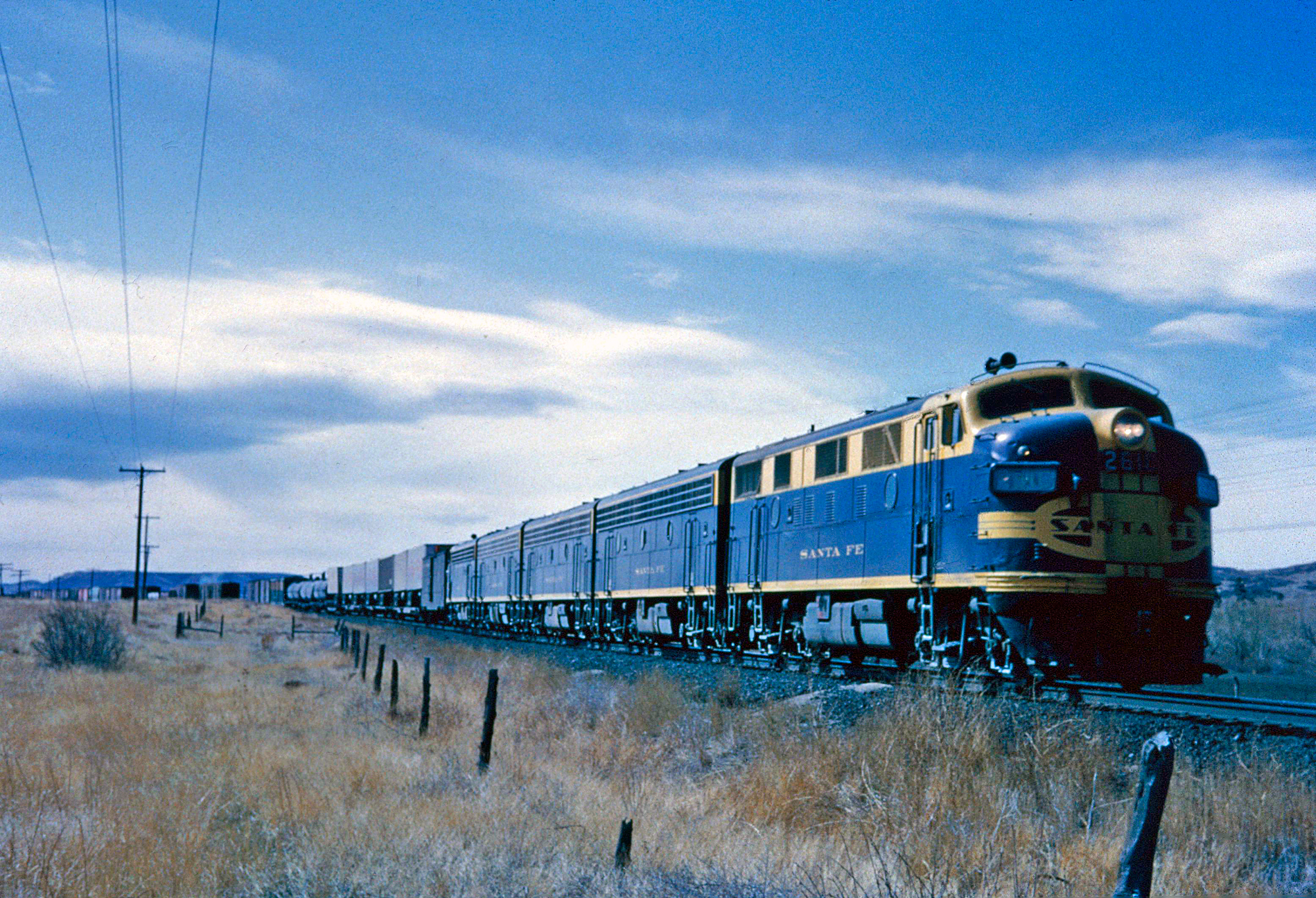
Santa Fe F7A #261-C (early chicken-wire grill variant) and other Fs lead freight south out of Denver near Castle Rock, Colorado, April 15, 1965. American-Rails.com collection.
How a Diesel-Electric Works
A common misconception is that the diesel engine turns the wheels directly. It does not. The diesel engine is the prime mover: the energy it creates drives a main generator (or alternator), which feeds electricity to traction motors in the trucks. Those motors turn the axles. The engine itself has no mechanical connection to the motion of the locomotive.
In essence the machine is an electric locomotive carrying its own power plant. A pure electric draws energy from overhead catenary or third rail; a diesel-electric generates that energy on board. The distinction matters for understanding everything from fuel logistics to why multiple-unit consists work so well: electrical control systems can coordinate several locomotives under one engineer.
Modern units monitor hundreds of parameters, operate routinely in multiple-unit consists, and often run distributed power mid-train or at the rear. Cab electronics have changed how engineers work—but the diesel-to-electric-to-wheels chain remains the core idea, from the 1920s boxcabs to today’s Tier 4 road freights.
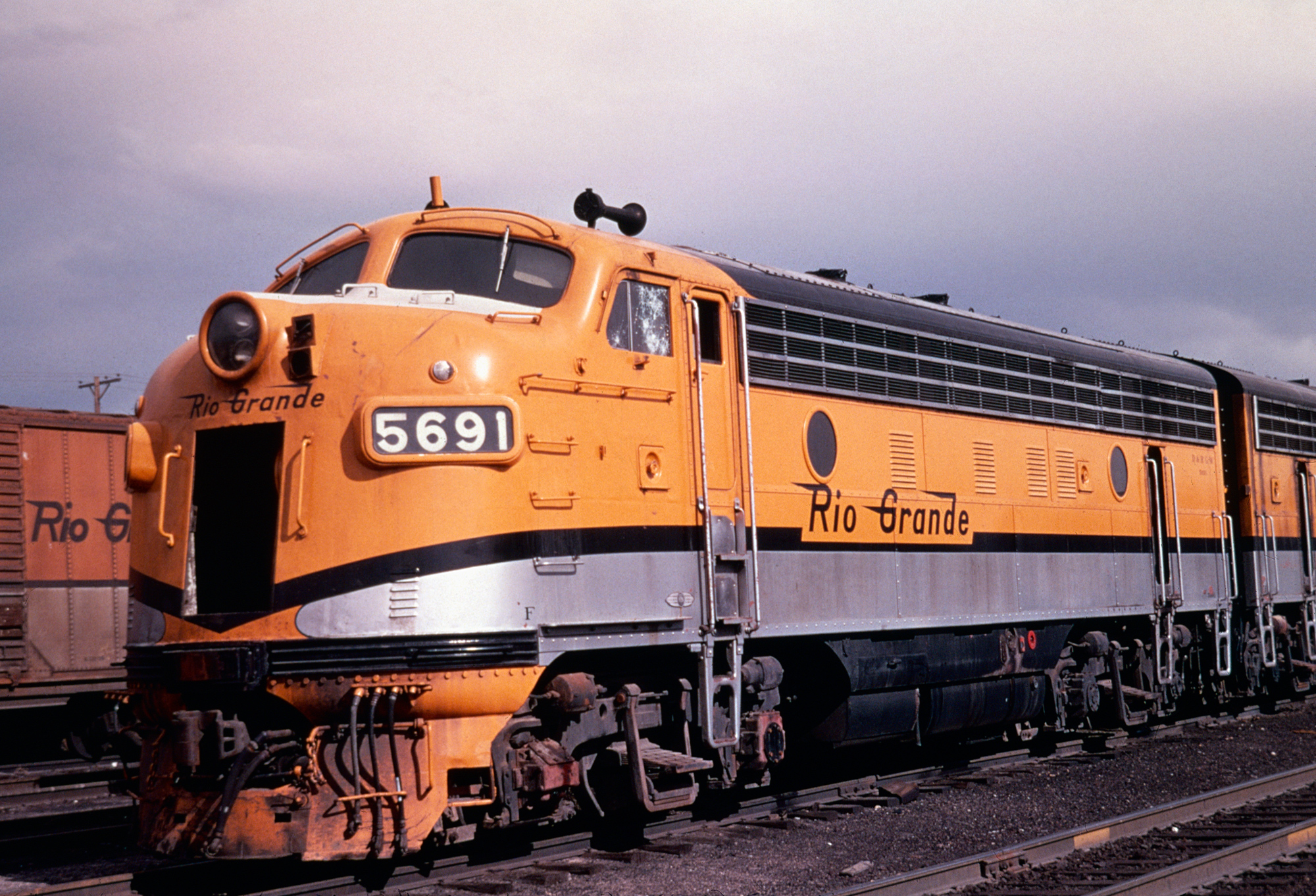
Rio Grande F7A #5691 in Denver, Colorado, during the 1970s. American-Rails.com collection.
At a Glance
| Topic | Notes |
|---|---|
| First U.S. rail diesel experiments | Southern Pacific test-bed gear circa 1904–05 with GE electrical equipment (Solomon, GE Locomotives); GE GM-50 experiments ~1917; limited early production switchers |
| Landmark early production switcher | Alco-GE-Ingersoll-Rand 60-ton boxcab; CNJ #1000 (1924/25 service-era classic)—often cited as first commercially successful diesel switcher |
| Early IC railcars | McKeen gasoline cars; later gas-electric “doodlebugs”; branch-line precursors to diesel power |
| First mainline diesel (often cited) | B&O / Electro-Motive boxcab #50 (1935) for mainline service experiments |
| Passenger streamliner diesels | EMC EA/EB and related E-units; B&O EA/EB tests often dated to 1937 in company lore |
| Freight diesel breakthrough | EMC/EMD FT demonstrator national tour 1939–40 (~5,400 hp four-unit A-B-B-A set #103); ~83,764 miles on 20 Class Is in 35 states (Morgan, Trains, Feb. 1960) |
| Major historic builders | EMD (GM), GE, Alco, Baldwin (later BLH), Fairbanks-Morse; plus smaller industrial builders |
| Shakeout | Baldwin/FM gone by early 1960s era; Alco locomotive production ends 1969; GE re-enters full line 1959 (Universal) and later overtakes EMD |
| Today’s U.S. new-build freight focus | Progress Rail (Caterpillar; EMD heritage) and Wabtec (GE Transportation heritage) |
| Most powerful production diesel (classic claim) | EMD DDA40X “Centennial” (~6,600 hp)—unique dual-engine design |
| Most important freight model (historical) | EMD FT and F-unit successors that sealed dieselization |
Sources for table: Brian Solomon (GE Locomotives, The American Diesel Locomotive, Electro-Motive E Units and F Units); Jim Boyd, The American Freight Train; David P. Morgan, “The Diesel That Did It,” Trains (February 1960); builder literature and American-Rails.com model profiles.
Timeline (Selected Milestones)
| Year | Event |
|---|---|
| 1904–05 | UP/McKeen self-propelled gasoline railcar work; SP diesel-electric test-bed with GE gear (Solomon) |
| 1905 / 1908 | McKeen “Windsplitter” M-1 (Omaha); McKeen Motor Car Company production from 1908 |
| 1917–18 | GE experimental GM-50 V-8 diesel; limited 225-hp production (few sales: Jay Street #4, Baltimore, U.S. Army) |
| 1923–25 | Alco-GE-Ingersoll-Rand 60-ton boxcab; CNJ #1000 becomes the classic early diesel switcher story |
| 1930s | EMC switchers; B&O boxcab #50 (1935); streamliner-era E-units and related passenger power |
| 1939–40 | EMC FT demonstrator #103 national tour; freight diesel credibility established |
| WWII | War Production Board constraints slow full dieselization; demand still builds |
| 1945–60 | Postwar F-unit boom; Geeps and road-switchers; steam exits Class I main lines |
| 1959+ | GE Universal (“U-boat”) series launches GE as full locomotive builder |
| 1969 | Alco ends U.S. locomotive production |
| 1980s | GE market share overtakes EMD |
| 1990s–2010s | AC traction standard for new high-hp freights; EPA tier emissions drive redesign |
| 2005+ | EMD sold out of GM; later Progress Rail / Caterpillar ownership; GE Transportation becomes Wabtec |
| 2010s–2020s | Tier 4 freights, comfort cabs, distributed power routine; battery/hybrid experiments for switching; Progress Rail & Wabtec duopoly for new Class I freight power |
Early Examples: Boxcabs, McKeen Cars & Switchers
According to Brian Solomon’s GE Locomotives, diesel-electric ideas appeared on Southern Pacific in 1904–1905 with GE supplying generator and electrical equipment. In 1917 GE tested an experimental unit with a GM-50 V-8 diesel of its own design. Formal production of 225-hp machines followed; sales were few—examples included Jay Street Connecting Railroad #4, a unit for Baltimore, and one for the U.S. Army. Early commercial failure, not the end of the idea.
Undeterred, GE partnered on a new design in 1923 using Ingersoll-Rand prime movers (~300 hp) and Alco carbody construction. Jim Boyd notes in The American Freight Train that the 60-ton boxcab finished in 1924 proved successful and sold to the Central Railroad of New Jersey as #1000, spending years switching around New York. Ironically, despite pioneering work, GE did not launch a full standalone locomotive product line until the late 1950s Universal (“U-boat”) series. Until then it partnered with Alco on electrical gear (traction motors and more) while also building electrification systems—and while Electro-Motive took the volume market.
The early boxcabs are often credited as the first rail diesels, but the first internal-combustion railcars were earlier. William McKeen, Union Pacific’s chief of motive power, developed the concept after Edward Harriman approached him in 1904 about self-powered cars for lightly patronized branches (Solomon, The American Diesel Locomotive). After tests at the Electric Railway Test Commission in St. Louis, an aerodynamic design with a ~100-hp Riotte gasoline engine became UP’s M-1 “Windsplitter,” completed at Omaha shops in March 1905. A refined longer car with a marine engine (roughly double the horsepower) impressed Harriman enough to authorize the McKeen Motor Car Company in 1908.
Early McKeen sales success flattened by about 1912 as reliability issues mounted. GE, Electro-Motive, and others later produced more durable gas-electric “doodlebugs” that pointed toward diesel switchers and road power. See Doodlebugs and RDCs.
Usurping steam on the main line was another matter. Baltimore & Ohio, always a technological trailblazer, is often cited for first mainline diesel use with Electro-Motive boxcab #50 in 1935. Electro-Motive later wrapped a rugged GM 567 prime mover in a sleek carbody—the path from boxcab experiment to F-unit freight power.
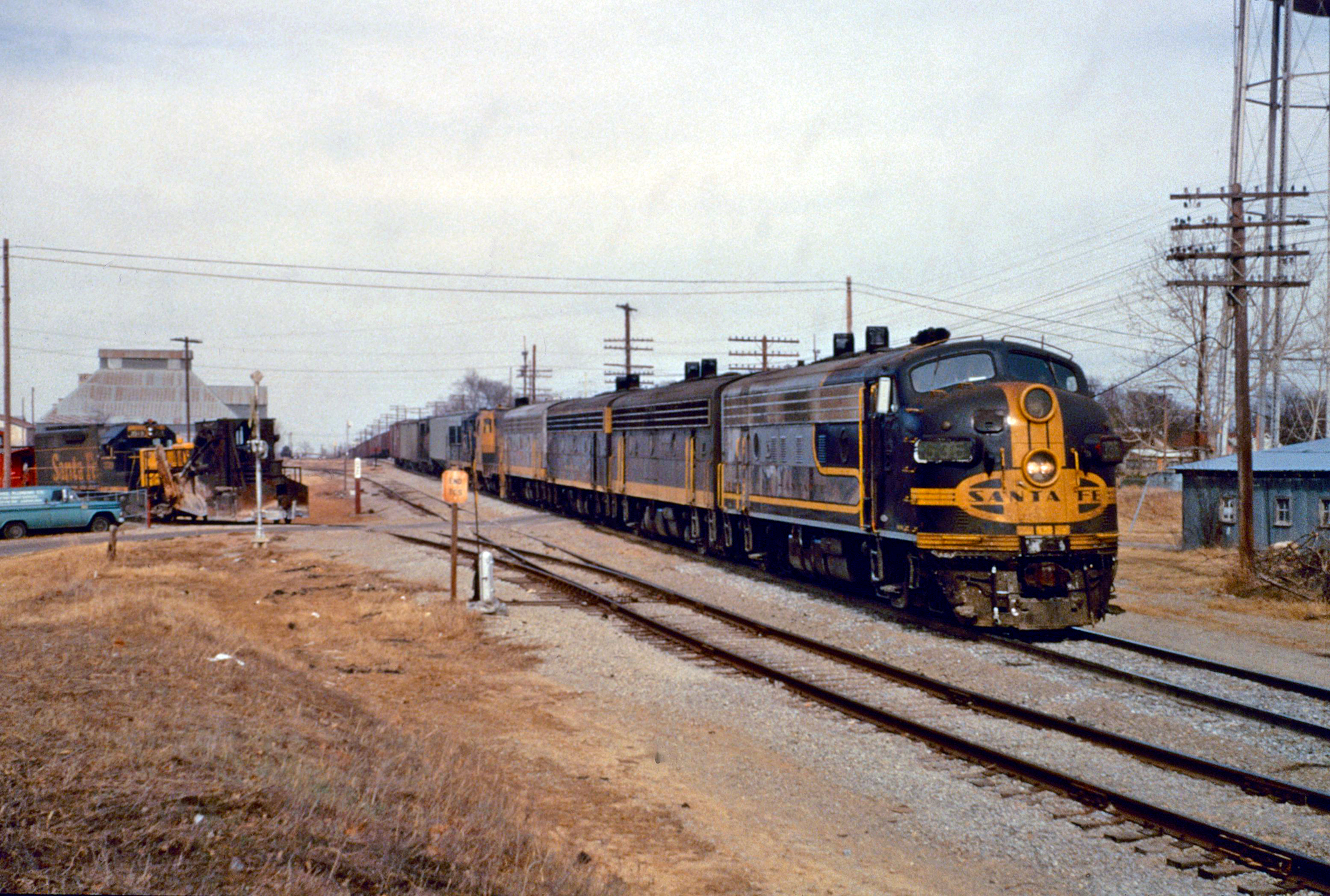
Santa Fe F7A #335-L eases out of the siding with a southbound freight at Ardmore, Oklahoma, crossing 5th Avenue, February 27, 1974. American-Rails.com collection.
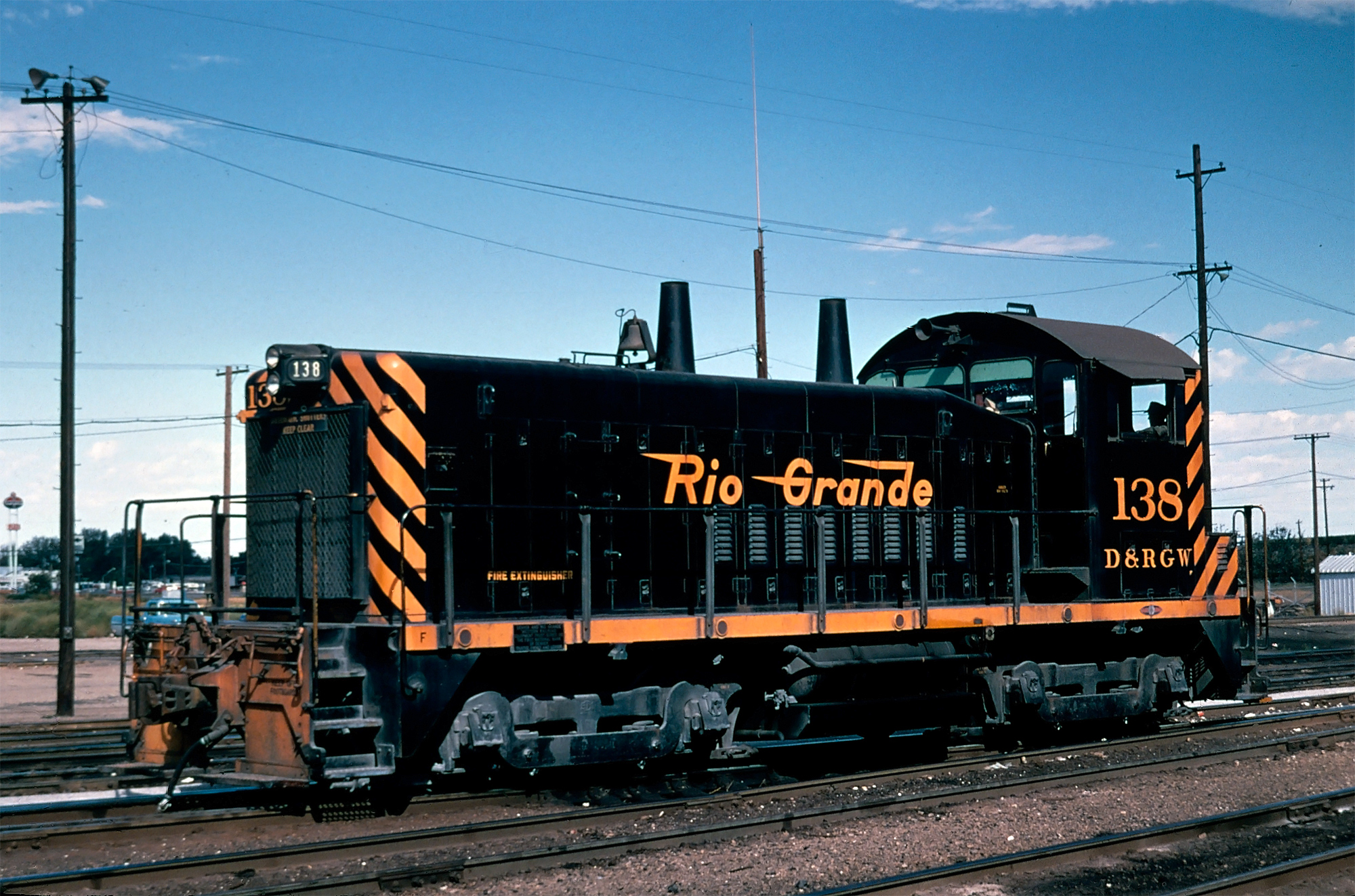
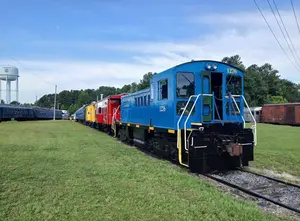
Rio Grande SW1200 #138 switching in Salt Lake City, Utah, circa 1975. Robert Eastwood, Jr. photo. American-Rails.com collection.
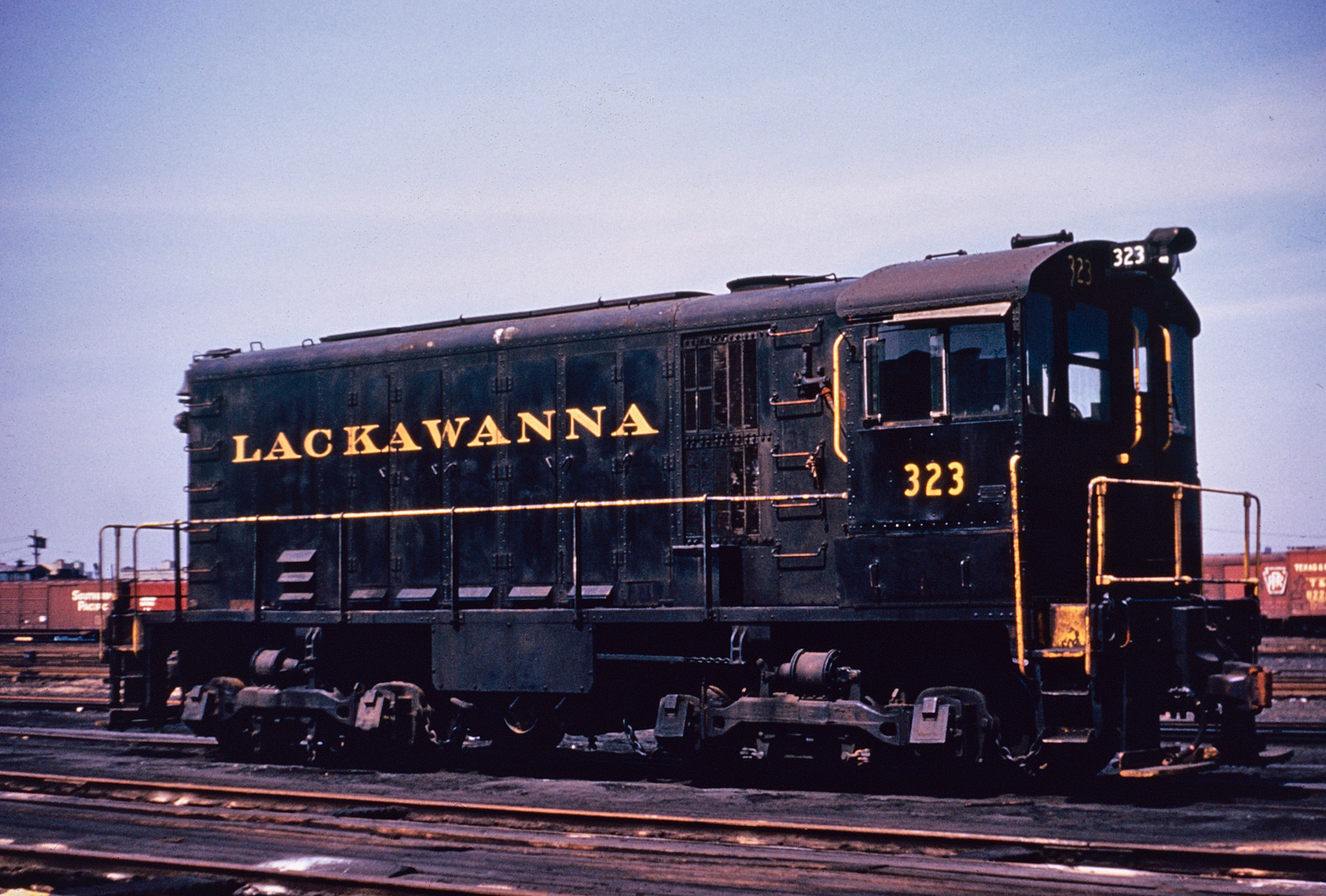
Erie Lackawanna HH600 #323, still in DL&W paint (built as #406), Jersey City, New Jersey, June 23, 1964. DL&W owned eight of these early 600-hp Alco switchers (#401–408, 1933–34; #401 was originally Alco demonstrator #603). Alco never officially named the type; railfans later adopted “HH” for High Hood. American-Rails.com collection.
The FT Demonstrator: Real Beginning of the Diesel Age
Diesels did not conquer American railroading in one night, but one event came closer than any other: the 1939–1940 national tour of Electro-Motive’s FT freight demonstrator set. Before the FT, diesels were widely accepted for switching and some passenger work but unproven for heavy mainline freight. After the FT, that skepticism largely collapsed.
Electro-Motive Corporation (soon GM’s Electro-Motive Division) designed the FT for freight from the start. The four-unit demonstrator—A-B-B-A set #103—produced about 5,400 horsepower and showcased multiple-unit control, a freight-worthy carbody, and electrical systems suited to sustained heavy duty. From November 1939 the set toured the country. As Brian Solomon notes in Electro-Motive E Units and F Units, it proved itself again and again—including on Southern Pacific’s Tehachapi Grade, where it outperformed SP and Santa Fe steamers (AT&SF held trackage rights in that territory).
According to David P. Morgan’s classic Trains article “The Diesel That Did It” (February 1960), during trials the locomotives traveled about 83,764 miles on twenty Class I railroads in thirty-five states over an eleven-month period. Results were decisive. Railroads watched the FT handle tonnage that would have demanded more steam power, with far less terminal time and one crew controlling all units. Santa Fe ordered heavily; others followed.
World War II and War Production Board restrictions constrained full conversion, but the postwar F-unit boom confirmed what the demonstrator had shown: diesel-electrics were ready for the hardest freight assignments. The FT did not invent the diesel locomotive—boxcabs, switchers, and passenger units had already proved the technology. What it proved was that diesel could replace steam in the core business: heavy freight over long distances at competitive cost and superior availability. Everything that followed—F3, F7, GP7, and the road-switcher revolution—rested on the credibility the FT earned.
It would take diesels nearly fifty years to equal the raw horsepower of a single steam locomotive at technological peak. They made up for it elsewhere: far less maintenance and heavy shopping, longer runs between fuel stops, more time on the road earning revenue, and MU control that let one engineer command several units. As Solomon notes, while Alco, GE, and Ingersoll-Rand spearheaded early diesel development, it was General Motors / Electro-Motive that successfully mass-produced them for mainline service—durable mechanics and the rugged 567 packaged in an attractive carbody.
Profiles: EMD FT · F-series overview · Electro-Motive history · Model 567.
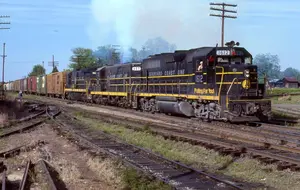
Soo Line SD40-2 #760, F7B #2202-C, and a GP9 at the sanding rack, Stevens Point, Wisconsin, April 20, 1974. American-Rails.com collection.
Why EMD Won—and the Others Lost
Postwar dieselization is often told as pure technology. It was also industrial competition. By the late 1950s Electro-Motive Division of General Motors dominated so thoroughly that rivals were gone or marginal. The outcome was not inevitable—different corporate decisions or earlier technology bets might have left more independents alive—but the shape of today’s market still reflects that shakeout.
EMD’s advantages were substantial: standardized mass production when many roads still expected custom engineering; the reliable, improved 567-series engine; strong parts and training support; and the performance reputation built by the FT and successors. Fleet commonality simplified maintenance and crew training. Roads that standardized on EMD gained real operating economies.
Alco entered with solid engineering credentials and produced successful road-switchers—the RS series and later Century models—but never matched EMD’s volume or early reliability reputation. Baldwin, once king of steam, struggled to adapt culture and product; its diesels never gained broad acceptance. Fairbanks-Morse brought an innovative opposed-piston engine (marine roots into the 19th century) but stayed niche and left the locomotive market after roughly a decade (the company itself continues in other businesses). Lima, after joining Baldwin as Baldwin-Lima-Hamilton, exited locomotives. Alco was the last of the traditional independents, ending U.S. locomotive production in 1969.
GE re-entered strongly with the Universal series (1959+). Early U-boats sold commercially but earned a mixed reliability reputation (many had relatively short service lives). GE refined designs through Dash-7 and Dash-8 lines until it overtook EMD in market share by the 1980s—setting up today’s Wabtec vs. Progress Rail duel. EMD never fully recovered its top spot after that shift; General Motors sold the business in 2005, and the corporate division was later dissolved under Progress Rail (Caterpillar), which still uses the EMD name for marketing. A testament to first- and second-generation models endures: units built more than half a century ago still work revenue service on short lines and industrials.
During the high years of dieselization, enthusiasts could see power from four major builders plus vivid railroad paint schemes—cab units, early road-switchers, and company colors in every direction. That diversity narrowed into a duopoly that has lasted, with ownership changes, into the present day.
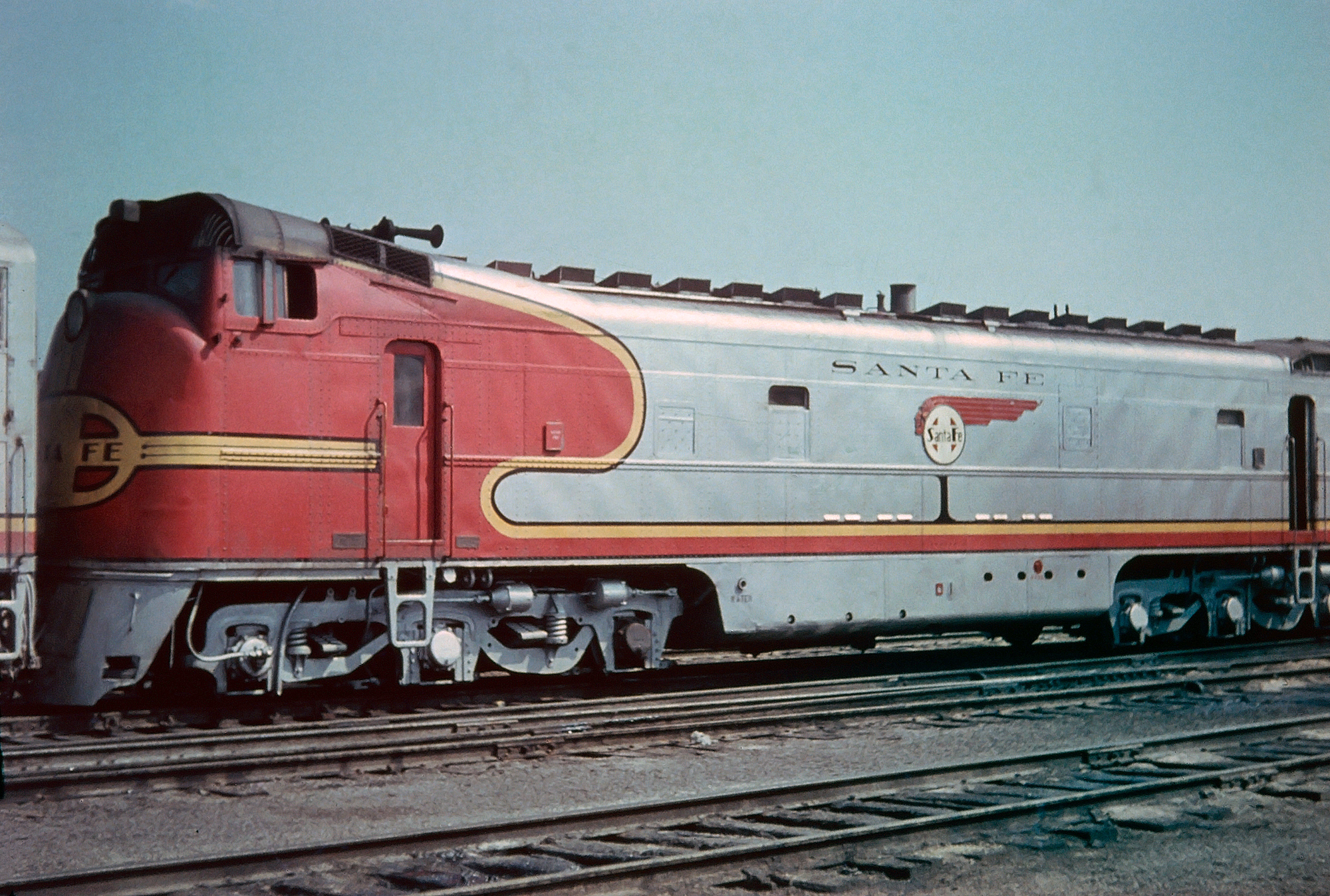
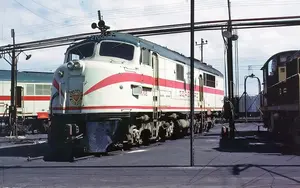
Baltimore & Ohio E9A #1457 (originally #40) in Sunburst livery at Ivy City, Washington, D.C., December 1963. American-Rails.com collection.
Builders (Company Histories)
Diesels have come a long way from the EMC and Alco-GE-IR boxcabs of the 1920s. Today’s models from Wabtec Freight and Progress Rail carry comfort cabs, climate control, and advanced electronics. In the early diesel era there were more than two builders; after Electro-Motive opened the market, Alco, Lima, Baldwin, Fairbanks-Morse, and later GE all competed. The old steam “Big Three” never fully made the transition.
- American Locomotive Company (Alco) · Montreal Locomotive Works (Alco’s Canadian arm)
- Baldwin Locomotive Works · Lima · Whitcomb
- Fairbanks-Morse · Canadian Locomotive Company
- General Electric · Wabtec Freight (GE Transportation successor)
- Electro-Motive (EMC/EMD) · General Motors Diesel (Canada) · Progress Rail (current EMD owner)
- Davenport · Plymouth (industrial / small builders)
- Morrison-Knudsen (rebuilds and specialty power)
Model Directories by Builder
Jump into the catalogs of detailed model articles on this site. These directories preserve the full research map from the original diesel hub—Alco through EMD, plus Canadian and specialty designs.
American Locomotive Company (Alco)
- The Experimental "Black Maria"
- The FA Series
- The PA Series
- The Century Series
- Early DL Design
- RS-1
- RSD-1
- EMD/Alco MRS-1
- RS-2
- RSC-2
- RS-3
- RSC-3
- RSD-4
- RSD-5
- RSD-7
- RS-11
- RSD-12
- RSD-15 "Alligator"
- RS-27
- RS-32
- RS-36
- C-415
- C-420
- C-424
- C-425
- C-430
- C-628
- C-630
- C-636
- C-643DH Diesel-Hydraulic
- C-855
- "High Hood" Series
- S-1
- S-2
- S-3
- S-4
- S-6
- T-6 "Transfer"
- General Electric/Alco Gas Turbine Design
Montreal Locomotive Works (MLW)
Baldwin Locomotive Works (BLW)
- VO-660
- VO-1000
- DS-4-4-660
- DS-4-4-750
- DS-4-4-1000
- S-8
- S-12
- DT-6-6-2000
- RT624
- DRS-4-4-1500
- DRS-6-4-1500
- DRS-6-6-1500
- AS16
- AS416
- AS616
- RS12
- "Baby Face" DR-4-4-1500
- DR-6-4-1500
- DR-6-4-2000
- RF16 "Shark"
- DR-12-8-3000 "Centipede"
- Baldwin's "Sharknose" Carbody
- The Unpopular "Baby Face"
Fairbanks-Morse (FM)
General Electric (GE)
- 44-Tonner
- 70-Tonner
- The Classic "U-Boat"
- U18B "Baby Boat"
- U23B
- U25B
- U28B
- U30B
- U33B
- U36B
- U23C
- U25C
- U28C
- U30C
- U33C
- U36C
- U50
- U50C
- The Joint General Electric/Alco Gas Turbine Design
- B23-7
- B30-7
- B36-7
- C30-7
- C36-7
- "Super 7" Series Rebuild Program
- B32-8 Series
- B39-8
- B40-8/W
- C39-8
- C40-8/W Series
- C40-9/W
- C44-9W
- AC4400CW
- AC6000CW
- ES44AC
- ES40DC
- ES44DC
- ES44C4
- ET44AC/ET44C4
- Genesis Series
Electro-Motive (EMD)
- Early EMC Switchers: SW, SC, NW, NC
- "Cow-Calf" Switcher Designs
- NW2
- SW1
- SW7
- SW8
- SW9
- SW900
- SW1000
- SW1001 Variant
- SW1200
- SW1500
- MP15DC/AC/T Series
- EMD's E Series
- EA/E1/E2
- TA
- E3
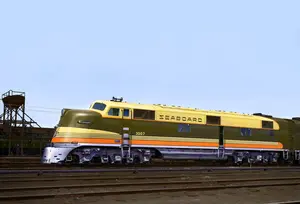
- Seaboard Air Line's E4
- Burlington's E5
- E6
- Rock Island's Unique AB6
- E7
- E8
- E9
- EMD's F Series
- FT
- F2
- F3
- F7
- FP7
- F9
- FP9
- New Haven's FL9
- F40C
- F40PH Series
- F45 Series
- SDP40F Passenger Variant
- NW3
- NW5
- Great Northern's GP5
- GP7
- GP9
- GP15 Series
- GP18
- RS1325
- GP20
- GP30
- GP35
- GP38 Series
- GP40 Series
- GP50
- GP60
- EMD/Alco MRS-1
- SD7
- SD9, "Cadillac"
- SD18
- SD24
- SD28
- SD35
- SD38 Series
- SD39/SDL39
- SD40/SD40-2 Series
- SD45 Series
- SD50
- SD60 Series
- SD70 Series
- SD75M/I
- SD80MAC
- SD90MAC
- SD70ACe
General Motors Diesel (Canada)
Siemens
Unique Designs
- B Units
- BP-4 (NS)
- C&NW's Crandall Cabs
- DD35/A
- DDA40X, "Centennial"
- Draper Taper
- Krauss-Maffei ML-4000
- MK5000C
- Slugs
- TE70-4S
- Tunnel Motors
Wabtec Freight
Common Designs, Prime Movers & Special Topics
Beyond builder model lists, these pages cover body styles, engines, trucks, branch-line power, and notable paint/events:
Common Designs
Notable Prime Movers
Truck Types
Other Reading
- Doodlebugs
- Gensets/Green Goats
- Rail Diesel Car, RDCs
- Morrison-Knudsen
- Erie E8 835
- PRR E8s 5711 and 5809
- Nickel Plate Road 190
Notable Events & Paint
- Union Pacific's Commemorative Series
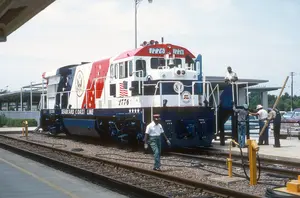
- Bicentennial Locomotives
- The Preamble Express (1974)
- National Train Day
Unique / specialty carbodies and experiments are listed under Unique Designs in the model directories (B-units, Centennials, tunnel motors, Krauss-Maffei ML-4000, slugs, Draper taper, and more).
Diesel Power in the 21st Century
The mid-century diesel-electric has itself continued to evolve. The principle—diesel engine, generator/alternator, traction motors—is unchanged; almost every major subsystem has been refined or transformed since the 1990s.
AC traction is the most visible change. Beginning in a serious way with EMD’s SD70MAC and GE’s AC4400CW, AC technology offered better adhesion, higher reliability in demanding service, and improved low-speed performance. By the 2010s AC locomotives were standard for new high-horsepower freights.
EPA emissions tiers forced sophisticated engine controls, exhaust after-treatment, and in some cases entirely new engine designs. Newer units produce substantially less nitrogen oxide and particulate matter than predecessors—at the cost of greater mechanical complexity. Computerization altered the engineer’s role: continuous monitoring of hundreds of parameters, automatic performance adjustments, data links to railroad operating systems, and routine distributed power and precision train handling. The newest Progress Rail and Wabtec units are as much rolling computers as traditional locomotives.
Alternative fuels and hybrids mark the next frontier: battery-electric and hybrid experiments for switching and yard service; renewable diesel and other lower-carbon fuels on limited fleets; gensets and low-emission switchers (see Gensets / Green Goats). Full electrification of the North American freight network remains unlikely near-term, but greenhouse-gas pressure is shaping research and limited deployment.
Builders today: Progress Rail (Caterpillar; EMD designs) and Wabtec (GE Transportation heritage) supply the bulk of new Class I freight power; Siemens and others compete in passenger (e.g., Charger series). The competitive field remains essentially a duopoly for new high-horsepower freights, but corporate ownership and technological priorities have shifted with the times. Diesels have come a long way from the EMC and Alco-GE-IR boxcabs of the 1920s—comfort cabs, climate control, advanced electronics—but they still answer the question the FT asked in 1939: can this machine do the work of steam better?
Related Reading on American-Rails.com
- Steam locomotives · Electric locomotives · Locomotive history
- Streamliners · Railroad history · Fallen flags
- EMD · GE · Alco · Baldwin · Fairbanks-Morse · Wabtec
- Class I railroads · Railroad jobs · Home
Sources
- Solomon, Brian. The American Diesel Locomotive; GE Locomotives; Electro-Motive E Units and F Units; related builder studies
- Boyd, Jim. The American Freight Train (early boxcab / CNJ #1000 context)
- Morgan, David P. “The Diesel That Did It.” Trains Magazine, February 1960 (FT demonstrator mileage and tour scope)
- Builder and railroad literature on EMC/EMD FT demonstrator tours (1939–40) and postwar F-unit dieselization
- Competitive histories of Alco, Baldwin, Fairbanks-Morse, GE, and EMD diesel lines through the 1969 Alco exit and 1980s GE ascendancy
- EPA locomotive emissions standards (tier progression) and industry AC-traction adoption (1990s–2010s)
- American-Rails.com model and builder profile pages linked throughout this hub
Diesel hub revised August 2026 (anchors, timeline and glance tables, structured builder/model directories, related reading, MailChimp capture stub) while retaining and bolstering core research on diesel-electric principles, early experiments, McKeen cars, FT breakthrough (including Tehachapi and Morgan tour figures), competitive dieselization, and 21st-century evolution—plus the site’s extensive model-link map for Alco, MLW, Baldwin, FM, GE, and EMD.
Recent Articles


-
West Point Route (Railroad): Map, History, Logo
Oct 16, 26 11:26 PM
 The West Point Route was a trademarked name comprising the Atlanta & West Point and Western Railway of Alabama, which were controlled by the Georgia Railroad.
 -
Virginian Railway Diesel Roster (All-Time)
Oct 16, 26 11:11 PM
 All-time diesel roster of the Virginian Railway. 40 Fairbanks-Morse H16-44s, 25 H24-66 Train Masters, and one GE 44-tonner. Serials included.
 -
Virginian Railway Steam Roster (Post 1900)
Oct 16, 26 10:55 PM
 Virginian Railway steam locomotives built since 1900. Mikados, 2-8-8-2s, the Triplex, class AE 2-10-10-2s, and the 1945 2-6-6-6s.
 -
Virginian Railway: Map, Rosters, History, Electrification
Oct 16, 26 10:51 PM
 Virginian Railway, Deepwater to Norfolk. Combined in 1907 and completed in 1909. Electrified from Roanoke to Elmore. Absorbed by the Norfolk & Western on December 1, 1959.
 -
Baldwin "Centipede" Locomotives: Specs, Roster, Photos
Oct 16, 26 03:58 PM
 Baldwin DR-12-8-1500/2 Centipede—2-D+D-2, two 608SC engines, 3,000 hp. SAL 4500 from the 1943 test bed. 54 on the serial list, 52 sold. PRR BP60 then BH50. None preserved.
 -
Louisville & Nashville Class M-1 2-8-4s: The Big Emmas
Oct 16, 26 03:52 PM
 Louisville & Nashville class M-1, 42 Big Emma 2-8-4s. Baldwin in 1942 and 1944, Lima in 1949. Coal trains from Neon to DeCoursey. No locomotive survives.
 -
Tennessee, Alabama and Georgia Railway: Map, History, Rosters
Oct 16, 26 03:21 PM
 Tennessee, Alabama and Georgia Railway, Chattanooga to Gadsden. The May 1929 card is 91.7 miles. Southern stock control closed on a January 1, 1971 schedule. Five diesels and Prince's steam list.
 -
Railroad Museums In The USA (2026): State Guides & Collections
Oct 16, 26 02:29 PM
 U.S. railroad museums—what they are vs tourist railroads, preservation history (R&LHS, NRHS, IRM, Steamtown), state guides, and destination collections. Confirm hours on each museum’s site.
 -
Wyoming Railroad Museums (2026): A Complete Guide
Oct 16, 26 02:26 PM
 Wyoming railroad museums—the Cheyenne Depot, Burlington 5633 at Douglas, Big Boy 4004, and the Laramie depot. Confirm hours and which locomotive is on the property.
 -
West Virginia Railroad Museums (2026): A Complete Guide
Oct 16, 26 12:52 PM
 West Virginia railroad museums—Cass Scenic’s geared steam, the Hinton C&O collection, and the Martinsburg B&O roundhouse. Confirm hours and which locomotive is assigned.
 -
Washington Railroad Museums (2026): A Complete Guide
Oct 16, 26 12:46 PM
 Washington railroad museums—Snoqualmie, Elbe, Chehalis, Reardan, and the Northern Pacific depot at Toppenish. Confirm hours and which locomotive is assigned.
 -
Vermont Railroad Museums (2026): A Complete Guide
Oct 16, 26 12:42 PM
 Vermont railroad museums—the Shelburne Museum’s 1890 station, Central Vermont No. 220, and the private car Grand Isle. Confirm hours on the site.
 -
Tennessee Central Railway: Map, Logo, Rosters, History
Oct 16, 26 11:32 AM
 Tennessee Central Railway, Harriman to Hopkinsville. Reorganized January 26, 1922. Last day August 31, 1968. Thirty-one diesels and the railroad's steam roster.
 -
Southern Railway Steam Roster (Post 1900)
Oct 16, 26 09:40 AM
Southern Railway steam locomotives built since 1900. Ps-4 Pacifics, Ts Mountains, USRA Santa Fes, and the subsidiary grids for the CNO&TP, Alabama Great Southern, and New Orleans and Northeastern. -
Southern Railway (USA): Map, Locomotives, Logo, History
Oct 16, 26 09:28 AM
 The Southern Railway, formed July 1, 1894 from the Richmond and Danville and the East Tennessee, Virginia and Georgia. Washington. Norfolk Southern Railway on December 31, 1990.
 -
Seaboard Coast Line Diesel Roster (All-Time)
Oct 15, 26 04:21 PM
 All-time diesel roster of the Seaboard Coast Line. Inherited Coast Line and Seaboard locomotives, then 623 new locomotives in the printed orders, plus 28 acquired from other railroads.
 -
Seaboard Coast Line Railroad: Map, History, Photos
Oct 15, 26 04:17 PM
 The Seaboard Coast Line, formed July 1, 1967 from the Atlantic Coast Line and the Seaboard Air Line. Jacksonville. Family Lines, then the Seaboard System on December 29, 1982.
 -
South Carolina Railroad Museums (2026): A Complete Guide
Oct 15, 26 02:54 PM
 South Carolina railroad museums—Winnsboro’s Rockton & Rion line, Spartanburg’s Hub City depot, Greenwood’s Baldwin No. 19, and the Best Friend replica. Confirm hours on each site.
 -
South Dakota Railroad Museums (2026): A Complete Guide
Oct 15, 26 10:55 AM
 South Dakota railroad museums—the Hill City museum beside the 1880 Train, and Prairie Village at Madison. Confirm hours, and confirm whether Hill City is still open.
 -
Seaboard Air Line Diesel Roster (All-Time)
Oct 15, 26 10:46 AM
 All-time diesel roster of the Seaboard Air Line. 734 locomotives: E4s in 1938, Centipedes, Alco road switchers, and GP40s through February 1967. Serials included.
 -
Seaboard Air Line Steam Roster (Post 1900)
Oct 15, 26 10:39 AM
 Seaboard Air Line steam locomotives built since 1900. Mikados, Russian Decapods, 2-10-2s, and the 2-6-6-4s sold to the Baltimore and Ohio in 1947. Drury's class grid.
 -
Seaboard Air Line Railroad: Map, Rosters, History
Oct 15, 26 10:34 AM
 The Seaboard Air Line, chartered in the Portsmouth and Roanoke of 1832 and formed July 1, 1900. Inland route to Florida. Merged into the Seaboard Coast Line on July 1, 1967.
 -
Utah Railroad Museums (2026): A Complete Guide
Oct 15, 26 12:04 AM
 Utah railroad museums—Ogden Union Station, Golden Spike at Promontory, the Helper mining museum, and the Heber Valley Railroad. Confirm hours on each site.
 -
Escanaba & Lake Superior Diesel Roster (All-Time)
Oct 14, 26 10:44 PM
All-time diesel roster of the Escanaba & Lake Superior. 30 locomotives: Baldwin switchers and RS-12s, two RF16s, three GP38s, three SD40-2s, and the Reserve Mining units. Serials and order numbers. -
Escanaba & Lake Superior Railroad: In Service Since 1898
Oct 14, 26 09:04 PM
 Escanaba & Lake Superior Railroad, chartered November 17, 1898, and still operating from Wells, Michigan. Logging line to Channing, the Milwaukee Road lines, and the diesel roster.
 -
Richmond, Fredericksburg & Potomac Diesel Roster (All-Time)
Oct 14, 26 08:49 PM
 All-time diesel roster of the Richmond, Fredericksburg and Potomac. 107 locomotives: 22 Alco S2s, one SW1, and an Electro-Motive road fleet from E8s to GP40-2s. Serials and order numbers.
 -
Richmond, Fredericksburg & Potomac Steam Roster (Since 1900)
Oct 14, 26 08:46 PM
 Richmond, Fredericksburg and Potomac steam locomotives built since 1900. Pacifics, Mountains, Berkshire-type 2-8-4s, and the named 4-8-4s. Last revenue run December 17, 1954.
 -
Richmond, Fredericksburg and Potomac Railroad: Map, Rosters, Logo
Oct 14, 26 08:36 PM
 The Richmond, Fredericksburg and Potomac, chartered February 25, 1834. A 113-mile Richmond–Washington bridge line. Named 4-8-4s, Potomac Yard, and the CSX sale of October 10, 1991.
 -
North Dakota Railroad Museums (2026): A Complete Guide
Oct 14, 26 08:29 PM
North Dakota railroad museums—Mandan’s state museum, the Railroad Museum of Minot, and Bonanzaville’s Northern Pacific 684. Confirm hours on each site. -
Oklahoma Railroad Museums (2026): A Complete Guide
Oct 14, 26 08:02 PM
Oklahoma railroad museums—the Oklahoma Railway Museum, Enid’s Frisco 1519, Waynoka’s Harvey House, and El Reno’s Rock Island depot. Confirm hours on each site. -
Oneida & Western Railroad: Map, History, Timetable
Oct 14, 26 06:47 PM
Oneida & Western Railroad, a Tennessee short line from Oneida to Jamestown. Chartered in 1912, opened to East Jamestown in 1921, and to Jamestown on December 10, 1930. Last revenue train March 4, 1954… -
Oneida and Western Railroad (Shamrock Coal Company)
Oct 14, 26 03:20 PM
 Shamrock Coal's mint-green coal trains, 1979–1987. Eight EMD SD40-2s, OWTX 9950–9957, order 786246. Two 72-car gondola sets. Louisville & Nashville, then CSX. Sold to BC Rail.
 -
Rhode Island Railroad Museums (2026): A Complete Guide
Oct 14, 26 03:03 PM
 Rhode Island railroad museums—the Friends’ museum in the 1875 Kingston depot, on the old New York, Providence and Boston. Confirm what is on view.
 -
Original Norfolk Southern Diesel Roster (All-Time)
Oct 14, 26 12:40 PM
 All-time diesel roster of the original Norfolk Southern Railway. 59 locomotives: Baldwin switchers and AS-416s, three GE 70-tonners, 17 GP18s, and seven GP38s. Serials and order numbers.
 -
Original Norfolk Southern Railway: Map, Rosters, History
Oct 14, 26 10:09 AM
 The original Norfolk Southern Railway, chartered in 1870 as the Elizabeth City & Norfolk. Norfolk to Charlotte. Merged into the Southern Railway on January 1, 1974. Baldwin diesels and the GP18s and G…
 -
Nebraska Railroad Museums (2026): A Complete Guide
Oct 14, 26 10:00 AM
 Nebraska railroad museums—the Durham Museum, Kenefick Park, Cody Park, and the Golden Spike Tower over Bailey Yard. Confirm hours on each site.
 -
Nevada Railroad Museums (2026): A Complete Guide
Oct 14, 26 09:51 AM
 Nevada railroad museums—Carson City, Boulder City, the Nevada Northern at East Ely, and the Virginia City depot. Confirm hours on each site.
 -
Montana Railroad Museums (2026): A Complete Guide
Oct 14, 26 12:17 AM
 Montana railroad museums—the Livingston depot, Fort Missoula’s Willamette, the Harlowton Milwaukee depot, and the Whitefish station. Confirm hours on each site.
 -
"Jawn Henry" Locomotive: Specs, Diagram, Photos
Oct 14, 26 12:03 AM
 Norfolk & Western No. 2300, class TE-1, the steam turbine-electric Jawn Henry. Baldwin-Lima-Hamilton, Westinghouse, and Babcock & Wilcox, May 1954. Specifications, the road tests, and the Dece…
 -
Atlantic and Danville Railway: Serving Southern VA
Oct 13, 26 04:32 PM
 Atlantic and Danville Railway, chartered in 1882, incorporated September 1883. Three-foot line to Claremont, then Norfolk to Danville. Southern lease from September 1, 1899, to July 1, 1949. Alco RS2s…
 -
Norfolk, Franklin and Danville Railroad: Map, Roster, History
Oct 13, 26 04:26 PM
 Norfolk, Franklin and Danville Railway, chartered October 2, 1962, and operating from November 1, 1962. Norfolk to Danville, 210.8 miles. Two Alco RS36s and four RS11s. Merged into the N&W on December…
 -
Norfolk & Western Diesel Roster (All-Time)
Oct 12, 26 11:59 PM
 Norfolk & Western diesel roster, all-time. 1,464 locomotives built new for the railroad, from the 1955 GP9s and RS-3s through the C36-7s, plus the merger fleets.
 -
Norfolk & Western Steam Roster (Post 1900)
Oct 12, 26 11:52 PM
 Norfolk & Western steam since 1898. The Roanoke grid: 1,266 locomotives, the J, the A, and the Y, and the last road steam on May 7, 1960.
 -
Norfolk & Western Railway: Map, Logo, Rosters, History
Oct 12, 26 11:45 PM
 The Norfolk & Western, from the City Point Railroad of 1838 to Norfolk Southern. Pocahontas coal, Roanoke steam, and the 1964 expansion.
 -
Louisiana Railroad Museums (2026): A Complete Guide
Oct 12, 26 11:24 PM
 Louisiana railroad museums—the DeQuincy depot, the Long Leaf sawmill, Jackson’s model railroad, and Southern Pacific 745. Confirm hours on each site.
 -
Michigan Railroad Museums (2026): A Complete Guide
Oct 12, 26 11:14 PM
 Michigan railroad museums—Pere Marquette 1225 at Owosso, Durand Union Station, The Henry Ford, and the Mount Clemens depot. Confirm hours on each site.
 -
Mississippi Railroad Museums (2026): A Complete Guide
Oct 12, 26 10:52 PM
Mississippi railroad museums—McComb’s rebuilt Illinois Central depot and Illinois Central 2542, and the Casey Jones museum at Water Valley. Confirm hours on each site. -
The "E2b": PRR's Experimental Freight Electrics
Oct 12, 26 10:33 PM
 PRR class E2b: six GE B-B freight electrics, 4939–4944, 2,500 hp, 11 kV AC. Specifications, roster, and the 1964 scrap.
 -
Alaska Railroad Museums (2026): A Complete Guide
Oct 12, 26 10:10 PM
 Alaska railroad museums—the Museum of Alaska in Wasilla, Tanana Valley No. 1 at Pioneer Park, and the Engine 557 shop. Confirm hours on each site.
 -
Western and Atlantic Railroad: Map, History, Timetables
Oct 12, 26 09:55 PM
 The Western & Atlantic Railroad of the State of Georgia, authorized December 21, 1836, from Atlanta to Chattanooga. The state still owns the 137.33-mile line. CSX leases it. The through railroad opene…